Affiliate of Centre for Public, International and Comparative Law
Centre for Public, International and Comparative Law
Faculty of Business, Economics and Law
Associate Professor
School of Law
Faculty of Business, Economics and Law
Availability:
Available for supervision
Media expert
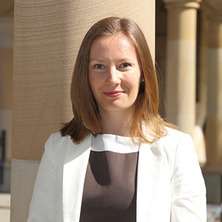
Dr Barbora Jedlickova is a specialist in competition law, with core research interests in competition‑law theory, the digital economy, and comparative competition law. Her work spans a wide range of topics, including cartels, vertical restraints, the concepts of bargaining power and market power, sustainability, AI, and the economic and jurisprudential foundations of competition law. She has also examined specific markets with distinctive regulatory challenges, such as grocery retail, pharmaceuticals, and digital platforms.
She has published both internationally and nationally, including in leading law journals. Her research monograph Resale Price Maintenance and Vertical Territorial Restrictions: Theory and Practice in EU Competition Law and US Antitrust Law was published by Edward Elgar Publishing. Her research has been presented across Australia, the United States, Europe, and Asia.
Barbora’s professional engagement is both global and domestic. She led the establishment of the Australia and New Zealand chapter of the International League of Competition Law (LIDC)—the first such group in the region—and serves as its President. The chapter is affiliated with the long‑standing international LIDC in Switzerland and connected to the University of Queensland’s Centre for Public, International and Comparative Law (CPILC). She has contributed to several international LIDC projects.
She is a member of the Competition and Consumer Committee of the Law Council of Australia and participates in several international associations. Her academic career has included visiting scholar positions at institutions such as the University of Iowa, Boston University, the US Department of Justice, and the Court of Justice of the European Union.
Barbora has held editorial roles with Competition Policy International (Oceania Column) and the LAWASIA Journal.
Drawing on her personal experience and journey, Barbora has been an active advocate for children with brain injuries, as well as for carers of children with special needs and serious illnesses. She led the establishment of the UQ Network for Carers of Children with Special Needs and Serious Chronic Illnesses, where she currently serves as Chair.
She holds a PhD and LL.M. (with Commendation) in International Competition Law and Policy from the University of Glasgow, and a Master’s degree in Law and Legal Studies from Masaryk University. Before entering academia, she worked as a lawyer in the Czech Republic and later as a contracts specialist at the Universities of St Andrews and Glasgow. In 2009, she completed a traineeship at DG Competition at the European Commission in Brussels.
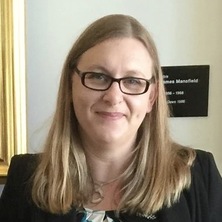
Dr Sarah Kendall is an interdisciplinary scholar with expertise in criminal law and procedure and evidence law. She is particularly interested in the intersections between law and science. Sarah's work focuses on justice responses to domestic, family and sexual violence, and emerging and re-emerging national security threats. Currently, she is researching victim-centric, trauma-informed criminal justice approaches in domestic, family and sexual violence matters. Alongside this research, she is examining the nature, effectiveness and appropriateness of the criminal law response to espionage, foreign interference and sabotage. Sarah uses a range of methods to conduct her research, including empirical (qualitative and quantitative) methods.
Prior to joining Griffith University, Sarah worked at the Queensland Law Reform Commission (QLRC), leading the review of Queensland's non-fatal strangulation offence. She has also previously worked at the Australian Law Reform Commission (ALRC) on a number of inquiries, including the Religious Educational Institutions and Anti-Discrimination Laws inquiry and Justice Responses to Sexual Violence inquiry, and at the Department of Justice Queensland where she progressed the Criminal Justice Legislation (Sexual Violence and Other Matters) Amendment Act 2024 (Qld).
In addition to her research, Sarah has taught Foundations of Law and Evidence Law at UQ and guest lectures on various topics.
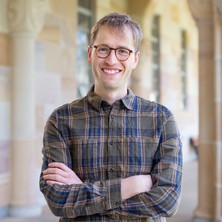
Simon is an intellectual historian specialising in the history of legal, political and religious ideas. He is currently working on a number of projects: the political uses of the fifth commandment ("Honour your father and mother") in the early modern period, resistance theory in the Reformed Protestant tradition, and the idea of constituent power in the early modern period. He was a Visiting Fellow at the Mathias Corvinus Collegium in Budapest in early 2023, and is a Non-Resident Fellow at the Danube Institute, also in Budapest. His first book was published with Edinburgh University Press in 2022, and is entitled Reforming the Law of Nature: The secularisation of political thought, 1532-1689. His second book is on education, entitled Against Worldview, and published with Lexham Press.
Affiliate of Centre for Living Experience Research
Centre for Living Experience Research
Faculty of Health, Medicine and Behavioural Sciences
Affiliate Research Fellow of T.C. Beirne School of Law of T.C. Beirne School of Law
School of Law
Faculty of Business, Economics and Law
Affiliate of Queensland Aphasia Research Centre (QARC)
Queensland Aphasia Research Centre
Faculty of Health, Medicine and Behavioural Sciences
Research Fellow
School of Health and Rehabilitation Sciences
Faculty of Health, Medicine and Behavioural Sciences
Availability:
Available for supervision
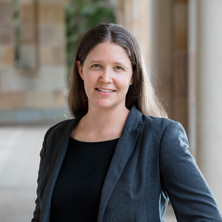
Michelle is a sociologist and lawyer: her research focuses on decision-making and the operation of law and regulation in practice for people with disabilities and other impairments to communication and legal capacity. She has research interests in the sociology of law, decision-making (supported and substituted), legal personhood, the UNCPRD, disability law, legal and administrative transition to adulthood, communication impairments, and profound intellectual disability. Her work examines decision-making in practice in a range of areas, including health and aged care, banking and finance, income support, and the NDIS. Michelle is trained in both qualitative and quantitative methods, and has extensive experience in research development, design, and practice, as well as health consumer research and co-design.
Michelle works on the MRFF funded project: Unspoken, Unheard, Unmet: Improving Access to Preventative Health Care through Better Conversations about Care. She leads the experience gathering stage of the project, the co-design elements of the work, and the development of guidelines about communication, decision-making, and aged care.
Michelle is also a consumer and disability advocate, with experience in strategic policy development, implementation, and evaluation, including the co-design of state level strategy for transition to adulthood health care, and on Australia’s National Living Evidence Taskforce. She is also the consumer board Chair of Child Unlimited, a consortium of researchers, clinicians, and consumers working towards best evidence-based practice in health care for children and young adults with chronic ill health and disabilities, and co-chair of the consumer advisory committee for the ARC Centre of Excellence Life Course Centre.
Dr Joseph Lelliott is a Senior Lecturer at the TC Beirne School of Law, teaching courses in criminal law, advanced crime and criminology, and international human rights law. He is a co-author of the textbook Criminal Law in Queensland and an Associate Fellow of the Higher Education Academy. He holds undergraduate degrees in Law and Arts and a PhD in Law.
Joseph’s research interests broadly lie in criminalisation and the scope and impact of criminal or otherwise punitive measures. He has particular expertise on the interrelated phenomena of migrant smuggling and human trafficking and is a co-editor of a commentary on the UN Convention against Transnational Organized Crime and its Protocols on smuggling, trafficking, and firearms (OUP, 2023). Joseph also frequently serves as a consultant to the United Nations Office of Drugs and Crime (UNODC) on issues related to smuggling and trafficking. He has authored or contributed to various UNODC publications, including the Legislative Guide to the Trafficking Protocol and other reports, issue papers, and case analyses. Joseph has a particular interest in the smuggling and trafficking of children (the topic of his PhD thesis) and has published numerous articles and chapters on migrant children.
Joseph is also currently working on a project concerning the criminalisation of threats. This includes an ongoing study on threats of fire in the context of domestic and family violence.
Joseph provides assistance to the Queensland Supreme and District Courts’ Criminal Directions Bench Book committee.
Faculty of Engineering, Architecture and Information Technology
Affiliate of Centre for Public, International and Comparative Law
Centre for Public, International and Comparative Law
Faculty of Business, Economics and Law
Deputy Dean (Research)
School of Law
Faculty of Business, Economics and Law
Availability:
Available for supervision
Media expert
Rain Liivoja is a Professor and Deputy Dean (Research) at the University of Queensland Law School. He also holds the title of Adjunct Professor of International Law at the University of Helsinki, where he is affiliated with the Erik Castrén Institute of International Law and Human Rights.
Rain's research focuses on the legal challenges associated with military applications of science and technology. His broader research and teaching interest include general international law, the law of armed conflict and human rights law. He is the author of Criminal Jurisdiction over Armed Forces Abroad (Cambridge University Press 2017), and a co-editor of several books, including Autonomous Cyber Capabilities under International Law (NATO CCDCOE 2021) and the Routledge Handbook of the Law of Armed Conflict (Routledge 2016).
Rain is a Director of the Asia-Pacific Institute for Law and Security, and the General Editor of its Information Portal on the Legal Review of Weapons. Rain is also Vice President (Australia) of the Australian and New Zealand Society of International Law, and Deputy Chair of the Queensland Division Council of the Australian Red Cross.
Before joining the University of Queensland, Rain held academic appointments at the Universities of Melbourne, Helsinki and Tartu. He has been a Visiting Legal Fellow at the Australian Department of Foreign Affairs and Trade, and a Senior Fellow with the Lieber Institute for Law and Land Warfare at the United States Military Academy at West Point. He has also been a visiting scholar at Georgetown University, University of Oxford, National University of Singapore, and the NATO Cooperative Cyber Defence Centre of Excellence, as well as a visiting lecturer at the Estonian Military Academy and the Riga Graduate School of Law.
Rain holds an undergraduate degree in law from the University of Tartu, and a masters and a doctorate in public international law from the University of Helsinki. He completed a Graduate Certificate in University Teaching at the University of Melbourne. He is a Graduate of the Australian Institute of Company Directors.
Dr Eve Massingham was a Senior Research Fellow with the School of Law at The University of Queensland, looking at the diverse ways in which the law constrains or enables autonomous functions of military platforms, systems and weapons, from September 2019 - August 2022. She is the co-editor of Ensuring Respect for International Humanitarian Law (Routledge, 2020) and she has published widely in the field of international humanitarian law. Eve has spent most of her career with the International Red Cross and Red Crescent Movement. Eve is currently working in the International Humanitarian Law team with the Australian Red Cross, returning in late 2025 after having worked in this team for many years prior to 2016. Eve has worked with the International Committee of the Red Cross as the Regional Legal Adviser for the Regional Delegation in the Pacific (2025), as the Regional Legal Adviser for East Africa (2016-2018), Regional Legal Adviser for Southern Africa (ad interim 2019) and as a Policy Adviser in the Arms and Conduct of Hostilities Unit in Geneva (2022-2023). She began her career at (then) Freehills (admitted 2004) and was an Associate to Justice Collier at the Federal Court of Australia. Eve has also served as an Australian Army Reserve Officer, graduating from Duntroon in 2001 as a member of the Queensland University Regiment. Eve holds qualifications including a Bachelor of Law (Hons) from Queensland University of Technology, a Master of International and Community Development from Deakin University, an LLM (Distinction) from King's College London (where she attended as a Chevening Scholar) and a PhD from the University of Queensland.
Simon McKenzie is a Research Fellow at the University of Queensland School of Law. Simon's current research focuses on the legal challenges connected with the defence and security applications of science and technology, with a particular focus on the impact of autonomous systems. His broader research and teaching interests include the law of armed conflict, international criminal law, and domestic criminal law.
Prior to joining the University of Queensland, Simon was a policy officer in the Victorian Department of Justice and Community Safety, working in a team responsible for reforming the criminal justice system to better respond to family violence. He has held teaching roles at the Melbourne Law School and as a researcher at the Supreme Court of Victoria where he completed a major research project on the management of expert evidence in the Kilmore East Bushfire Proceedings, the largest class action in Victoria's history. He has also worked as a researcher at the International Criminal Court assisting the Special Advisor to the Prosecutor on international humanitarian law. He began his career in 2011 at a large commercial law firm in Melbourne.
Simon graduated in 2011 from the University of Tasmania with a combined Arts and Law Degree with First Class Honours in Law and was admitted to practice in Victoria later that year. He received his PhD in international criminal law from the University of Melbourne in 2018.
Robert Mullins holds a BPhil in Philosophy and a DPhil in Law from the University of Oxford. His research expertise is in legal philosophy and the theory of legal reasoning. Much of Robert's published work investigates the implications of different accounts of the meaning and use of deontic language developed by logicians and linguists for the understanding of legal rights, obligations, and authority relations. His most recent work focuses on logics of common law reasoning developed by scholars in Artificial Intelligence and Law.
Dr Mullins currently serves as Reviews Editor of the peer-reviewed professional journal, Law and Philosophy. He is an Associate Member of the ARC Centre for Excellence for Automated Decision-Making and Society.
Patrick Parkinson is an Emeritus Professor at the TC Beirne School of Law. Professor Parkinson was Dean of Law at the TC Beirne School of Law from 2018 - 2021. Professor Parkinson is a specialist in family law, child protection, law and religion and the law of equity and trusts. His books include Australian Family Law in Context (8th ed, 2023), Tradition and Change in Australian Law (5th ed, 2013), Family Law and the Indissolubility of Parenthood (2011), The Voice of a Child in Family Law Disputes (with Judy Cashmore, 2008), Child Sexual Abuse and the Churches (2nd ed, 2003) and Principles of Equity (editor, 2nd ed., 2003). Professor Parkinson served from 2004-2007 as Chairperson of the Family Law Council, an advisory body to the federal Attorney- General, and also chaired a review of the Child Support Scheme in 2004-05 which led to the enactment of major changes to the Child Support Scheme. He was President of the International Society of Family Law from 2011-14. Professor Parkinson is also well-known for his community work concerning child protection. He has been a member of the NSW Child Protection Council, and was Chairperson of a major review of the state law concerning child protection which led to the enactment of the Children and Young Persons (Care and Protection) Act 1998. He also works with churches on child protection and religious freedom issues.
Dr Lauren Sanders is a Senior Research Fellow with the TC Beirne School of Law, The University of Queensland in the Law and Future of War project. Lauren’s current research focus is on the application of export control, arms trade and sanctions regimes relevant to the export and brokering of trusted autonomous military systems and associated technology. Her broader research and teaching interests include international criminal law, international humanitarian law and domestic counter-terrorism law. She is the editor of UQ's Law and Future of War podcast where she interviews experts in the fields of law and emerging and disruptive technology, military strategy and military affairs.
She completed her initial law studies with The University of Queensland, along with a Bachelor of Arts in Peace and Conflict Studies. Her PhD studies were competed at the Australian National University focused on the practical application of universal jurisdiction. She holds an LLM in Legal Practice, Masters in Defence and Strategic Studies and numerous Graduate certificates in military law.
Before returning to The University of Queensland, Lauren spent twenty years as an Australian Army signals officer and legal officer, and has served in Iraq, Afghanistan and East Timor and on humanitarian assistance and disaster relief operations, a legal advisor to ADF domestic counter-terrorism operations, and an assistant Inspector-General of the ADF. She is a graduate of the Australian Command and Staff College, and was awarded a Conspicuous Service Cross for her work as the Command Legal Officer within Special Operations Command.
She supports the training of military legal officers with the University of Adelaide's Legal Training Module Level Three (Masters Law Course); and is a reserve legal officer, where she is a member of the Principal Writing Team for the Australian Defence Force’s Law of Armed Conflict Manual, and teaches at the Indo-Pacific Centre for Military Law and the ADF's Military Law Centre.
Andreas Schloenhardt is Professor of Criminal Law in the School of Law at The University of Queensland in Brisbane, Australia and Honorary Professor for Foreign and International Criminal Law in the Faculty of Law, Department of Criminal Law and Criminology at the University of Vienna, Austria.
Professor Schloenhardt is the convenor of the Transnational Organised Crime programme (https://toc.jura.uni-koeln.de/), a research and learning network with academic staff and students from the University of Vienna (Austria), the University of Zurich (Switzerland), the University of Cologne (Germany), the University of Ferrara (Italy), and the University of Queensland (Australia). Professor Schloenhardt holds a PhD in Law from The University of Adelaide. Prior to his position at The University of Queensland, he was a lecturer at The University of Adelaide Law School.
Professor Schloenhardt’s principal areas of research include criminal law, organised crime, smuggling of migrants, trafficking in persons, wildlife trafficking, narco-trafficking, terrorism, criminology, and immigration and refugee law. He is the author of many books and journal articles and his work is frequently cited by other scholars, in government reports, and judicial decisions, including the High Court of Australia and the Supreme Court of Austria.
Professor Schloenhardt has held adjunct appointments and visiting professorships at the University of Zurich, the University of St Gallen, the University of Ferrara, Bucerius Law School, Hamburg, the National University of Singapore Faculty of Law , The University of British Columbia, Vancouver, and the Monterey Institute of International Studies, Monterey, California. In 2011-2012, Professor Schloenhardt was a recipient of a Fellowship from the Winston Churchill Memorial Trust.
Professor Schloenhardt is a member of the Austrian Society of Criminal Law and Criminology and he has worked extensively with the United Nations Office on Drugs and Crime (UNODC), the Council of Europe, the Global Initiative against Transnational Crime, the International Centre for Migration Policy Development (ICMPD) and a range of law enforcement agencies in Australia and Asia.
Faculty of Engineering, Architecture and Information Technology
Affiliate of ARC COE for Plant Success in Nature and Agriculture
ARC COE for Plant Success in Nature and Agriculture
Faculty of Science
UQ Laureate Fellow
School of Law
Faculty of Business, Economics and Law
Availability:
Available for supervision
Brad Sherman is a UQ Laureate Fellow at The University of Queensland. Professor Sherman's previous academic positions include posts at Griffith University, the London School of Economics, and the University of Cambridge. His research focuses on the intersection of intellectual property and science and technology studies, as well as the impact of intellectual property on food and agriculture. He is currently working on the role intellectual property played in the formation of the Californian citrus industry in the early twentieth century.
Faculty of Engineering, Architecture and Information Technology
Affiliate of UQ Cyber Research Centre
UQ Cyber Research Centre
Faculty of Engineering, Architecture and Information Technology
Professor
School of Law
Faculty of Business, Economics and Law
Availability:
Available for supervision
Media expert
John Swinson's principal interests are intellectual property law, Internet law, privacy law, AI law, cybersecurity law and the application of law to new technologies.
John graduated from the T.C. Beirne School of Law in 1988 with a University Medal. He also has a Bachelor of Arts majoring in computer science from The University of Queensland and a Master of Laws from Harvard Law School where he studied as a Fulbright Fellow and a Frank Knox Scholar. In 1989, John worked as a judge's associate to Justice C W Pincus of the Federal Court of Australia. John is admitted to the NY Bar, and worked as an associate at Kenyon & Kenyon in NYC from September 1991 to January 1997. From 1999 until 2017, John was an adjunct professor at QUT.
John was a partner at the law firm King & Wood Mallesons from 1999 to 2021. He was also Chairman of the auDA Policy Review Panel, which made recommendations to the auDA Board to revise Australia's domain name policies in 2019.
Since 2000, John has been an arbitrator for the World Intellectual Property Organisation (WIPO) in Geneva, and has decided over 800 disputes regarding the ownership of domain names.
John commenced as a professor at the T.C. Beirne School of Law in November 2017.
Rebecca Wallis is a Senior Lecturer at the TC Beirne School of Law. Rebecca’s teaching and research interests fall broadly within the areas of criminal law and procedure, the law of evidence, and criminal justice system structure and operation. She is concerned with how criminal law theories and principles play out in policy and practice, and how these shape the operation of the criminal justice system in intended and unintended ways.
Rebecca holds a Bachelor of Arts and a Bachelor of Laws from the University of Queensland, a Master of Arts in Criminology and Criminal Justice (Hons) and PhD from Griffith University. She is admitted to the Supreme Court of Queensland and the High Court of Australia (non-practising).
Tamara Walsh is a Professor of Law at UQ. She has degrees in both Law and Social Work, and her interest is in social welfare law and human rights. Her research examines the impact of the law on vulnerable people including children and young people, people experiencing homelessness, people on low incomes, people with disabilities, mothers and carers. Her research has been widely published, both in Australia and internationally.
In 2008, Tamara designed and established the UQ Pro Bono Centre, along with Dr Paul O'Shea and Prof Ross Grantham. The UQ Pro Bono Centre facilitates student and staff participation in pro bono legal activities, particularly public interest research and law reform. It is now a flagship program of the UQ Law School.
In 2016, Tamara established the UQ Deaths in Custody Project, which she runs in partnership with Prisoners' Legal Service. This Project monitors deaths in custody across Australia, and administers a public website which is an important resource for researchers, coroners and members of the public: www.deaths-in-custody.project.uq.edu.au
In 2020, Tamara established the UQ/Caxton Human Rights Project, along with Bridget Burton. This project is staffed by volunteer law students and makes information on every case that refers to the Human Rights Act 2019 (Qld) publicly available: https://law.uq.edu.au/human-rights-cases.
Tamara is currently undertaking an ARC Linkage project on human rights dispute resolution in Australia (2023-2025) with Prof Dominique Allen (Monash University). Prior to this, she completed an ARC Linkage project on the criminalisation of poverty and homelessness in Australia (2017-2021).
Tamara lectures in human rights law and children's law.
Dr Brydon Wang is an author, lawyer, and scholar researching the trustworthy regulation of technology. His work focuses on how we design and govern benevolent data structures and decision-making systems that support human-centric, climate-resilient cities. Dually qualified in law and architecture, Brydon brings more than twenty years of experience across construction, legal practice, and academia. He is currently an Associate Director at KPMG, advising on major infrastructure transactions, and an Honorary Fellow at the Centre for Policy Futures at the University of Queensland.
Brydon’s research investigates how regulation can increase the perceived trustworthiness of decision-makers, particularly in contexts of automated systems and informational asymmetry. His interdisciplinary methods blend doctrinal legal analysis with creative research strategies. He was lead editor of Automating Cities: Design, Construction, Operation and Future Impact (Springer, 2021) and lead editor of the forthcoming Large Floating Solutions (Springer, 2025), a volume exploring sustainable marine infrastructure and governance, that follows on from the previous edited collection Large Floating Structures: Technological Advances (Springer 2015). His work has been featured by the Centre for Digital Built Britain (Cambridge University), The Conversation, ABC Radio National’s Future Tense, and Seeker’s How Close Are We to Living in the Ocean?
Before joining KPMG, Brydon taught contract law, data privacy, and AI regulation at the Queensland University of Technology, where he received the 2024 Vice Chancellor’s Award for Early Career Teaching. He also taught Responsible Data Science in UQ’s Master of Data Science programme. His PhD thesis, The Role of Trustworthiness in Automated Decision-making Systems and the Law, was awarded the 2022 Faculty of Business and Law Outstanding Doctoral Thesis Award. His research combines doctrinal legal research with creative research methodologies to explore the governance of automation, digital infrastructure, and smart urban systems. Through his creative research strategies, Brydon has also become an award-winning artist.
Brydon began his career in architecture and contract administration on award-winning construction projects, before practising as a technology and construction lawyer at Allens Linklaters. He remains passionate about integrating policy, law, and infrastructure to ensure technological systems are designed with trust and transparency at their core.
Affiliate of Centre for Public, International and Comparative Law
Centre for Public, International and Comparative Law
Faculty of Business, Economics and Law
Senior Lecturer
School of Law
Faculty of Business, Economics and Law
Availability:
Available for supervision
Dr Matt Watson is a Lecturer in the TC Beirne School of Law, The University of Queensland. Dr Watson teaches Jurisprudence and Administrative Law. His research interests lie primarily in the fields of legal and political philosophy. Dr Watson’s core research areas include multiculturalism and minority rights (with an emphasis on minority language rights and language policy), constitutionalism, the intersection of law and politics, the liberal philosophical tradition, and all aspects of the philosophy of law. Dr Watson is currently working on a research project that enquires into the legal and moral permissibility of taking account of religious and cultural membership in refugee resettlement determinations.
Dr Watson completed his doctoral studies in law at the University of Oxford in 2016. His DPhil thesis, written under the supervision of Professor Leslie Green, inquired into the philosophical foundations of minority language rights. While at Oxford, Dr Watson led tutorials in Jurisprudence.