Affiliate of Centre for Social Responsibility in Mining
Centre for Social Responsibility in Mining
Faculty of Engineering, Architecture and Information Technology
Advance QLD Industry Research Fellow
School of Chemical Engineering
Faculty of Engineering, Architecture and Information Technology
Availability:
Not available for supervision
Media expert
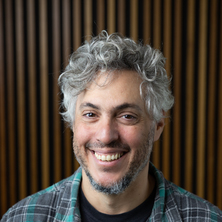
Dr Ummul Sultana is a Industry Research Fellow in the Hydrometallurgy Research Group within the School of Chemical Engineering, at the University of Queensland. She obtained a Bachelor’s degree in Materials and Metallurgical Engineering, followed by Master’s degree in Hydrometallurgy and PhD in Materials Engineering from the Queensland University of Technology in Australia. After finishing her PhD, she started her research career as a Postdoctoral Researcher at UQ in the School of Chemical Engineering in 2019. She has gained experiences in the field of hydrogen energy, nanomaterials-based electrocatalysts development, thermodynamic phase equilibria & database development as well as advanced materials’ characterization techniques. She was invited to the Ohio State University in United States of America to participate in a short course on advanced materials’ characterization techniques. She has been largely contributing to the research area of treating industrial tailings & critical metal recovery techniques. She has also been engaged in teaching, staff & laboratory management as well as managing the Occupational Health and Safety (OHS) guidelines in UQ laboratories. Due to her research excellence, she has received the Outstanding Doctoral Thesis Award for the class of 2019 and High Achiever Award in 2018 from QUT. She has several publications in well reputed journals and two of her journal articles have been featured in the front covers of “Advanced Functional Materials” (IF 20) and “ChemElectroCehm” (IF 5). In 2021, she was awarded the Research Fellowship Grant from the UQ Research and Innovation Centre. Ummul is currently focusing on Extracting Queensland’s Rare Earth Elements Sustainably project supported by the Queensland Department of Natural Resources, Mines and Energy. She is also an Associate Fellow of Higher Education Academy (AFHEA), member of Royal Society of Chemistry and Engineers Australia professional societies.
Affiliate of Dow Centre for Sustainable Engineering Innovation
Dow Centre for Sustainable Engineering Innovation
Faculty of Engineering, Architecture and Information Technology
Postdoctoral Research Fellow
School of Chemical Engineering
Faculty of Engineering, Architecture and Information Technology
Availability:
Available for supervision
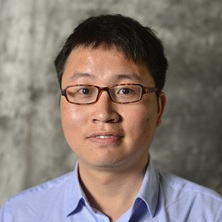
Dr Kaige Sun is a Postdoctoral Research Fellow at ARC Centre of Excellence for Green Electrochemical Transformation of Carbon Dioxide (GETCO2) and UQ Dow Centre for Sustainable Engineering Innovation at The University of Queensland. He received his PhD degree in Chemical Engineering from The University of Queensland, where his research focused on electrochemical ion separation and selectivity. His current main research interests centre on green electrochemical techniques for energy and environmental applications, such as electrochemical CO2 capture and conversion, electrochemical deionization, and the development of advanced biomass-derived electroactive materials. To date, he has published over 27 peer-reviewed publications in Nature indexed/top-tier journals, including Advanced Functional Materials, Advanced Energy Materials, Advanced Materials, Environmental Science & Technology, Chemical Reviews, etc.
Topics related to current research interests:
1. Energy-efficient electrochemical CO2 capture and direct air capture
2. Tailoring microenvironment for electrocatalytic CO2 reduction to valuable chemicals
3. Electrochemical ion separation and recovery
4. High-value utilization of biomass to electroactive materials
Faculty of Engineering, Architecture and Information Technology
Affiliate of Dow Centre for Sustainable Engineering Innovation
Dow Centre for Sustainable Engineering Innovation
Faculty of Engineering, Architecture and Information Technology
Availability:
Available for supervision
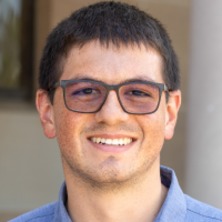
Dr Tebyetekerwa is an ARC DECRA Fellow and Sub-Group Leader at UQ Dow Centre for Sustainable Engineering Innovation and ARC Centre of Excellence for Green Electrochemical Transformation of Carbon Dioxide(GETCO2), working with Professor Xiwang Zhang. His current main research interests at UQ School of Chemical Engineering rotate around water and electrochemical systems such as electrochemical CO2 capture and conversion to valuable chemicals and electrochemical production of hydrogen peroxide and/or hydrogen. He is deeply interested in designing scalable and industry-relevant chemical cells and generators. He completed his PhD from The Australian National University (ANU), where his research focused on optical spectroscopy and advanced characterization of semiconducting materials and their devices (Supervised by Prof Dan Macdonald, A/Prof. Dr. Hieu T. Nguyen and Prof. Yuerui (Larry) Lu). Dr Tebyetekerwa also holds a Master's in Materials Processing Engineering from Donghua University, Shanghai, where his research focused on fibrous materials for flexible energy storage (Supervised by Academician Meifang Zhu and A/Prof Shengyuan Yang). Mike supervises projects for undergraduate, master's, and PhD students on topics related to the following research interests;
Scalable electrochemical production of hydrogen peroxide and/or hydrogen from water*
Scalable electrochemical CO2 capture and reduction to valuable chemicals*
Reconstructed graphite for sodium-ion batteries
High surface area electrospun fibre materials for various applications
Aggregation-induced emission (AIE) molecules and their engineered applications
Light-matter understanding of 2D materials and other semiconductor materials for optoelectronics*
*Currently funded and active ongoing projects
Featured works
2022: His work on 2D materials (https://www.cell.com/cell-reports-physical-science/fulltext/S2666-3864(21)00213-7) was selected in the Cell Reports Physical Science “Influential papers-2021” and "Editor's Choice-2021" collection.
2021: His works (https://pubs.rsc.org/en/content/articlehtml/2017/sc/c8ee02607f) and other co-authored works (https://www.science.org/doi/full/10.1126/science.abb8687), ( https://doi.org/10.1016/j.carbon.2017.11.012 ) are listed as "Highly Cited Papers" and "Hot Papers" in Web of Science.
2020:His work on nanofibers has continuously been listed as one of the highly cited articles for Advanced Fiber Materials (https://doi.org/10.1007/s42765-020-00049-5), since it was published to date.
2019:His work on nanofibers ( https://doi.org/10.1021/acsaem.7b00057 ) was listed as the most-read article for ACS Applied Energy Materials in 2018.
In addition to his research, Mike lectures Sustainable Energy Technologies and Supply Systems (ENGY7000) course as part of the Master of Sustainable Energy (MSE) program.
Faculty of Engineering, Architecture and Information Technology
Professor
School of Mechanical and Mining Engineering
Faculty of Engineering, Architecture and Information Technology
Availability:
Available for supervision
Media expert
Prof. Anand Veeraragavan's research interests are in supersonic combustion of hydrocarbons, hypersonic aerothermodynamics, advanced optical diagnostics for hypersonic flows and microcombustion based portable power. He is the Co-Director for UQ's Centre for Hypersonics. Since 2021, he is an Associate Editor for the AIAA Journal of Spacecraft and Rockets, which is a Quartile 1 Journal in Aerospace Engineering (Scimago).
Prof. Anand Veeraragavan joined the School of Mechanical and Mining Engineering as a mechanical engineering lecturer in 2012. He was an Mid-Career Advance Queensland Research Fellow (2017-2020) awarded for conducting research in the project entitled
Supersonic Combustion of Hydrocarbon Fuels for High-Mach-Number Axisymmetric Scramjets
Anand graduated with a B.Tech in aerospace engineering from the Indian Institute of Technology Madras (IIT-Madras) in 2002. He obtained his MS (2006) and PhD (2009) degrees in aerospace engineering from the University of Maryland. His Doctoral research, which focused on understanding flame stabilization in microscale combustors, won the best thesis award in the Department of Aerospace Engineering at the University of Maryland.
After his PhD, he took up a research appointment as a postdoctoral research associate in the Device Research Lab at MIT where he worked on thermophotovoltaics and nanofluid based volumetric solar absorbers. He next joined GE Energy as a combustion technologist in the US. At GE, he worked primarily on designing the next generation, land based, heavy duty, gas turbine engine combustors focusing on cost, operability, reliability and emissions and also completed his lean Six Sigma Greenbelt certification at GE.
He is currently undertaking world-leading research in the field of hypersonics and supersonic combustion sponsored by Australian DST, U.S. Air Force Office of Scientific Research (AFOSR) and U.S. Asian Office of Aerospace Research and Development (AOARD). This includes leading the Australian effort in prestigious projects such as ground testing and simulations in support of the Boundary Layer Transition/Turbulence (BOLT II) flight test sponsored by the AFOSR.
His research interests include:
Supersonic combustion of hydrocarbon fuels
Hypersonic aerothermodynamics
Optical diagnostics: PLIF for supersonic combustion, FLDI for hypersonic aerothermodynamics, high-speed schlieren
Micro-combustion driven power systems
Solar thermal and solar photovoltaic technology development
Affiliate of Centre for Environmental Responsibility in Mining
Centre for Environmental Responsibility in Mining
Faculty of Engineering, Architecture and Information Technology
Affiliate of Centre for Social Responsibility in Mining
Centre for Social Responsibility in Mining
Faculty of Engineering, Architecture and Information Technology
Senior Lecturer
School of Civil Engineering
Faculty of Engineering, Architecture and Information Technology
Availability:
Available for supervision
Media expert
Denys Villa Gomez holds a joint appointment at the University of Queensland as Senior Lecturer at the School of Civil Engineering and as a Research Fellow at the Australian Institute for Bioengineering and Nanotechnology. She obtained her PhD at the world-leading institute’s IHE-Delft/Wageningen University, The Netherlands in 2013. She applies advanced methodologies such as omics approaches and micro spectral tools to develop biotechnology processes that reduce carbon emissions and recover resources from mine waste and wastewater. She is the leader of the key area “Synbio Mining” within the recently created UQ Biosustainability Hub and chief investigator at the ARC Training Centre in Critical Resources for the Future. She has published over 40 peer-reviewed journal and conference papers cited more than 500 times, and has served as editor and reviewer for leading journals and advisory roles in industry and scientific committees (e.g. International Mine Water Association).
Teaching and Learning:
Course coordinator and lecturer for Introduction to Environmental Engineering (CIVL2135)
Course coordinator and lecturer for Environmental Phenomena (ENVE3160)
Lecturer in Integrated Design for Environmental Management (CIVL4516)
Lecturer in Sustainable Built Environment (CIVL4180)
Faculty of Engineering, Architecture and Information Technology
Availability:
Available for supervision
Yuan Xu completed a Bachelor of Engineering degree (Chemical and Material) from the University of Queensland in 2015. After that, he started his PhD in the research field of colloidal science, rheology and chemical engineering, supervised by Professor Jason Stokes. He has continued in UQ as postdoctoral research fellow since 2019, at which, he has contributed to multidisciplinary projects including viscoelastic lubrication of soft matter systems, and programming structural anisotropy in nanocellulose hydrogels. His research capability focuses on the area of rheology, colloidal science/ physical chemistry, material/physical science, soft matters/complex fluids, and tribology/lubrication.
Faculty of Engineering, Architecture and Information Technology
Affiliate of ARC Research Hub to Advance Timber for Australia's Future Built Environment (ARC Advanc
ARC Research Hub to Advance Timber for Australia's Future Built Environment
Faculty of Engineering, Architecture and Information Technology
Availability:
Available for supervision
Media expert
I have a multidisciplinary background in chemical and civil engineering, chemistry and materials science. Currently, I am the UQ leader of the National Centre for Timber Durability and Design Life, based at USC. I apply my expertise to understand the effects of fungal decay and moisture intrusion in timber connections, as well as the improvement of the fire performance of timber. I supervise 6 PhD students.
Affiliate of Dow Centre for Sustainable Engineering Innovation
Dow Centre for Sustainable Engineering Innovation
Faculty of Engineering, Architecture and Information Technology
Honorary Fellow
School of Chemical Engineering
Faculty of Engineering, Architecture and Information Technology
Availability:
Not available for supervision
Dr Xiangkang Zeng is currently an Honorary Research Fellow at the UQ Dow Centre, School of Chemical Engineering, The University of Queensland. He received his PhD in Chemical Engineering from Monash University in 2017. He subsequently undertook postdoctoral research at the Hong Kong University of Science and Technology and Monash University before joining UQ as an ARC DECRA Research Fellow (2022-2025) and UQ Amplify Lecturer (2025-2026).
Dr Zeng’s research focuses on functional materials and redox catalysis for energy and environmental applications, particularly electrocatalysis, photocatalysis, peroxide synthesis, CO₂ conversion, and energy storage. He has published more than 60 peer-reviewed papers in leading journals, including Advanced Materials, Advanced Energy Materials, Angewandte Chemie, ACS Catalysis, Applied Catalysis B, Water Research, and Green Chemistry. He also has extensive teaching experience in bioprocess engineering, process principles, thermodynamics, and research thesis supervision.