Affiliate of Centre of Research Excellence on Achieving the Tobacco Endgame
Centre of Research Excellence on Achieving the Tobacco Endgame
Faculty of Health, Medicine and Behavioural Sciences
Affiliate of National Centre for Youth Substance Use Research
National Centre for Youth Substance Use Research
Faculty of Health, Medicine and Behavioural Sciences
NHMRC Emerging Leadership Fellow
School of Psychology
Faculty of Health, Medicine and Behavioural Sciences
Availability:
Available for supervision
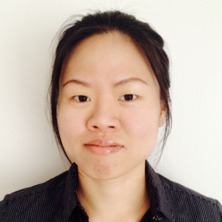
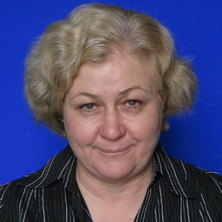
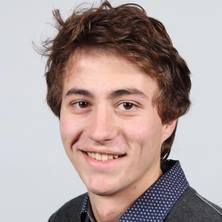
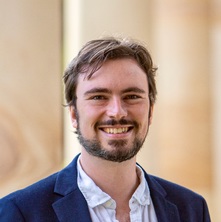
Carmen is an NHMRC Emerging Leadership Fellow at the National Centre for Youth Substance Use Research. Her research seeks to understand why young people start using substances and develop strategies that advance public health.
Her work spans three key areas:
(1)Youth vaping and social media, where she examines trends and the influence of social media on youth vaping; (2) Cannabis and regulation, investigating industry marketing practices and compliance with regulatory guidelines; (3)International comparisons and equity - developing culturally appropriate prevention and harm reduction strategies to address substance use in diverse contexts;
Through her research, Carmen aims to generate evidence that informs policy, guides prevention and harm reduction efforts, and support healthier futures for young people. She has published over 100 peer-reviewed papers in addiction and mental health (Google Scholar: >10K citations, h-index = 43, 31% output in top 10% citation percentile).
Carmen holds qualifications in biostatistics, public health and epidemiology. She has experiences in teaching and mentoring students from diverse demographic and cultural background, and welcomes self-driven, curious students with interest in public health, psychology, epidemiology, or statistics to join her team.
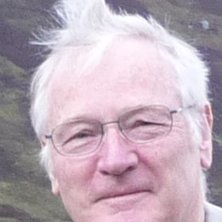
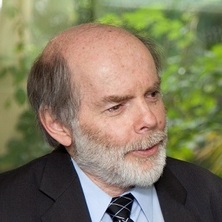
Born in Sydney Australia, 1941. Educated at North Sydney High, then Sydney University (B.A. in Philosophy, first class honours). Commonwealth Scholarship to Oxford University UK,leading to D.Phil. 1965 with thesis on "Rules of truth for modal logic". From 1965 to 1982 worked at the American University of Beirut, Lebanon (Assistant, Associate, Full Professor in the Philosophy Department), then from 1980 to 2000 as Programme Specialist in Unesco (Philosophy Division). From 2001 to 2006 Professor at King's College London (Computer Science Department), then from 2007 to 2019 Guest Professor in the Department of Philosophy, Logic and Scientific Method, London School of Economics (LSE). Currently living in Paris, and since September 2022 Honorary Associate Professor in the School of Historical and Philosophical Inquiry, University of Queensland.
An intellectual autobiography entitled "A tale of five cities" was published in S.O. Hansson ed., David Makinson on Classical Methods for Non-Classical Problems (Series: Outstanding Contributions to Logic) Springer 2014, pp 19-32, with recollections also in an interview in The Reasoner 2014, also available at personal website mentioned below..
Affiliate of Centre for Motor Neuron Disease Research
Centre for Motor Neuron Disease Research
Faculty of Health, Medicine and Behavioural Sciences
Professor
Frazer Institute
Faculty of Health, Medicine and Behavioural Sciences
Availability:
Available for supervision
Neurologist
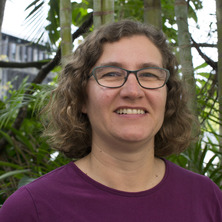
Dr McCombe graduated in Medicine from UQ and completed a Science degree for medical students. She then trained as a neurologist in Sydney, at Prince Henry and Prince of Wales Hospitals. She obtained a PhD from the University of Sydney. She obtained experience in Neurophysiology in Cleveland and then returned to UQ as a post-doctoral fellow. She worked for some years as a research fellow in Neuroimmunology and was an NHMRc SRF. Later she resumed clinical practice as a neurologist, and contimued her research as an NHMRC Practitioner Fellow. She is currentlyProfessor and Head of the Royal Brisbane Clinical school in the School of Medicine and Co-head of the Brain and Mental Health Theme at the UQ Centre for Clinical Research.
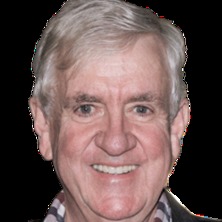
Professor Geoffrey McLachlan's research interests are in: data mining, statistical analysis of microarray, gene expression data, finite mixture models and medical statistics.
Professor McLachlan received his PhD from the University of Queensland in 1974 and his DSc from there in 1994. His current research projects in statistics are in the related fields of classification, cluster and discriminant analyses, image analysis, machine learning, neural networks, and pattern recognition, and in the field of statistical inference. The focus in the latter field has been on the theory and applications of finite mixture models and on estimation via the EM algorithm.
A common theme of his research in these fields has been statistical computation, with particular attention being given to the computational aspects of the statistical methodology. This computational theme extends to Professor McLachlan's more recent interests in the field of data mining.
He is also actively involved in research in the field of medical statistics and, more recently, in the statistical analysis of microarray gene expression data.
Affiliate Professor of School of Chemistry and Molecular Biosciences
School of Chemistry and Molecular Biosciences
Faculty of Science
Affiliate of ARC COE for Innovations in Peptide and Protein Science
ARC COE for Innovations in Peptide and Protein Science
Institute for Molecular Bioscience
Affiliate Associate Professor
Institute for Molecular Bioscience
Professorial Research Fellow
Australian Institute for Bioengineering and Nanotechnology
Availability:
Available for supervision
Media expert
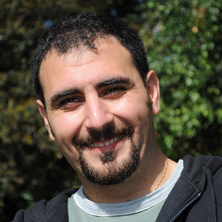
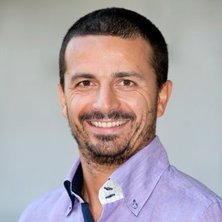
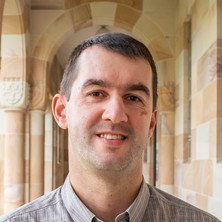
Professor Mobli is a structural biologist and a group leader at the University of Queensland's Australian Institute for Bioengineering and Nanotechnology (AIBN). He is well known internationally for his contributions to the basic theory of multidimensional nuclear magnetic resonance and its applications to resolving the molecular structure of peptides and proteins, as well as studying their physiochemical properties and function. Mehdi's contributions to the field has been recognised by being appointed an Executive Editor of the AMPERE society's journal "Magnetic Resonance", and to the advisory board of the international Biological Magnetic Resonance Data Bank (BMRB) as well as serving on the board of directors of the Australia and New Zealand Society for Magnetic Resonance (ANZMAG). He is a former ARC Future Fellow and recipient of the ASBMB MERCK medal, the Australia Peptide Society's Tregear Award, the ANZMAG Sir Paul Callaghan medal and the Lorne Proteins Young Investigator Award (now Robin Anders Award).
Prof. Mobli's research group focuses on characterising the structure and function of receptors involved in neuronal signalling, with a particular focus on developing new approaches for the discovery and characterisation of modulators of these receptors through innovations in bioinformatics, biochemistry and and biophysics. This work has led to publication of more than 100 research articles attracting over 6,000 citations.
Faculty of Engineering, Architecture and Information Technology
Availability:
Available for supervision
Dr Evgenii Nekhoroshev is a Postdoctoral Research Fellow at the School of Chemical Engineering and a member of the Pyrometallurgy Innovation Centre led by Prof. Evgueni Jak.
He graduated with a Master in Chemistry (chemical thermodynamics) from Lomonosov's Moscow State University, Deparment of Chemistry in 2012. His Master's Thesis was "Thermodynamic optimization of the NaOH-Al(OH)3-Na2SiO3-H2O system for applications in Bayer's process of bauxite treatment" as part of a bigger project initiated in collaboration with Rusal company aimed at utilisation/valorisation of red mud residues accumulated during the production of aluminium oxide from bauxite ores.
In 2019, he completed a PhD in Metallurgical Engineering at Ecole Polytechnique of Montreal, Canada within The Centre For Research in Computational Thermodynamics (CRCT), where he acquired expertise in FactSage software, multicomponent database development, and was included in the list of official collaborators of FactSage. His PhD thesis was "Thermodynamic optimization of the Na2O-K2O-Al2O3-CaO-MgO-B2O3-SiO2 system" sponsored by Glass Consortium including Corning and SCHOTT glass producers. The purpose of the database he developed was to assist the industry in designing new glasses with special properties: chemically hardened glasses (smartphones), technical glasses with high thermal and chemical resilience (boron-containing glasses), chemically inert glasses, etc.
Short after receiving his PhD, Dr Evgenii Nekhoroshev accepted a position at The University of Queensland as part of the Pyrometallurgy Innovation Centre's team where he has an official title of Theme Leader in Thermodynamic Computations, combining his broad expertise in metallurgy, chemical engineering, applied mathematics, and programming.
Dr Evgenii Nekhoroshev has always been passionate about formalisation and automation of big research tasks. He started working on developing an automated solver for thermodynamic optimisation during his PhD thesis which was improved and finalised using the ideas of Prof. Evgueni Jak about real-time derivative matrix optimization and sensitivity analysis applicable to large multicomponent systems. His contribution to the Centre allowed to make transition to a continuous optimization approach when experimental and modelling streams of work in the Centre are efficiently combined together. It allows to include the most recent experimental datasets into a self-consistent database update with minimal time delays.
Centre Director of Centre for Efficiency and Productivity Analysis
Centre for Efficiency and Productivity Analysis
Faculty of Business, Economics and Law
Affiliate of Centre for Efficiency and Productivity Analysis
Centre for Efficiency and Productivity Analysis
Faculty of Business, Economics and Law
Professor in Econometrics
School of Economics
Faculty of Business, Economics and Law
Availability:
Available for supervision
Media expert
Chris O’Donnell obtained his PhD from the University of Sydney. He is an Associate Editor of the Journal of Productivity Analysis, an Associate Editor of Empirical Economics, and a Distinguished Fellow of the Australian Agricultural and Resource Economics Society. His current research is focused on economic and statistical methods for measuring and explaining productivity and efficiency change. He has authored or co-authored three books on this topic. His work has been published in leading economics and econometrics journals, including the American Journal of Agricultural Economics, the Journal of Econometrics, the Journal of Applied Econometrics, Econometric Reviews and the European Journal of Operational Research. He has provided in-house training and/or been a consultant for organisations including the World Bank, the Asian Productivity Organisation, the International Rice Research Institute, the Australian Energy Regulator, the New South Wales Independent Pricing and Regulatory Tribunal, and the Australian Independent Hospital Pricing Authority.
I studied Technical Mathematics at the Vienna University of Technology. I also earned a Master's degree in Law and I finished the first ("non-clinical") part of Medical Studies at the University of Vienna. I earned my PhD in Applied Mathematics at the University of Vienna in 2007. My PhD advisor was Christian Schmeiser, my co-advisor was Peter Markowich. I spent several months at the University of Buenos Aires working with C. Lederman and at the ENS-Paris rue d'Ulm in the group of B. Perthame.
Before coming to UQ, I held post-doc positions at the Wolfgang Pauli Insitute (Vienna), University of Vienna and the Austrian Academy of Sciences (RICAM). In 2013 I won an Erwin Schrödinger Fellowship of the Austrian Science Fund (FWF). I was a post-doc researcher in the group of Alex Mogilner first at UC Davis, then at the Courant Institute of Math. Sciences (New York University).
I moved to UQ in Dec. 2016. More recently, in 2024, I spent 4 months at the department of Mathemetics of the U. of Heidelberg as a visiting scientist.
Postdoctoral Research Fellow in Crop Quantitative Genetics
Queensland Alliance for Agriculture and Food Innovation
Availability:
Available for supervision
Dr. Victor Papin is a postdoctoral researcher at The University of Queensland working in the Hickey Lab. His research focuses on improving crop breeding efficiency through advanced genomic and quantitative genetics approaches. He develops and applies haplotype stacking methodolgy to identify and combine favourable genomic regions that enhance yield, resilience, and sustainability in crops such as chickpea, lentil, and faba bean. Victor’s work bridges applied breeding and theoretical genetics: he designs simulation pipelines to optimise crossing schemes and evaluates genomic selection (GBLUP, FA models, GP) across heterogeneous environments. His ultimate goal is to build integrative, data-driven strategies that enable sustainable genetic improvement under variable climates.
Faculty of Health, Medicine and Behavioural Sciences
Availability:
Not available for supervision
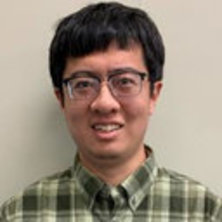
Yang is currently a Adjunct Research Fellow at Prince Charles Hospital Northside Clinical Unit, UQ Faculty of Health, Medicine and Behavioural Sciences. He has extensive experience in analysing large-scale national and international health surveys and hospitalisaiton datasets with complex statistical models. He is interested in answering a couple of research questions in the population level (e.g. the associations between modifiable behaviors and chronic diseases; the inequalities in chronic disease risk).
Emeritus Professor Phil Pollett has research interests in Markov process theory, and mathematical modelling in population biology, ecology, epidemiology, seismology, chemical kinetics and telecommunications.
He holds an honours degree in Applied Mathematics from the University of Adelaide and a PhD degree in Applied Probability from the University of Cambridge. He joined the then Department of Mathematics in 1987 as Senior Lecturer, having previously held positions at the University of Adelaide, Murdoch University and University College of Cardiff. He was promoted to Reader in 1993 and to Professor in 2004.
His research is recognized internationally for significant contributions to Markov process theory, and mathematical modelling. This research has been supported by 12 ARC Large/Discovery/Linkage grants. He was a Chief Investigator (2014-2021) within the ARC Centre of Excellence for Mathematical and Statistics Frontiers (ACEMS), and was a Chief Investigator (2002-2014) within the ARC Centre of Excellence for Mathematics and Statistics of Complex Systems (MASCOS). In 1993, he was awarded the Moran Medal by the Australian Academy of Science for distinguished research in Applied Probability.
Phil Pollett has served on the editorial boards of the Journal of the Australian Mathematical Society, Methodology and Computing in Applied Probability, Stochastic Models, and The Annals of Applied Probability, and has served on the organizing committees of several major international conferences. He devised the Probability Web, recognized as the main Web resource for probabilists throughout the world, and one of the first academic web sites. He has a strong record of innovation in undergraduate teaching, and has guided the development of many postgraduate students and postdoctoral fellows through supervision and collaboration.
I research extrasolar planets - planets around other stars - and focus on developing and applying new data science approaches for detecting and characterizing them. I have taken nearly every approach to exoplanet and stellar observation, including transits, radial velocities, direct imaging, and asteroseismology.
As an ARC DECRA Fellow I'm mainly working on exoplanet direct imaging with the James Webb Space Telescope, and especially how we can use differentiable & probabilistic programming to enhance data analysis to detect faint objects in noisy data. I also work on radio astronomy to study planets' magnetic interactions with their host stars, and using radiocarbon in tree rings as a tracer of long term solar activity.
I grew up in Sydney, New South Wales, and studied for my Honours and Masters at the University of Sydney. I studied abroad at the University of California, Berkeley, and in 2017 I completed my DPhil in Astrophysics at Balliol College, Oxford. From 2017-20 was a NASA Sagan Fellow at the NYU Center for Cosmology and Particle Physics and Center for Data Science. I'm now a Lecturer in Astrophysics and DECRA Fellow at the University of Queensland.
I'm into open source, open science, and climate action. I was a member of the winning Balliol College team in the 2016-17 series of University Challenge on BBC2, with the wonderful Joey Goldman, Freddy Potts, and Jacob Lloyd. Sometimes I write: see my latest piece in The Monthly, about the possible discovery of phosphine on Venus.
Affiliate of Research Centre in Creative Arts and Human Flourishing
Research Centre in Creative Arts and Human Flourishing
Faculty of Humanities, Arts and Social Sciences
Professor
School of Mathematics and Physics
Faculty of Science
Availability:
Available for supervision
Media expert
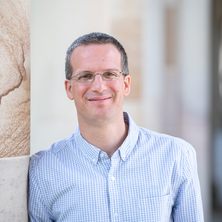
Artem Pulemotov holds a Bachelor's degree from Kyiv University and a PhD from Cornell University. His research is primarily in the field of geometric analysis. He had been a Dickson Instructor at the University of Chicago before joining the School of Mathematics and Physics at UQ as a lecturer in 2012.
Faculty of Health, Medicine and Behavioural Sciences
Availability:
Available for supervision
Media expert
I received my Bachelor's in Biology (2001) from Yarmouk University in Jordan, followed by postgraduate degrees from the University of Houston in Houston-Texas (2002-2007). My studies are integrative in nature, joining the best of both the Neuroscience world and Circadian Biology (the study of biological clocks). In the laboratory of Prof. Arnold Eskin, I investigated how processes as complex as learning and memory are modulated by biological clocks i.e. the circadian (about 24 hours) system, using Aplysia californica as the experimental model. After completing my Master's in Science in 2005, my research focused on the mechanism by which biological clocks modulate learning and memory. This work was performed in the laboratories of Prof. Gregg Cahill and Prof. Greg Roman, experts in chronobiology and behavioral neuroscience, respectively. Using Zebrafish as a model system, I investigated the role of melatonin, a night-time restricted hormonal signal, in modulating long-term memory consolidation. My findings, published in Science in 2007, shows that the circadian system via the cyclic night-time confined synthesis/release of melatonin “the hormone of darkness” functions as a modulator, shaping daily variations in the efficiency by which memories are processed. After receiving my Ph.D. in 2007, I joined as a postdoctoral fellow the laboratory of the pharmacologist and melatonin researcher Prof. Margarita Dubocovich. My postdoctoral work engaged in elucidating the role of melatonin in circadian physiology and pharmacology during development and ageing in rodents (Mus musculus) and non-human primates (Macaca mulatta) at the Feinberg School of Medicine (Northwestern University-Chicago) and the State University of New York (SUNY). From 2010-2015, I held a teaching/research position in the Dr. Senckenbergische Anatomy and the Dept. of Neurology at the Goethe University in Frankfurt-Germany. During this time, I was involved in teaching gross human anatomy while continuing my endeavor in understanding the mechanistics involved in shaping memory processes (acquisition, consolidation and retrieval) by the circadian system.