Affiliate of Australian Women's and Girls' Health Research Centre
Australian Women and Girls' Health Research Centre
Faculty of Health, Medicine and Behavioural Sciences
Senior Lecturer in Biostatistics
School of Public Health
Faculty of Health, Medicine and Behavioural Sciences
Availability:
Available for supervision
Media expert
Dr Michael Waller: is a biostatistician working on the Australian Longitudinal Study of Womens Health (ALSWH). He has previous experience working on cancer screening, and military health studies. His current research focus is using linked data sources to assess dementia rates and risk factors.
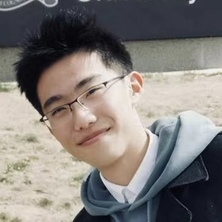
Yibo Wang is a Postdoctoral Research Fellow at the URBANiQ node within the Institute for Social Science Research (ISSR) at UQ. His current research focuses on urban mobility and travel behaviour in relation to public health, with particular emphasis on carbon emissions, socio-demographic patterns, travel modes, heat exposure, and accessibility to health services and infrastructure.
Yibo has a strong interdisciplinary background spanning geographic information systems and mechatronic engineering. He obtained a BEng from BUAA, where he was involved in the design and development of LiDAR systems. He subsequently completed a MEng at ANU, further developing technical expertise in machine learning and computer vision. More recently, he was awarded a PhD from UQ with research focusing on the statistical characteristics of carbon emissions generated by urban travel activities and how these emissions are jointly shaped by household characteristics and the built environment.
Yibo’s combined experience in science and engineering has equipped him with expertise in the design, fabrication, and validation of advanced remote sensing systems, as well as in the analysis of large-scale datasets to inform applied research and policy. At ISSR, he continues to integrate and extend these skills, contributing to improved everyday mobility and public health outcomes in urban contexts.
Postdoctoral Research Fellow, Cancer Immunotherapy
Australian Institute for Bioengineering and Nanotechnology
Availability:
Available for supervision
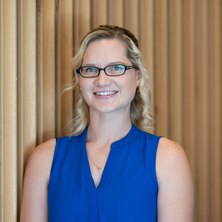
Dr Yanan Wang is a Postdoc at the Australian Institute for Bioengineering and Nanotechnology (AIBN), The University of Queensland. She obtained her PhD degree from Ocean University of China and joined AIBN in early 2026.
Dr Wang’s research focuses on the development of stimulus-responsive and targeted drug delivery systems for the treatment of acute organ injuries and inflammatory diseases. In addition, her current work also aims to develop engineering multifunctional nanomedicine for cancer immunotherapy, with particular interests in innate immune modulation, dendritic cell-mediated antitumour immunity, and the tumour immunosuppressive microenvironment reprogramming for enhancing cancer treatment.
Dr Wang has published 23 papers in international top refereed journals such as ACS Nano, Advanced science, Biomaterials, Chemical Engineering Journal, and so on.
Faculty of Health, Medicine and Behavioural Sciences
Director, UQ Poche Centre
Faculty of Health, Medicine and Behavioural Sciences
Affiliate of ARC COE for Indigenous Futures
ARC COE for Indigenous Futures
Faculty of Business, Economics and Law
Availability:
Available for supervision
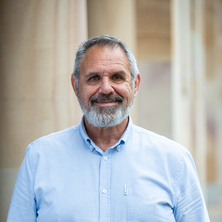
Professor James Ward is a Pitjantjatjara and Narungga man, and a national leader in Aboriginal and Torres Strait Islander research. He is currently the Director of the Poche Centre for Indigenous Health at the University of Queensland. As such he leads a research program focused on urban Aboriginal and Torres Strait Islander health and an infectious diseases research program and associated issues. Having held various roles in Aboriginal public health policy for both government and non-government organisations, in 2007 he was appointed as the Inaugural Program Head of the Aboriginal Program at the Kirby Institute, University of New South Wales. In 2012 he moved to Alice Springs to become Deputy Director of the Baker Institutes' Aboriginal Health Program, after which he joined the South Australian Health and Medical Research Institute. James has been awarded funding applications totalling $23M since 2013; including $7.14M as CIA on NHMRC funded grants and has authored 160 publications. He has led national research projects on health services research http://cre-ash.org.au/participating-sites/clinical-hubs/; in health promotion www.youngdeadlyfree.org.au; and methamphetamines https://wecandothis.com.au/ to name a few.
His work has influenced policy and practice significantly contributing to national guidelines, policy and practice. During 2020 he has contributed to the national COVID—19 response nationally through membership of the Communicable Diseases Network of Australia and the National Aboriginal and Torres Strait Islander COVID-19 Taskforce.
Faculty of Health, Medicine and Behavioural Sciences
Availability:
Available for supervision
Media expert
Dr Arosha Weerakoon is a dentist, researcher and educator whose work focuses on restorative dentistry, dental materials, public oral health and the responsible use of artificial intelligence (AI) in healthcare and higher education. She connects clinical experience with research and science communication to support informed decisions and better care.
A Senior Lecturer at The University of Queensland’s School of Dentistry and owner of Tewantin Family Dental, Arosha brings more than two decades of clinical experience to her work. Her PhD examined how ageing affects dentine, the tissue beneath tooth enamel, and the implications for bonding restorative materials to teeth. Her research interests include dental adhesion, the longevity of restorations and equitable access to oral healthcare.
An award-winning educator, Arosha develops teaching and assessment approaches that integrate AI literacy while supporting students’ critical thinking and professional judgement. Her work in AI ethics and governance explores how these technologies can be used responsibly, with attention to patient safety, accountability and equity.
Through contributions to The Conversation and professional publications, she makes complex oral health research accessible to broad audiences. She welcomes research collaborations, student supervision enquiries and opportunities for public and professional education across dental materials, responsible AI and public oral health.
Affiliate of Australian Women's and Girls' Health Research Centre
Australian Women and Girls' Health Research Centre
Faculty of Health, Medicine and Behavioural Sciences
Research Program Manager
School of Public Health
Faculty of Health, Medicine and Behavioural Sciences
Availability:
Available for supervision
Maiden name: Ellen Maree Leslie
Dr Ellen Wessel is a Research Fellow in the School of Public Health, with backgrounds in both public health and criminology. Her research interests include women's health, alcohol and other drug use, and policing.
Faculty of Health, Medicine and Behavioural Sciences
Availability:
Available for supervision
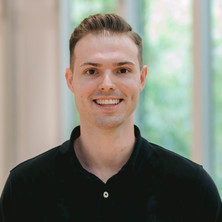
James Woodforde is a lecturer in the School of Human Movement and Nutrition Sciences at The University of Queensland. His research centres on physical activity in children and young people, with a specific focus on the school setting. James’s PhD research examined physical activity in the before-school segment, drawing on a variety of data sources and engaging with school stakeholders to develop a comprehensive understanding of physical activity patterns and influences during this time of day.
Charlotte Young is a research fellow at the Institute for Social Science Research at The University of Queensland. Charlotte is a qualitative researcher with interdisciplinary interests spanning sociology, public health, health promotion, and migration studies. Her research focuses on the systemic drivers of migrant health inequities and how they can be redressed. Charlotte is also interested in the ways migrants adapt and respond to systemic and structural drivers of inequity. Recently, she has been exploring how the COVID-19 pandemic has impacted migrant and refugee background tertiary students and how young culturally and linguistically diverse social media influencers have been promoting COVID-safe behaviours online. Charlotte also explores immigrant organisations as critical settings to influence health and wellbeing. She is passionate about producing impactful research to affect positive change and tackling migrant health problems in solidarity with the communities they affect. Charlotte also has experience conducting evaluation research for large-scale health interventions.