Affiliate of Centre for Advanced Materials Processing and Manufacturing (AMPAM)
Centre for Advanced Materials Processing and Manufacturing
Faculty of Engineering, Architecture and Information Technology
Lecturer
School of Mechanical and Mining Engineering
Faculty of Engineering, Architecture and Information Technology
Availability:
Available for supervision
Media expert
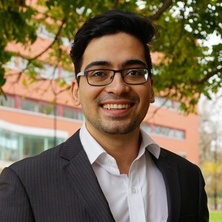
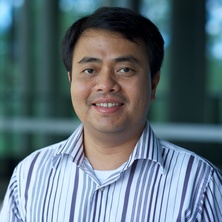
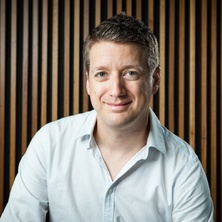
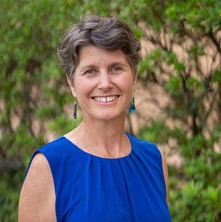
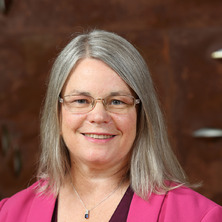
Dr Aditya Khanna is a Lecturer (Applied Mechanics) at The University of Queensland (commenced 2023). Prior to joining UQ, Aditya worked as an engineering consultant (dynamics and vibration) at Vipac Engineers & Scientists Ltd and held an adjunct lecturer appointment at The University of Adelaide. Aditya's research and industry consulting background is in the areas of: stress analysis, fatigue and fracture assessment, structural dynamics, vibration control, and non-destructive testing,
Director of HDR Students of School of Civil Engineering
School of Civil Engineering
Faculty of Engineering, Architecture and Information Technology
Associate Professor
School of Civil Engineering
Faculty of Engineering, Architecture and Information Technology
Availability:
Available for supervision
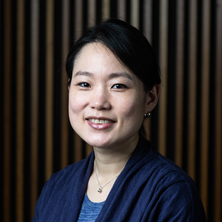
Jiwon Kim is an Associate Professor in Transport Engineering and the Director of Higher Degree by Research in the School of Civil Engineering at the University of Queensland. She was a DECRA Fellow (2019-2022) sponsored by the Australian Research Council. She joined UQ in 2014 after completing her PhD research at Northwestern University. Prior to joining Northwestern, she worked at Samsung C&T (Engineering & Construction Group). She received Bachelor’s and Master’s degrees in civil engineering from Korea University.
Her research interests broadly encompass the application of Artificial Intelligence and Machine Learning (AI/ML) to enhance prediction, automation, and insight generation in transportation and urban mobility. She is passionate about developing intelligent autonomous systems that facilitate real-time traffic management and control, mobility service optimization, and traveller support. Her current research explores the potential of deep learning, reinforcement learning, and other cutting-edge AI/ML approaches to achieve these objectives.
Faculty of Engineering, Architecture and Information Technology
Associate Professor
School of Electrical Engineering and Computer Science
Faculty of Engineering, Architecture and Information Technology
Availability:
Available for supervision
Prospective Students
Please visit the link (https://sites.google.com/view/dsteam/pros-students).
Short Biography
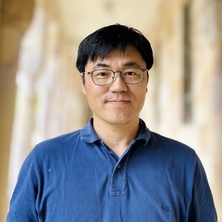
Dr. Dan Dongseong Kim is Deputy Director of UQ Cybersecurity and an Associate Professor (Reader in the commonwealth system) (continuing appointment) in Cyber Security at The University of Queensland (UQ), Brisbane, Australia. Before UQ, he was a faculty member (permanent academic staff; Senior Lecturer 2015-2018, Lecturer 2011-2014) in Cyber Security in the Department of Computer Science and Software Engineering at The University of Canterbury (UC), Christchurch, New Zealand from 2011 to 2018. From 2008 to 2011, he was a postdoc at Duke University, Durham, North Carolina in the US. He was a visiting scholar at the University of Maryland, College Park, Maryland in the US in 2007. His research interests are in Cyber Security and Dependability for various systems and networks. Please visit his research team webpage: https://sites.google.com/view/dsteam/
Publications
Google Scholars (8200+ citations, h-index: 47, i10-index: 135): https://scholar.google.com/citations?user=dIIYVQkAAAAJ&hl=en
Adversarial Machine Learning for Network Intrusion Detection Systems: A Comprehensive Survey, IEEE Communications Surveys & Tutorials [Impact factor in 2021: 33.84]
Toward Proactive, Adaptive Defense: A Survey on Moving Target Defense, IEEE Communications Surveys & Tutorials 2020 [Impact Factor 2018-19: 22.973]
A Survey on Threat Situation Awareness Systems: Framework, Techniques, and Insights, ACM Computing Surveys, 2022 [Impact Factor 2021-22: 10.282, ranked 4/137 in Computer Science Theory & Methods]
Evaluating the effectiveness of shuffle and redundancy MTD techniques in the cloud. Computers & Security (2021) [Impact factor: 4.438]
Threat-Specific Security Risk Evaluation in the Cloud. IEEE Trans. Cloud Comput. 9(2): 793-806 (2021) [Impact factor: 4.714]
Dynamic Security Metrics for Measuring the Effectiveness of Moving Target Defense Techniques, Computers & Security, Elsevier, 2018 [Impact factor: 4.438]
Assessing the Effectiveness of Moving Target Defenses using Security Models. IEEE Transactions on Dependable and Secure Computing (IEEE TDSC), 2016. [CORE Rank A, Impact factor: 6.404]
Recovery from software failures caused by Mandelbugs. IEEE Transactions on Reliability, 2016. [CORE Rank A, Impact factor: 2.79]
Scalable Security Models for Assessing Effectiveness of Moving Target Defenses, IEEE/IFIP DSN 2014 [CORE Rank A*]
Sensitivity Analysis of Server Virtualized System Availability. IEEE Transactions on Reliability, 61(4): 994-1006, 2012. [CORE Rank A, Impact factor: 2.293]
Scalable Optimal Countermeasure Selection using Implicit Enumeration on Attack Countermeasure Trees, IEEE/IFIP DSN 2012 [CORE Rank A*]
Research Sponsors (past and current)
NSF (US), IBM T.J. Watson (US), US Army Research Lab./DEVCOM-Pacific (US), NEC (Japan), Tait Comm. (NZ), MBIE (NZ), NPRP (Qatar), ADD (Republic of Korea), NRF (Republic of Korea), etc.
Ph.D. graduates (selected)
1. Ke He (Ph.D., University of Auckland, May 2024, co-supervisor): Adversarial Attacks, Defences and Visualisation for AI-based NIDS. (Lecturer at The University of Canterbury, New Zealanad).
2. Kok Onn Chee (Ph.D., University of Queensland, Jan 2024: Principal Advisor): Security Modelling and Analysis of Internet of Things against Evolving Attacks.
3. Minjune Kim (Ph.D., University of Queensland, 2023: Principal Advisor): Security and performance evaluation of software defined networking adopting moving target defenses (Senior Research Engineer at CSRIO's Data61, Australia).
4. Dilli P. Sharma (Ph.D., University of Canterbury, 2020; senior supervisor at UC, -> co-supervisor at UQ): Software-defined networking based moving target defenses. (Postdoc at U. of New Brunswick, Canada -> Postdoc at the University of Toronto, Canada -> Postdoc, York U., Canada).
5. Taehoon Eom (Ph.D., 2020, KAU, Korea, co-supervisor): Security modeling and analysis for performance enhancement in software defined network (Researcher at KAU-> Research Professor at KAU -> Artificial Intelligence Industry Cluster Agency (AICA), South Korea).
6. Hooman Alavizadeh (Ph.D., Massey University, NZ, 2019, co-supervisor): Effective Security Analysis for Combinations of MTD Techniques on Cloud Computing (a Postdoc, Massey University -> Postdoc at UNSW Canberra->Lecturer at U of Sydney-> Lecturer (continuing academic staff), La Trobe University, Australia).
7. Kieran Morris (Ph.D., ECE, University of Canterbury, NZ, 2019, co-supervisor): Reliability and resilience evaluation of distribution automation (first employment: Tait communications, NZ-> Noted Ltd -> Transpower, NZ).
8. Simon (Enochson) Yusuf (Ph.D., Computer Science, NZ, University of Canterbury, Dec 2018, senior supervisor): Dynamic Cyber Security Modeling and Analysis (Postdoc at UQ-> Lecturer (continuing academic staff) at Federal University Kashere (FUK), Gombe, Nigeria -> Lecturer at Whitecliffe College, New Zealand. )
9. Mengmeng Ge (Ph.D., Computer Science, University of Canterbury, 2018; senior supervisor): Graphical security modeling and assessment for the Internet of things (Senior Lecturer, Monash University, Australia).
10. Iman Elmir (Ph.D., Hassan 1st Univ. Morocco, 2017, co-supervisor): Security Modeling and Analysis of Intrusion Tolerant Data Centers
11. Jin B. Hong (Ph.D., Computer Science, University of Canterbury, April 2015, senior supervisor): Scalable and Adaptable Security Modeling and Analysis. (First employment: Postdoc, UC, NZ -> Lecturer, then Senior Lecturer in Cybersecurity at U of Western Australia)
12. Nguyen Tuan Anh (Ph.D., August 2015, KAU, co-supervisor): Availability Modeling and Analysis of Data Center Systems using Stochastic Reward Nets. (Postdoc, Kunkuk University, South Korea -> an Academic Research Professor, Kunkuk University, South Korea -> Viettel Group, Vietnam -> Director of Robot Software and Control, VinDynamics)
Cyber Security Research Experience
Dan Dongseong Kim has been working on various topics in computer and network security since 2001. Dan started his research with crypto algorithms design, implementation, and testing for hardware devices such as FPGA/ASICs. Then, he worked on machine learning/data mining approaches for (host-based, network-based) intrusion detection from 2001 onward. His master's thesis was a machine learning (ML)-based network intrusion detection. He worked on various computer and network security topics such as an intelligent SIEM (it was called enterprise security management at that time), authentication protocols for RFID systems, security and privacy for Wireless Sensor Networks (WSNs), etc. His Ph.D. topics were security and privacy for WSNs. He spent one year as a visiting scholar at The University of Maryland (UMD), College Park, Maryland in the US in 2007 under the supervision of Prof. Virgil D. Gligor.
He started working on dependability more seriously in addition to Cyber Security in 2008 when he started his postdoc research at Duke University under the supervision of the Hudson Chaired Professor Kishor S. Trivedi. He worked on research projects funded by the US NSF, NEC Japan, and IBM T.J. Watson in the area of dependability (availability/performance) of data centers/cloud computing and cybersecurity modeling & analysis.
Since he became a faculty member at The University of Canterbury, New Zealand in August 2011, he explored deeply the area of graphical models for cybersecurity, metrics, measurement, and efficient evaluation methods for automated cybersecurity modeling and analysis and applied those key ideas to Cloud computing, Internet of Things (IoT), Moving Target Defenses (MTD), cyber deception, and automated cyber-attacks generation. He has focused more on practical adversarial machine learning attacks and robust defence in network intrusion detection systems for IoT and autonomous vehicles since he joined the UQ in 2019. He worked with diverse groups of people from various countries including Australia, Bangladesh, Brazil, China, Germany, Hong Kong, India, Iran, Italy, Japan, Saudi Arabia, South Korea, Mongolia, Morocco, Malaysia, Nepal, New Zealand, Nigeria, Pakistan, Qatar, USA, UK, and Vietnam.
Academic Genealogy
As for his academic genealogy, his Ph.D. thesis advisor was
Jong Sou Park (Pennsylvania State University, Ph.D., 1994); his one was
Paul Thomas Hulina (Pennsylvania State University, Ph.D., 1969); then it runs back through
Jon Gustav Bredeson (Northwestern University, Ph.D., 1967),
Seifollah Louis Hakimi (The University of Illinois at Urbana-Champaign (UIUC), Ph.D., 1959),
Mac Van Valkenburg (Stanford University, Ph.D., 1952),
Oswald Garrison Villard, Jr. (Stanford University, Ph.D., 1949),
Frederick Emmons Terman (widely credited as being the father of Silicon Valley) (Massachusetts Institute of Technology (MIT), 1924, Sc.D.) and
Vannevar Bush (Jointly Harvard/MIT, D. Eng., 1916) to
Arthur Edwin Kennelly (Professor at Harvard/MIT) (who was working in Thomas Edison's West Orange Laboratory from December 1887 to March 1894) and Dugald C. Jackson.
His postdoc advisor is Professor Kishor S. Trivedi (UIUC, Ph.D., 1974) who is a Life Fellow of IEEE and the Hudson Distinguished Professor of Electrical and Computer Engineering at Duke University, USA. Please visit the academic tree from Duglad C. Jackson up to the ancestors at the academic tree (link).
May 2002–ongoing: Senior Lecturer Land Resources Sciences, Principla Research Fellow, School of Land, Crop and Food Sciences; The University of Queensland, Australia
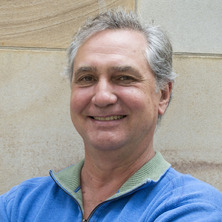
As lecturer of Land Resources Sciences at the University of Queensland, Dr Kirchhof has both led and collaborated on over half a dozen projects, and supervised numerous research staff and students. His research has focussed on:
Soil–Water relationships;
Conservation Agriculture and Irrigation scheduling
Soil erosion
Water and Nutrient Balances;
Spatial Variability of Soil Properties from Ped to Landscape Scales;
Dry-land Salinity Management;
Water Recycling
Computer Modelling of Water Flow with Special Reference to Variability and assessment of deep drainage
Knowledge Management;
2011-15 Course leader: Australia Awards in Africa Dryland Farming/Soil and Water conservation Short Course Awards, UniQuest; Australia and Africa, Dr Kirchhof led the design and delivery of the AusAID-funded Dryland Farming Short Course Award, contracted to UniQuest/UQ-ID through GRM International, which was delivered twice a year in 2011 and 2014.
Countries of work experience: Indonesia, Vietnam, Papua New Guinea, the Philippines, Burkino Faso, Côte d’Ivoire, Djibouti, Ethiopia, Nigeria, Tunisia, Uganda, Kenya, Tunisia, Australia.
Previous postions:
Oct 1997–May 2002: Senior Soil Scientist, Soil Conservation, NSW Agriculture; Australia
Mar 1996–Oct 1997: Soil Physicist, International Institute of Tropical Agriculture; Ibadan, Nigeria
Dec 1991–Mar 1996: Research Fellow, Department of Agriculture, The University of Queensland; Brisbane
Jan 1989–Dec 1991: Soil Scientist, CASSIRO Ltd, Wauchope, NSW
Affiliate of Minerals Industry Safety and Health Centre
Minerals Industry Safety and Health Centre
Faculty of Engineering, Architecture and Information Technology
Affiliate of Centre for Social Responsibility in Mining
Centre for Social Responsibility in Mining
Faculty of Engineering, Architecture and Information Technology
Affiliate of Julius Kruttschnitt Mineral Research Centre
Julius Kruttschnitt Mineral Research Centre
Faculty of Engineering, Architecture and Information Technology
Affiliate of Future Autonomous Systems and Technologies
Future Autonomous Systems and Technologies
Faculty of Engineering, Architecture and Information Technology
Associate Professor
School of Mechanical and Mining Engineering
Faculty of Engineering, Architecture and Information Technology
Availability:
Available for supervision
Media expert
Associate Professor Mehmet Kizil is currently the mining engineering program leader in the School of Mechanical and Mining Engineering at The University of Queensland. Mehmet received his bachelor of mining engineering from Dokuz Eylul University in Turkey in 1986. He then went to England to complete his PhD with the University of Nottingham. In 1993, he returned to Turkey where he worked as assistant professor at the University of Dokuz Eylul. Mehmet joined UQ in 1996 and since then has contributed to the education of more than 800 mining engineering graduates.
A national award-winning lecturer, Mehmet’s teaching and learning innovations have been recognised by both students and colleagues achieving numerous School, Faculty, University and National teaching awards. In 2018, Mehmet has become a Higher Education Academy Senior Fellow. He has past experience as an Engineering Researcher and Academic in universities around the world, including the United Kingdom, Turkey and Australia.
Mehmet’s teaching and research interests are in the areas of:
• Mine planning and design
• Mining systems - production analysis and improvement
• Computer applications and virtual reality in mining
Centre Director of Centre for Multiscale Energy Systems
Centre for Multiscale Energy Systems
Faculty of Engineering, Architecture and Information Technology
Reader
School of Mechanical and Mining Engineering
Faculty of Engineering, Architecture and Information Technology
Availability:
Available for supervision
Media expert
Dr Alexander Klimenko’s research interests are in: Multiscale phenomena, Reacting flows, Turbulence, Energy and Coal, Technology and its Cycles, Complex Competitive Systems, Analytical and Computational Methods.
Dr Klimenko lectures in Mechanical Engineering within the School of Mechanical and Mining Engineering.
He received his PhD from Moscow University in 1991 and his DEng from the University of Queensland in 2007.
Dr Klimenko has made an outstanding contribution to theory and computation of reacting flows: the conditional equations introduced by him proved to be a most efficient toll in simulation or multiscale phenomena of different nature. His models and approaches (CMC,MMC,IDFE, PCMC theory of RCLand others) have resulted in dramatic improvements in efficiency of simulations and are used and recognized worldwide.
Affiliate of Centre for Environmental Responsibility in Mining
Centre for Environmental Responsibility in Mining
Faculty of Engineering, Architecture and Information Technology
Affiliate of Centre for Social Responsibility in Mining
Centre for Social Responsibility in Mining
Faculty of Engineering, Architecture and Information Technology
Affiliate of Julius Kruttschnitt Mineral Research Centre
Julius Kruttschnitt Mineral Research Centre
Faculty of Engineering, Architecture and Information Technology
Affiliate of Future Autonomous Systems and Technologies
Future Autonomous Systems and Technologies
Faculty of Engineering, Architecture and Information Technology
Professor
School of Mechanical and Mining Engineering
Faculty of Engineering, Architecture and Information Technology
Availability:
Available for supervision
Prof Peter Knights’ research interests are in: engineering asset management, mine maintenace and systems engineering applied to mine safety and mine planning.
Professor Knights is Discipline Lead for Mining within the School of Mechanical and Mining Engineering..
From 2006-2015 he held the BMA Chair in Mining Enginereing with the University of Queensland. From 1996 to 2004 he was employed as an Assistant Professor with the Faculty of Engineering of the Catholic University of Chile, based in Santiago, Chile. He was subsequently named as Associate Professor and Canadian Chair in Mining. Peter holds a Bachelor’s degree in Mechanical Engineering for the University of Melbourne, Australia, a Masters degree in Systems Engineering from the Royal Melbourne Institute of Technology and a Ph.D. in Mining Engineering from McGill University, Canada.
His recent work has focussed on incorporating ESG concerns into early stage mine planning and electrification systems for decarbonising mine haulage. He has a number of publications in prestigious international journals such as the Journal for Quality in Maintenance Engineering and the Journal of Reliability Engineering and System Safety.
Faculty of Engineering, Architecture and Information Technology
Chair & Director - Cyber Security
School of Electrical Engineering and Computer Science
Faculty of Engineering, Architecture and Information Technology
Availability:
Available for supervision
Media expert
Professor Ryan Ko is Chair Professor of Cyber Security, Centre Director of UQ Cyber Research Centre, Director of Research at the School of Electrical Engineering and Computer Science, and an elected member of the Academic Board at the University of Queensland, Australia. He holds a Bachelor of Engineering (Computer Engineering)(Hons.) (2005), and PhD (2011) from Nanyang Technological University (NTU), Singapore.
Ko has held senior scientific leadership, executive, and directorship roles across industry and academia, and has more than 15 years of board, governance and advisory experience across government, industry and NGOs across Australia, New Zealand, Singapore, and USA. Prior to academia, he held scientific research positions at Hewlett Packard Labs and was a systems engineer with the semiconductor manufacturer Micron Technology.
He currently serves on the Audit and Risk Committee for the board of the global not-for-profit ORCID, and has served on boards and advisory groups for AustCyber, Queensland Government, Meat and Livestock Australia (MLA), and the NZX-listed (NZE:LIC) Livestock Improvement Cooperation (LIC).
He has also served as expert advisor to INTERPOL, the government of Tonga, NZDF, NZ Minister for Communications' Cyber Security Skills Taskforce, and is a Technical Advisor (one of four nationally-appointed) for judges relating to the Harmful Digital Communications Act 2015, Ministry of Justice. He has also served as independent technical expert for Australian law firms in court cases, litigations and class actions.
He is a registered external expert for the Tertiary Education Quality and Standards Agency (TEQSA), and a member of the Australian Computer Society (ACS) Accreditation Committee. He has experience reviewing course proposals and served in governance roles for higher education institutes.
He is Adjunct Professor at the Singapore Institute of Technology, and Affiliate Faculty Member at NIATEC at the Idaho State University, USA.
He has been a co-founder of 4 start-ups, including First Watch Ltd (NZ) – an industrial cybersecurity spin-off based on his patented OT security and provenance research at the University of Waikato.
Since joining UQ in 2019, he has served as:
Deputy Head of School (External Engagement) (2021-2022)
Founding Discipline Leader of the Cyber Security and Software Engineering discipline (2020-2021)
Group Leader - Cyber Security (2019)
Ko has successfully established several university-wide, multi-disciplinary academic research and education programmes, including establishing and leading:
UQ Cyber Research Centre - interdisciplinary cyber scurity research centre involving 60+ academics and their respective teams from the 6 Schools (EECS, Business, Economics, Law, Social Science, Mathematics & Physics), the Centre for Policy Futures, and 4 Faculties since 2019.
UQ's interdisciplinary postgraduate programme (MCyber, PGDipCyber, GCertCyber) involving four UQ faculties in 2019,
NZ's first cyber security graduate research programme and lab (Cybersecurity Researchers of Waikato (CROW)) in 2012,
NZ's first Master of Cyber Security (encompassing technical and law courses), the NZ Cyber Security Challenge since 2014, and
NZ Institute for Security and Crime Science – Te Puna Haumaru as its founding director, the Evidence Based Policing Centre (at Wellington with NZ Police and ESR), and Master of Security and Crime Science in 2017 with the University of Waikato, NZ.
Over his academic career, Ko has been awarded A$20+million in competitive grants as lead Chief Investigator, and ~A$40+million as co-investigator. Prior to UQ, he was the highest funded computer scientist in New Zealand, as Principal Investigator and Science Leader of the largest MBIE-awarded cloud security research funding for STRATUS (NZ$12.2 million; 2014-2018). STRATUS' research was awarded 'Gold' by MBIE (i.e. top performing project, 2017), adopted by INTERPOL and featured in NZ's Department of Prime Minister and Cabinet's NZ Cyber Security Strategy 2016 annual report.
Ko has a track record developing international and national cyber security curricula, including:
Co-creation of the gold-standard (ISC)2 Certified Cloud Security Professional (CCSP) curriculum (2014-2015)
Authoring the draft of the NZQA's Level 6 Cybersecurity Diploma qualification as part of the NZ Cyber Security Skills Taskforce on behalf of the Department of Prime Minister and Cabinet.
Ko has also experience developing competitions and coaching competitive cyber security teams, including:
Co-founding the NZ Cyber Security Challenge in 2014, and leading the NZCSC from 2014 to 2018. NZCSC is now the premier national cyber security competition in NZ.
Co-founding the Oceania Cybersecurity Challenge (OCC) in 2020, and leading the competition from 2022 to present. OCC is now the regional qualifiers for the International Cybersecurity Challenge
Co-founding the International Cybersecurity Challenge (ICC) as part of the Steering Committee in 2022. ICC has been held in Athens (2022) and San Diego (2023). It is aiming to be the world cup of cyber competitions.
Head Coach of Team Oceania for the ICC. 2022 Results: Overall 4th; 2023 Results: Overall 2nd in the world.
He contributed to the establishment of the Government of Tonga CERT and CERT NZ, and has been a keynote speaker regularly on cyber and cloud security research across the globe, including the OECD, Republic of Korea National Assembly (2018), INTERPOL (2017), TEDx Ruakura (2017), and the NZ Members of Parliament (2016).
Within the ISO/IEC JTC 1/SC 27, Prof Ko was Head of Delegation for the Singapore national body, served as Editor, ISO/IEC 21878 “Security guidelines for design and implementation of virtualized servers”, and hosted the ISO/IEC JTC 1/SC 27 meetings at Hamilton, NZ, in 2017. He is currently one of the editors of the ISO/IEC PWI 5181 Data Provenance Reference Model. In 2022, Ko co-chaired the development of the Singapore standard TR 106:2022 Tiered cybersecurity standards for enterprises in collaboration with the SPSTC and Singapore Cyber Security Agency.
Ko serves as an assessor for the Australian Research Council (ARC), Irish Research Council, Nederlandse Organisatie voor Wetenschappelijk Onderzoek (NWO), Natural Sciences and Engineering Research Council of Canada (NSERC), and NZ MBIE College of Assessors (since 2015).
Ko has externally examined 11 PhD and 3 Masters theses for universities in Australia, New Zealand, Canada, Hong Kong and Singapore.
For his contributions to the field, he was elected Fellow of the Australian Computer Society, Fellow of the Queensland Academy of Arts and Sciences, and Fellow of Cloud Security Alliance (CSA) (2016). He was awarded the Singapore Government (Enterprise Singapore)’s Young Professional Award (2018) for his leadership at ISO, and awarded the inaugural CSA Ron Knode Service Award 2012 for the establishment of Cloud Data Governance and Cloud Vulnerabilities Research Working Groups. He is also recipient of the 2015 (ISC)2 Information Security Leadership Award.
For his research and teaching excellence, he was awarded the University of Queensland Awards for Excellence - Leadership (Commendation) (2023), EAIT Nominations for Most Effective Teacher (both semesters of 2020, 2021, 2022, 2023), University of Waikato's Early Career Excellence Award (2014), Faculty Teaching Excellence Awards (2014, 2015, 2018), and the Nola Campbell eLearning Excellence Award (2014). During his PhD, he was also awarded A*STAR SIMTech's Best Student Award (2009), and clinched the 1st Prize of the IEEE Services Cup 2009 at IEEE ICWS (CORE A*) in Los Angeles, CA.
Earlier in his career, Ko was a systems engineer at Micron, and subsequently founded two start-ups (one was a social enterprise which became an events/conventions management contractor with IMG at mega-events in Singapore, including the inaugural Youth Olympics in 2010).
He is an active science communicator and is regularly interviewed and featured by Australian (ABC News, SBS News, 7 News, 9 News, Courier Mail, Network 10, AFR), Singaporean (Channel NewsAsia, CNA Radio938), NZ (NZ Herald, Dominion Post, Stuff.co.nz, Waikato Times, TVNZ, Central TV) and international media on topics of cyber security, cybercrime and data privacy.
Faculty of Engineering, Architecture and Information Technology
Affiliate of Dow Centre for Sustainable Engineering Innovation
Dow Centre for Sustainable Engineering Innovation
Faculty of Engineering, Architecture and Information Technology
Affiliate of The Nanomaterials Centre
NanoMaterials Centre
Faculty of Engineering, Architecture and Information Technology
Associate Professor, Chemical Engineering
School of Chemical Engineering
Faculty of Engineering, Architecture and Information Technology
Availability:
Available for supervision
Media expert
Biography: Dr Muxina Konarova is an Associate Professor in the UQ School of Chemical Engineering. She gained her PhD in Chemical Engineering at Tokyo Institute of Technology, Japan. Dr Konarova has led multiple academia/industry projects, securing >$15M as lead CI and her team partnered with five large organisations under her Advance Qld Research (Early) and Mid-Career Fellowships, ARENA-UQ, ARC-Linkage, ARC-Hubs and Innovation Connections.
Research: Dr Konarova’s research team focuses on the development of sustainable chemical processes and is directed to address climate change, waste utilisation and provide technical solutions for a circular economy. Current chemical industries are heavily reliant on fossil-fuel feedstock and significant advances in process engineering will be required to enable a carbon-neutral chemical industry. To accelerate the transition to circularity, fossil-fuel based industries are now seeking to introduce waste products and renewables as their feedstock. However, selective catalysts and suitable reactor designs are largely unknown for these new types of feedstock (biomass, plastic waste and CO2). This lack of knowledge has prevented both commercialisation of new chemical processes and the utilisation of sustainable resources. Dr Konarova’s research program focuses on the (1) design of selective, stable and active solid catalysts; (2) integration of solid catalysts into a reactor environment where an optimum mass and heat transfer can occur. Her team uses a range of advanced spectroscopic tools to analyse reaction products, elucidate underlying reaction mechanisms and control product selectivity. The overall research aim is to identify new generations of catalysts and reactors designs and address fundamental challenges associated with catalytic conversion and contribute to the development of sustainable chemical industry.
Teaching and Learning Contributions:
Dr. Konarova is a dedicated educator at the School of Chemical Engineering, where she plays a key role in the Master of Sustainable Energy (MSE) program. She coordinates and lectures the course Energy Transitions in Industrial Processes (ENGY7003), imparting critical knowledge on sustainable practices within industrial settings. Since 2021, Dr. Konarova has also been actively involved in coordinating and teaching Process Modelling and Control (CHEE3007), a core course in the undergraduate chemical engineering curriculum at UQ. Through these roles, she integrates her expertise in energy and process engineering to provide students with a robust understanding of modern industrial processes and control systems.
Australian Institute for Bioengineering and Nanotechnology
Availability:
Available for supervision
Media expert
Dr Nyoman Kurniawan is a Senior Research Fellow in the Centre for Advanced Imaging and the Facility Manager for Preclincal 16.4T Microimaging 9.4T MRI scanners.
Dr Kurniawan’s research areas are:
Diffusion magnetic resonance imaging of mouse neuroanatomy, with view to study neurological disease model, including:
developmental abnormalities
spinal cord diseases
Development of 3D mouse brain, human spinal cord and cephalopod brain atlases using high resolution structural and diffusion MRI
Affiliate of Minerals Industry Safety and Health Centre
Minerals Industry Safety and Health Centre
Faculty of Engineering, Architecture and Information Technology
Affiliate of ARC Research Hub to Advance Timber for Australia's Future Built Environment (ARC Advanc
ARC Research Hub to Advance Timber for Australia's Future Built Environment
Faculty of Engineering, Architecture and Information Technology
Director of HDR Students of School of Civil Engineering
School of Civil Engineering
Faculty of Engineering, Architecture and Information Technology
Associate Professor - Structural Engineering
School of Civil Engineering
Faculty of Engineering, Architecture and Information Technology
Availability:
Available for supervision
Media expert
Dr David Lange joined the School of Civil Engineering at the University of Queensland in early 2018. Originally from the the UK, he has a Masters and a PhD, both from the University of Edinburgh. Following completion of his studies, he spent a number of years working in the UK developing fire safety strategies for a range of premises including laboratory and commercial facilities, and residential buildings; as well as conducting fire risk assessments and risk engineering projects in a range of industrail areas including HPR facilities. He then spent 6 years working as a senior research scientist for SP / RISE in Sweden, conducting research in a range of different areas such as fire resistance, facade fire safety, crisis management and infrastructure resilience. His work at the University of Queensland covers a broad range of areas related to fire safety.
David is a Registered Professional Engineering in Queensland (RPEQ), a registered engineer in New South Wales, as well as a Chartered Engineer (CPEng) at the member grade of Fellow with Engineers Australia (FIEAust). He is on the National Engineers Register (NER) in Australia and is an APEC Engineer and an International Professional Engineering registered in Australia (IntPE). He is also a member of the SFPE.
His current research projects are in the areas of:
Fire safety of timber buildings
Design of buildings for vertical fire spread
Lithium Ion Battery fire safety
Structural fire engineering
Fire engineering design
Application and development of risk analysis techniques in fire safety engineering
Affiliate of UQ Poche Centre for Indigenous Health
UQ Poche Centre for Indigenous Health
Faculty of Health, Medicine and Behavioural Sciences
Affiliate of Centre of Architecture, Theory, Culture, and History
Centre of Architecture, Theory, Culture and History
Faculty of Engineering, Architecture and Information Technology
Associate Professor
School of Public Health
Faculty of Health, Medicine and Behavioural Sciences
Availability:
Available for supervision
Media expert
Associate Professor Nina Lansbury (also published as Nina Hall) is an environmental public health research and teaching academic at The University of Queensland’s School of Public Health. Her current research at UQ examines environmental health aspects that support the health and wellbeing of remote Indigenous community residents (as a non-Indigenous Australian) on both mainland Australia and in the Torres Strait in terms of housing, water and sanitation, and women's health. She also investigates the impacts of climate change on human health; at a global level, this involves a role as Coordinating Lead Author on the Intergovernmental Panel on Climate Change (IPCC AR7 WG II Ch 9, and formerly as a Lead Author in AR6) as well as a focus on remote Indigenous communities in Australia. In her teaching of undergraduate and postgraduate health students, she covers wicked health problems, integrative and interdisciplinary thinking in health, environmental health, and climate change impacts on health. Within the research sector, she was a senior research scientist at CSIRO, manager of the Sustainable Water program at The University of Queensland, and senior research consultant at the Institute for Sustainable Futures, UTS. Within the non-government sector, she was the director of the Climate Action Network Australia and research coordinator at the Mineral Policy Institute.
Faculty of Engineering, Architecture and Information Technology
Availability:
Available for supervision
Media expert
Professor Bronwyn Laycock has a diverse background in translational research, working not only in academia but also in industry and as a consulting chemist as well as at CSIRO. Her research activities have ranged from bio/degradable polymers, composites, organic and organometallic synthesis, waste conversion technologies, and pulp and paper chemistry, to general polymer chemistry. She is currently working across a range of projects with a focus on materials for circular economy applications and management of the transition to the new plastics economy. The application areas in her research program include biopolymers (particularly polyhydroxyalkanoates), polymer lifetime estimation and end-of-life management/conversion technologies, biocomposites, controlled release matrixes for pesticide and fertiliser applications, polyurethane chemistry, and biodegradable packaging.
She has a strong history of successful commercialisation and impact, being a co-inventor on CSIRO's extended wear contact lens program (recognised as its fourth most significant invention) - for which she was awarded a joint CSIRO Medal for Research Achievement 2009. As a Project Leader and Deputy Program Leader within the CRC for Polymers, she also managed a project that delivered an oxodegradable thin film polyethylene that was commercially licenced by Integrated Packaging. This work earned the team a Joint Chairman’s Award for research/commercialization (CRC for Polymers) and an Excellence in Innovation Award (CRC Association).
Faculty of Engineering, Architecture and Information Technology
Affiliate of Julius Kruttschnitt Mineral Research Centre
Julius Kruttschnitt Mineral Research Centre
Faculty of Engineering, Architecture and Information Technology
Availability:
Available for supervision
Tania is interested in researching, developing and applying advanced control solutions, computational analysis, and process simulation to optimise processes in the mining industry. She joined the JKMRC as a member of the Advanced Process Prediction and Control (APPCo) group in 2023 and has since worked mainly on projects to develop soft sensors for mineral processing operations. Highlights include JK MillFIT to estimate mill content and charge trajectory, CycloPS to estimate cyclone performance and DMC soft sensor to estimate dense medium cyclone performance in coal operations.
Tania completed her undergraduate study in Chemical Engineering and a Master's degree in Chemical Engineering with a major in Process Control in 2015. For her master's thesis, she worked on the study and evaluation of mill power draw models; these studies contributed to the development of a vibration sensor and software to measure filling in tumbling mills.
Tania has over nine years of experience in the Chilean mining industry, where she has held several key roles as a Project Engineer, Process Engineer, Data Processing Specialist and Advanced Process Control Engineer. Throughout her career, she has maintained strong ties with academia, collaborating on publications and promoting collaborative research between the mining industry and Chilean universities.
Affiliate of ARC Training Centre for Bioplastics and Biocomposites
ARC Training Centre for Bioplastics and Biocomposites
Faculty of Engineering, Architecture and Information Technology
Research Fellow
School of Chemical Engineering
Faculty of Engineering, Architecture and Information Technology
Availability:
Available for supervision
Ian has been a research fellow in the School of Chemical Engineering since 2023. He has a diverse background in chemical engineering R&D, with PhD in chemical engineering at UQ, experience in pilot scale hydrometallurgy where he was a lead researcher in the product development team for AlphaHPA and has a growing researcher profile focussing on bioplastics production, modification, and applications, as well as their life-cycle assessments. His current research within the ARC Centre for Bioplastics and Biocomposites is supporting transition away from linear, non-degradable plastics toward a more circular economy through the production of a bioderived and biodegradable bioplastic called PHA (polyhydroxyalkanoate) using halophilic biotechnology, with expertise in scaleup design and techno-economic assessments. Another topic Ian is passionate about is nutrient pollution, which has cascading effects on our local aquatic ecosystems, as well as air quality and climate change. To address this global challenge, he is developing novel controlled release fertilisers by coating them with PHA and other bioplastics to help mitigate nutrient losses from agricultural lands and reducing fertiliser requirements. Ian is a motivated problem-solver, applying fundamental chemical engineering principles to help support a transition to a more sustainable future.
I am specialised in remote sensing, Earth observation (EO), and geospatial data science. My current research centres on modelling canopy height by integrating GEDI LiDAR and Sentinel-2 satellite data. This work leverages high-performance computing (HPC), cloud platforms, and machine learning (ML) to produce scalable, reproducible workflows for environmental monitoring and decision support.
My current focus includes:
EO-driven canopy height estimation for forest structure and biomass monitoring
Scalable HPC/cloud workflows for processing LiDAR and satellite data
AI/ML applications in EO for ecosystem modelling and climate resilience
Supporting policy and land planning with EO-derived environmental indicators
Previously, I led research on satellite-based grassland curing to improve fire monitoring, addressing inter-satellite variability and product accuracy for use by fire managers. I also contributed to government-led programs focusing on environmental water planning and provide the framework for coordinating the development of flood works.
I collaborate with academic, government, and industry stakeholders nationally and internationally to ensure EO science translates into tools and insights that support environmental monitoring.
Faculty of Engineering, Architecture and Information Technology
Availability:
Available for supervision
Dr Jimmy Li works at the intersection of geophysics, petrophysics and geomechanics, applied to petroleum, unconventional gas and geoenergy storage.
Before academia, he spent a decade with Halliburton (Sperry Drilling) in measurement- and logging-while-drilling and directional drilling, delivering geosteering and formation evaluation for Shell, ConocoPhillips, CNOOC and PetroChina across onshore and offshore fields.
His PhD at Curtin University (2021) developed the first theory to probe rock wettability with elastic wave propagation, published in Geophysical Research Letters, Geophysics and JASA.
At UQ since 2021, he has run laboratory programs in rock mechanics, petrophysics and formation evaluation, with industry-funded research for Origin Energy, ACARP, QPME, Lihir Gold and others. He established the Quality Management System for the University's rock mechanics testing laboratory and mechanical testing laboratory, which held NATA accreditation for rock mechanics measurement from 2022. Current work spans coal and sandstone geomechanics, fluid invasion and retention in unconventional reservoirs, CO₂ and hydrogen storage, and machine learning for subsurface characterisation.
He welcomes enquiries about industry-funded research and contract laboratory testing.
Faculty of Engineering, Architecture and Information Technology
Affiliate of ARC Research Hub for Sustainable Crop Protection
ARC Research Hub for Sustainable Crop Protection
Queensland Alliance for Agriculture and Food Innovation
Honorary Associate Professor
Australian Institute for Bioengineering and Nanotechnology
Availability:
Not available for supervision
Media expert
Dr Li Li is a Honorary Associate Professor at Australian Institute for Bioengineering and Nanotechnology. She received her PhD in Chemical Engineering from China University of Petroleum.
In 2007, she joined the University of Queensland (UQ) as a postdoctoral research fellow in the ARC Centre of Excellence for Functional Nanomaterials, working on nanoparticles and nanomaterials for renewable energy production and storage, environment technology and catalysis including hydrogen production and storage, environmental protection, and gas adsorption. In 2011, she was awarded UQ Postdoctoral Fellowship under the supervision of Prof. Zhi Ping (Gordon) Xu, working on engineered nanomaterials in healthcare and environment control. After Postdoctoral Fellowship, she was awarded Advance Queensland Research Fellow in 2016. Her research focuses on design and engineering functional nanomaterials for drug/gene delivery, sustainable release and oral vaccine delivery for human health and animal health management. Since 2011, she has attracted 22+ research funding including Advance Queensland Fellowship (Mid), Queensland smart future fund, UQ Postdoctoral Research Fellowship, 3 UQ grants and 2 international collaboration projects. Moreover, she has a strong linkage with industry partners on the development of functional targeted nano-delivery systems to enhance the health of farm animals.
Affiliate of Dow Centre for Sustainable Engineering Innovation
Dow Centre for Sustainable Engineering Innovation
Faculty of Engineering, Architecture and Information Technology
ARC DECRA
School of Chemical Engineering
Faculty of Engineering, Architecture and Information Technology
Availability:
Available for supervision
Dr Feng Li is an ARC DECRA Fellow at The University of Queensland, specialising in electrochemical CO₂ conversion, electrocatalysis, ion-exchange membranes, electrolysers, and multiscale modelling. His research focuses on developing efficient and durable technologies for converting CO into valuable fuels and chemicals, with particular interests in catalyst design, membrane transport, reactor engineering, and carbon capture and utilisation.
Dr Li received his PhD in Chemistry from the University of Waterloo in 2022 , where he investigated structural transformations in nanocatalysts for CO₂ electrolysis using multiscale modelling.
From 2022 to 2026, he worked at the University of Toronto with Prof. David Sinton and Prof. Edward Sargent, developing advanced electrocatalysts, membranes, and electrolyser architectures for CO₂ electrolysis and capture.
His current research integrates electrocatalyst design, membrane science, and computational modelling to understand and control reaction and transport processes from the molecular scale to practical electrochemical systems.
Dr Li has published 42 peer-reviewed articles, including 20 as first, co-first, or corresponding author, in leading journals including Nature Energy, Nature Catalysis, Nature Sustainability, Nature Synthesis, Nature Communications, JACS, Energy & Environmental Science, Joule, and Angewandte Chemie.
School of Electrical Engineering and Computer Science
Faculty of Engineering, Architecture and Information Technology
Affiliate of Dow Centre for Sustainable Engineering Innovation
Dow Centre for Sustainable Engineering Innovation
Faculty of Engineering, Architecture and Information Technology
Availability:
Available for supervision
Media expert
Dr Kai Li Lim is the inaugural St Baker Fellow in E-Mobility at the UQ Dow Centre for Sustainable Engineering Innovation. Specialising in data science, engineering, and emerging technologies, Dr Lim focuses on real-time vehicle telematics, infrastructure management, and computer vision-based autonomous driving.
At UQ, Dr Lim's research centres on electric vehicle (EV) usage and charging patterns to inform adoption policies and strategies. His work includes examining trends for incentive design and assessing the environmental and economic impacts of EVs. Dr Lim's current focus is on charging reliability and addressing EV drivers' pain points. His research has been featured in academic, industry, and media publications, facilitating discussions with various stakeholders.
Dr Lim has published a range of articles, book chapters, and conference papers in reputable venues. He has delivered invited talks and appeared in media outlets such as ABC, Courier Mail, and The Conversation. Collaborating with various UQ schools, including Civil Engineering, Electrical Engineering and Computer Science (EECS), Economics, and Environment, Dr Lim has secured funding for projects on topics like carbon emissions offset after EV uptake and evaluating price incentives for EV charging using real-time data.
In addition to his work at UQ, Dr Lim collaborates closely with the UC Davis Electric Vehicle Research Center, where he recently completed a six-month visiting fellowship on EV charging. He engages in speaking events and networking opportunities centred on sustainability and transportation innovation, delivering keynote speeches at conferences and industry roundtables.
Dr Lim holds a BEng (Hons) degree in electronic and computer engineering from the University of Nottingham, an MSc degree in computer science from Lancaster University, and a PhD degree from The University of Western Australia, supported by the Australian Government under the Research Training Programme.