Affiliate of Future Autonomous Systems and Technologies
Future Autonomous Systems and Technologies
Faculty of Engineering, Architecture and Information Technology
Lecturer
School of Mechanical and Mining Engineering
Faculty of Engineering, Architecture and Information Technology
Availability:
Available for supervision
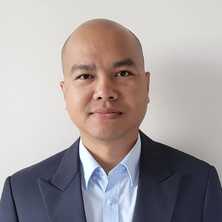
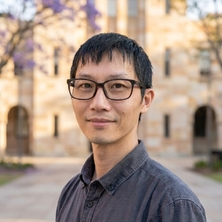
Dr T. Thang Vo-Doan is a Lecturer of the School of Mechanical and Mining Engineering at the University of Queensland. He was a postdoctoral researcher at the Institute of Biology I, University of Freiburg, Germany (2019-2023). He was also a Research Fellow at Nanyang Technological University (NTU), Singapore (2016-2018). He was awarded his PhD in Mechanical Engineering from the School of Mechanical & Aerospace Engineering, NTU in 2016. He received his M.Eng. degree in Manufacturing Engineering and B.Eng. degree in Mechanical Engineering from Ho Chi Minh City University of Technology, Vietnam in 2010 and 2008 respectively. He was awarded the prestigious Human Frontier Science Program Cross-disciplinary Fellowship (2019-2022).
He directs the UQ Biorobotics lab after joining in the University of Queensland. Current research activities of the lab focus on insect-machine hybrid robots, bio-inspired robotics, insect structures and functions, biomechanics, fast lock-on tracking, and brain imaging in untethered insects.
Affiliate of ARC COE for Children and Families Over the Lifecourse
ARC COE for Children and Families Over the Lifecourse
Faculty of Humanities, Arts and Social Sciences
Affiliate of Centre for Policy Futures
Centre for Policy Futures
Faculty of Humanities, Arts and Social Sciences
Associate Professor in Computer Science
School of Electrical Engineering and Computer Science
Faculty of Engineering, Architecture and Information Technology
Availability:
Available for supervision
Media expert
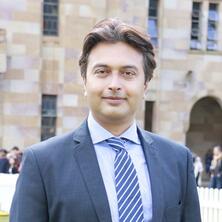
Dr. Dhaval Vyas is an Associate Professor in the Human-Centred Computing discipline - a former ARC DECRA Fellow (2018-2022) and. He is a part of the Compassion Lab research group. His research spans the areas of Human-Computer Interaction (HCI) and Computer-Supported Cooperative Work (CSCW). In particular, he focuses on designing IT tools to support health and wellbeing of under-resourced communities. He has worked in academia and industry for over 15 years. He received a PhD in Human-Computer Interaction from University of Twente, the Netherlands; a master’s degree in Computer Science from Lancaster University, UK; and an undergraduate degree in Computer Science from Gujarat University, India.
School of Electrical Engineering and Computer Science
Faculty of Engineering, Architecture and Information Technology
Availability:
Available for supervision
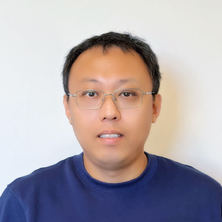
Dr Sen Wang is an ARC DECRA Senior Research Fellow and Senior Lecturer in computer science and data science at the School of Information Technology and Electrical Engineering at UQ. He is also a CI on several health data analytics research grants. Sen has an interest in ICU data and has clinical collaborations with RBWH and Children’s Hospital. Dr Wang received his PhD degree in 2014 and his research interest includes various topics on Feature Selection, Semi-supervised Learning, Deep Learning, Pattern Recognition, Data Mining, and Health Informatics. Since 2010, Dr Wang has published 80+ academic papers in top conferences and journals. Most were published in internationally renowned journals and conferences in the fields of data science, data mining, and machine learning, such as Algorithmica, TNNLS, TMC, TKDE, TCYB, TMM, WWWJ, Signal Processing, ACM TOMM, ACM MM, IJCAI, AAAI, SDM, CIKM, CVPR, ICCV, ICDM, ISWC, ECML-PKDD, PAKDD, ICONIP, ICPADS, and WISE, all CORE A/A* journals and conferences.
Centre Director of ARC COE for Engineered Quantum Systems (EQUS)
ARC COE for Engineered Quantum Systems
Faculty of Science
ARC Australian Laureate Fellow
School of Mathematics and Physics
Faculty of Science
Availability:
Available for supervision
Media expert
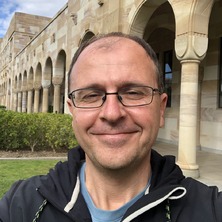
Professor White leads the Quantum Technology Laboratory at UQ, which he established in 1999, and is an Australian Research Council Laureate Fellow. He is internationally recognised for research in quantum science and technology, and is interested in all aspects of quantum weirdness. He is a Fellow of the Australian Academy of Science, the American Physical Society, and Optica. Andrew’s research spans: quantum foundations; production, manipulation and exploitation of quantum states of light, both in conventional optics and nanophotonics; and utilising quantum technology, be it in quantum computation, quantum communication, quantum sensing, or neuromorphic computing. Details can be found at the Quantum Laboratory website.
Professor White has worked with twenty-two postdoctoral researchers since 2001, five of whom received ARC Discovery Early Career Researchers Awards whilst working in his lab, six receiving Marie Skłodowska-Curie Fellowships subsequently and one a Erwin Schrödinger Fellowship. He has supervised more than 40 postgraduate students, who have received an array of awards including a Rhodes Scholarship, three Springer PhD thesis prizes, Australian representative at the Lindau Nobel Meeting, the only-ever runner for the Australian Institute of Physics Bragg Medal, and UQ Medals and Valedictorian, to name but a few.
Bio: Andrew was raised in a Queensland dairy town, before heading south to the big smoke of Brisbane to study chemistry, maths, physics and, during the World Expo, the effects of alcohol on uni students from around the world. Deciding he wanted to know what the cold felt like, he first moved to Canberra, then Germany—completing his PhD in quantum physics—before moving on to Los Alamos National Labs in New Mexico where he quickly discovered that there is more than enough snow to hide a cactus, but not nearly enough to prevent amusing your friends when you sit down. Over the years he has conducted research on various topics including shrimp eyes, nuclear physics, optical vortices, and quantum computers. He likes quantum weirdness for its own sake, but his current research aims to explore and exploit the full range of quantum behaviours—notably entanglement—with an eye to engineering new technologies and scientific applications. He is currently Director of the Centre of Engineered Quantum Systems, an Australia-wide, 14-year long, research effort by more than 250 scientists to build quantum machines that harness the quantum world for practical applications.
Faculty of Engineering, Architecture and Information Technology
Affiliate of Research Centre in Creative Arts and Human Flourishing
Research Centre in Creative Arts and Human Flourishing
Faculty of Humanities, Arts and Social Sciences
Professor
School of Electrical Engineering and Computer Science
Faculty of Engineering, Architecture and Information Technology
Availability:
Available for supervision
Media expert
Janet Wiles is a Professor in Human Centred Computing at the University of Queensland.
Her multidisciplinary team co-designs language technologies to support people living with dementia and their carers and social robots for applications in health, education, and neuroscience. She is currently developing a citizen science project which uses insights from neuroscience, AI and language technologies to explore the electrical characteristics of mycelial networks of symbiotic fungi in local ecosystems. She received her PhD in computer science from the University of Sydney and completed a postdoctoral fellowship in psychology. She has 30 years’ experience in research and teaching in machine learning, artificial intelligence, bio-inspired computation, complex systems, visualisation, language technologies and social robotics, leading teams that span engineering, humanities, social sciences and neuroscience. She currently teaches research methods for thesis and masters students, and a new course in human-centred artificial intelligence. Previous special interest courses include a cross disciplinary course ”Voyages in Language Technologies” that introduced computing students to the diversity of Indigenous and non-Indigenous languages, and state-of-the-art tools for deep learning and other analysis techniques for working with language data.
Featured projects
Human-centred AI
The Underground Brain Project
Florence communication technology
For more on Human Centred Computing see the HCC projects page
Faculty of Engineering, Architecture and Information Technology
Associate Professor
School of Electrical Engineering and Computer Science
Faculty of Engineering, Architecture and Information Technology
Availability:
Available for supervision
Research into advanced computer architectures
John Williams, born in 1973, was awarded his Ph.D from the Queensland University of Technology (QUT), Australia, in 2001. He was previously awarded undergraduate degrees in Electronic Engineering, and
Information Technology, also from QUT, in 1995. He is currently employed in the School of ITEE at The University of Queensland, Brisbane, Australia, where he holds the position of Research Fellow.
His research interests include reconfigurable computing and real-time embedded Systems, as well as 3D computer vision and imaging. He has authored 5 refereed journal publications, and more than 20 refereed conference publications, and recently edited the Proceedings of the 2004 IEEE International Conference on Field Programmable Technology. He has been a member of the IEEE for 8 years.
Affiliate of Centre for the Business and Economics of Health
Centre for the Business and Economics of Health
Faculty of Business, Economics and Law
Senior Research Fellow
Medical School
Faculty of Health, Medicine and Behavioural Sciences
Availability:
Available for supervision
Dr Lee Woods is an internationally recognised leader in digital health workforce capability and education, and practising Registered Nurse in primary care. She is Senior Research Fellow and Lead of the Workforce & Education Team at the Queensland Digital Health Centre (QDHeC), University of Queensland. Her academic qualifications include a Bachelor of Nursing (2005), Graduate Certificates in Clinical Nursing (2009) and Research (2019), First Class Honours (2015), and a PhD (2019). She also completed a four-year Fellowship by Training with the Australasian Institute of Digital Health (2021) and advanced co-design and design thinking training through the University of Sydney and the European Institute of Innovation and Technology (2016–2017).
Dr Woods has an H-index of 17, more than 790 citations, and has secured over AUD$2.9M in research funding. She leads an interdisciplinary team of 4 researchers and 6 doctoral students, with supervision completions including 1 PhD, 2 Masters, and 1 Honours. She served as Guest Editor for the Australian Journal of Rural Health special issue on digital interventions (2024).
Her leadership includes major projects such as the Queensland Health digital maturity assessment, which informed the refresh of Queensland’s state-wide digital health strategy Digital Health 2031 and measured 165 health services representing 56,000 consumers. She also helped lead the Embedding Digital Health Education into Health Degrees initiative, a global first in establishing a nationally agreed core curriculum for pre-registration health degrees. Dr Woods co-authored two national workforce strategies and co-developed Australia’s first health workforce fellowship program in digital health.
She is a Fellow of the Australasian Institute of Digital Health, was the Chair of the National Digital Health Early to Mid Career Conference (2024) and holds advisory roles in digital health education and research across Australia. Her contributions have been recognised through awards for industry engagement, service, and diversity, and she was selected to meet with Ministers of Parliament in Canberra (2023). Internationally, Dr Woods represents Australia on the International Medical Informatics Association Nursing Informatics Society and leads an AU–UK partnership to develop an AI literacy career framework for healthcare workers. She will deliver a keynote at the Perioperative Nurses International Conference (2026).
Affiliate of Centre for Living Experience Research
Centre for Living Experience Research
Faculty of Health, Medicine and Behavioural Sciences
Affiliate of Queensland Aphasia Research Centre (QARC)
Queensland Aphasia Research Centre
Faculty of Health, Medicine and Behavioural Sciences
Lecturer in Human-Centred Computing
School of Electrical Engineering and Computer Science
Faculty of Engineering, Architecture and Information Technology
Availability:
Available for supervision
I am an interaction designer.
I have an interest in design research and methods and their application to the design of technology. I believe that co-design/participatory design and human-centered design are critical approaches to ensuring that technology will truly serve the people who will be using or impacted by that technology.
A significant proportion of my work involves working with people living with dementia and post-stroke aphasia. Much of this work focuses on accessibility, usability and acceptability with the aim of creating technological solutions that are not only functional but also recognise and respond to people's intrinsic needs and experiences. A key aspect of my recent work is exploring acceptability and its ties to the Social Self-Determination model of people's needs. Through this I am looking at User Experience through a different lens, seeking to develop an understanding of how this model of people's needs can support a meaningful and impactful experience.
My interests extend across design theory and practice, human-computer interaction and user experience, and the application of the theory of these domains into practical and novel contexts. When designing technology that is to be used in everyday or applied contexts, I believe it is important to think beyond the technology itself. Therefore, in my research so far, I have worked in multidisciplinary teams crossing speech pathology, occupational therapy, computer science, and psychology. I am also committed to ensuring that technology and the process of designing technology is ethical.
Dongming Xu is Associate Professor in Business Information Systems at the UQ Business School. She holds a PhD from the City University of Hong Kong in Information systems.
Dr Xu’s research focuses on the confluence of information technology use and information technology innovation to reach a deep understanding of how information systems are used and how information systems influence the society. In recent years, she primarily works on IT entrepreneurship that focuses on the understanding of hi-tech start-ups development and the relationship between IT innovation and business performance. In the meantime, she has been working in the area of social media use in business, such as, disaster management, eFinance, eHealth. Thus research interests lay in the areas of message transmission, information quality control, and decision making infrastructure etc.
The other research interests include decision making and business intelligence on a variety of contexts, such as theoretical foundations, applications, and technologies, such as intelligent agents, data mining, etc. In particular, she is working on eFianance applications, web-server-agent-based family wealth management systems, decision support systems for securities exception management, knowledge management systems and disaster management systems. Her research usually combines theoretical model building, laboratory and field experiments and the development of prototype systems.
Dongming's previous research outputs have been published in more than 100 top tier journals and conference proceedings, such as IEEE Transaction on Knowledge and Data Engineering, Information and Management, Decision Support Systems, and the Expert Systems with Applications, International Conference on Information Systems, etc. Dr. Xu as a Chief-Investigator or a Co-Investigator received multiple grants from different research agencies, such as, Hong Kong Government Research Grant Council, The National Natural Science Foundation of China, The University of Queensland, City University of Hong Kong, Shenzhen (China) State Research Council.
Currently, she is an Associate Editor with Information & Management, Journal of Electronic Commerce Research, Australasian Journal of Information Systems, among others.
Faculty of Engineering, Architecture and Information Technology
Senior Lecturer
School of Electrical Engineering and Computer Science
Faculty of Engineering, Architecture and Information Technology
Availability:
Available for supervision
Dr. Guowei Yang is a Senior Lecturer in the School of Electrical Engineering and Computer Science at The University of Queensland, Australia. His research interests lie in Software Engineering, and its synergy with Machine Learning and Programming Languages, with a focus on improving reliability and security of software and machine learning systems. Prior to joining UQ in 2021, he was a tenured Associate Professor in the Department of Computer Science at Texas State University, USA. He received his Ph.D. from The University of Texas at Austin, USA in 2013. To find out more details please check his homepage: https://guoweiyang.github.io.
Multiple scholarships are available! Dr. Guowei Yang is looking for highly motivated students (including PhDs, Masters, undergraduates), and visitors to join his research group. If you are interested and have background in software engineering, programming languages, formal methods, and/or AI, please send an email with your CV to guowei.yang@uq.edu.au. The University of Queensland is ranked in the top 50 globally according to major ranking systems, including QS (40) and U.S. News (41).
School of Electrical Engineering and Computer Science
Faculty of Engineering, Architecture and Information Technology
Availability:
Available for supervision
Dr Jihui (Aimee) Zhang is currently a lecturer (Assistant Professor) in the School of Electrical Engineering and Computer Science, University of Queensland, Australia. She is also an honorary lecturer in the Audio & Acoustic Signal Processing (AASP) group, the Australian National University (ANU), Australia. From 2023 to 2024, she was a lecturer (Assistant Professor) in the Institute of Sound and Vibration Research (ISVR), University of Southampton, the United Kingdom. From 2018 to 2022, she was a Postdoctoral Research Fellow and a Research Fellow in the AASP group, ANU, Australia. From May 2018 to Aug.2018, she was a Research Engineer Intern in SONY, Japan.
Her research interest is mainly in Audio and Acoustic Signal Processing, especially Spatial Active Noise Control, Spatial Audio Solution for Virtual and Augmented Reality, and Microphone Arrays. Her other research interest is in Human-Robot/machine Audio Interactions, especially Audio Solution for Human-Unmanned Aerial Vehicle (UAV) Interactions. She has practical experience in Digital Design and Embedded Systems, especially Embedded Automatic Test & Control Systems and Embedded Audio Systems
She is currently a senior member of the IEEE and Signal Processing Society (SPS), a member of Audio Engineering Society (AES) and Acoustical Society of America (ASA). She serves as Student Activities Chair in the IEEE Queensland Section in 2025. She served as a chair of Women in Engineering Affinity Group in IEEE Australian Capital Territory Section in 2021 and 2022.
Faculty of Engineering, Architecture and Information Technology
Availability:
Available for supervision
Media expert
Dr Weiming Zhao is an ARC DECRA Fellow (2026 - 2029) in the School of Civil Engineering at the University of Queensland.
A domestic (Australian citizens or permanent residents) PhD position is availble: "Learning-based control strategies for personalised and socially aware automated vehicles".
His research sits at the intersection of robotics, human behaviour, and infrastructure, focusing on Intelligent Transportation Systems (ITS) and the interactions between Connected and Automated Vehicles (CAVs) and human drivers in mixed traffic. Using control theory and machine learning, including Model Predictive Control and Mathematica-based modelling, he develops trajectory planning solutions for CAVs at intersections and highway merging areas, aiming to improve safety, efficiency, and energy use in both urban and highway settings.
Dr Zhao completed his PhD at the University of Leeds, followed by a postdoctoral position at Aalto University. He joined UQ as a postdoc in 2022, before commencing his DECRA fellowship in 2026. His current DECRA project, Make Automated Vehicles Personalised and Socialised, investigates how control methods for automated vehicles can align with human driver behaviour to build trust.
Faculty of Engineering, Architecture and Information Technology
Affiliate of Queensland Digital Health Centre
Queensland Digital Health Centre
Faculty of Health, Medicine and Behavioural Sciences
Professorial Research Fellow
School of Electrical Engineering and Computer Science
Faculty of Engineering, Architecture and Information Technology
Availability:
Available for supervision
Professor Guido Zuccon is a Professorial Research Fellow at The University of Queensland, Electrical Engineering and Computer Science School, and since 2025, he is also a Research Scientist at Google Research Australia.
At UQ, Guido is the AI DIrector for the Queensland Digital Health Centre (QDHeC), an Affiliate Professor at the UQ Centre for Health Services Research, Faculty of Medicine, and an Honorary Reader at Strathclyde University (UK). He leads the Information Engineering Lab (ielab), a research team working in Information Retrieval and Health Data Science. He was an ARC DECRA Fellow (2018-2020).
Guido's main research interests are Information Retrieval, Health Search, Formal Models of Search and Search Interaction, and Health Data Science. He has successfully attracted funding from the ARC via an ARC Discovery Early Career Research Award Fellowship and an ARC Discoverty Project. His research has also been funded by Google (Google Research Awards program), Grain Research and Development Corporation (GRDC), Microsoft (Microsoft Azure for Research Award), the CSIRO (research gifts and PhD Students Top-up scholarships), the Australian Academy of Science (FASIC program), the European Science Foundation, and Neusoft Corporation.
Guido has published more than 250 peer-reviewed research articles at conferences and in journals, in information retrieval and health informatics; of these more than 30 are ranked in the top 10% of his filed (field weighted average) and more than 10 are ranked in the top 1%. He is amongst the top 20 most prolific researchers in the ACM Special Interest Group on Information Retrieval (SIGIR). He has won best papers award at AIRS 2017 (“Automatic Query Generation from Legal Texts for Case Law Retrieval”), CLEF 2016 (“Assessors agreement: A case study across assessor type, payment levels, query variations and relevance dimensions”), ALTA 2015 (“Analysis of Word Embeddings and Sequence Features for Clinical Information Extraction”), and ECIR 2012 (“Top-k retrieval using facility location analysis”). His research on people using search engines to seek health advice on the web has been widely disseminated by the media (190+ national and international newspaper articles, 10+ TV and radio interviews in 2015; see the media page coverage for that project). Guido is the Consumer Health Search task leader for the CLEF eHealth Evaluation Lab, since 2014. He is one of the TREC 2019 Decision Track organisers: this is an international evaluation effort in Information Retrieval that aims to investigate how people use search engines to make decisions (with a focus in 2019 on consumer health search). Guido has provided scientific tutorials to other researchers in his field at ACM SIGIR 2015 and 2018, ACM CIKM 2015, ACM ICTIR 2016, RUSSIR 2018, WSDM 2019.
Guido has reviewed for top journals and conferences in his field, including ACM TOIS, FnTIR, JASIST, IRJ, ACM TIST, ACM TWEB, IP&M, ACM SIGIR,ACM CIKM, ACM ICTIR, ACM WSDM, WWW, ECIR, ACM SIG-PODS. He was awarded the Best Reviewer Award at ECIR 2014. He has served as general chair, program chair, workshop chair and publicity chair for conferences in his research field, including ADCS (either PC Chair or General Chair in 2013, 2014, 2017), AIRS 2015 (General Chair), ECIR 2015 (Workshop Chair) and WSDM 2019 (publicity chair). Dr Zuccon is the Information co-Director for ACM SIGIR and was one of the recognised IR leaders invited to participate to the 3rd Strategic Workshop in Information Retrieval (SWIRL III, 2018).
Before joining the University of Queensland, Guido was a Lecturer (2014-2017) and Senior Lecturer (2017-2018) at the Queensland University of Technology, Australia, and a Post Doctoral Research Fellow at the Australian E-Health Research Centre (AEHRC), CSIRO (2011-2014), Australia. He received a Ph.D. in Computer Science at the University of Glasgow, UK (2012), focusing on Formal Models of Information Retrieval based on Quantum Theory, and a M.Comp.Eng. summa cum laude at the University of Padova, Italy (2007).