Faculty of Engineering, Architecture and Information Technology
Associate Professor in Design (Built Environments)
School of Architecture, Design and Planning
Faculty of Engineering, Architecture and Information Technology
Availability:
Available for supervision
Media expert
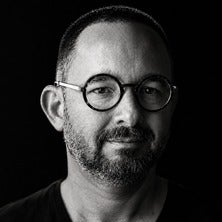
Assoc Prof Fred Fialho Teixeira is an architect, media artist and associate professor at University of Queensland, School of Architecture, Design and Planning and director of the UQ VisLab. He has been working in the fields of computational architecture, biodesign and immersive environments for the last 20 years. He has been awarded the Dean's Fellowship from the University of California where he initiated is PhD and developed innovative biological-based design strategies at the California Nano Systems Institute. He's an alumni of the Architectural Association, School of Architecture (AA) and accredited architect by Royal Institute of British Architects (RIBA) and Portuguese Chamber of Architects (OA) and also practiced for high profile offices such as Zaha Hadid Architects. Presently his research work on bio-design and spatial computation combines the use of mixed reality, advanced manufacturing and biomaterials to enable the next generation of built environments
Memberships
Architectural Association, School of Architecture (UK),Royal Institute of British Architects (UK), Chamber of Architects (PT), Australian Smart Communities Association (AU), UQ CyberResearch Centre
Dr Anthony Halog: Expert in Circular Economy, Life Cycle Thinking, and Sustainable Systems
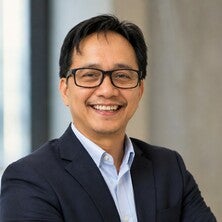
Dr. Anthony B. Halog is a professor at the University of Queensland specialising in circular economy, sustainability engineering, industrial ecology, and life cycle assessment (LCA/LCSA). His current work focuses on designing low-carbon, net-zero, and resource-efficient systems to address climate change, waste reduction, and sustainable development.
Dr. Halog works across energy, materials, food, waste, and policy systems, applying systems thinking, life cycle sustainability assessment, digital twins, and artificial intelligence for sustainability. His research helps governments, industries, and communities make evidence-based decisions that reduce emissions, improve resource efficiency, and avoid unintended environmental impacts.
A core focus of his work is transforming linear value chains into circular value chains, supporting green hydrogen, bioenergy, circular bioeconomy, agricultural waste valorisation, waste-to-energy, and sustainable materials. These solutions contribute to decarbonisation, climate resilience, sustainable supply chains, and the green economy.
Key areas of expertise
Circular economy and industrial ecology
Life cycle assessment and sustainability metrics
Green hydrogen, bioenergy, and clean energy transitions
Sustainable waste management and circular bioeconomy
Systems modelling, AI-enabled tools, and sustainability policy
Dr. Halog collaborates with policymakers, industry partners, SMEs, and Indigenous communities in Australia and internationally to deliver practical climate solutions and support the transition to decarbonised circular economies.
Faculty of Engineering, Architecture and Information Technology
Availability:
Available for supervision
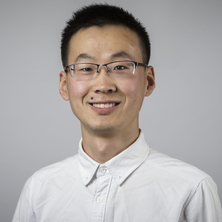
Baojie is a (Full) Professor of Urban Climate and Sustainable Built Environment with the School of Architecture and Urban Planning at Chongqing University, China.
Email: baojie.he@uq.edu.au; baojie.he@cqu.edu.cn
He is currently leading the Centre for Climate-Resilient and Low-Carbon Cities with the focus on Heat-Resilient and Low-Carbon Urban Planning and Design. Baojie has published more than 200 peer-reviewed papers in high-ranking journals and delivered more than 100 invited talks in reputable conferences/seminars. Baojie has a SCOPUS H-index of 57 (Scopus). Baojie has been involved in several large research projects on urban climate and built environment in China and Australia. Baojie has been invited to act as Editor-in-Chief and Associate Editors of several international reputuable journals. Baojie received the received the Most Cited Chinese Researchers Title in 2024 and 2025, Highly Cited Researcher Title (Clarivate) in 2022, 2023, 2024, and 2025, the Sustainability Young Investigator Award in 2022, the Green Talents Award (Germany) in 2021, and National Scholarship for Outstanding Study Abroad Students (China) in 2019. Baojie was ranked as one of the Top 2% Scientists by the Mendeley from 2020 onwards.
Affiliate of Centre of Architecture, Theory, Culture, and History
Centre of Architecture, Theory, Culture and History
Faculty of Engineering, Architecture and Information Technology
Senior Lecturer in Architecture
School of Architecture, Design and Planning
Faculty of Engineering, Architecture and Information Technology
Availability:
Available for supervision
Media expert
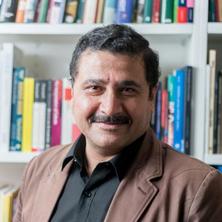
Dr. Manu P. Sobti is a landscape historian and urban interlocutor of the Global South with research specialisations in South Asia, South East Asia, Central Asia, and the Middle East. Within the gamut of the Global, the Islamic, and the Non-Western, his continuing work examines borderland transgressions and their intertwinement with human mobilities, indigeneities, and the narratives of passage across these liminal sites. From his perspective, ‘land-centered’ and ‘deep’ place histories replete with human actors serve as critical and de-colonizing processes that negate the top-down master-narratives wherein borders and boundaries simplistically delineate nation states and their scalar range of internal geographies. He was previously Associate Professor at the School of Architecture & Urban Planning (SARUP), University of Wisconsin-Milwaukee USA (2006-16). He has a B.Dipl.Arch. from the School of Architecture-CEPT (Ahmedabad - INDIA), an SMarchS. from the Massachusetts Institute of Technology (Cambridge - USA), and a Ph.D. from the College of Architecture, Georgia Institute of Technology (Atlanta - USA).
As a recognized scholar and innovative educator, Sobti served as Director of SARUP-UWM’s India Winterim Program (2008-15). This foreign study program worked intensively with local architecture schools in Ahmedabad, Delhi and Chandigarh, allowing students and faculty to interact actively, often within the gamut of the same project. He also set up a similar, research-focused program in Uzbekistan, engaging advanced undergraduate and graduate students to undertake field research at sites, archives and cultural landscapes. In partnership with the Art History Program at the University of Wisconsin-Madison, and SARUP colleagues, Sobti also co-coordinated the Building-Landscapes-Cultures (BLC) Concentration of SARUP-UWM’s Doctoral Program (2011-13), creating opportunities for student research in diverse areas of architectural and urban history and in multiple global settings. He served as the Chair of SARUP's PhD Committee between 2014-16, leading an area of BLC's research consortium titled Urban Histories and Contested Geographies.
Sobti's research has been supported by multiple funding bodies, including the Graham Foundation of the Arts (USA), the Architectural Association (UK), the National Council for Eurasian and East European Research (USA), the French Institute of Central Asian Studies (UZBEKISTAN), the US Department of State Fulbright Foundation (USA), the Aga Khan Foundation (SWITZERLAND), the Andrew W. Mellon Foundation (USA), the Massachusetts Institute of Technology (USA), the Centre for 21st Century Studies University of Wisconsin-Milwaukee (USA), the Institute for Research in the Humanities University of Wisconsin-Madison (USA), Stanford University (USA), in addition to city governments in New Delhi/Chandigarh/Ahmedabad (INDIA), Samarqand/Bukhara (UZBEKISTAN), Erzurum (TURKEY) and New Orleans (USA). He has also served as a United States Department of State Fulbright Senior Specialist Scholar and received 7 Research Fellowships at important institutions worldwide. He is a nominated Expert Member of the ICOMOS-ICIP (Interpretation and Presentation of Cultural Heritage Sites) International Committee, responsible for debate and stewardship on contentious cultural heritage issues globally.