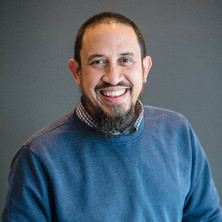
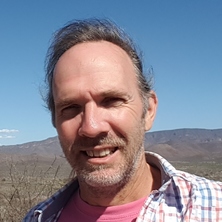
My current research at UQ is as Professor in this School (teaching AGRC3040 Crop Physiology) and as an Affiliate Professor of QAAFI. Since 2020, with full-time appointment at UQ, my research portfolio has included multiple projects in applications of machine learning and artificial intelligence into the ag domain. This area is developing rapidly and across UQ, I am engaging with faculty in multiple schools (ITEE, Maths and Physics, Mining and Mech Engineering) as well as in the Research Computing Centre to develop new projects and training opportunities at the interface of field agriculture and these new digital analytics.
My career research has been around genetic and environment effects on physiology of field crops, particularly where drought dominates. Application of quantitative approaches (crop simulation and statistical methods) and phenotyping (aerial imaging, canopy monitoring) to integrate the understanding of interactions of genetics, growth and development and the bio-physical environment on crop yield. In recent years, this work has expanded more generally into various applications in digital agriculture from work on canopy temperature sensing for irrigation decisions (CSIRO Entrepreneurship Award 2022) through to applications of deep-learning to imagery to assist breeding programs.
Much of this research was undertaken with CSIRO since 1996. Building on an almost continuous collaboration with UQ over that time, including as an Adjunct Professor to QAAFI, Prof Chapman was jointly appointed (50%) as a Professor in Crop Physiology in the UQ School of Agriculture and Food Sciences from 2017 to 2020, and at 100% with UQ from Sep 2020. He has led numerous research projects that impact local and global public and private breeding programs in wheat, sorghum, sunflower and sugarcane; led a national research program on research in ‘Climate-Ready Cereals’ in the early 2010s; and was one of the first researchers to deploy UAV technologies to monitor plant breeding programs. Current projects include a US DoE project with Purdue University, and multiple projects with CSIRO, U Adelaide, La Trobe, INRA (France) and U Tokyo. With > 8500 citations, Prof Chapman is currently in the top 1% of authors cited in the ESI fields of Plant and Animal Sciences and in Agricultural Sciences.
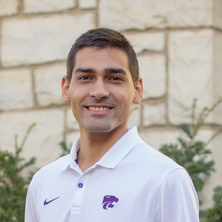
Dr. Javier A. Fernandez is a Research Fellow at The University of Queensland. His research specializes in crop physiology, plant nutrition, corn production, and crop modelling reflected by over 30 articles (refereed journal publications, extension articles, conference proceedings, and others). He is currently engaged in the use of statistical, digital, and model technologies to assess crop growth and development, with the overall goal of enhancing production, resource use efficiency, and sustainability of agricultural systems in Australia. Javier received his BS in Agricultural Engineering from Universidad Nacional del Nordeste in Argentina, and his PhD in Agronomy from Kansas State University. He is recipient of several honours and awards from university, professional societies, and governmental organizations, including two Fulbright Commission scholarships.
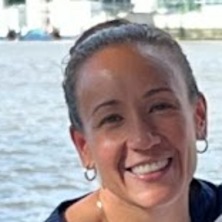
Angelica is a senior spatial scientist with a strong background in remote sensing and environmental analysis. Her work bridges science and practice, applying spatial technologies to improve land and resource management. She has contributed to research across a wide range of applications — from crop and vegetation monitoring to assessing land use change driven by different sectors.
Her research interests include the evaluation and adoption of remote sensing technologies for crop and vegetation monitoring, tracking native vegetation clearing and regrowth, analysing environmental and production factors that influence crop performance, and developing spatial datasets for yield forecasting, crop phenotyping, and long-term landscape monitoring.
Queensland Alliance for Agriculture and Food Innovation
Availability:
Available for supervision
Dr Yan Zhao is an agricultural remote sensing and digital agriculture scientist specialising in the integration of Earth observation, artificial intelligence, crop modelling and climate information for crop monitoring and decision support. His research spans satellite, UAV and proximal sensing to quantify crop type, phenology, soil moisture, crop stress and yield across field to regional scales. He develops scalable spatial-data and machine-learning approaches to translate complex sensing and environmental data into practical agricultural information, working closely with growers, agribusiness, government and international research partners. His current research increasingly explores multi-source hyperspectral sensing and analytics for detecting crop stress and assessing crop productivity and grain quality.