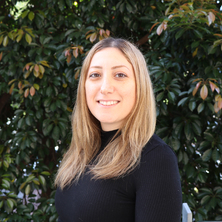
Paul Dennis leads an exciting research group that applies cutting-edge technologies to understand the roles of microorganisms and their responses to environmental change.
He is also a passionate educator and public speaker who advocates for the importance of biological diversity and evidence-based environmental awareness. He has talked about his research on ABC Radio and a range of other media outlets.
His teaching covers aspects of ecology, microbiology, plant and soil science, and climatology. He considers these topics to be of fundamental importance for the development of more sustainable societies and takes pride in helping others to obtain the knowledge and skills they need to build a better future.
Paul's research has taken him to Antarctica, the Amazon Rainforest, high mountains and oceans. The approaches used in his lab draw on a wide range of expertise in molecular biology, ecology, statistics, computer science, advanced imaging and soil science. He applies these skills to a wide-range of topics and systems including plant-microbe interactions, Antarctic marine and terrestrial ecology, biogeography, pollution and human health.
Affiliate of Centre for Environmental Responsibility in Mining
Centre for Environmental Responsibility in Mining
Faculty of Engineering, Architecture and Information Technology
Affiliate of Centre for Geoanalytical Mass Spectrometry
Centre for Geoanalytical Mass Spectrometry
Faculty of Science
Professorial Research Fellow
Sustainable Minerals Institute
Faculty of Engineering, Architecture and Information Technology
Availability:
Available for supervision
Media expert
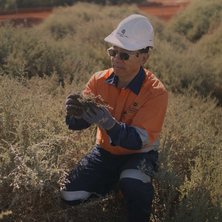
Professor Longbin Huang is a Full Professor and leader of an interdisciplinary research group in Ecological Engineering in Mining. His research focuses on mine waste rehabilitation, ecological engineering, and geomicrobial soil formation, integrating ecological, microbiological, and environmental processes to address sustainability challenges in the mining sector, with influence spanning industry, academia, and policy. Professor Huang leads cutting-edge research in: Geo-microbial ecology, Mineral bioweathering, Microbially and rhizosphere driven soil formation from Tailings Minerals.
Professor Huang's work has advanced nature-based solutions for transforming mine tailings, waste rock, and bauxite residues into sustainable ecosystems. Supported by approximately AUD $23 million in competitive and industry-funded research over the past 15 years, his team has developed and demonstrated innovative rehabilitation technologies with field-scale applications. These include a pioneering technology for the treatment and dealkalization of bauxite residues, which has been commercialized through the University of Queensland startup Bioculum Pty Ltd, and novel approaches for preventing acid mine drainage generation in mine waste materials.
Professor Huang has published over 190 scholarly outputs, including journal articles, conference papers, patents, and book chapters. His research has attracted broad international recognition and has contributed significantly to the advancement of mine waste management, ecological restoration, and sustainable mining practices worldwide.
He is highly experienced in industry-partnered research and translation of knowledge into field-based technologies for tackling large environmental challenges in the mining industry, for example, technologies for tackling global tailings problem. Since 2010, he has led many large and industry-partnered research projects attracting about $23M funding. The research aims to deliver transformative knowledge and practices (i.e., technologies/methdologies) in the rehabilitation of mine wastes (e.g., tailings, mineral residues, spoils, waste rocks) and mined landscapes for non-polluting and ecologically and financially sustainable outcomes. Prof Huang has successfully demonstrated innovative methodology and technology to achieve nature-based outcomes in treating and rehabilitating tailings and waste rocks. Prof Huang’s research program was featured in Rio Tinto’s media releases as one of the four most successful global R&D partnerships in 2024. Prof Huang led the development of the first field-feasible technology to treat and dealkalize alkaline bauxite residues for sustainable rehabilitation. His industry-partnered research was recognised in 2019 UQ’s Partners in Research Excellence Award (Resilient Environments) (Rio Tinto and QAL). Prof Huang is also developing new knowledge and technologies for achieving non-polluting and ecologically sustainable rehabilitation of, for example, coal mine spoils and tailings, Fe-ore tailings, bauxite tailings (from mining bauxite), and Cu/Pb-Zn tailings.
Membership of Board, Committee and Society
Professional associations and societies
2010 – Present Australian Soil Science Society.
2023 – Present AuSIMM
2015 – 2025 Present American Society of Mining and Reclamation (ASMR)
Editorial boards/services
2025 - present: Member of Editorial Board, Energy & Environment Nexus
Discipline Lead - Soil Science of School of Agriculture and Food Sustainability
School of Agriculture and Food Sustainability
Faculty of Science
Professor - Soil Science
School of Agriculture and Food Sustainability
Faculty of Science
Availability:
Available for supervision
Media expert
Not only do soils provide humans with 98.8% of our food, they also provide humanity with a broad range of other services such as carbon storage and greenhouse gas regulation. Whilst soil takes hundreds or thousands of years to form, it can be destroyed in a matter of years if not managed correctly.
Peter's work aims to understand the hidden processes in soil that control how plants obtain nutrients, how carbon is stored, and how agricultural systems can remain productive while also protecting the environment. He has worked across highly diverse systems, both in Australia and developing countries. He has a demonstrated ability to lead outstanding research programs across a range of inter-connected themes, spanning in scale from fundamental research to landscape-scale projects, with this demonstrating a unique ability to link industry partners with high quality research.
Peter is Past President of Soil Science Australia (QLD), a former ARC Future Fellow, recipient of the JK Taylor Gold Medal in Soil Science (2018), and recipient of the CG Stephens Award in Soil Science (2005).
Affiliate of Centre for Environmental Responsibility in Mining
Centre for Environmental Responsibility in Mining
Faculty of Engineering, Architecture and Information Technology
Senior Research Fellow
Sustainable Minerals Institute
Faculty of Engineering, Architecture and Information Technology
Availability:
Available for supervision
Dr. Shaygan is a soil scientist who works on multidisciplinary projects. She obtained both her BSc and MSc degrees in Agronomy from the University of Tehran, followed by a Master of Environmental Management from the University of Queensland. Dr. Shaygan completed her PhD in Soil Science at the University of Queensland. Prior to joining SMI in 2017, she worked with the NSW Department of Primary Industries.
Dr. Shaygan's research focuses on the rehabilitation of degraded landscapes and mine sites, mine cover design, quantification and modelling of water flow, solute and nutrient transport in porous media, soil erosion, characterization of soil hydrological and mechanical properties, and soil salinity management. In addition, she investigates the integration of biofuel crops into mine closure strategies, with a particular focus on the use of Pongamia trees for land rehabilitation, carbon sequestration, and biofuel production.
Her research interests include but are not limited to: (i) salinity management, (ii) land rehabilitation, (iii) water flow and solute/nutrient transport in porous media, (iv) erosion processes, (v) Pongamia tree growth and responses to different environmental conditions, and (vi) soil hydrological modelling.
Since joining SMI, Dr. Shaygan has secured over $3.8 million in grant funding, including more than $1 million as Lead Chief Investigator (Lead CI). Her research projects have been supported by the mining industry (e.g., Stanmore Resources and Anglo American), the Queensland Government, and the Australian Coal Association Research Program (ACARP).