Affiliate of Centre for Public, International and Comparative Law
Centre for Public, International and Comparative Law
Faculty of Business, Economics and Law
Professor
School of Law
Faculty of Business, Economics and Law
Availability:
Not available for supervision
Media expert
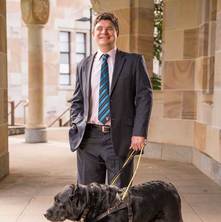
Professor Paul Harpur OAM is a leading international and comparative disability rights legal academic, and a leader in higher education reforms.
Professor Harpur directs the the UQ Disability Collaboratory. The UQ Disability Collaboratory is a university-wide University of Queensland initiative which galvanises the university’s significant but currently distributed research expertise in order to maximise research impact and output. The Collaboratory is the primary means by which UQ enacts its commitment to research excellence in the fields of disability inclusion and was established following the University’s adoption of the Champions of Change Disability Inclusion Research and Innovation Plan. In addition to including a commitment to forming a high-impact disability research network, the Plan will further UQ’s leadership in disability inclusion research, ensuring that people with lived experience of disability play a central role in shaping research outcomes.
Beyond the UQ, Professor Harpur holds international posts, including as an Associate with the Harvard Law School's Harvard Project on Disability, an International Distinguished Fellow, with the Burton Blatt Institute, Syracuse University, Berkeley Center on Comparative Equality and Anti-Discrimination Law, and is a former Fulbright Future Scholar.
Professor Harpur is active in university-wide and sector-wide higher education change. Illustratively he has chairred the UQ Disability Inclusion Group since 2016 and sits on a range of university-wide committees. At the sector-wide level, during 2023 Dr Harpur served on the Ministerial Reference Group for the Universities Accord. He also serves on the Higher Education Standards Panel (HESP), which is a statutory body under Part 9 of the Tertiary Education Quality and Standards Agency Act 2011 (Cth). The HESP is charged to advise and make recommendations to the Minister and to the Tertiary Education Quality and Standards Agency (TEQSA) on the Higher Education Standards Framework and to TEQSA on matters including TEQSA’ strategic objectives, corporate plan, performance against that plan, reform agenda, streamlining of activities and resourcing requirements and its regulatory approaches. He also serves on the Advisory Board for the Australian Centre for Student Equity and Success, formerly the National Center for Student Equity in Higher Education. In April the Univertas 21 (U21) Senior Leaders Group adopted the U21 Framework for Equitable and Inclusive Global Engagement to guide EDI across the 30 university Network. This Framework as a committee, the U21 EDI Management Committee, to which Professor Harpur was appointed in 2025. His transformational work and service has been recognised with numerous diversity and inclusion, human resources and leadership citations and awards. In the 2024 Australia Day Honours, Professor Harpur was awarded a Medal of the Order of Australia by the Governor General of Australia (OAM). The citation for his OAM is “for service to people with disability”.
Additionally, Professor Harpur is a former Fulbright Future Scholar, former current Australian Research Council Future Fellow, and duel Paralympian. He competed in the Sydney 2000 Paralympics and the Athens 2004 Paralympics and has the Paralympics Australia Pin #614.
Professor Harpur is a TEDx speaker (“Universities as Disability Champions of Change”).
Affiliate of Centre for Living Experience Research
Centre for Living Experience Research
Faculty of Health, Medicine and Behavioural Sciences
Affiliate Research Fellow of T.C. Beirne School of Law of T.C. Beirne School of Law
School of Law
Faculty of Business, Economics and Law
Affiliate of Queensland Aphasia Research Centre (QARC)
Queensland Aphasia Research Centre
Faculty of Health, Medicine and Behavioural Sciences
Research Fellow
School of Health and Rehabilitation Sciences
Faculty of Health, Medicine and Behavioural Sciences
Availability:
Available for supervision
I am a sociologist, lawyer, and advocate working across law, health, policy and social science. My research examines human rights, decision-making and legal capacity, and how legal and administrative systems actually work for people with disabilities, including in health care and transition to adulthood, the NDIS, aged care, banking and finance, income support, and voting. I am interested in personhood and capacity in areas of life where people may be less able to make legally recognised decisions, and in the gaps between policy intentions and lived realities. My particular focus is people with profound intellectual and multiple disabilities, who are too often invisible in regulation, policy, governance and research. I come to this work with living experience as a parent and supporter of an adult daughter with profound disability.
I lead Profound Pathways (MRFF, 2026 to 2030), a consumer-led national program co-designing guidelines for health care transition and decision-making for young adults with profound intellectual and multiple disabilities; the CommGUIDE workstream of the Conversations about Care project, developing national guidelines on communication support in aged care; and the regulatory review for the NDRP-funded Safe Homes project on personalised housing and support for people with intellectual disability. I am a founding member of the Centre for Living Experience Research, a Board Director of ASID and Child Unlimited, and Co-Chair of the ALEC Consumer Panel and the ARC Life Course Centre Community Advisory Committee.
My work is built on co-production with people with disability and their relational networks, and on inclusion in research for those least often included. Across research, governance and advocacy, my aim is systems that better recognise and include people with profound disability.
Tamara Walsh is a Professor of Law at UQ. She has degrees in both Law and Social Work, and her interest is in social welfare law and human rights. Her research examines the impact of the law on vulnerable people including children and young people, people experiencing homelessness, people on low incomes, people with disabilities, mothers and carers. Her research has been widely published, both in Australia and internationally.
In 2008, Tamara designed and established the UQ Pro Bono Centre, along with Dr Paul O'Shea and Prof Ross Grantham. The UQ Pro Bono Centre facilitates student and staff participation in pro bono legal activities, particularly public interest research and law reform. It is now a flagship program of the UQ Law School.
In 2016, Tamara established the UQ Deaths in Custody Project, which she runs in partnership with Prisoners' Legal Service. This Project monitors deaths in custody across Australia, and administers a public website which is an important resource for researchers, coroners and members of the public: www.deaths-in-custody.project.uq.edu.au
In 2020, Tamara established the UQ/Caxton Human Rights Project, along with Bridget Burton. This project is staffed by volunteer law students and makes information on every case that refers to the Human Rights Act 2019 (Qld) publicly available: https://law.uq.edu.au/human-rights-cases.
Tamara is currently undertaking an ARC Linkage project on human rights dispute resolution in Australia (2023-2025) with Prof Dominique Allen (Monash University). Prior to this, she completed an ARC Linkage project on the criminalisation of poverty and homelessness in Australia (2017-2021).
Tamara lectures in human rights law and children's law.