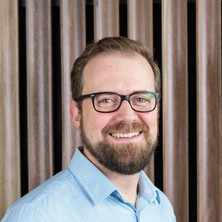
Dr. Bialasiewicz worked at the Royal Children's Hospital and the Children's Health Queensland HHS for over 18 years conducting translational research and clinical support centering on infectious disease (primarily viral and bacterial) molecular diagnostics, general microbiology and molecular epidemiology. In 2019, he became a group leader at The University of Queensland's Australian Centre for Ecogenomics, expanding on a growing interest in the microbial ecology of the human body, it's role in health and disease, and ways to manipulated to achieve desirable outcomes. One Health microbial ecology, where human health is interconnected with the health of animals (both livestock and wildlife), and the broader environment is also an area of active interest. His background in virology has influenced the work he does, meaning a key focus of his microbial ecology works centres around the interactions between all types of microorgansims (bacteria, archaea, viruses, fungi, and micro-eukaryotes).
Ongoing work includes:
- Leveraging of emerging technologies to explore the hidden microbial diversity and their interactions in the human body.
- Using the technology to develop microbial (e.g. phage)-based treatments or preventatives to complex diseases (e.g. Otitis Media, Chronic Rhinosinusitis, GvHD).
- Understanding the genetics of antibiotic resistance spread.
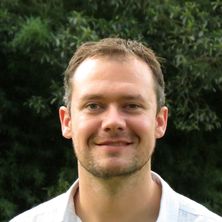
Paul Dennis leads an exciting research group that applies cutting-edge technologies to understand the roles of microorganisms and their responses to environmental change.
He is also a passionate educator and public speaker who advocates for the importance of biological diversity and evidence-based environmental awareness. He has talked about his research on ABC Radio and a range of other media outlets.
His teaching covers aspects of ecology, microbiology, plant and soil science, and climatology. He considers these topics to be of fundamental importance for the development of more sustainable societies and takes pride in helping others to obtain the knowledge and skills they need to build a better future.
Paul's research has taken him to Antarctica, the Amazon Rainforest, high mountains and oceans. The approaches used in his lab draw on a wide range of expertise in molecular biology, ecology, statistics, computer science, advanced imaging and soil science. He applies these skills to a wide-range of topics and systems including plant-microbe interactions, Antarctic marine and terrestrial ecology, biogeography, pollution and human health.
My research focuses on soil health in cropping and pasture systems, with particular expertise in soil carbon and soil organic matter dynamics, microbial ecology, and plant–soil interactions. I investigate how agronomic interventions influence soil functional processes and productivity, with the goal of reversing soil fertility decline and building healthier, more resilient soils. This work includes assessing the impacts of tillage, cover cropping, crop rotational diversity, nutrient management, and organic amendments on soil processes, crop development, and long-term system performance.
Teaching and education
I am committed to student‑centred, evidence‑based teaching that prepares graduates for contemporary agricultural practice. My teaching spans introductory to advanced agronomy, with a focus on aligning theory with hands‑on learning through lectures, tutorials, practicals, and field‑based activities. I coordinate and teach into courses including fundamentals of agriculture and cropping systems, and serve as Course Coordinator for an industry placement course, where students undertake structured work‑integrated learning experiences with agricultural and agri‑industry partners.
Across my teaching, I emphasise applied problem‑solving, quantitative skills, systems thinking, and graduate employability. I am particularly interested in curriculum design, constructive alignment, assessment for learning, and integrating research and industry context into agronomy education.
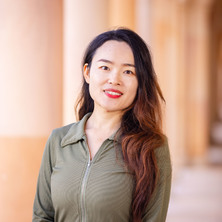
The aim of Allie's research is to improve soil health for sustainable agricultural production and environmental protection. Her research spans the areas of plant-soil-microbe interactions, soil microbiology, nutrients cycling and the recylcing of organic wastes, currently focusing on (i) the development of advanced and novel methodologies for investigation of plant-soil-microbe interactions; (ii) dynamics of nutrients (N, P, K) and carbon in soils including greenhouse gas emissions; and (iii) soil carbon sequestration and persistence.