School of Electrical Engineering and Computer Science
Faculty of Engineering, Architecture and Information Technology
Availability:
Not available for supervision
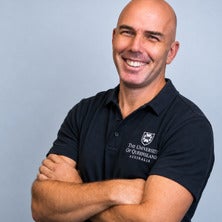
Dr Eban Escott is a Senior Lecturer in the School of Electrical Engineering and Computer Science at The University of Queensland. His work connects software engineering, artificial intelligence and education, with a particular focus on how people direct, evaluate and collaborate with increasingly capable AI systems.
His research interests include model-driven engineering, software development automation, human-in-the-loop AI and graduate readiness for changing workplaces. He explores how automation can support software development while keeping people responsible for judgement, quality and decisions.
Eban brings extensive industry experience as a software engineer, entrepreneur and technology leader. He has translated research into commercial software tools and delivery practices applied in government and enterprise projects. His experience spans software architecture, legacy system modernisation, product development and the leadership of engineering teams.
At UQ, he teaches software innovation and contributes to curriculum development, drawing on industry experience to connect theory with practical engineering work. He also serves on UQ’s Computer Science Curriculum Advisory Board, contributing to discussions about graduate capabilities and the changing demands of the software profession.
Eban holds a PhD in software engineering from UQ. He welcomes collaboration on software engineering, AI-supported development and preparing students for professional practice.
Faculty of Engineering, Architecture and Information Technology
Availability:
Available for supervision
Media expert
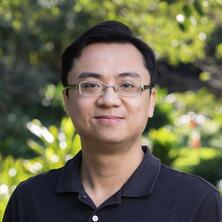
Dr Nguyen is a Lecturer in Robotics at the School of Mechanical and Mining Engineering, The University of Queensland. His research focuses on advancing autonomous robot capabilities in complex, large-scale environments through 1) principled and scalable fusion of complementary sensing modalities with distilled prior knowledge from learning processes for localisation & mapping, and 2) cooperative strategies for multi-robot systems. These research directions address challenging scenarios such as inspection, exploration, and manipulation, where robust localisation & mapping form a solid foundation upon which collaborative schemes can unlock new levels of efficiency and scalability.
Dr Nguyen was previously a Research Assistant Professor at the Centre for Advanced Robotics Technology Innovation (CARTIN), Nanyang Technological University (NTU), following the Wallenberg–NTU Presidential Postdoctoral Fellowship, where he led collaborative research efforts between NTU and KTH Royal Institute of Technology. He received his PhD from the School of EEE, NTU, with the best thesis (Doctoral Innovation Award) in 2020. He graduated with a Bachelor of Engineering (Honours) from Vietnam National University – Ho Chi Minh City University of Technology in 2014. He is an active member of IEEE Robotics and Automation Society (RAS), and is currently an Associate Editor of IEEE Robotics and Automation Letters (RA-L) in the area of Localisation & Mapping.
Faculty of Engineering, Architecture and Information Technology
Availability:
Available for supervision
Media expert
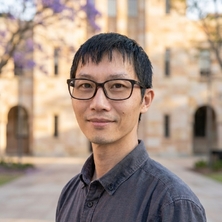
Dr Weiming Zhao is an ARC DECRA Fellow (2026 - 2029) in the School of Civil Engineering at the University of Queensland.
A domestic (Australian citizens or permanent residents) PhD position is availble: "Learning-based control strategies for personalised and socially aware automated vehicles".
His research sits at the intersection of robotics, human behaviour, and infrastructure, focusing on Intelligent Transportation Systems (ITS) and the interactions between Connected and Automated Vehicles (CAVs) and human drivers in mixed traffic. Using control theory and machine learning, including Model Predictive Control and Mathematica-based modelling, he develops trajectory planning solutions for CAVs at intersections and highway merging areas, aiming to improve safety, efficiency, and energy use in both urban and highway settings.
Dr Zhao completed his PhD at the University of Leeds, followed by a postdoctoral position at Aalto University. He joined UQ as a postdoc in 2022, before commencing his DECRA fellowship in 2026. His current DECRA project, Make Automated Vehicles Personalised and Socialised, investigates how control methods for automated vehicles can align with human driver behaviour to build trust.