
Overview
Background
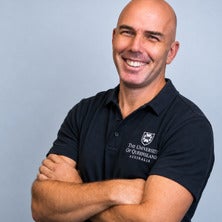
Dr Eban Escott is a Senior Lecturer in the School of Electrical Engineering and Computer Science at The University of Queensland. His work connects software engineering, artificial intelligence and education, with a particular focus on how people direct, evaluate and collaborate with increasingly capable AI systems.
His research interests include model-driven engineering, software development automation, human-in-the-loop AI and graduate readiness for changing workplaces. He explores how automation can support software development while keeping people responsible for judgement, quality and decisions.
Eban brings extensive industry experience as a software engineer, entrepreneur and technology leader. He has translated research into commercial software tools and delivery practices applied in government and enterprise projects. His experience spans software architecture, legacy system modernisation, product development and the leadership of engineering teams.
At UQ, he teaches software innovation and contributes to curriculum development, drawing on industry experience to connect theory with practical engineering work. He also serves on UQ’s Computer Science Curriculum Advisory Board, contributing to discussions about graduate capabilities and the changing demands of the software profession.
Eban holds a PhD in software engineering from UQ. He welcomes collaboration on software engineering, AI-supported development and preparing students for professional practice.
Availability
- Dr Eban Escott is:
- Not available for supervision
Fields of research
Qualifications
- Bachelor of Science, The University of Queensland
- Masters (Coursework) of Information Technology, Queensland University of Technology
- Doctor of Philosophy of Software Engineering, The University of Queensland
Research interests
-
Human-AI collaboration in software engineering
Exploring how software professionals direct, evaluate and collaborate with AI systems. This work examines how human judgement, oversight and feedback can support effective use of AI in software development, with attention to quality, accountability and the changing capabilities required of engineering teams.
-
Model-driven engineering and software automation
Investigating how software models can support code generation, testing and the modernisation of existing systems. This work connects model-driven engineering with AI-assisted development, exploring how structured models and reusable knowledge can make software delivery more reliable, traceable and adaptable.
-
AI in education and graduate readiness
Exploring how teaching, assessment and curriculum can prepare students for professional work with increasingly capable AI systems. Particular interests include developing critical thinking, technical judgement and the ability to evaluate AI-generated work, alongside understanding how AI use affects learning and graduate employability.
-
Software delivery processes and research translation
Investigating how software engineering methods translate into practical delivery in government and industry. Interests include software estimation, process improvement and the integration of automation with human decision-making. This work examines how teams can assess and improve delivery practices while managing the complexity of existing systems and organisational requirements.
Works
Search Professor Eban Escott’s works on UQ eSpace
2025
Journal Article
Jidoka: automation with a human touch
Escott, Eban (2025). Jidoka: automation with a human touch. Software and Systems Modeling, 24 (2), 339-358. doi: 10.1007/s10270-024-01256-z
2022
Journal Article
Using DevOps toolchains in Agile model-driven engineering
Suess, Joern Guy, Swift, Samantha and Escott, Eban (2022). Using DevOps toolchains in Agile model-driven engineering. Software and Systems Modeling, 21 (4), 1495-1510. doi: 10.1007/s10270-022-01003-2
2022
Journal Article
Relative estimates of software development effort: Are they more accurate or less time-consuming to produce than absolute estimates, and to what extent are they person-independent?
Jorgensen, Magne and Escott, Eban (2022). Relative estimates of software development effort: Are they more accurate or less time-consuming to produce than absolute estimates, and to what extent are they person-independent?. Information and Software Technology, 143 106782, 1-9. doi: 10.1016/j.infsof.2021.106782
2013
Other Outputs
A model-driven approach to developing and testing web applications
Escott, Eban Peter (2013). A model-driven approach to developing and testing web applications. PhD Thesis, School of Information Technol and Elec Engineering, The University of Queensland.
2012
Conference Publication
Model-driven web form validation with UML and OCL
Escott, Eban, Strooper, Paul, King, Paul and Hayes, Ian J. (2012). Model-driven web form validation with UML and OCL. 11th International Conference on Web Engineering (ICWE 2011), Paphos, Cyprus, 20-21 June 2011. Heidelberg, Germany: Springer. doi: 10.1007/978-3-642-27997-3_23
2011
Conference Publication
Integrating model-based testing in model-driven web engineering
Escott, Eban, Strooper, Paul, Steel, Jim and King, Paul (2011). Integrating model-based testing in model-driven web engineering. 18th Asia Pacific Software Engineering Conference (APSEC 2011), Ho Chi Minh City, Vietnam, 5- 8 December 2011. Piscataway, NJ, United States: IEEE. doi: 10.1109/APSEC.2011.61
2011
Conference Publication
Architecture-centric model-driven web engineering
Escott, Eban, Strooper, Paul, Süß, Jörn Guy and King, Paul (2011). Architecture-centric model-driven web engineering. 18th Asia Pacific Software Engineering Conference (APSEC), Ho Chi Minh City, Vietnam, 5-8 December 2011. Piscataway NJ, United States: IEEE. doi: 10.1109/APSEC.2011.45
Media
Enquiries
For media enquiries about Dr Eban Escott's areas of expertise, story ideas and help finding experts, contact our Media team: