Faculty of Health, Medicine and Behavioural Sciences
Availability:
Available for supervision
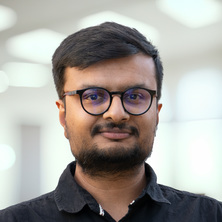
Dr Dharmesh D Bhuva is a NHMRC Emerging Leadership Fellow (EL1) on a mission to understand how complex systems of gene regulation and signalling produce diverse tissue phenotypes in health, disease, and development. He completed his PhD in Oct 2020 through the Department of Mathematics and Statistics, University of Melbourne, focusing on developing novel systems biology approaches to study molecular function and gene regulation in cancer systems. His current work focuses on extending these ideas to biological tissues through the development of computational methods to generate accurate biological insights from spatial molecular datasets.
Whilst being an early career researcher, he has developed high quality bioinformatics software that have been downloaded more than 160,000 times, has received >$3.25M in funding support, including NHMRC and MRFF, and has published in Genome biology and Nucleic Acids Research, some of the highest-ranking journals in his field. Dr Bhuva has organised and run various computational biology workshops at the University of Melbourne as well as the WEHI Bioinformatics and Computational Biology Masterclass (2021) that was delivered to the Asia-Pacific region. He currently supervises a PhD student and has co-supervised 2 successful MSc Bioinformatics students.
Affiliate of Australian Women's and Girls' Health Research Centre
Australian Women and Girls' Health Research Centre
Faculty of Health, Medicine and Behavioural Sciences
Senior Lecturer - Biostatistics
School of Public Health
Faculty of Health, Medicine and Behavioural Sciences
Availability:
Available for supervision
In biostatistics, the real measure of good work is not the journal’s impact factor or the size of the grant, but whether the analysis is honest, the methods are fit for purpose, and the findings can be trusted to guide decisions. Dr Darssan aims to do this kind of work: careful, transparent, and selective within focused teams of like-minded colleagues where statistical thinking is shared rather than outsourced. The goal remains constant: better evidence that ultimately advances modelling of geographical patterns and environmental impacts.
His research centres on applying and extending statistical methods, particularly spatial and environmental approaches, to address practical problems in complex observational and environmental data. He remains committed to transparent, reproducible practice and to mentoring the next generation of applied spatial and environmental modellers.
Dr Darssan values teaching that builds genuine statistical confidence rather than surface-level competence. His approach centres on active learning, real-world data, and creating an environment that encourages students to ask questions, challenge ideas, and think critically. He uses R-based workshops, practical case studies, and structured discussion to develop computational skill, logical reasoning, and critical judgement. As a Fellow of the Higher Education Academy (FHEA), he remains committed to reflective, student-centred practice that prepares learners to use statistics thoughtfully in their future work. He has taught approximately 1,300 postgraduate and 1,000 undergraduate students in foundational and applied statistics, and has supervised 9 Master’s dissertations and 8 PhD students to completion.
He values service as service, not as a means of promotion or personal return, but as a genuine commitment to helping others. Externally, he contributed as Statistics Editor for Clinical Toxicology, Associate Editor for Archives of Environmental and Occupational Health, President of the Statistical Society of Australia – Queensland Branch, Webinar Coordinator for the Teaching of Statistics in the Health Sciences section of the American Statistical Association, and Social Media Editor for the Australian and New Zealand Journal of Statistics. He also regularly reviews manuscripts and examines research theses.
Within the University, he has served as Program Director of the Bachelor of Health Sciences, co-founder of the Environmental Epidemiology Research Group, Engagement Coordinator for current students, PhD progress review chair and thesis examiner. He also developed the School’s LinkedIn presence. He particularly values conversations with like-minded people who undertake service for its own sake, rather than for personal benefit.
As a service statistician, Dr Darssan has spent years supporting investigator-initiated clinical trials, contributing to study design, randomisation, protocol development, statistical analysis plans, final reports, and data safety monitoring. He has provided statistical expertise to clinicians and researchers across ophthalmology, nephrology, rheumatology, endocrinology, and health services research.
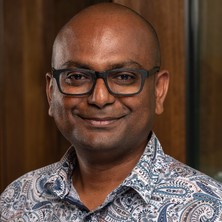
Dr Darsy Darssan is a Senior Lecturer in Biostatistics at The University of Queensland’s School of Public Health. He holds three degrees in Statistics from mathematical sciences schools: a BSc (Hons) from the University of Jaffna (2005), an MAppSc from RMIT University (2008), and a PhD from Queensland University of Technology (2014). His early career included roles at the Australian Council for Educational Research, the University of New South Wales, and the University of Wollongong, followed by postdoctoral research in biostatistics at the University of Liverpool, UK. He returned to Australia in late 2015 and has been at UQ ever since.
Faculty of Health, Medicine and Behavioural Sciences
Availability:
Available for supervision
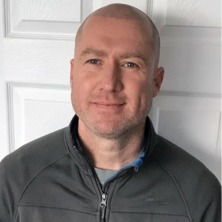
A/Prof Benn Sartorius is an established spatial and global health epidemiologist, with a particular interest in the burden of infectious disease and attributable determinants at sub-national, national and global scales as a tool to help inform and optimise policy at national and subnational scales. Dr Sartorius a principal research fellow in UQ's ODeSI team at University of Queensland, an affiliate professor in Department of Health Metric Sciences at University of Washington and a honorary visiting research fellow at University of Oxfored. Prior to join UQ, Dr Sartorius was the principal investigator for the Global Research on Antimicrobial Resistance (GRAM) Project based in the Centre for Tropical Medicine and Global Health at University of Oxford.
Dr Sartorius' research has focused on better understanding the spatial-temporal burden and risk factors of multiple IDs, including mosquito-borne diseases such as malaria, sexually transmitted infections, neglected tropical diseases such as soil-transmitted helminths and onchocerciasis, vaccine preventable diseases, emerging infectious diseases and more recently focused on antimicrobial resistance. These and other examples highlight the utility of spatial epidemiology to identify higher risk areas that should be prioritised for more targeted, tailored and resource efficient intervention and control measures. However, often spatial risk estimates for IDs are often not produced in-country in settings such as the Pacific, where disease burden is high and local modelling expertise is limited, resulting in use of incomplete/biased data and resulting in inefficient and suboptimal decision-making. I’ve been a collaborator on the Global Burden of Disease (GBD) project since 2014 and the Scientific Council for the GBD Project since 2015. Dr Sartorius is a member of the WHO Reference Group on Health Statistics (RGHS) and chair of the Age-Specific Mortality Estimation and Life Table Computation task force. Benn's vision, through ODeSI-HERA, is to expand his international profile and leadership in spatial-temporal epidemiology of priority infectious diseases in Australia and the Pacific. This will include spatial epidemiological innovation, and capacity building to improve health outcomes in high-risk and vulnerable sub-populations within the region, and will be co-created with stakeholders in the region to ensure that it aligns with their priorities, and support precision-based decision-making systems to help policy makers optimise resource allocation and guide targeted interventions.
Yibo Wang is a Postdoctoral Research Fellow at the URBANiQ node within the Institute for Social Science Research (ISSR) at UQ. His current research focuses on urban mobility in relation to public health, with particular emphasis on carbon emissions, socio-demographic patterns, travel modes, heat exposure, and accessibility to health services and infrastructure.
Yibo has a strong interdisciplinary background spanning geographic information systems and mechatronic engineering. He obtained a BEng from BUAA, where he was involved in the design and development of LiDAR systems. He subsequently completed a MEng at ANU, further developing technical expertise in machine learning and computer vision. More recently, he was awarded a PhD from UQ with research focusing on the statistical characteristics of carbon emissions generated by urban travel activities and how these emissions are jointly shaped by household characteristics and the built environment.
Yibo’s combined experience in science and engineering has equipped him with expertise in the design, fabrication, and validation of advanced remote sensing systems, as well as in the analysis of large-scale datasets to inform applied research and policy. At ISSR, he continues to integrate and extend these skills, contributing to improved everyday mobility and public health outcomes in urban contexts.