Affiliate of Centre for Cardiovascular Health and Research
Centre for Cardiovascular Health and Research
Faculty of Health, Medicine and Behavioural Sciences
Affiliate of Centre for Extracellular Vesicle Nanomedicine
Centre for Extracellular Vesicle Nanomedicine
Faculty of Health, Medicine and Behavioural Sciences
Professor and Director of UQ Advanced Cell Therapy Manufacturing Initiative
School of Chemical Engineering
Faculty of Engineering, Architecture and Information Technology
Availability:
Available for supervision
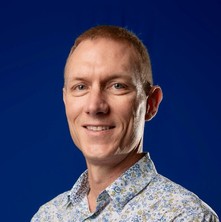
Professor Simon Cool is Professor of Bioengineering and Director of the UQ Advanced Cell Therapy Manufacturing Initiative in the School of Chemical Engineering at the University of Queensland.
Professor Cool began his scientific career at the University of Queensland more than 20 years ago. He received his BSc (hons) and PhD degrees from the University of Queensland, where he subsequently held a faculty position in the School of Biomedical Sciences. His areas of studies have included age-related changes in the structure of bone and teeth and the extracellular matrix compartment of skeletal tissue that guide stem cell behaviour and wound repair. Professor Cool was invited to join the Institute of Molecular and Cell Biology (IMCB), A*STAR, Singapore in 2003 as a Principal Investigator. He then joined A*STAR’s Institute of Medical Biology (IMB) in 2008, shortly after its inception, to further his research in regenerative medicine, serving as Senior Principal Investigator of the Glycotherapeutics Group. In October 2020, Professor Cool re-joined the Institute of Molecular and Cell Biology (IMCB) as a Research Director, Glycotherapeutics, where he focused on developing novel glycosaminoglycan biomolecules that enhance wound repair and control adult human mesenchymal stem cell activity.
Professor Cool has 117 patent applications across 26 families with 51 granted in the fields of glycosaminoglycan biochemistry, regenerative medicine and stem cell science. He has more than 150 publications and continues to foster strong strategic collaborations both nationally and internationally with academic and industry groups. He has a strong biomanufacturing and translational focus with experience in taking glycosaminoglycan-based devices through discovery RnD on to pre-clinical and clinical testing. Professor Cool also has an entrepreneurial and licensing background having successfully spun-off some of his technology to a US-based regenerative medicine start-up company, SMC Biotechnology Ltd. Professor Cool holds a Visiting Professor appointment at the Institute of Molecular and Cell Biology (IMCB), A*STAR, Singapore and an Adjunct Professor (Research) appointment in the Orthopaedic Department at the National University of Singapore (NUS). Prior to his move back to UQ, he previously held the position of Treasurer, Tissue Engineering and Regenerative Medicine International Society, Asia Pacific Chapter (TERMIS-AP) and Treasurer, Stem Cell Society Singapore (SCSS). He also held senior leadership positions in several Singapore-based R&D programmes, notably as Director, Allogeneic Stem Cell Manufacturing (ASTEM) and Theme Leader in Advanced Manufacturing for Biological Materials (AMBM). Prof Cool currently serves on the Editorial Board of the journals Biomaterials, Tissue Engineering and Regenerative Medicine, and is Asia-Pacific Regional Editor for Stem Cells and Development.
I am a molecular biologist/biochemist and HFSP postdoctoral researcher at the School of School of Chemistry and Molecular Biosciences. My research bridges the fields of functional proteomics and evolutionary biology, with a particular focus on how proteins and their post-translational modifications have evolved to shape and enable the evolution of key animal traits. Using mass spectrometry as my main analytical tool, I study early-branching animals such as sponges, ctenophores, and cnidarians to uncover the post-translational innovations underlying the emergence of multicellularity, the nervous and immune systems, and symbiotic interactions.
My current focus is on the evolution of protein N-glycosylation, a modification central to protein stability, folding, cell-cell and cell-ECM adhesion, recognition and communication, and therefore pivotal to the evolution of animals.
I completed my PhD (2019-2023) at the European Molecular Biology Laboratory (EMBL) Heidelberg, Germany in the group of Prof. Detlev Arendt, as a Marie Skłodowska-Curie Fellow within the ITN IGNITE network, where I combined functional proteomics with 3D imaging to uncover the molecular basis of coordinated contractions in nerveless sponges. This work revealed an ancient relaxant-inflammatory response underlying sponge deflation (Current Biology, 2024) and, in parallel, developed a protein structure-based framework for cross-phyla protein annotation in poorly annotated non-model species (Genome Biology, 2023).
I routinely work with mass spectrometry-based -omics (proteomics, glycoproteomics, glycomics) in non-model organisms in the Schulz lab. I welcome collaborations involving PTM discovery, glycoproteomics, and protein annotation in non-model species, as well as anyone simply interested in evolution and proteins.
Faculty of Engineering, Architecture and Information Technology
Availability:
Available for supervision
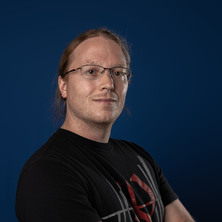
Dr. Alex Smith is a Research Fellow in Glycotherapeutics at UQ's School of Chemical Engineering. His interests are in understanding structure: function relationships between complex carbohydrates (such as heparan sulphate) and proteins, and how these interactions can inform the development of glycotherapeutic agents to treat a wide variety of injuries and diseases.