Queensland Alliance for Agriculture and Food Innovation
Availability:
Available for supervision
Media expert
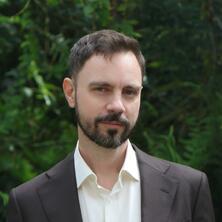
I work at the interface of sensory science and analytical chemistry to understand how food production, processing and environmental conditions influence food quality, provenance, authenticity and consumer perception. My research supports agrifood industries, including meat, seafood and broader food production sectors, by linking measurable chemical changes with sensory attributes such as flavour, aroma, texture and appearance.
I am interested in partnering with producers, processors, industry bodies and technology providers to evaluate how different growing, treatment, feeding, farming, harvesting or processing methods affect product quality and consumer perceptibility. This includes industry trials focused on climate-smart crops, sustainable production systems, improved animal and seafood production methods, provenance claims and product differentiation. My goal is to help translate scientific measurement into practical insights that support innovation, product integrity and consumer confidence.
Affiliate of Centre for Environmental Responsibility in Mining
Centre for Environmental Responsibility in Mining
Faculty of Engineering, Architecture and Information Technology
Affiliate of Centre for Geoanalytical Mass Spectrometry
Centre for Geoanalytical Mass Spectrometry
Faculty of Science
Professorial Research Fellow
Sustainable Minerals Institute
Faculty of Engineering, Architecture and Information Technology
Availability:
Available for supervision
Media expert
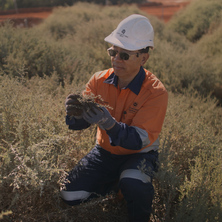
Professor Longbin Huang is a Full Professor and leader of an interdisciplinary research group in Ecological Engineering in Mining. His research focuses on mine waste rehabilitation, ecological engineering, and geomicrobial soil formation, integrating ecological, microbiological, and environmental processes to address sustainability challenges in the mining sector, with influence spanning industry, academia, and policy. Professor Huang leads cutting-edge research in: Geo-microbial ecology, Mineral bioweathering, Microbially and rhizosphere driven soil formation from Tailings Minerals.
Professor Huang's work has advanced nature-based solutions for transforming mine tailings, waste rock, and bauxite residues into sustainable ecosystems. Supported by approximately AUD $23 million in competitive and industry-funded research over the past 15 years, his team has developed and demonstrated innovative rehabilitation technologies with field-scale applications. These include a pioneering technology for the treatment and dealkalization of bauxite residues, which has been commercialized through the University of Queensland startup Bioculum Pty Ltd, and novel approaches for preventing acid mine drainage generation in mine waste materials.
Professor Huang has published over 190 scholarly outputs, including journal articles, conference papers, patents, and book chapters. His research has attracted broad international recognition and has contributed significantly to the advancement of mine waste management, ecological restoration, and sustainable mining practices worldwide.
He is highly experienced in industry-partnered research and translation of knowledge into field-based technologies for tackling large environmental challenges in the mining industry, for example, technologies for tackling global tailings problem. Since 2010, he has led many large and industry-partnered research projects attracting about $23M funding. The research aims to deliver transformative knowledge and practices (i.e., technologies/methdologies) in the rehabilitation of mine wastes (e.g., tailings, mineral residues, spoils, waste rocks) and mined landscapes for non-polluting and ecologically and financially sustainable outcomes. Prof Huang has successfully demonstrated innovative methodology and technology to achieve nature-based outcomes in treating and rehabilitating tailings and waste rocks. Prof Huang’s research program was featured in Rio Tinto’s media releases as one of the four most successful global R&D partnerships in 2024. Prof Huang led the development of the first field-feasible technology to treat and dealkalize alkaline bauxite residues for sustainable rehabilitation. His industry-partnered research was recognised in 2019 UQ’s Partners in Research Excellence Award (Resilient Environments) (Rio Tinto and QAL). Prof Huang is also developing new knowledge and technologies for achieving non-polluting and ecologically sustainable rehabilitation of, for example, coal mine spoils and tailings, Fe-ore tailings, bauxite tailings (from mining bauxite), and Cu/Pb-Zn tailings.
Membership of Board, Committee and Society
Professional associations and societies
2010 – Present Australian Soil Science Society.
2023 – Present AuSIMM
2015 – 2025 Present American Society of Mining and Reclamation (ASMR)
Editorial boards/services
2025 - present: Member of Editorial Board, Energy & Environment Nexus
Centre Director of Queensland Alliance for Environmental Health Science
Queensland Alliance for Environmental Health Sciences
Faculty of Health, Medicine and Behavioural Sciences
Centre Director of Minderoo Centre for Plastics and Human Health
Minderoo Centre for Plastics and Human Health
Faculty of Health, Medicine and Behavioural Sciences
Affiliate of ARC Training Centre for Bioplastics and Biocomposites
ARC Training Centre for Bioplastics and Biocomposites
Faculty of Engineering, Architecture and Information Technology
Affiliate of Centre for Marine Science
Centre for Marine Science
Faculty of Science
Centre Director - QAEHS
School of Pharmacy and Pharmaceutical Sciences
Faculty of Health, Medicine and Behavioural Sciences
Availability:
Available for supervision
Media expert
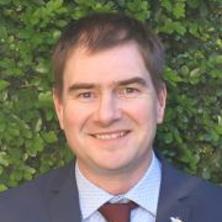
Professor Kevin Thomas is an internationally recognised environmental health scientist whose research over three decades has focused on a fundamental challenge: how can we identify, measure and understand the environmental exposures that matter for human and ecosystem health?
His research has pioneered new approaches to measuring environmental exposure, from environmental contaminants and complex mixtures to wastewater-based epidemiology, plastics and human health. He pioneered wastewater-based epidemiology as a population-level approach to monitoring community health and behaviour, and has advanced the measurement of micro- and nanoplastics, plastic-associated chemicals, PFAS and other contaminants of emerging concern.
A central focus of his research is making previously invisible exposures measurable. He combines high-resolution mass spectrometry, non-target analysis and advanced approaches to chemical and polymer characterisation to identify and quantify known and previously unrecognised exposures across environmental, population and human matrices.
His current research focuses on the human chemical and particulate exposome—integrating measurements of chemicals, plastics and other environmental stressors with exposure and health data to understand how complex mixtures of environmental exposures affect human health.
Professor Thomas is Director of the Queensland Alliance for Environmental Health Sciences (QAEHS) at The University of Queensland and Director of the Minderoo Centre for Plastics and Human Health. He is also Deputy Director and Queensland Node Leader of the ARC Industrial Transformation Training Centre for Hyphenated Analytical Separation Technologies (HyTech), and is affiliated with the ARC Training Centre for Bioplastics and Biocomposites and the Centre for Marine Science.
His research programme spans four interconnected areas:
Plastics and human health. Developing analytical approaches to identify and quantify micro- and nanoplastics and associated chemicals in environmental and human matrices, and to understand human exposure and potential health effects.
Emerging contaminants and exposomics. Developing high-resolution mass spectrometric and non-target approaches to identify known and previously unknown chemical exposures, including PFAS and other persistent and mobile contaminants.
Wastewater-based epidemiology. Using wastewater as a population-level biological sample to monitor community health, drug and tobacco use, emerging chemical threats and other indicators of population behaviour and health.
Antimicrobial resistance and environmental health. Identifying chemical and biological drivers of antimicrobial resistance in environmental mixtures, and developing approaches to understand their sources, exposure pathways and risks.
Professor Thomas has authored more than 400 pper-reviewed publications and has supervised researchers across environmental chemistry, analytical science, wastewater epidemiology, plastics and human exposure. His research brings together analytical science, environmental health and population-level measurement, with extensive collaboration across government, industry and international research organisations.
Across his research, a consistent focus has been making previously invisible environmental exposures measurable. This has taken his work from known contaminants to complex mixtures, population-level measurements and, increasingly, the chemical and particulate exposome of humans.