Affiliate of Centre for Living Experience Research
Centre for Living Experience Research
Faculty of Health, Medicine and Behavioural Sciences
Affiliate Research Fellow of T.C. Beirne School of Law of T.C. Beirne School of Law
School of Law
Faculty of Business, Economics and Law
Affiliate of Queensland Aphasia Research Centre (QARC)
Queensland Aphasia Research Centre
Faculty of Health, Medicine and Behavioural Sciences
Research Fellow
School of Health and Rehabilitation Sciences
Faculty of Health, Medicine and Behavioural Sciences
Availability:
Available for supervision
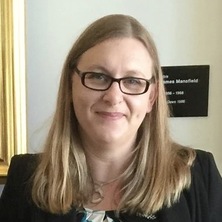
Michelle is a sociologist and lawyer: her research focuses on decision-making and the operation of law and regulation in practice for people with disabilities and other impairments to communication and legal capacity. She has research interests in the sociology of law, decision-making (supported and substituted), legal personhood, the UNCPRD, disability law, legal and administrative transition to adulthood, communication impairments, and profound intellectual disability. Her work examines decision-making in practice in a range of areas, including health and aged care, banking and finance, income support, and the NDIS. Michelle is trained in both qualitative and quantitative methods, and has extensive experience in research development, design, and practice, as well as health consumer research and co-design.
Michelle works on the MRFF funded project: Unspoken, Unheard, Unmet: Improving Access to Preventative Health Care through Better Conversations about Care. She leads the experience gathering stage of the project, the co-design elements of the work, and the development of guidelines about communication, decision-making, and aged care.
Michelle is also a consumer and disability advocate, with experience in strategic policy development, implementation, and evaluation, including the co-design of state level strategy for transition to adulthood health care, and on Australia’s National Living Evidence Taskforce. She is also the consumer board Chair of Child Unlimited, a consortium of researchers, clinicians, and consumers working towards best evidence-based practice in health care for children and young adults with chronic ill health and disabilities, and co-chair of the consumer advisory committee for the ARC Centre of Excellence Life Course Centre.
Affiliate of ARC COE for Children and Families Over the Lifecourse
ARC COE for Children and Families Over the Lifecourse
Faculty of Humanities, Arts and Social Sciences
Senior Research Fellow
School of Human Movement and Nutrition Sciences
Faculty of Health, Medicine and Behavioural Sciences
Availability:
Available for supervision
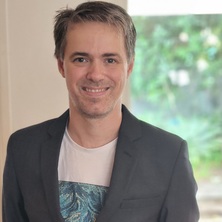
Dr Martin O’Flahertyis a research fellow in the ARC Centre of Excellence for Children and Families over the Life Course located in the Institute for Social Science Research. Martin has made important contributions to the evaluation of nationally significant social policy, often working with the Department of Social Services. Notable highlights include designing the impact evaluation for the $90 million Try, Test, and Learn Fund and leading the evaluation of the Building Capacity in Australia’s Parents trial and the National Community Awareness Raising initiative. He is the quantitative lead for recently announced Community Refugee Integration and Sponsorship Pilot, funded by the Department of Home Affairs, which is investigating the feasibility of alternative settlement pathways for unlinked humanitarian migrants.
Martin’s broader research centres on the intersection of family, health, and disadvantage over the life course, using advanced quantitative methods to unlock causal and longitudinal perspectives on important social problems. Recent work has investigated patterns and determinants of children’s and adolescents’ time-use, including for adolescents with disability and LGBTQ adolescents. He has also led research using state-of-the-art machine learning methodology to study heterogeneous effects of teenage motherhood on later life mental health. Martin’s current research is primarily focussed on understanding the nature, causes of, and solutions to, poverty and financial insecurity among children with disabilities and their families. His work has appeared in leading international journals including Demography, Child Development, and The Lancet Child and Adolescent Health among others.
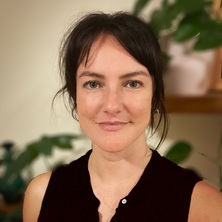
Zoe Staines (she/her) is Senior Lecturer and Director of Research in the School of Social Science at The University of Queensland. Her deeply interdisciplinary research spans social policy, sociology, and criminology, examining gender and work, care, welfare conditionality, and (de)coloniality with particular attention to structural injustice. She has published four books (including with leading publishers, Routledge and Policy Press) and dozens of journal articles, 85% of which are in Q1 journals and 21% of which are in journals ranked well within the top 10% globally (e.g., Policy Studies–top 2%, Sociology–top 4%). Her research has received multiple prizes and awards, including an ARC DECRA (2020-2023), the Australian and New Zealand Society of Criminology's 'best book in criminology' prize (2025), the John Mayer best article in Aus Journal of Political Science prize (2022), a Whitlam Institute Research Fellowship (2023), and UQ's competitive Foundation Research Excellence Award (2023).
Zoe is an elected board member for Australia's national Council for Humanities, Arts, and Social Sciences (CHASS), Chair of the Organising Committee for the 2026 Australian Social Policy Conference, Deputy Chair of the Australian Basic Income Lab, and an invited mentor for the International Association for Feminist Economics where she works with a group of eight mentees from across the Asia-Pacific region. She also served as Associate Editor and then Co-Editor of the Australian Journal of Social Issues (Q1) between 2019-2025. Before entering academia, Zoe held senior research and policy roles in government and the non-profit sector, and she remains committed to research with translational impact on policy and practice.
Zoe is recipient of a 2024 Australian Award for University Teaching (AAUT) and a 2023 UQ Citation for Outstanding Contributions to Student Learning, for 'co-creating imaginative, innovative, and engaging new resources for social science students to become effective social change agents'. She teaches into UQ's Bachelor of Social Science, Bachelor of Arts, and Bachelor of Criminology and Criminal Justice, while also sitting on the Bachelor of Social Science Program Committee. Zoe also currently supervises nine PhD students undertaking projects that span welfare conditionality, social policy, social housing, gender and work, work platformisation, artificial intelligence and future of work, and international human rights and law. She has been twice nominated for a UQ School of Social Science Excellence in Research Mentorship award.