5 results for scientific computing and numerical modelling
1 - 5 of 5 results
173Works
11Funded projects
Hon Assoc Professor
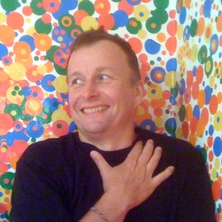
Lutz Gross
Honorary Associate Professor
School of Mathematics and Physics
Faculty of Science
Availability:
Available for supervision
Media expert
since 2023: Honorary Associate Professor, School of Mathematics and Physics, The University of Queensland.
2017-2023: Associate Professor, School of Earth and Environmental Sciences, The University of Queensland.
2003-2017: Deputy Director (Software), Earth System Sciences Computational Center (ESSCC) & School of Earth Sciences, The University of Queensland.
2001-2003: Computational Scientist, CSIRO Mathematical and Information Sciences Division, Melbourne, Australia.
2000-2001: Lecturer, Institute of Information and Mathematical Sciences, Massey University at Albany, Auckland, New Zealand.
1996-1999: Research Fellow, Center for Mathematics and its Applications, School of Mathematical Sciences, Australian National University (ANU), Canberra.
1989-1996: Research Scientist, Computing Center, University of Karlsruhe/Germany.
Links:
LinkedIn
researchgate.net
Editor: Geoscientific Model Development Journal (GMD), http://www.geoscientific-model-development.net & EGUsphere https://www.egusphere.net/
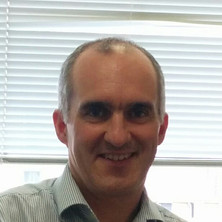
I studied Technical Mathematics at the Vienna University of Technology. I also earned a Master's degree in Law and I finished the first ("non-clinical") part of Medical Studies at the University of Vienna. I earned my PhD in Applied Mathematics at the University of Vienna in 2007. My PhD advisor was Christian Schmeiser, my co-advisor was Peter Markowich. I spent several months at the University of Buenos Aires working with C. Lederman and at the ENS-Paris rue d'Ulm in the group of B. Perthame.
Before coming to UQ, I held post-doc positions at the Wolfgang Pauli Insitute (Vienna), University of Vienna and the Austrian Academy of Sciences (RICAM). In 2013 I won an Erwin Schrödinger Fellowship of the Austrian Science Fund (FWF). I was a post-doc researcher in the group of Alex Mogilner first at UC Davis, then at the Courant Institute of Math. Sciences (New York University).
I moved to UQ in Dec. 2016. More recently, in 2024, I spent 4 months at the department of Mathemetics of the U. of Heidelberg as a visiting scientist.
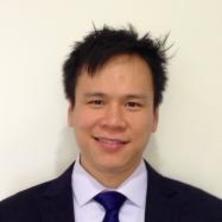
I joined UQ in September 2014 as Senior Lecturer in Mathematics and Director of the Master of Financial Mathematics (MFinMath) Program. Through strategic and effective leadership, I've overseen the Program's transformation into one of Australia's largest. My commitment to enhancing teaching methodologies, fostering a vibrant student and alumni community, and emphasising industry relevance and collaboration, has significantly contributed to this growth. Additionally, I've had the privilege of supervising well over 100 MFinMath graduates and several PhD candidates, many of whom are making significant contributions in corporations worldwide. My commitment to academic rigour, industry relevance and collaboration ensures our graduates are well-prepared for their careers.
My research focuses on the development of reliable numerical methods for stochastic control problems in finance. In particular, I have worked on complex mathematical challenges such as Defined Contribution superannuation and valuation adjustments, which stem from governance issues and broader societal needs. My robust collaboration with key sectors including FinTech, Superannuation, Energy, Investment, Banking & Finance, Information Technology, and Commercial, reinforces the practical relevance of my academic endeavors and strengthens the bridge between academia and industry.
My ongoing commitment is focused on fostering an enriching educational environment, promoting impactful research, and strengthening industry-academia collaborations at UQ.
Beyond my professional commitments, I find balance through a range of personal interests. I am a blackbelt in Judo and an enthusiastic CrossFit practitioner.
Furthermore, I have a deep appreciation for music, particularly piano compositions. My daughter, now an advanced pianist, has been a source of both inspiration and amusement for me. Despite enduring her initial stages of piano practice, filled with the typical off-key notes and stumbles that come with learning an instrument, I've been rewarded with the joy of her progress. Her dedication to mastering the piano serves as a continual source of motivation and a reminder of the beauty found in commitment and growth.
I hold a PhD in Computer Science from the University of Toronto, Canada.
Faculty of Engineering, Architecture and Information Technology
Associate Professor
School of Mechanical and Mining Engineering
Faculty of Engineering, Architecture and Information Technology
Availability:
Available for supervision
Media expert
Biography:
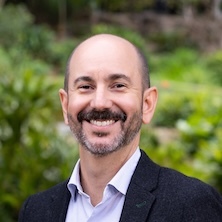
Christopher Leonardi is an Associate Professor within the School of Mechanical and Mining Engineering and an Advance Queensland Industry Research Fellow (Mid-Career). Dr Leonardi completed his PhD in computational mechanics at The University of Wales, Swansea, and his BE(Hons) in mechanical engineering at James Cook University, where he graduated with First Class Honours and a University Medal. Christopher’s PhD thesis resulted in the development of a computational approach to modelling complex fluid-particle suspensions and demonstrated its application in the context of underground mining. Prior to joining UQ, Christopher spent three years as a postdoctoral research fellow in the Department of Civil and Environmental Engineering at the Massachusetts Institute of Technology, where he worked on computational modelling of fluid-solid interaction problems in the context of oil and gas production.
Dr Leonardi has published more than 40 scientific papers in international journals, 30 conference papers (most in collaboration with industry partners), and one book chapter. He has graduated four PhD students as principal advisor and a further three as associate advisor. In addition to his academic pursuits, Christopher spent five years working as an engineering consultant with Rockfield Technologies Australia, where he applied advanced computational analysis tools to problems in bulk materials handling, structural design, and geomechanics.
Research:
Associate Professor Leonardi’s research is focused on the development and application of computational models of complex fluid-solid interactions, including suspension transport, porous media flow, multiphase flows, and poromechanics. The outputs of his work are applied to provide insight into the complex characteristics of subsurface fluid and solid mechanics in gas production from unconventional reservoirs (e.g. coal seams) and mineral extraction from challenging orebodies. Current and recent projects include studies on hydraulic fracturing and proppant transport in coal seam gas (CSG) reservoirs, surface movement within and adjacent to CSG tenements, counter-current two-phase flow in CSG wells, in situ recovery of minerals from low-permeability rocks, and bubble-particle interaction in hydrogen formation via methane pyrolysis.
Christopher and his group of postdoctoral researchers and postgraduate students possess expertise in a range of computational techniques, including the lattice Boltzmann, discrete element, finite element, and finite difference methods. His team collaborates closely with national computing facilities, such as Pawsey Supercomputing Centre, to development, implement, and apply these techniques to large-scale engineering problems.
Teaching and Learning:
Associate Professor Leonardi is Director of Teaching and Learning in the School of Mechanical and Mining Engineering where he coordinates and lectures the course, MECH3780 Computational Mechanics, and lectures the first-year course, ENGG1001 Programming for Engineers. Christopher was awarded a Graduate Certificate in Higher Education from UQ in 2015 and received Citations for Outstanding Contributions to Student Learning from the Australian Awards for University Teaching (AAUT) in 2019 and UQ in 2018.
Affiliate of Minerals Industry Safety and Health Centre
Minerals Industry Safety and Health Centre
Faculty of Engineering, Architecture and Information Technology
Affiliate of ARC Research Hub to Advance Timber for Australia's Future Built Environment (ARC Advanc
ARC Research Hub to Advance Timber for Australia's Future Built Environment
Faculty of Engineering, Architecture and Information Technology
Director of HDR Students of School of Civil Engineering
School of Civil Engineering
Faculty of Engineering, Architecture and Information Technology
Associate Professor - Structural Engineering
School of Civil Engineering
Faculty of Engineering, Architecture and Information Technology
Availability:
Available for supervision
Media expert
Dr David Lange joined the School of Civil Engineering at the University of Queensland in early 2018. Originally from the the UK, he has a Masters and a PhD, both from the University of Edinburgh. Following completion of his studies, he spent a number of years working in the UK developing fire safety strategies for a range of premises including laboratory and commercial facilities, and residential buildings; as well as conducting fire risk assessments and risk engineering projects in a range of industrail areas including HPR facilities. He then spent 6 years working as a senior research scientist for SP / RISE in Sweden, conducting research in a range of different areas such as fire resistance, facade fire safety, crisis management and infrastructure resilience. His work at the University of Queensland covers a broad range of areas related to fire safety.
David is a Registered Professional Engineering in Queensland (RPEQ), a registered engineer in New South Wales, as well as a Chartered Engineer (CPEng) at the member grade of Fellow with Engineers Australia (FIEAust). He is on the National Engineers Register (NER) in Australia and is an APEC Engineer and an International Professional Engineering registered in Australia (IntPE). He is also a member of the SFPE.
His current research projects are in the areas of:
Fire safety of timber buildings
Design of buildings for vertical fire spread
Lithium Ion Battery fire safety
Structural fire engineering
Fire engineering design
Application and development of risk analysis techniques in fire safety engineering