
Overview
Background
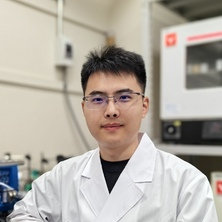
Dr. Yunqing Kang received his Ph.D. from Waseda University, Japan, in 2022. Following his graduation, he has held research positions at several prestigious institutions, including the National Institute for Materials Science (NIMS) and Nagoya University, where he has been actively engaged in cutting-edge academic research. Currently, Dr. Kang is a Discovery Early Career Researcher Award (DECRA) Fellow in the Yamauchi Research Group at the AIBN. His research focuses on the design and synthesis of advanced nanostructured metallic materials to address critical challenges in energy conversion and environmental sustainability. By pioneering bottom-up self-assembly strategies, Dr. Kang precisely engineers the atomic-scale disorder in porous metals, enabling the creation of high-performance catalysts essential for the global energy transition.
Dr Kang's core expertise encompasses mesoporous metals, amorphous and high-entropy alloys, and disordered metallic architectures, with specific applications in electrocatalysis for water splitting and plastic upcycling. With over 50 publications in prestigious journals including Nature, Science Advances, and Angewandte Chemie, Dr. Kang is dedicated to advancing the fundamental understanding of material science to facilitate industrial innovation.
Availability
- Dr Yunqing Kang is:
- Available for supervision
Fields of research
Qualifications
- Bachelor (Honours) of Materials Science and Engineering, East China University of Science and Technology (华东理工大学)
- Masters (Research) of Materials Science and Engineering, Shanghai Normal University (上海师范大学)
- Doctoral (Research) of Materials Science and Engineering, Waseda University
Research interests
-
Mesoporous Metallic Materials
I specialize in the bottom-up self-assembly of advanced nanostructured metals with precisely controlled pore architectures. My work focuses on creating single atom alloy, amorphous alloy and high-entropy alloy systems that offer enhanced surface areas and structural stability for industrial applications. By engineering these disordered metallic frameworks, I aim to push the boundaries of material design for sustainable development and catalytic performance.
-
Engineering Hybrid Functional Materials
I design complex hybrid materials by integrating porous metallic structures with diverse functional components including oxides, MOFs, silica, carbon, and polymers. By systematically tailoring the interfaces and architectural synergy between these components, I develop robust composite systems with enhanced activity and durability. This work provides a versatile material platform for addressing complex challenges in electrochemical energy storage and conversion.
-
Electrocatalytic Energy and Environmental Applications
I apply advanced material systems to address global energy and sustainability challenges, with a primary focus on high-efficiency water splitting. My work explores the coupling of the hydrogen evolution reaction (HER) with the anodic oxidation reaction (AOR) for upcycling of plastics to produce high-value chemicals. This research delivers sustainable and scalable pathways for clean hydrogen production and the transformation of waste into value-added products within a circular economy.
Research impacts
Dr. Kang’s research translates complex material science into tangible solutions for sustainable energy and environmental protection by improving the efficiency and durability of catalysts that serve as the engines of the clean energy economy. His development of highly active mesoporous metal catalysts significantly lowers the energy barriers for water electrolysis, rendering green hydrogen production more viable and cost-effective.
Furthermore, his work on catalytic architectures supports the conversion of waste plastics and environmental pollutants into high-value chemical products, directly promoting a circular economy. The impact of his research is evidenced by a high international standing, with outputs consistently ranked in the top 1%–10% of global citations and a Field-Weighted Citation Impact of 5.62. Beyond his laboratory contributions, Dr. Kang actively shapes the scientific community as a young editorial board member, ensuring the dissemination of cutting-edge findings that drive industrial progress and global sustainability goals.
Works
Search Professor Yunqing Kang’s works on UQ eSpace
2018
Journal Article
CO2 conversion to synthesis gas: Via DRM on the durable Al2O3/Ni/Al2O3 sandwich catalyst with high activity and stability
Zhao, Yu, Kang, Yunqing, Li, Hui and Li, Hexing (2018). CO2 conversion to synthesis gas: Via DRM on the durable Al2O3/Ni/Al2O3 sandwich catalyst with high activity and stability. Green Chemistry, 20 (12), 2781-2787. doi: 10.1039/c8gc00743h
Funding
Current funding
Supervision
Availability
- Dr Yunqing Kang is:
- Available for supervision
Looking for a supervisor? Read our advice on how to choose a supervisor.
Media
Enquiries
For media enquiries about Dr Yunqing Kang's areas of expertise, story ideas and help finding experts, contact our Media team: