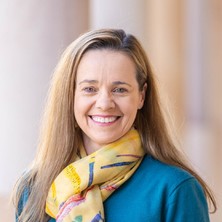
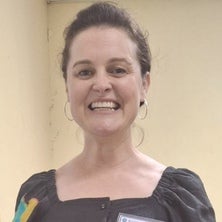
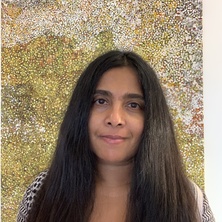
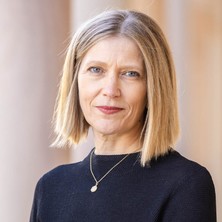
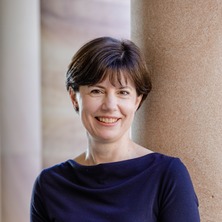
Lisa McDaid is Director of the Institute for Social Science Research (ISSR) and Professor of Social Sciences and Health at The University of Queensland. Lisa has an international reputation grounded in knowledge exchange and partnership. Her research has made significant contributions to identifying solutions to health inequalities among the most disadvantaged and marginalised in our society. Lisa is experienced in how to engage communities at high risk of poor health and wellbeing in health improvement research and in developing new methods of co-production for intervention development.
Lisa is a Social Scientist and obtained her PhD in Medical Sociology from the University of Glasgow in 2007. She has been Chief-Investigator on research grants c.AU$100M and has authored over 100 publications. Lisa is also an Associate Director of the Centre for Research on Families and Relationships, a consortium research centre based at the University of Edinburgh in Scotland.
Faculty of Health, Medicine and Behavioural Sciences
Availability:
Available for supervision
Media expert
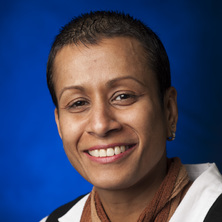
I am a Pacific Fijian academic, researcher and community leader providing senior leadership in community‑engaged research and teaching across Australian and international higher education. My work sits at the intersection of Indigenous knowledge systems, health equity and public policy, driving system‑level change through culturally grounded scholarship.
I lead and shape programs that embed Indigenous methodologies, community participatory action research and social justice principles into policy‑relevant research, professional education and practice. Through long‑term, co‑designed partnerships, I advance culturally safe solutions that address the social, cultural, environmental and political determinants of health affecting Māori and Pasifika, Culturally and Linguistically Diverse (CALD) and First Nations communities nationally and internationally.
My strength‑based research program focuses on health equity and the burden of chronic conditions, with a strong emphasis on research translation, policy development and advocacy impact. My work informs health systems, service design and decision‑making at local, national and international levels, contributing to improved and more equitable health outcomes—particularly for First Nations including Māori and Pasifika and CALD communities in Australia and globally.
Faculty of Health, Medicine and Behavioural Sciences
Affiliate of Centre for Cardiovascular Health and Research
Centre for Cardiovascular Health and Research
Faculty of Health, Medicine and Behavioural Sciences
Affiliate Professor of Mater Research Institute-UQ
Mater Research Institute-UQ
Faculty of Health, Medicine and Behavioural Sciences
Affiliate of Minerals Industry Safety and Health Centre
Minerals Industry Safety and Health Centre
Faculty of Engineering, Architecture and Information Technology
Centre Director of Centre for Community Health and Wellbeing
Centre for Community Health and Wellbeing
Faculty of Health, Medicine and Behavioural Sciences
Professor in Community Health and Wellbeing
School of Human Movement and Nutrition Sciences
Faculty of Health, Medicine and Behavioural Sciences
Professor in Community Health and Wellbeing
School of Public Health
Faculty of Health, Medicine and Behavioural Sciences
Availability:
Available for supervision
Media expert
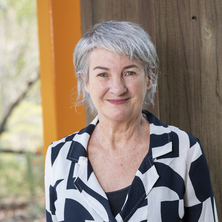
My work focuses on how universities can operate as deeply embedded institutions within the societies they serve. Knowledge is created through listening, trust and genuine partnership, and impact comes from being present, responsive and collaborative. I focus on strengthening universities’ social licence by developing new ways of working with and alongside communities.
I am a Professor of Community Health and Wellbeing here at The University of Queensland, with an international reputation in community health, prevention, health services and policy. Together with my team, I lead research that shapes how communities thrive, with our work recognised through multiple awards for research excellence and real-world impact.
The cornerstone of my work is leading the Springfield Living Lab. Living labs use place-based, systems-oriented approaches to bring together research, teaching and partnerships to co-create, test and refine solutions in real-world settings over time. Springfield provides a uniquely rich environment for this work through its integrated urban design, strong local governance and commitment to innovation across health, education and technology. As Australia’s largest master-planned city, it offers a complex, real-world context for understanding how community-led approaches can translate into scalable models for broader application.
As a leader, I bring people together across disciplines, sectors and lived experience to create shared purpose and coordinated action. I support teams and organisations to imagine what is possible, map pathways forward and translate ambitious ideas into sustained impact. My leadership is values-led, collaborative and grounded in practical delivery.
I am particularly interested in how research, teaching and engagement can be better aligned to address complex societal challenges, while building cultures where people can do their best work.
I welcome opportunities to work with people and organisations committed to community connection, partnership and innovation. Together, we can strengthen trust, build capability and design approaches that are meaningful for the next generation and for society more broadly.
Faculty of Health, Medicine and Behavioural Sciences
Affiliate Associate Professor
Mater Research Institute-UQ
Faculty of Health, Medicine and Behavioural Sciences
Research Social Scientist
Institute for Social Science Research
Faculty of Humanities, Arts and Social Sciences
Availability:
Available for supervision
Media expert
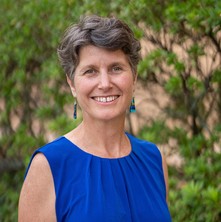
Assoc Prof Fran Boyle is a social scientist and health services researcher at the Institute for Social Sciences Research. Fran's background is in psychology and public health and her research focuses on people’s lived experiences of health, health services and the health system. Fran's research expertise is in the application of social sciences methods (including the integration quantitative and qualitative approaches) and health systems thinking to guide policy and practice.
Fran is a Principal Investigator with the Australian Centre of Research Excellence in Stillbirth where she co-leads the Care after Stillbirth program. Her research addresses the psychosocial impacts of perinatal loss and is committed to improving outcomes for women and families through the implementation and evaluation of best practice parent-centred perinatal bereavement care in hospital and community settings.
Affiliate of UQ Poche Centre for Indigenous Health
UQ Poche Centre for Indigenous Health
Faculty of Health, Medicine and Behavioural Sciences
Affiliate of Centre of Architecture, Theory, Culture, and History
Centre of Architecture, Theory, Culture and History
Faculty of Engineering, Architecture and Information Technology
Associate Professor
School of Public Health
Faculty of Health, Medicine and Behavioural Sciences
Availability:
Available for supervision
Media expert
Associate Professor Nina Lansbury (also published as Nina Hall) is an environmental public health research and teaching academic at The University of Queensland’s School of Public Health. Her current research at UQ examines environmental health aspects that support the health and wellbeing of remote Indigenous community residents (as a non-Indigenous Australian) on both mainland Australia and in the Torres Strait in terms of housing, water and sanitation, and women's health. She also investigates the impacts of climate change on human health; at a global level, this involves a role as Coordinating Lead Author on the Intergovernmental Panel on Climate Change (IPCC AR7 WG II Ch 9, and formerly as a Lead Author in AR6) as well as a focus on remote Indigenous communities in Australia. In her teaching of undergraduate and postgraduate health students, she covers wicked health problems, integrative and interdisciplinary thinking in health, environmental health, and climate change impacts on health. Within the research sector, she was a senior research scientist at CSIRO, manager of the Sustainable Water program at The University of Queensland, and senior research consultant at the Institute for Sustainable Futures, UTS. Within the non-government sector, she was the director of the Climate Action Network Australia and research coordinator at the Mineral Policy Institute.
Karen is a Professor of Development Geography in the School of the Environment and an ARC Industry Laureate Fellow (2026–2031). Her work examines how people experience and respond to the intersecting challenges of climate change, disaster risk, poverty, and displacement. Over the past two decades, she has led long-term, collaborative research partnerships across the Asia-Pacific, working with governments, NGOs, and local communities to understand lived experiences of vulnerability, resilience, and adaptation.
Karen’s research has included supporting farming communities in Aceh rebuilding after the 2004 Indian Ocean tsunami; examining the experiences of newly settled migrants in Dhaka displaced by erosion and flooding; partnering with Torres Strait Elders to record traditional environmental knowledge; and documenting everyday climate impacts and adaptation stories across rural Pacific Island communities.
She has led a series of major research projects, including an ARC Future Fellowship, and has served in advisory roles for national governments and international organisations. She currently sits on the Expert Group on Non‑Economic Losses under the Warsaw International Mechanism for Loss and Damage (UNFCCC), contributing her expertise on climate-related impacts and social equity.
Karen grew up in Quirindi on Kamilaroi Country in NSW. Her rural upbringing fostered a deep commitment to research that is grounded, community-focused, and centred on supporting more just and resilient futures.
Director of HDR Students of School of Political Science and International Studies
School of Political Science and International Studies
Faculty of Humanities, Arts and Social Sciences
Associate Professor
School of Political Science and International Studies
Faculty of Humanities, Arts and Social Sciences
Availability:
Available for supervision
Heloise Weber’s research is animated by an interest in the historical and contemporary politics of inequalities and injustices in the organization of development globally. She approaches questions over development from a critical perspective, which considers ‘the international’ as a product of development, and the 'development' we experience as advanced crucially also through the ‘international’. Her research addresses how knowledge-production and representation shape and justify framings of ‘development’ at a macro-political level, and what this means for people. A correlate of this is her interest in struggles against such schemes, and for ‘development otherwise’. The conceptual and theoretical concerns raised in this context form the basis of her interest in the politics of method and methodological choices, notably with regard to social science staples such as the (formal) comparative method, and its consequences and implications. Her theoretical and analytical approaches are informed by a critical interest in colonialism and its legacies, and post-colonial and decolonial thought and politics. She is also interested in how such insights can contribute to contemporary critical revisions of global public political histories.
Research
Critical Development Theory and International Relations
Politics of the Comparative Method
Colonialism, Post-colonial Relations, and Decolonial Politics
Critical Approaches to Human Rights and Inequality
Critical Approaches to Security and Development
Global Political Economy, Finance, and Development
Politics and Political Economy of Microcredit and Microfinance
Trade, Development and Inequality
The UN 2030 Sustainable Development Goals
Heloise has been an active member of the Global Development Studies Section(GDS) of the International Studies Association(ISA), has twice served as Section and Program Chair, and serves on the GDS Eminent Scholar Committee. She is a founding member of the GDS/ISA Edward Said Graduate Paper Award.
In 2022, Heloise was elected President of the Development Studies Association of Australia (DSAA), serving a full term until 2024. She facilitated the organisation of the Third Biennial Conference held at the University of Melbourne and, among other initiatves and responiosbilties associated with the role introduced the inaugural biannual online seminar series with a presentation by Adjunct Prof. Mary Graham and Associate Prof. Morgan Brigg.
She is a member of the editorial boards of Contexto Internacional- Journal of Gobal Connections, and of Globalizations.
She has served as Associate Editor of International Political Sociology (2017-2021). IPS is an official journal of the International Studies Association.
Books:
Co-authored
Phillip McMichael & Heloise Weber, Development and Social Change – A Global Perspective – 7thEdition. Thousand Oaks, CA: Sage Publishing, 2021 (copyright 2022).
Mark T. Berger & Heloise Weber,Rethinking the Third World: international development and world politics Basingstoke: Palgrave Macmillan, 2014.
Edited volumes
The politics of development: A survey London, U.K.: Routledge, 2014.
Co-Edited volumes
War, peace and progress in the 21st century: Development, violence and insecurity London United Kingdom: Routledge, 2011. (With Mark T Berger)
Recognition and Redistribution: Beyond International Development London: Routledge, 2009. (With Mark T Berger) *This was originally a Special Issue of Globalizations.*
Book Chapters
Afterword:Imperialism and Global Inequalities. in G. Bhambra & J. McClure Imperial Inequalities: The politics of economic governance across European empires (forthcoming 2022). Manchester, Manchester University Press .
The political significance of Bandung for development: challenges, contradictions and struggles for justice (2016). In Quynh N. Pham and Robbie Shilliam (Ed.), Meanings of Bandung: postcolonial orders and decolonial visions (pp. 153-164) London, United Kingdom: Rowman & Littlefield.
From land grabs to food sovereignty (2016) In Jan Aart Scholte, Lorenzo Fioramonti and Alfred G. Nhema (Ed.), New rules for global justice: structural redistribution in the global economy (pp. 109-124) London, United Kingdom: Rowman & Littlefield.
Gender and microfinance/microcredit (2016). In Jill Steans and Daniela Tepe-Belfrage (Ed.), Handbook on gender in world politics (pp. 430-437) Cheltenham, United Kingdom: Edward Elgar.
Introduction (2014) In Heloise Weber (Ed.), The Politics of Development: A Survey (pp. 3-9) London, United Kingdom: Taylor and Francis. doi:10.4324/9780203804919
Global politics of human security (2013) In Mustapha Kamal Pasha (Ed.), Globalization, difference, and human security (pp. 27-37) Abingdon, Oxon, United Kingdom: Routledge. doi:10.4324/9781315886923
Global Poverty, Inequality and Development (2012) In Richard Devetak, Anthony Burke and Jim George (Ed.), An introduction to international relations 2nd ed. (pp. 372-385) Port Melbourne Vic., Australia: Cambridge University Press.
Global poverty and inequality. (2007) In Richard Devetak, Anthony Burke and Jim George (Ed.), An introduction to international relations: Australian perspectives (pp. 283-294) Cambridge, England: Cambridge University Press.
Microcredit Schemes (2007) In Roland Robertson and Jan Aart Scholte (Ed.), Encyclopedia of Globalization (pp. 780-783) New York, USA: Routledge.
The global political economy of microfinance and poverty reduction: locating local 'livelihoods' in political analysis(2006) In Jude L. Fernando (Ed.), Microfinance: Perils and prospects (pp. 43-63) London and New York: Routledge Taylor and Francis.
Global governance and poverty reduction: the case of microcredit (2002) In Steve Hughes and Rorden Wilkinson (Ed.), Global governance: critical perspectives (pp. 132-152) Abingdon, United Kingdom: Taylor & Francis. doi:10.4324/9780203302804_chapter_8
Journal Articles
Poverty is not ‘another culture’: Against a right of children to work to live. Review of International Studies (published online, Feb 5, 2022). *With Aliya Abasi.
Contribution to the Giucciardini Prize Forum: Racist Origins of IR: Thakur and Vale on South Africa's formative influence on the discipline. Cambridge Review of International Affairs (published online Oct 26, 2021)
Colonialism, genocide and International Relations: the Namibian–German case and struggles for restorative relations, (2020) European Journal of International Relations Vol. 26 (S1): 91-115. DOI: 10.1177/1354066120938833 .*With Martin Weber.
When Means of Implementation meet Ecological Modernization Theory: A critical frame for thinking about the Sustainable Dvelopment Goals initiative. (2020) World Development.*With Martin Weber.
Global development and precarity: a critical political analysis (2019) Globalizations, 16 4: 525-540. doi:10.1080/14747731.2018.1463739 *With Samid Suliman.
Collective discussion: Diagnosing the present (2018) Walker, R. B. J., Shilliam, Robbie, Weber, Heloise and Du Plessis, Gitte (2018) Collective discussion: Diagnosing the present. International Political Sociology, 12 1: 88-107. doi:10.1093/ips/olx022
Politics of ‘leaving no one behind’: contesting the 2030 sustainable development goals agenda (2017) Globalizations,14 3: 1-16. doi:10.1080/14747731.2016.1275404
The ‘Bandung spirit’ and solidarist internationalism (2016) Australian Journal of International Affairs, 70 4: 391-406. doi:10.1080/10357718.2016.1167834 *With Poppy Winati*
Is IPE just ‘boring’, or committed to problematic meta-theoretical assumptions? A critical engagement with the politics of method (2015) Contexto Internacional: Journal of Global Connections, 37 3: 913-943. doi:10.1590/s0102-85292015000300005
Reproducing inequalities through development: the MDGs and the politics of method (2015) Globalizations, 12 4: 660-676. doi:10.1080/14747731.2015.1039250
Global Politics of Microfinancing Poverty in Asia: The Case of Bangladesh Unpacked. (2014) Asian Studies Review,38 4: 544-563. doi:10.1080/10357823.2014.963508
When goals collide: politics of the MDGs and the post-2015 sustainable development goals agenda.(2014) SAIS Review of International Affairs, 34 2: 129-139. doi:10.1353/sais.2014.0026
Politics of global social relations: Organising 'everyday lived experiences' of development and destitution (2010)Australian Journal of International Affairs, 64 1: 105-122. doi:10.1080/10357710903460048
Human (in)security and development in the 21st century (2009) Third World Quarterly, 30 1: 263-270. doi:10.1080/01436590802623001 *With Mark T. Berger*
War, peace and progress: Conflict, development, (in)security and violence in the 21st century (2009) War, peace and progress: Conflict, development, (in)security and violence in the 21st century. Third World Quarterly, 30 1: 1-16. doi:10.1080/01436590802622219 *With Mark T Berger*
A political analysis of the formal comparative method: Historicizing the globalization and development debate (2007)Globalizations, 4 4: 559-572. doi:10.1080/14747730701695828
Conclusion: Towards recognition and redistribution in global politics (2007) Globalizations, 4 4: 603-605. doi:10.1080/14747730701695869 *With Mark T. Berger*
Introduction: Beyond international development (2007) Globalizations, 4 4: 423-428. doi:10.1080/14747730701695612 *With Mark T. Berger*
A political analysis of the PRSP initiative: Social struggles and the organization of persistent relations of inequality(2006) Globalizations, 3 2: 187-206. doi:10.1080/14747730600702998
Beyond state-building: global governance and the crisis of the nation-state system in the 21st century Third World Quarterly, 27 1: 201-208. doi:10.1080/01436590500370095 *With Mark T. Berger*
GATS in context: development, an evolving lex mercatoria and the Doha Agenda (2005) Review of International Political Economy, 12 3: 434-455. doi:10.1080/09692290500170809 *With Richard Higgott*
Beyond US grand strategy?: Critical analysis and world politics (2005). Critical Asian Studies, 37 1: 95-102. doi:10.1080/1467271052000305287 *With Mark T Berger*
The new economy and social risk: Banking on the poor (2004) Review of International Political Economy, 11 2: 356-386. doi:10.1080/09692290420001672859
Reconstituting the 'Third World'? poverty reduction and territoriality in the global politics of development (2004)Third World Quarterly, 25 1: 187-206. doi:10.1080/0143659042000185408
The imposition of a global development architecture: The example of microcredit (2002) Review of International Studies, 28 3: 537-555. doi:10.1017/S0260210502005375
Lynda is Deputy Provost of the University, with responsibility for assisting in the operations of the Provost portfolio and initiatives sponsored by the Offices of the Vice-Chancellor and Provost. This includes providing direction for strategic projects and working across functions, units, colleges, and campuses to execute goals for the Provost. As a member of the Senior Leadership and Academic Board, Lynda provides administrative leadership with a particular focus on industrial and employee relations issues as they relate to academic staff.
Lynda holds a Bachelor of Economic and Social Science (Hons) in sociology from the University of Wales (University College of Swansea), and a BA Honours degree and PhD in sociology from Central Queensland University.
Prior to taking up the position of Deputy Provost, she served as Head of the School of Social Science from 2020 to 2026. She has also held research-focussed and Teaching and Research positions, including an Australian Research Council Future Fellowship from 2011 to 2015.
As a sociologist, Lynda has undertaken research in the broad area of community, neighbourhoods and housing, examining how how structural and policy processes impact upon neighbourly and community relations, and attachments to home and place. She has led a large program of research on ‘un-neighbourliness’ using large-scale, survey, interview and administrative data to examine the nature, causes and outcomes of problems between neighbours and their effects on neighbouring more broadly. She has also served as international Partner Investigator on the ESRCs’ Connected Communities consortium (Crow et al) and the Wales Institute of Social and Economic Research, Data and Methods (WISERDII).
Affiliate of ARC COE for Children and Families Over the Lifecourse
ARC COE for Children and Families Over the Lifecourse
Faculty of Humanities, Arts and Social Sciences
Affiliate of Centre for Health Outcomes, Innovation and Clinical Education (CHOICE)
Centre for Health Outcomes, Innovation and Clinical Education
Faculty of Health, Medicine and Behavioural Sciences
Centre Director of Parenting and Family Support Centre
Parenting and Family Support Centre
Faculty of Health, Medicine and Behavioural Sciences
Director of Parenting and Family Support Centre and Professor in Family Psychology and Parenting
School of Psychology
Faculty of Health, Medicine and Behavioural Sciences
Availability:
Available for supervision
Media expert
Prof Alina Morawska is Director of the Parenting and Family Support Centre, The University of Queensland. She is passionate about creating a world where children develop the skills, competencies and confidence to adapt and thrive in an ever-changing world. Her research focuses on the central role of parents in influencing all aspects of children’s development, and parenting interventions as a way of understanding healthy development, a means for promoting positive family relationships, and a tool for the prevention and early intervention in lifelong health and wellbeing. She has published extensively in the field of parenting and family intervention and has received numerous grants to support her research. She has been recognised as Australia’s top scholar in family studies.
Centre Director of Centre for Motor Neuron Disease Research
Centre for Motor Neuron Disease Research
Faculty of Health, Medicine and Behavioural Sciences
Associate Professor
School of Biomedical Sciences
Faculty of Health, Medicine and Behavioural Sciences
Availability:
Available for supervision
Media expert
Associate Professor Steyn is a leading expert in neurodegenerative disease research, specializing in the metabolic and physiological aspects of Motor Neurone Disease (MND). He currently directs a comprehensive translational research program at the University of Queensland, focusing on the interplay between metabolism and disease progression in MND, and leads key projects investigating the impact of metabolic dysfunction, appetite dysregulation, and hypermetabolism on patient outcomes. His work prioritizes the integration of pre-clinical models, clinical studies, and innovative digital health technologies to advance understanding of the heterogeneity in MND, patient care and therapeutic development.
Associate Professor Steyn’s career began with detailed investigations into the hypothalamic regulation of energy homeostasis, growth, and reproduction. He developed industry-standard methodologies for evaluating hormone release patterns in rodent models, particularly concerning growth hormone regulation. In 2015, he transitioned to focus on neurodegenerative diseases, establishing a research platform at UQ that has significantly advanced the analysis of metabolic phenotypes in MND.
His current research projects include the MEND-MND study, which explores how altered energy metabolism influences disease progression, and the EATT4MND study, which examines the consequences of appetite loss and impaired body weight regulation on disease outcomes. Through collaboration with industry partners, he is also developing novel therapeutic strategies and refining wearable digital health technologies for precise, real-time monitoring of disease progression, including the validation of actigraphy-based measures as clinical trial biomarkers.
Professor and Associate Dean (Academic/Research/External Engagement/Other)
Faculty of Humanities, Arts and Social Sciences
Affiliate of Research Centre in Creative Arts and Human Flourishing
Research Centre in Creative Arts and Human Flourishing
Faculty of Humanities, Arts and Social Sciences
Availability:
Not available for supervision
Media expert
Kim Wilkins is a humanities researcher and acclaimed creative writer who specialises in the intersection of creativity, technology, and cultural industries. Currently Associate Dean (Research) in the Faculty of Humanities and Social Sciences at UQ, she leads innovative research into the socio-material dimensions of creative industries and the application of creative thinking to complex technological challenges.
Her research portfolio spans popular fiction studies, publishing ecosystems, and technology foresight. Recent projects include pioneering work on speculative fiction storytelling for defence innovation, community publishing in regional Australia, and the application of "story thinking" to anticipate technological impacts. She serves as a member of the Australian Research Council College of Experts.
As a creative practitioner, Wilkins has published 30+ novels in 20+ languages, including bestselling historical fiction and fantasy series. Her dual expertise as both researcher and professional writer uniquely positions her to bridge academic inquiry with industry practice, particularly in areas of creativity research, reading and book culture, the future of publishing, and transdisciplinary innovation.
Centre Director of Centre for Innovation in Pain and Health Research (CIPHeR)
Centre for Innovation in Pain and Health Research
Faculty of Health, Medicine and Behavioural Sciences
Professor and NHMRC Leadership Fellow
School of Health and Rehabilitation Sciences
Faculty of Health, Medicine and Behavioural Sciences
Availability:
Available for supervision
Media expert
Paul W. Hodges DSc MedDr PhD BPhty(Hons) FAA FACP APAM(Hon) is an National Health and Medical Research Council (NHMRC) Leadership Fellow (Level 3), Professor and Director of the Centre for Innovation in Pain and Health Research (CIPHeR) at The University of Queensland (UQ). He is lead chief investigator on an NHMRC Synergy Grant that includes colleagues from the Universities of Queensland, Adelaide and South Australia, and the South Australian Health and Medical Research Institute. Paul is a Fellow of the Australian Academy of Science, which is a Fellowship of the nation’s most distinguished scientists, elected by their peers for outstanding research that has pushed back the frontiers of knowledge. He is also a Fellow of the Australian College of Physiotherapists, the Australian Academy of Health and Medical Science, and was made an Honoured member of the Australian Physiotherapy Association, their highest honour.
Paul is a recognised world leader in movement control, pain and rehabilitation. His unique comprehensive research approach from molecular biology to brain physiology and human function has led to discoveries that have transformed understanding of why people move differently in pain. His innovative research has also led to discoveries of changes in neuromuscular function across a diverse range of conditions from incontinence to breathing disorders. These observations have been translated into effective treatments that have been tested and implemented internationally.
Paul has received numerous national and international research awards that span basic and clinical science. These include the premier international award for spine research (ISSLS Prize) on five occasions; three times in Basic Science (2006, 2011, 2019) and twice in Clinical Science (2018, 2021). International awards in basic science include the SusanneKlein-Vogelbach Award (2010) and the Delsys Prize for Innovation in Electromyography (2009). National medical research awards include the NHMRC Achievement Award (2011). He has also received national community-based leadership awards including the Young Australian of the Year Award in Science and Technology (1997), Future Summit Australian Leadership Award (2010), and Emerging Leader Award (Next 100 Awards, 2009).
Paul is the Chair of the Terminology Task Force for the International Association for the Study of Pain, Chair of the Consensus for Experimental Design in Electromypgraphy for the International Society for Electrophysiology and Kinesiology and has been the Chair/Co-Chair for several major international conferences. He has led major international consortia to bring together leaders from multiple disciplines to understand pain.
Faculty of Health, Medicine and Behavioural Sciences
Professor
School of Human Movement and Nutrition Sciences
Faculty of Health, Medicine and Behavioural Sciences
Availability:
Available for supervision
Media expert
Professor Mallett has enjoyed a distinguished career in elite coaching and academia. Prof. Mallett was an Olympic and World Championship medal-winning coach and won a National university teaching award (2011). In 2017, he was awarded the prestigious August-Wilhelm Scheer Professorial Fellowship at Technische Universität München (TUM) in Germany. He developed a world-renowned online program in sports coaching and consults nationally and internationally to many elite sporting organisations. Prof. Mallett is a leading international scholar in two broad and interrelated research areas - sport psychology and coaching; specifically:
Understanding the person-in-context
Multi-layered understanding of the person-in-context (personality profiling of coaches and athletes)
Motivation of elite coaches and athletes (Self-Determination Theory - SDT);
Autonomy-supportive learning environments in sport (Self-Determination Theory - SDT);
Mental toughness in elite sport (coaches and athletes).
Players' leadership: A Social Identity Approach (SIA)
High Performance coach learning and development:
How high performance coaches learn in the workplace;
Coaches as sculptors, architects, performers and leaders.
In 2016, Professor Mallett led and completed an international research project examining what can we learn from some of the world's most successful coaches. Prof. Mallett was Chair and Co-Chair of the Research Committee for the International Council for Coaching Excellence (ICCE) from 2010-2019.
Background
Professor Cliff Mallett joined the School of Human Movement Studies in 2000 after a career in physical education and also in elite coaching as a National High Performance Coach in track and field with the Australian Institute of Sport (AIS) and the Queensland Academy of Sport (QAS). He teaches undergraduate and graduate students and actively researches in the area of elite sport. Prof. Mallett regularly consults with elite coaches and athletes as well as coach developers in several national sporting organisations and international organisations.
Affiliate of Centre for Digital Cultures & Societies
Centre for Digital Cultures & Societies
Faculty of Humanities, Arts and Social Sciences
Professor
School of Education
Faculty of Humanities, Arts and Social Sciences
Availability:
Not available for supervision
Media expert
Annemaree Carroll is Professor of Educational Psychology within the School of Education at The University of Queensland. Her research activities focus on the social emotional learning of children and adolescents, and the importance of social connectedness, (dis)engagement, and social inclusion to their behavioural and educational outcomes. Student, teacher, and community voices and agency are key considerations in her research methodologies. She is known nationally and internationally for the development of innovative emotion regulation interventions for children and youth to bring about positive change in their lives. She has conceptualised and coordinated the development of the Mindfields Suite of Programs (www.mindfields.com.au), which encompasses a strengths-based approach to student well-being that targets school-wide practices to help young people take control of their lives. She has also led a team of researchers to develop the KooLKIDS Resources (www.kool-kids.com.au), an emotion resilience program to empower children to live well with themselves and others by learning social, emotional, and cognitive skills that promote self-regulation and well-being. Her research has now extended to teacher emotion regulation strategies, demonstrating that improved teacher well-being has downstream benefits to students' well-being and the teacher-student relationship.
Professor Carroll has extensive experience managing large-scale, school-based projects across classroom settings and clinic-based research, in which she has excellent skills in test administration with children and adolescents. She has also been concerned with children with neurodevelopmental disorders (e.g., ADHD, speech-language disorders, Tourette Syndrome) to examine information-processing tasks that may demand intact executive functioning and that require dual-task performance and control of impulsive reactions.
From 2014 to 2020, Professor Carroll was Co-ordinator of Translational Outcomes within the Australian Research Council Science of Learning Research Centre. Building on this work, she is the co-founder and Head of the UQ Learning Lab, where multi-disciplinary researchers work in partnership with educational and industry professionals to identify and address important learning and training priorities. The Learning Lab’s primary objective is to transform education and learning across schooling and beyond, through partnered innovations and research translation initiatives.
Professor Carroll is a registered teacher and psychologist. She has experience teaching in primary and special education in Queensland and has engaged in research and higher education teaching at The University of Queensland and The University of Western Australia, where she was granted a Master of Education (1991) and PhD in Educational Psychology (1995). She was elected a Fellow of the Academy of Social Sciences in Australia in 2018.