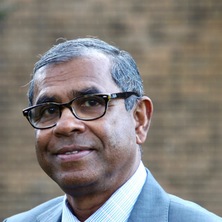
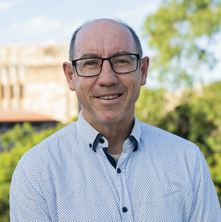
As an agricultural and resource economist, Thilak Mallawaarachchi focuses on building resilient and sustainable food, agricultural and natural resource systems under climate, market and policy uncertainty. His work combines economics, public policy and systems thinking to improve decision-making across agriculture, agribusiness, water and environmental management.
With over 35 years of international experience across Australia, Asia and Africa, Thilak has contributed to research and policy development on climate adaptation, agricultural productivity, water allocation, food systems, natural resource management and rural development. He has worked with governments, industry and international development agencies to address challenges affecting farmers, communities and ecosystems.
Current multidisciplinary research focuses on economic modelling and policy analysis to inform institutional arrangements in agriculture, food systems and land management, including:
• Agricultural economics and rural development • Risk management and resilience • Industrial organisation and entrepreneurship • Collective decision-making and cooperation • Contract theory and its applications • Environmental and resource economics
His work has informed major Australian policy initiatives, including climate adaptation strategies, Murray-Darling Basin water reform and national food policy, while supporting agricultural development programs across the Asia-Pacific and Africa aimed at improving agricultural productivity, reducing food loss and waste, and enhancing market access.
Faculty of Engineering, Architecture and Information Technology
Availability:
Available for supervision
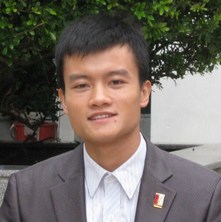
Dr Ngoc N. Nguyen is a Senior Lecturer (Assistant Professor) and a Discovery Early-Career Researcher Award recipient (DECRA Fellow) granted by Australian Research Council (ARC), at School of Chemical Engineering, The University of Queensland (UQ), Australia. Prior to the current position, he was awarded an Australia Award Scholarship by the Australian Government for studying at UQ and attained a PhD in Chemical Engineering at UQ in 2018. After completing his PhD, he was awarded a world-renowned Alexander von Humboldt (AvH) Fellowship by the AvH Foundation (the German Government) and worked as an AvH fellow at the Department of Physics at Interfaces, Max Planck Institute for Polymer Research (Germany) for three years (2019-2021). Dr Nguyen used to work as a visiting scholar to Pacific Northwest National Laboratory in USA and a lecturer at Hanoi University of Science and Technology in Vietnam. He is also an associate investigator within the ARC Centre of Excellence for Eco-enabling Beneficiation of Minerals.
His research strives for creating cutting-edge knowledge and innovations in three inter-related pillars of the low-carbon economy:
(1) sustainable energy,
(2) natural resources including critical metals,
(3) innovative approaches for tackling environmental issues such as CO2 emissions and mine waste.
He is working concurrently in these pillars. In particular, he is leading an ARC DECRA project about unconventional energy storage by locking fuel gases (e.g., hydrogen, methane) in the solid lattice of water, taking the intrinsic advantages of water as the cheapest, safest and most sustainable feedstock on Earth. Besides, he is working actively in eco-efficient extraction and separation of valuable resources from the Earth's crust toward a sustainable mineral processing industry for supplying sufficient commodities (e.g., metals) for the energy transition. In addition, Dr Nguyen has enduring interest in creating innovations for tackling pressing environment problems such as CO2 emissions, with special interest in carbon capture and storage and utilisation, as well as addressing the mine waste in the mineral processing industry and the recylcing of critical metal-containing waste.
Dr Jon Olsen is an Associate Professor & Deputy Director (Research) at the Institute for Social Science, The University of Queensland. He serves as Director of URBANiQ: Urban Intelligence for Healthy & Equitable Places @ The University of Queensland, the AURIN UQ-Node, and leads research focused on place and health inequalities. His work explores how the built and natural environments, along with urban planning policies, influence health outcomes and disparities. Jon is also committed to advancing understanding of the intersections between human health and planetary health.
He is Co-I of the NIHR Global Health Research Unit in Social and Environmental Determinants of Health Inequalities (SEDHI) and the NIHR Public Health Research (PHR) Programme-funded Orienting Policy Towards Inequality Minimising Actions (OPTIMA) project, a systems science approach to 20-minute neighbourhood policy and evaluation.
Jon is Senior Editor of the new journal Urban Transitions, Editorial Board Member of Wellbeing, Space and Society. He is an Honorary Senior Research Fellow at the University of Glasgow, UK and Honorary Professor at Chulalongkorn University, Thailand.
Faculty of Engineering, Architecture and Information Technology
Affiliate Research Fellow of School of the Environment
School of the Environment
Faculty of Science
Affiliate of UQ Centre for Natural Gas
UQ Gas & Energy Transition Research Centre
Faculty of Engineering, Architecture and Information Technology
Availability:
Available for supervision
Media expert
Julie’s research is mainly focussed on gas-water-rock core reactivity at reservoir conditions using experimental, field, and geochemical modelling techniques. Recent projects have been in the application of carbon dioxide geological storage in which CO2 is captured and stored in formations generally contained by low permeability cap-rock. The safe containment of the injected CO2 and the potential changes to rock porosity, permeability, and water quality should be determined. Recent and current projects with a focus on a demonstration site in the Surat Basin (Precipice Sandstone) include the impacts of impurity or acid gases present in industrial CO2 streams (collaboration with D. Kirste, SFU), inducing carbonate precipitation (in collaboration with S. Golding), and understanding dissolved metal sources and fate. Julie has also worked closely with the CO2CRC, CTSCo, Glencore, SEAL, the NSW government, CI-NSW, and ANLEC R&D, and provided expert opinion to the Queensland Government, and input to Environmental Impacts Assessments.
Julie is currently working with landholders, the QLD regional government, RDMW, councils and industry to understand the sources of methane in aquifers of the Great Artesian Basin, especailly those overlying coal seam gas reservoirs (CSG) (with Arrow Energy, SANTOS, APLNG, H. Hoffman, K, Baublys).
Other projects include gas-water-rock or acid-rock reactivity that modify nano-porosity and gas flow in gas or oil bearing shales.
Julie Pearce graduated with an MCHEM (Hons) degree in Chemistry from the University of York, UK. She then moved to the University of Bristol to complete a Ph.D. in 2007 focusing on laser spectroscopic studies to understand the detailed reaction dynamics of atmospheric processes. From 2007 – 2009 she accepted a Japan Society for the Promotion of Science Postdoctoral Fellowship, hosted at Nagoya University, Japan. There she measured delta 13C and delta 18O isotopic signatures of CO2 simultaneously in real time in the atmosphere using a laser spectroscopic technique to understand anthropogenic and biogenic sources of CO2. After taking a career break to travel in 15 countries in Asia, she moved to Brisbane in 2010 where she is enjoying the surrounding natural beauty of Queensland.
Affiliate of Centre for Environmental Responsibility in Mining
Centre for Environmental Responsibility in Mining
Faculty of Engineering, Architecture and Information Technology
Research Fellow
Sustainable Minerals Institute
Faculty of Engineering, Architecture and Information Technology
Availability:
Available for supervision
Dr Sang Phan work combines research in forest ecology and management with significant experience as a practitioner in project implementation and a community development worker. Dr. Phan’s expertise includes carbon sequestration in terrestrial and coastal ecosystems (such as mangrove forests), sustainable forestry practices, and the valuation of ecosystem services. He translates this expertise into practical outcomes by leading forest restoration programs, designing climate change mitigation projects such as REDD+ and agroforestry carbon initiatives, and improving environmental monitoring techniques. A key aspect of his approach involves working directly with local communities and stakeholders, coordinating development projects, and delivering targeted training to build local capacity for sustainable land management and livelihood enhancement.
Sreekar’s research focuses on using ecological theory to inform conservation decision making. He is interested in a broad range of topics, including spatial conservation planning, evidence-based conservation policy, community assembly rules, extinction synergies, and land-use management. A big question that drives his research is how to address the twin crises of climate change and biodiversity loss. His current research is centred around studying the environmental risks associated with mining and mineral processing.
He serves as an Associate Editor for the Journal of Applied Ecology and has spent the past 15 years at universities across Australia, China, Czechia, India and Singapore. Sreekar is an avid birder and enjoys this aspect of his work both professionally and recreationally.
Deputy Director of Centre for Biodiversity and Conservation Science of Centre for Biodiversity and C
Centre for Biodiversity and Conservation Science
Faculty of Science
Affiliate of Centre for Biodiversity and Conservation Science
Centre for Biodiversity and Conservation Science
Faculty of Science
Senior Lecturer in AgroEcology
School of Agriculture and Food Sustainability
Faculty of Science
Senior Lecturer in AgroEcology
School of the Environment
Faculty of Science
Availability:
Available for supervision
Media expert
April Reside is a senior lecturer in the School of the Environment and School of Agriculture and Food Sustainability, affiliated with the Centre for Biodiversity and Conservation Science.
Dr Reside's research encompasses ecology, conservation, and policy; investigating refuges and refugia; and recovery actions and their costs for Australia’s threatened species. April also works on conservation of woodland bird communities, the impact of climate change on biodiversity, and strategies for climate change adaptation. This work has involved applying conservation planning frameworks to identify spatial priorities for climate change adaptation for biodiversity and carbon sequestration.
April has a particular fascination of flying vertebrates, and has worked on bats on three continents and nine countries. She worked as a field ecologist for non-government organisations before her PhD on understanding potential impacts of climate change on Australian tropical savanna birds. She adapted species distribution modelling techniques to account for temporal and spatial variability in the distributions of highly vagile bird species. These dynamic species distribution models take into account species’ responses to fluctuations in weather and short-term climatic conditions rather than long-term climate averages. In her first postdoctoral position, Dr Reside modelled the distribution of c.1700 vertebrates across Australia at a fine resolution, and located the future location of suitable climate for all these species for each decade until 2085. From this, she identified hotspots across Australia where species were moving to in order to track their suitable climate, informing the IUCN SSC Guidelines for Assessing Species’ Vulnerability to Climate Change by the IUCN Species Survival Commission.
April has been involved in conservation of the Black-throated Finch for over 12 years, and is Chair of the Black-throated Finch Recovery Team. She has served on Birdlife Australia's Research and Conservation Committee and Threatened Species Committee; and the Science Committee for the Invasive Species Council.
Affiliate of Centre for Biodiversity and Conservation Science
Centre for Biodiversity and Conservation Science
Faculty of Science
Professor
School of the Environment
Faculty of Science
Availability:
Available for supervision
Media expert
Professor Anthony J. Richardson uses mathematical, statistical, computational and spatial planning tools to investigate human impacts on our oceans - and to find solutions. Particular foci include:
Marine spatial planning - Where best to locate marine protected areas to minimise impacts on people, maximise ecosystem benefits, ensure they are climate-smart and connected, and enable multiple-use zoning of the ocean.
Developing models of marine ecosystems - How do lower trophic levels (plankton) regulate fisheries productivity and carbon sequestration, and how will these be impacted by climate change.
Long-term change in lower trophic levels (plankton) in the ocean. This includes both field work around Australia and global analyses.
Anthony did an undergradulate degree in Mathematics and Biology at the University of Queensland, followed by an Honours degree there. He was awarded a PhD degree from the University of Cape Town in 1998, modelling the dynamics of marine ecosystems. Since 2005, Anthony has held a joint position between UQ (School of the Environment) and CSIRO Environment. He has previously held positions at the University of Cape Town (South Africa), the University of the Western Cape (South Africa), and the Sir Alister Hardy Foundation of Ocean Science (UK).
Anthony runs a dynamic lab at the nexus between conservation science and mathematics. His focus is on using mathematical tools to better conserve biodiversity, predict impacts of climate change, and understand the functioning of marine ecosystems. If you have a background in marine ecology and are interested in applying mathematics/statistics/computational science and want to apply your skills to real-world problems, get in touch.
Affiliate of Centre for Biodiversity and Conservation Science
Centre for Biodiversity and Conservation Science
Faculty of Science
Associate Professor
School of the Environment
Faculty of Science
Availability:
Available for supervision
Media expert
Research interest: Monitoring ecosystem health of coral reefs and seagrass habitats, integrating field and remote sensing image datasets, and the developing applied cost-effective mapping and monitoring approaches. Developed approaches have been adopted as standard practice globally, making a difference in conservation of these valuable habitats. The long term monitoring studies at Heron and Moreton Bay formed the basis for the development of mapping and monitoring over time and space at local to global scale. See here major research impact
Major projects:
Long term monitoring of benthic composition at Heron Reef (2002-ongoing).
Long term monitoring of seagrass composition and abundance in Moreton bay Marine Park (2000-ongoing).
Smart Sat CRC Hyperspectral Remote Sensing of Seagrass and Coral Reefs 2023-2027.
Developement of Underwater Field Spectrometry and Benthic Photo Collection and Analysis
3D GBR Habitat Mapping Project 2015 - ongoing:
Global habitat mapping project 2019-2023 Allen Coral Atlas .
Current position: Associate Professior in Marine Remote Sensing leading the Marine Ecosystem Monitoring Lab. . Academic Director Heron Island Research Station and affiliated researchers with Centre for Marine Science and Centre for Biodiversity and Conservation Science
Capacity Building and Citizen Science: Capacity: under/post graduate courses; Msc/PhD supervision, workshops/courses; Remote Sensing Educational Toolkit, and online courses (e.g. TNC).Strong supporter of citizen science based projects, as trainer, organiser and advisor for Reef Check Australia, CoralWatch, Great Reef Census and UniDive.
Tina is a quantitative marine and coral reef ecologist focused on understanding the drivers of reef community dynamics, from food-web structure and energy flow to habitat connectivity and population processes. She integrates field ecology, laboratory analyses, and big-data modelling to answer applied questions for conservation, with particular expertise in stable isotope ecology and ecosystem modelling.
Based at the University of Queensland and affiliated with the Centre for Marine Science and the Centre for Biodiversity and Conservation Science, she currently models Crown-of-Thorns Starfish outbreak dynamics on the Great Barrier Reef to identify strategies that maximise the effectiveness of limited manual control resources. This work contributes directly to management through the COTS Control Innovation Program with the Great Barrier Reef Foundation and national partners.
She has over a decade of international experience leading cross-sector collaborations with governments, NGOs, research institutions, Indigenous peoples, and local communities across Australia, the Pacific, and the Caribbean, and is committed to translating complex biodiversity data into decisions that benefit both people and nature. She is also passionate about communicating science to diverse audiences and engaging the next generation in marine research.
I'm a quantitative community ecologist with broad experience across terrestrial and marine systems, modern and geological time, local and global scales with both theoretical and practical focus. I'm driven by discovery, interested in myriad topics on how communities form and function, but particularly how we measure and make comparisons between communities.
Translating anomaly detection to ecology: In a world experiencing climate change, biodiversity loss and other human impacts, detecting anomalous ecological systems accurately and early potentially offers vast benefits to conservation and ecosystem management. Anomaly detection is a fast-moving area of research applied in fields as varied as banking fraud detection, cybersecurity and cancer diagnosis. These fields deal with data as complex and incomplete as ecology, but we haven't plumbed this expertise for benefits to ecology. This is the primary focus of my DECRA.
Grounding ecological novelty for practical use: Ecologists have been talking about novel systems for twenty years, and related topics (such as "no-analog systems") for even longer. Despite well-cited work on how "novel" can be a useful label for ecological restoration, there's a mismatch between management frameworks, which often use ad-hoc qualitative criteria, and quantitative novelty research, which has been mostly performed at global scales. Understanding how to measure novelty, how analytic choices affect measurements, and how to downscale our inferences to be practicable, has been a focus for me and my colleagues.
The linguistic evolution of programming languages: The use of scientific programming languages like R, Python and Julia are becoming not only popular, but mandatory skills for researchers. The utility of these languages has been improved by new versions and a plethora of community-created addon packages. This approximates features of natural language evolution, where lexicon changes over time. Understanding the speed and direction of how programming languages evolve can give us a unique insight into how humans learn and alter languages, and how we might ensure they remain understandable into the future. I am currently using GitHub as a vast repository of time-stamped programming “texts”, ripe for linguistic analysis.
Community ecology through the lens of functional traits: It doesn’t matter who you are, it matters what you do. That applies to organisms too. Despite decades of research into how physiology and life history strategy, often proxied through easy-to-measure “functional traits”, functional ecology is still more niche than it should be. Currently my colleagues and I are exploring how a functional lens alters ecological novelty, but I am always thinking about ecology in the light of how organisms live.
My research focuses on soil health in cropping and pasture systems, with particular expertise in soil carbon and soil organic matter dynamics, microbial ecology, and plant–soil interactions. I investigate how agronomic interventions influence soil functional processes and productivity, with the goal of reversing soil fertility decline and building healthier, more resilient soils. This work includes assessing the impacts of tillage, cover cropping, crop rotational diversity, nutrient management, and organic amendments on soil processes, crop development, and long-term system performance.
Teaching and education
I am committed to student‑centred, evidence‑based teaching that prepares graduates for contemporary agricultural practice. My teaching spans introductory to advanced agronomy, with a focus on aligning theory with hands‑on learning through lectures, tutorials, practicals, and field‑based activities. I coordinate and teach into courses including fundamentals of agriculture and cropping systems, and serve as Course Coordinator for an industry placement course, where students undertake structured work‑integrated learning experiences with agricultural and agri‑industry partners.
Across my teaching, I emphasise applied problem‑solving, quantitative skills, systems thinking, and graduate employability. I am particularly interested in curriculum design, constructive alignment, assessment for learning, and integrating research and industry context into agronomy education.
Faculty of Health, Medicine and Behavioural Sciences
Availability:
Available for supervision
Media expert
Dr. Ayaho Yamamoto is the Group Leader of Laboratory Science at the Children's Health and Environmental Program and is a research fellow in the field of Biomedical Science. Her research focuses on understanding the mechanistic links between environmental exposures and adverse respiratory outcomes. In particular, she focuses on the cellular responses following air pollution exposure and/or viral infection on human respiratory epithelium, and the age differences in immune defence mechanisms. Investigate on early intervention strategies with dietary antioxidants to improve respiratory health and reduce the risk of long-term chronic diseases.
Dr. Yamamoto has a Bachelor of Science in Environmental Health and Public Health; her research focused on childhood asthma. She has a Master of Science in Biomedical Science and Pharmacology; the research focus was to understand the mechanisms and to test new drugs for osteoporosis and chondrosarcomas metastasis. She has worked in a Uni-based start-up company for drug development.