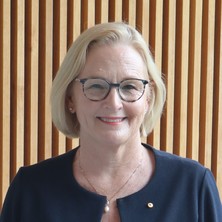
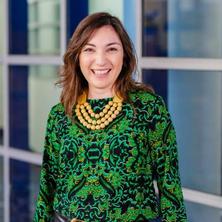
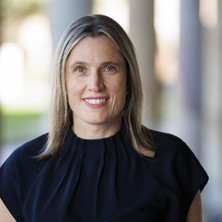
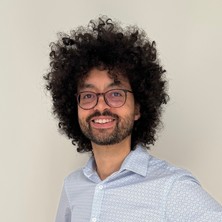
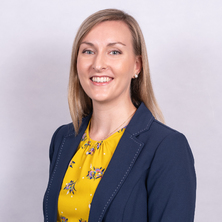
Louise Hickson, AM, is an Emeritus Professor of Audiology in the Faculty of Health, Medicine and Behavioural Sciences at The University of Queensland. She has published over 300 research articles, books and book chapters with her main focus on the effects of hearing loss on people's everyday lives and the development of strategies and interventions that improve the uptake and outcomes of hearing rehabilitation. Louise is Chair of the Phonak Expert Circle on Family-Centred Hearing Care, is on the Executive Board of the International Society or Audiology and is a Fellow and Life Member of Audiology Australia. She has received numerous awards recognising her contributions to audiology, including the international research award from the American Academy of Audiology, The University of Queensland Leadership Award, a Lifetime Achievement Award from Hearing Australia and a Life Member of Audiology Australia. She is an Editor of the International Journal of Audiology amd in 2021 Emeritus Professor Hickson was Australia's Leading Researcher in the field of Audiology and Speech and Language Pathology. In 2022 she became a Member of the Order of Australia for significant service to tertiary education and audiology associations. She is a sought after speaker and regularly presents at conferences and meetings around the world. Louise also provides advice to hearing service providers both in Australia and overseas and is committed to improving services for people with hearing difficulties.
Faculty of Health, Medicine and Behavioural Sciences
Availability:
Available for supervision
Media expert
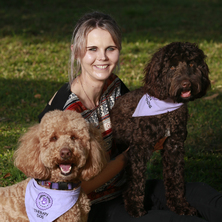
Jess has worked as a paediatric occupational therapist in private practice since graduating from her undergraduate degree. She gained additional training in animal-assisted therapy (canine and equine) in 2015 and became interested in the role animals could play in facilitating client motivation and engagement within therapy sessions. This interest led Jess to complete her PhD exploring the efficacy of canine-assisted occupational therapy with autistic children. Since completing her PhD Jess has continued her research into the impact of human-animal interaction to human and animal health and wellbeing resulting in a number of publications. In line with this research Jess is also the Co-director of The University of Queensland Animal-Assisted intervention Alliance, and the Community Engagement Manager for Animal Therapies Ltd. Jess is also qualified as a personal trainer and has clinical and research experience working to support people with disability engage in physical activity. Jess is a current researcher and coach within the UQ ParaSTART Program.
Faculty of Health, Medicine and Behavioural Sciences
Availability:
Available for supervision
Media expert
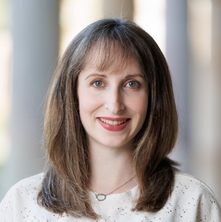
Dr Elaine Kearney is a Conjoint Research Fellow in Speech Pathology between The University of Queensland and Princess Alexandra Hospital. Her background is as a speech pathologist and speech scientist. Her research interests include the brain mechanisms underlying speech changes in neurological disorders (e.g., Parkinson’s disease, Huntington’s disease) and developing evidence-based speech therapies for these populations. She conducts both basic science and clinical research using a broad range of methods (e.g., acoustic, neuroimaging, computational modelling), and she is committed to conducting rigorous, transparent, and accessible science.
At Princess Alexandra Hospital, Dr Kearney facilitates research in the Speech Pathology department, specifically mentoring speech pathologists in building research capacity and establishing a stronger evidence base for their clinical practice. This work focuses on knowledge translation and implementation science, making real-world change in the healthcare setting.
Affiliate of University of Queensland Centre for Hearing Research (CHEAR)
Centre for Hearing Research
Faculty of Health, Medicine and Behavioural Sciences
Affiliate of Parenting and Family Support Centre
Parenting and Family Support Centre
Faculty of Health, Medicine and Behavioural Sciences
Associate Professor in Audiology
School of Health and Rehabilitation Sciences
Faculty of Health, Medicine and Behavioural Sciences
Availability:
Available for supervision
Media expert
I am the Founder and Director of the Hearing Research Unit for Children, leading three research teams investigating (1) middle ear assessments in neonates and infants, (2) hearing screening and diagnostic assessment of school-aged children, and (3) assessment of auditory function of adults and children using electrophysiologic measures including otoacoustic emissions, auditory brainstem response, steady-state evoked potentials, wideband absorbance and wideband tympanometry. My special interest in technological advances and my mission to improve hearing health services through the use of cutting-edge technologies have inspired me to become a world leader in detecting ear diseases in newborns, infants and children. As a world leader in the field of tympanometry and advanced middle ear assessments for children, I have been invited to present on the use of wideband tympanometry with infants and children at international seminars and institutions.
As of July 2024, I have a career total of 249 publications - consisting of 1 book, 4 book chapters, 2 chapters in the Encyclopedia of Human Communication Sciences and Disorders, 132 peer-reviewed journal papers and 110 conference abstracts. Internationally, I am ranked as the most productive author in the world in the field of Tympanometry (a test of middle ear function) and advanced middle ear assessments for all years (1994-2024) and for the last 5 years (Web of Science, February 2024). My work has been cited in 25 different subject categories including Medicine, Health Professions, Neuroscience, Physics, Astronomy, Engineering and Computer Science (Scopus, February 2024). Furthermore, my work has been widely cited internationally by authors in 83 countries ranging from the United States to Europe, Asia and the Middle East (Scopus, February 2024).
Faculty of Health, Medicine and Behavioural Sciences
Availability:
Available for supervision
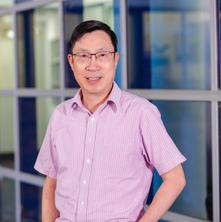
Mark Liu is a Postdoctoral Research Fellow focusing on the potential for clinical trials to affect change on a larger, longer-term scale. He was the interning early-career researcher for a multidisciplinary patient safety trial conducted at eight hospitals across Sydney, Melbourne and regional New South Wales. His doctoral research program involved physical activity for cancer patients, with an emphasis on creating long-term behaviour change for underserved groups.
Methodological expertise:
Implementing trials in real-world contexts
Behaviour change theory
Consumer involvement
Leveraging routinely collected healthcare data for research
Other areas of interest: supportive care for people with cancer, inequities in healthcare
Faculty of Health, Medicine and Behavioural Sciences
Director, STARS Education and Research Alliance
Faculty of Health, Medicine and Behavioural Sciences
Availability:
Available for supervision
Pip Logan is a Professor of Occupational Therapy and Co Director of the STARS Education and Research Alliance working across the University of Queensland and Metro North Hospital and Health Service (MNHHS). She recently moved from the UK to Brisbane and maintains an honorary post as Professor of Rehabilitation Research at the University of Nottingham, School of Medicine, UK. She has held numerous research grants, fellowships and awards, including the highest award from the UK National Institute for Health Research as a Senior Investigator. Prior to moving Pip worked clinically as an NHS occupational therapist with the community stroke service.
She publishes in a broad range of journals, presents her work internationally, and is a member of several international research groups. Through supervising 25 nurses, Allied Health Professionals, medics to gain PhDs, being a member of funding panels, and contributing to national health policies she has experience of working across partnerships and borders. Pip has increased the capacity and capability of Occupational Therapists in research and knowledge exchange while improving the health of patients and clients.
Faculty of Health, Medicine and Behavioural Sciences
Availability:
Available for supervision
I am a clinician researcher with experience in health services research, transdisciplinary care, stroke research, implementation science, and consumer engagement. I am passionate about optimising healthcare services and improving patient care by identifying and addressing inefficiencies using innovative models of care and solutions. I am an expert in the field of transdisciplinary healthcare models.
I am also an occupational therapist with over 8 years of experience in direct patient care across multiple hospital settings, including acute stroke, neuroscience, general medical, orthopaedics, and surgical. I currently work as a Service Improvement and Innovation Officer for community healthcare services at Mater at Home.
School of Electrical Engineering and Computer Science
Faculty of Engineering, Architecture and Information Technology
Availability:
Available for supervision
Dr Michèle Masson-Trottier is a certified speech-language pathologist and postdoctoral research fellow at the University of Queensland. Her work bridges speech-language therapy, neuroimaging, and open science to improve communication outcomes in individuals with post-stroke aphasia and neurodegenerative conditions such as primary progressive aphasia and Alzheimer’s disease.
Her expertise includes:
Evidence-based language therapy development and adaptation
Therapy-induced neuroplasticity and functional neuroimaging (rs-fMRI, task-fMRI)
Technology-supported communication interventions
Culturally and linguistically responsive care models
Reproducible, containerised neuroimaging workflows for clinical populations
As part of the Neurodesk project, she leads the development of open, accessible neuroimaging tools tailored to clinical research needs, including lesion segmentation and cortical atrophy pipelines. Her work reduces technical barriers for clinician-researchers and promotes inclusive, translational science.
Her research is widely disseminated through peer-reviewed publications, international collaborations, and clinical knowledge translation. She is committed to making neuroscience tools and evidence-based interventions more usable and impactful across healthcare contexts.
Keywords: aphasia, neuroimaging, speech-language pathology, primary progressive aphasia, open science, therapy effectiveness, neuroplasticity, dementia, communication disorders, translational neuroscience
Affiliate of Centre for Living Experience Research
Centre for Living Experience Research
Faculty of Health, Medicine and Behavioural Sciences
Lecturer in Speech Pathology
School of Health and Rehabilitation Sciences
Faculty of Health, Medicine and Behavioural Sciences
Availability:
Available for supervision
Dr Katelyn Melvin is a Lecturer and Researcher in Speech Pathology in the School of Health and Rehabilitation Sciences at The University of Queensland. Katelyn's qualitative and mixed-methods research focuses on collaborating with families, professionals, and communities to drive meaningful, long-term improvements in developmental outcomes for children and families. Her clinical experience as a speech pathologist working alongside families navigating social and economic disadvantage and families with diverse cultural and linguistic backgrounds has deeply shaped her approach to research and practice. Katelyn is committed to equity in the early years, ensuring that all children and families have access to the support they need to thrive.
Her research themes include:
Health promotion and prevention in the early years. Designing and implementing proactive, community- and population-level approaches to supporting children's development, with a particular focus on communication.
Advancing best-practice family-centred care through collaboration with families. Supporting collaborative working with families in pre-professional training through to professional practice in complex early years settings.
Co-design for health service innovation. Equipping clinicians and services to bring stakeholder voices together to solve real-world problems and improve service delivery.
Faculty of Health, Medicine and Behavioural Sciences
Availability:
Available for supervision
Hannah is an Advanced Accredited Practising Dietitian (AdvAPD) who holds positions as a Senior Dietitian at The Surgical, Treatment and Rehabilitation Service, Knowledge Translation Workforce Development Officer for Metro North Hospital and Health Service, and Honorary Research Fellow within the University of Queensland, Centre for Health Services Research.
Hannah completed her PhD at the University of Queensland in 2024. Her PhD focused on person-centred care and interprofessional practice in nutrition and food services in rehabilitation, and has been internationally recognised. Hannah published four first-author peer-reviewed articles from her PhD research and has been invited to present her work at national conferences. Hannah has also secured competitive research funding to advance her clinical research program and translate her findings into practice across Queensland hospitals and health services, establishing herself as a promising early-career clinician-researcher. This has been reflected in recent awards, including the Practice-based Evidence in Nutrition Prize from Dietitians Australia (2024).
Hannah’s clinical research program aims to improve nutrition care in rehabilitation populations by harnessing technology, data-driven decision-making, and consumer engagement. Recent projects within this program include co-designing and implementing innovative nutrition education videos: https://metronorth.health.qld.gov.au/news/nutrition-information-for-patients, co-developing quality indicators for rehabilitation nutrition and food services with consumers and multidisciplinary staff, and using body composition measures to inform precision nutrition care.
As a Knowledge Translation Workforce Development Officer and clinically embedded researcher, Hannah is committed to bridging the gap between contemporary research and clinical practice. Hannah leads the Metro North arm of the Allied Health Translating Research into Practice (AH-TRIP) initiative: https://www.health.qld.gov.au/clinical-practice/database-tools/translating-research-into-practice-trip/translating-research-into-practice, which aims to increase knowledge translation capacity among health professionals. Her involvement in various projects reflects this commitment to both knowledge translation and innovation, including contributing to the development and implementation of a new high-value Malnutrition Model of Care and supporting the implementation of interprofessional mealtime enhancement strategies into routine practice.
Affiliate of Centre for Living Experience Research
Centre for Living Experience Research
Faculty of Health, Medicine and Behavioural Sciences
Affiliate of Centre for Motor Neuron Disease Research
Centre for Motor Neuron Disease Research
Faculty of Health, Medicine and Behavioural Sciences
Senior Lecturer
School of Health and Rehabilitation Sciences
Faculty of Health, Medicine and Behavioural Sciences
Availability:
Available for supervision
Dr Rebecca Packer is a Senior Lecturer in Speech Pathology at the School of Health and Rehabilitation Sciences, Faculty of Health, Medicine and Behavioural Sciences. Dr Packer has attracted over 2.2M in research funding and published over 40 research articles and book chapters with her main focus on the impacts of swallowing disorders in head and neck cancer on survivors and their families.
Affiliate of Centre for Innovation in Pain and Health Research (CIPHeR)
Centre for Innovation in Pain and Health Research
Faculty of Health, Medicine and Behavioural Sciences
Research Fellow
School of Health and Rehabilitation Sciences
Faculty of Health, Medicine and Behavioural Sciences
Availability:
Available for supervision
Dr Chris Papic is a Research Fellow in musculoskeletal injury at the RECOVER Injury Research Centre (University of Queensland) and a Clinical Exercise Physiologist (ESSA) with 10 years of experience in rehabilitation hospital settings. Chris co-leads the 'Knowledge translation, education and implementation' theme for the Centre for Innovation in Pain and Health Research (CIPHeR); CIPHeR unites groups of pain researchers across The University of Queensland to work collaboratively toward the single end of cracking the code on pain. Chris is an Early Career Network Collaboration Committee member for the International Association for the Study of Pain.
Chris' research and clinical passion is to optimise care for people with pain after traumatic injury. His research focusses on translation and implementation science projects including: development and implementation of Australian whiplash clinical guidelines with health professionals and insurers; upskilling physiotherapists in delivering integrated psychological and physical care for people after road traffic injury (https://cre-rfrti.centre.uq.edu.au/clinical-trials/picot-clinical-trial); adapting an integrated intervention for stress and pain management from primary care settings to hospital orthopaedic wards; development and evaluation of a simple text message intervention to support recovery after whiplash injury.
Affiliate of Centre for Living Experience Research
Centre for Living Experience Research
Faculty of Health, Medicine and Behavioural Sciences
Senior Lecturer
School of Health and Rehabilitation Sciences
Faculty of Health, Medicine and Behavioural Sciences
Availability:
Available for supervision
Adriana Penman is a Senior Teaching-Focused Lecturer in Speech Pathology and the Head of Speech Pathology for the School of Health and Rehabilitation Sciences (SHRS), Faculty of Health, Medicine and Behavioural Sciences (HMBS) at The University of Queensland (UQ). She is an elected Academic member of the UQ Academic Board (2026-2028). Adriana is an experienced speech pathologist who has worked clinically in the areas of adult swallowing and communication disorders across the continuum of care and stuttering or fluency disorders across the lifespan. Adriana is passionate about sharing her knowledge, experience and expertise in these clinical areas through her teaching and research.
Adriana's teaching and research programs are driven by the need to create innovative and authentic solutions such as embedding simulation-based learning within health professional curricula to support students’ preparation for practice. Adriana leads a program of research that aims to assist the growth of new graduates who are prepared for future success in speech pathology through their enriched student educational experiences. As a previous ITaLI Affiliate Academic, she is interested in embedding experiential learning opportunities such as simulation-based learning into university classrooms more broadly to assist student learning and engagement, and to build their confidence and readiness for placement. Additionally, within her Affiliate Academic role in 2023-2024, Adriana is the ITaLI representative on the UQ Fitness to Practise Working Party review which is necessitated to continue to guide and support students as developing practitioners.
Adriana's program of research is focussed on the investigation of teaching and learning practices within speech pathology and more broadly, within health science professions with a specific focus on graduate preparedness for placement and the transition to professional practice. She maintains national and international collaborations with a learning community of academics interested in scholarship of teaching. Adriana’s PhD (2021) investigated the use of simulation-based learning to prepare speech pathology students for clinical practice. Her research utilises mixed methodologies however, she has a particular interest in qualitative studies. Adriana is an active researcher in stuttering across the lifespan, teaching and student learning practices, practice education and simulation pedagogy. She is also interested in exploring students’ engagement in interprofessional education and collaborative practice.
Awards and Fellowships:
Australian Awards for University Teaching (AAUT) Citation for Outstanding Contributions to Student Learning (2025)
Senior Fellow, Higher Education Academy (2025)
UQ Award for Teaching Excellence (2024)
Faculty of Health and Behavioural Sciences (HaBS) Award for Teaching Excellence (2023)
Fellow, Higher Education Academy (2019)
Faculty of Heath and Behavioural Sciences (HaBS) Citation for Outstanding Contribution to Student Learning (2018)
School of Health and Rehabilitation Sciences (SHRS) Early Career Citation for Outstanding Contribution to Student Learning (2017)
School of Health and Rehabilitation Sciences (SHRS) Commendation for Early Career Citation for Outstanding Contribution to Student Learning (2016)
Faculty of Health, Medicine and Behavioural Sciences
Availability:
Available for supervision
Sarah is an occupational therapist with over 20 years clinical experience delivering specialised brain injury and complex neurological intervention across the continuum of care in Australia and the UK. Sarah is passionate about conducting research which enables improved rehabilitation outcomes and quality of life for people with brain injury. Her PhD, completed in 2018, investigated client-centred goal setting in the rehabilitation of community dwelling clients with acquired brain injury. The PhD provides insight into how clinicians may implement the client-centred goal setting process in practice to ensure that the meaningful and personally relevant goals of people with brain injury can be formulated, despite known barriers such as memory and self-awareness impairment.
Sarah is a Post-doctoral Research Fellow in Brain Injury Rehabilitation, Surgical Treatment and Rehabilitation Service (STARS) Education and Research Alliance, the University of Queensland. She also works in her private practice, to provide specialised brain injury rehabilitation services in Queensland, Australia.
Affiliate of Centre for Innovation in Pain and Health Research (CIPHeR)
Centre for Innovation in Pain and Health Research
Faculty of Health, Medicine and Behavioural Sciences
Research Fellow
School of Health and Rehabilitation Sciences
Faculty of Health, Medicine and Behavioural Sciences
Availability:
Available for supervision
Jonathan is Postdoctoral Research Fellow in Musculoskeletal and Orthopaedic Research at the STARS Education and Research Alliance. “STARS” is the Surgical, Treatment and Rehabilitation Service specialist public health facility in Brisbane and the “Alliance” is between the University of Queensland (UQ) and Metro North Health in Queensland, Australia. He is also Steering Committee Member and Impactful Clinical Trials Co-Lead for the UQ Centre for Innovation in Pain and Health Research (CIPHER).
His vision is to improve the quality of life of people with the most common and disabling types of joint pain. He is passionate about leading research priority setting partnerships and investigating the most effective and safe treatments to support condition management. A key part of this is understanding what works best for whom and why. He has a specialist interest in the clinical and surgical management of joint pain due to osteoarthritis and low back pain. To maximise research impact he also seeks to understand the best ways of getting new knowledge from research to the people who need it most including healthcare practitioners and people with joint pain.
His boundary-spanning physiotherapy career has involved clinical, academic, conjoint, policy and professional body roles. Prior to joining the University of Queensland, he was Research into Practice Adviser at the Chartered Society of Physiotherapy in the UK and he holds a Visiting Senior Research Fellow position at The University of York, UK.
He is in the top 1% of global osteoarthritis researchers and has secured over $6.3 million in grant funding and published over 52 peer-reviewed journal articles in top musculoskeletal journals including The Lancet Rheumatology, Osteoarthritis and Cartilage, Rheumatology and the British Journal of Sports Medicine. He has lead-supervised three research students to completion (1 PhD, 1 MPhil and 1 Academy of Medical Sciences project student) and has 4 ongoing PhD students and 1 MPhil. He contributes to national policy (e.g. 2022 UK NICE osteoarthritis guideline committee), is a steering group member of the Osteoarthritis Research Society International Joint Effort Initiative (which seeks to improve the international implementation of evidence based osteoarthritis care) and has held national committee strategy, research and communications officer roles (e.g. for: The Community Rehabilitation Alliance; The British Society of Rheumatology, and; the Council for Allied Health Professions Research). He thrives through collaboration and welcomes approaches from prospective PhD students. He is committed to high quality consumer involvement and improving equity, diversity and belonging in research.
Examples of national and international recognition include:
-Invited advisor to NHS England Obesity Expert Group and report writer of “the impact of weight and weight management on osteoarthritis of the hip and knee” 2021-23.
-Invitations to give international conference plenaries including the Osteoarthritis Research Society International (OARSI) Epidemiology and Therapy Year in Review in 2021.
-Clinical Research Network West Midlands Research Scholar Fellowships x2 2020-2022
-National Institute of Health Care Research (NIHR) Academic Clinical Lecturer in Physiotherapy 2016-2019
Affiliate of Queensland Cerebral Palsy Rehabilitation and Research Centre
Queensland Cerebral Palsy Rehabilitation and Research Centre
Faculty of Health, Medicine and Behavioural Sciences
NHMRC Research Fellow
Child Health Research Centre
Faculty of Health, Medicine and Behavioural Sciences
Availability:
Available for supervision
Dr Sarah Reedman is a Postdoctoral Research Fellow at the Queensland Cerebral Palsy and Rehabilitation Research Centre group within the UQ Child Health Research Centre. Sarah is passionate about enabling participation of young people with disabilities in sports and active recreation. She is interested demonstrating how paediatric physiotherapists, occupational therapists and exercise physiologists are well-placed to deliver effective physical activity promotion interventions in young people with disabilites. Sarah is also involved in the conduct of a large, multi-site randomized controlled trial of an intensive functional goal-directed motor training intervention in children with bilateral cerebral palsy (Hand Arm Bimanual Intensive Training Including Lower Extremity [HABIT-ILE]).
Sarah is experienced in the following research methods:
Design, conduct and administration of randomized controlled trials (including multi-site trials)
Cross-sectional and cohort studies
Validation of rehabilitation outcome measures
Objective measurement of physical activity behaviours, tri-axial accelerometry
Sarah is available as an associate supervisor for HDR students.
Affiliate of University of Queensland Centre for Hearing Research (CHEAR)
Centre for Hearing Research
Faculty of Health, Medicine and Behavioural Sciences
Lecturer in Speech Pathology
School of Health and Rehabilitation Sciences
Faculty of Health, Medicine and Behavioural Sciences
Availability:
Available for supervision
Media expert
Dr Felipe Retamal-Walter is a bilingual speech pathologist, audiologist, and early career academic at The University of Queensland. His research focuses on improving access, equity, and quality in communication and hearing healthcare across the lifespan. Drawing on over 15 years of experience across Chile and Australia, Felipe leads and contributes to international research projects funded nationally and internationally. He is a recipient of multiple academic recognitions, including top-cited article awards, international fellowships, and an invention patent for neonatal care technology.
Felipe uses mixed methods, implementation science, and participatory research approaches to co-design and evaluate practical, person-centred models of care. He works in partnership with families, students, clinicians, educators, and policymakers across many regions in Australia and the Pacific, North and South America, and Europe to develop tools, training, and systems that respond to the needs of underserved and diverse communities.
Felipe’s research themes include:
Design, improvement, and evaluation of service delivery models to enhance access to timely and high-quality services. This is achieved by building honest, transparent, and long-lasting partnerships that consider all stakeholders as equal partners in care: clients, families, communities, healthcare professionals, and policymakers.
Development and validation of implementation tools and measures to enhance person- and family-centred care, engagement, and shared decision-making in healthcare services. These tools promote equitable, community-based access for people across the lifespan in diverse regions and contexts.
Implementation of culturally responsive education and training approaches to prepare health professions students for inclusive, digitally enabled, and person-centred practice in global and diverse contexts.
Felipe is an active member of the World Health Organization’s World Hearing Forum. He serves on The University of Queensland’s Cultural Inclusion Council and several research engagement themes. His work has informed national policy, clinical training programs, and service delivery innovations across Australia and other global settings. As an advocate for inclusion, Felipe also leads interdisciplinary initiatives that embed equity, diversity, and cultural responsiveness in healthcare and health education systems.
Affiliate of Centre for the Business and Economics of Health
Centre for the Business and Economics of Health
Faculty of Business, Economics and Law
Affiliate of Centre for Innovation in Pain and Health Research (CIPHeR)
Centre for Innovation in Pain and Health Research
Faculty of Health, Medicine and Behavioural Sciences
Senior Research Fellow
School of Health and Rehabilitation Sciences
Faculty of Health, Medicine and Behavioural Sciences
Availability:
Available for supervision
Media expert
Dr Megan Ross (she/her) is a Specialist Research Physiotherapist and Senior Research Fellow at RECOVER Injury Research Centre, The University of Queensland. She is part of a research team, led by Professor Trevor Russell, which focuses on developing more effective and efficient health services supported by technology innovation. Megan’s current research projects include exploring consumer perspectives of the telerehabilitation service delivery model, factors that influence the uptake and utilisation of telerehabilitation, and exploring the acceptability and usability of digital health innovations. Megan has a broad range of research skills that span both quantitative and qualitative methods and co-design approaches, including systematic reviews, cross-sectional and longitudinal study designs and data analysis, discrete choice experiments, interviews and focus group discussions and thematic analysis.
Dr Ross received a Bachelor of Physiotherapy (with First Class Honours) in 2012 and a PhD in Physiotherapy in 2020 from The University of Queensland. Megan is the inaugural Chair of the Australian Physiotherapy Association’s LGBTQIA+ Advisory Committee, is Deputy Chair of the Australian Physiotherapy Associations’ National Advisory Committee and sits on the Queensland Gender Affirming Network Steering Committee. Dr Ross leads a program of research in the area of LGBTQIA+ experiences of, and access to healthcare with a focus on physiotherapy and allied health. Megan is passionate about ensuring safe and affirming access to healthcare for people with diverse gender identities, sexual orientations and sex characteristics and has received over $1M AUD in funding, including a CIA MRFF grant to co-design, implement and evaluate an LGBTQIA+ affirming model of primary care. The overarching objective of Dr Ross’s work is to improve access to, provision of, and experiences with health care and ultimately contribute to improved health and wellbeing for the LGBTQIA+ communities.