Queensland Alliance for Agriculture and Food Innovation
Availability:
Available for supervision
Media expert
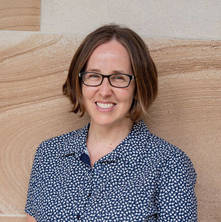
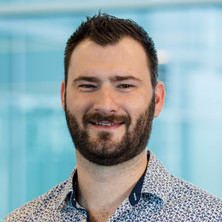
Professor Heather Smyth helps industry understand what makes food taste great - and how to deliver it consistently. Her research integrates sensory science, flavour chemistry, food structure, and consumer insights to identify the drivers of consumer acceptance and translate these into product innovation and optimisation.
She works across the agri-food value chain - linking primary production, processing and formulation to consumer experience - supporting the development of differentiated, high-value Australian products. Her research spans formulated foods, horticultural produce, meat, seafood and cereals, as well as premium foods including wine, coffee and high-value speciality crops. She has a particular interest in supporting ‘Brand Australia’ by defining and communicating the unique quality, provenance and sensory characteristics of Australian foods. Professor Smyth is a Fellow of the Australian Institute of Food Science and Technology (AIFST).
Professor Smyth is particularly focused on anticipating future consumer needs and supporting industry to respond, guiding the development of products and agri-food systems that align with evolving expectations around quality, health, sustainability and experience.
I began my scientific career with a Bachelor of Science in Biochemistry and Chemistry, followed by a Bachelor of Science with First Class Honours in Chemistry from Massey University, New Zealand. My honours project focused on developing hydrogels for controlled peptide release in the gut. I then pursued a PhD at Massey University, working on synthetic anti-cancer drugs based on cyclodextrins.
After completing my PhD, I worked as a Research Officer at the New Zealand Veterinary Pathology Epicentre, refining my diagnostic research skills. I continued my career as a Postdoctoral Fellow at Kansas State University, contributing to the detection and surveillance of zoonotic diseases in the swine industry.
Currently, at The University of Queensland, I integrate my expertise in synthetic peptides with vaccine development. My research bridges medical and agricultural biotechnology, focusing on innovative adjuvants and vaccines that span medicinal chemistry, nanotechnology, and immunology, aiming to enhance both health outcomes and agricultural practices.
Affiliate of Queensland Alliance for Environmental Health Science
Queensland Alliance for Environmental Health Sciences
Faculty of Health, Medicine and Behavioural Sciences
ARC Mid-Career Industry Fellow
School of Pharmacy and Pharmaceutical Sciences
Faculty of Health, Medicine and Behavioural Sciences
Availability:
Available for supervision
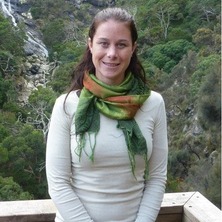
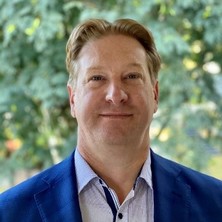
Dr Phong Thai is an ARC Mid-Career Industry Fellow. Phong joined Queensland Alliance for Environmental Health Sciences (QAEHS) in 2018 after his Vice Chancellor Senior Research Fellowship at the International Laboratory of Air Quality and Health at Queensland University of Technology. His research focus at QAEHS involves the expansion of wastewater-based epidemiological approach to estimate community consumption and exposure to a range of licit and illicit substances including tobacco and alcohol, pharmaceuticals and as well as the monitoring of community infection to Covid-19 during the last pandemic. He is a member of the team who manage the National Wastewater Drug Monitoring Program.
Phong is also working on projects monitoring occurence, fate and transport of environmental pollutants in different matrices. He has lso far ed or contributed to several exciting projects totalling > A$ 15 millions.
Centre Director of Queensland Alliance for Environmental Health Science
Queensland Alliance for Environmental Health Sciences
Faculty of Health, Medicine and Behavioural Sciences
Centre Director of Minderoo Centre for Plastics and Human Health
Minderoo Centre for Plastics and Human Health
Faculty of Health, Medicine and Behavioural Sciences
Affiliate of ARC Training Centre for Bioplastics and Biocomposites
ARC Training Centre for Bioplastics and Biocomposites
Faculty of Engineering, Architecture and Information Technology
Affiliate of Centre for Marine Science
Centre for Marine Science
Faculty of Science
Centre Director - QAEHS
School of Pharmacy and Pharmaceutical Sciences
Faculty of Health, Medicine and Behavioural Sciences
Availability:
Available for supervision
Media expert
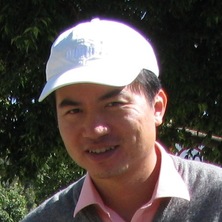
Professor Kevin Thomas is an internationally recognised environmental health scientist whose research over three decades has focused on a fundamental challenge: how can we identify, measure and understand the environmental exposures that matter for human and ecosystem health?
His research has pioneered new approaches to measuring environmental exposure, from environmental contaminants and complex mixtures to wastewater-based epidemiology, plastics and human health. He pioneered wastewater-based epidemiology as a population-level approach to monitoring community health and behaviour, and has advanced the measurement of micro- and nanoplastics, plastic-associated chemicals, PFAS and other contaminants of emerging concern.
A central focus of his research is making previously invisible exposures measurable. He combines high-resolution mass spectrometry, non-target analysis and advanced approaches to chemical and polymer characterisation to identify and quantify known and previously unrecognised exposures across environmental, population and human matrices.
His current research focuses on the human chemical and particulate exposome—integrating measurements of chemicals, plastics and other environmental stressors with exposure and health data to understand how complex mixtures of environmental exposures affect human health.
Professor Thomas is Director of the Queensland Alliance for Environmental Health Sciences (QAEHS) at The University of Queensland and Director of the Minderoo Centre for Plastics and Human Health. He is also Deputy Director and Queensland Node Leader of the ARC Industrial Transformation Training Centre for Hyphenated Analytical Separation Technologies (HyTech), and is affiliated with the ARC Training Centre for Bioplastics and Biocomposites and the Centre for Marine Science.
His research programme spans four interconnected areas:
Plastics and human health. Developing analytical approaches to identify and quantify micro- and nanoplastics and associated chemicals in environmental and human matrices, and to understand human exposure and potential health effects.
Emerging contaminants and exposomics. Developing high-resolution mass spectrometric and non-target approaches to identify known and previously unknown chemical exposures, including PFAS and other persistent and mobile contaminants.
Wastewater-based epidemiology. Using wastewater as a population-level biological sample to monitor community health, drug and tobacco use, emerging chemical threats and other indicators of population behaviour and health.
Antimicrobial resistance and environmental health. Identifying chemical and biological drivers of antimicrobial resistance in environmental mixtures, and developing approaches to understand their sources, exposure pathways and risks.
Professor Thomas has authored more than 400 pper-reviewed publications and has supervised researchers across environmental chemistry, analytical science, wastewater epidemiology, plastics and human exposure. His research brings together analytical science, environmental health and population-level measurement, with extensive collaboration across government, industry and international research organisations.
Across his research, a consistent focus has been making previously invisible environmental exposures measurable. This has taken his work from known contaminants to complex mixtures, population-level measurements and, increasingly, the chemical and particulate exposome of humans.
Affiliate of Queensland Alliance for Environmental Health Science
Queensland Alliance for Environmental Health Sciences
Faculty of Health, Medicine and Behavioural Sciences
Senior Research Fellow
School of Pharmacy and Pharmaceutical Sciences
Faculty of Health, Medicine and Behavioural Sciences
Availability:
Available for supervision
Media expert
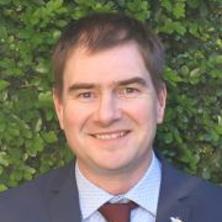
Dr Ben Tscharke is an analytical chemist with a keen interest in quantifying analytes in environmental samples. Ben is currently a Senior Research Fellow at the University of Queensland research institute, Queensland Alliance for Environmental Health Sciences (QAEHS), joining in February 2017 after graduating his PhD from the University of South Australia the previous year. His key focus at QAEHS involves the wastewater based epidemiological approach to determine community consumption and exposure to a range of illicit drugs, pharmaceuticals and personal care products. He leads the Australian Criminal Intelligence Commission's National Wastewater Drug Monitoring program at UQ, which collaborates with the University of South Australia (https://www.acic.gov.au/publications/intelligence-products/national-wastewater-drug-monitoring-program-report).
Associate Professor - Pollution Science in Aquatic and Marine Environments
School of the Environment
Faculty of Science
Availability:
Available for supervision
Media expert
Associate Professor Ryan Turner is the Director of the Reef Catchments Science Partnership at the University of Queensland (a partnership with the Department of the Environment, Tourism, Science and Innovation). Ryan was previously the Department's Principal Scientist for Water Quality and Investigations and held an Adjunct Associate Professor role at Queensland University of Technology in the Managing for Resilient Landscapes, Institute for Future Environments. For 14 years, Ryan managed multimillion-dollar water quality monitoring programs that assessed the impacts of sediments, nutrients, and pesticides in numerous catchments along the Queensland coast, which discharge into the Great Barrier Reef and Moreton Bay. Ryan has served on several steering committees and technical advisory panels, including the Great Barrier Reef Foundation's Technical Advisory Panel. He has published extensively (>80 papers and reports) and led several collaborative research projects between the Queensland Government and academia. Ryan previously supervised analytical chemistry and microbiology laboratories in the private and public sectors. Ryan has developed numerous methodologies and standard operating procedures for analytical and monitoring techniques (water quality, sediments and soils). Ryan’s passion for the future of water security is what keeps him striving forward.
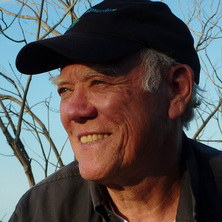
Educated at the University of Copenhagen, Denmark, and the Australian National University, Canberra. Career at the Université de Lausanne, Switzerland, and the Universität Marburg, Germany. Professor and Chair of Organic Chemistry and Head of the Organic Chemistry Section, The University of Queensland from 1985. Emeritus professor from 2008. Chair of the National Committee for Chemistry of the Australian Academy of Science 2009-2014. Editor-in-Chief, Australian Journal of Chemistry 2008-15. Editor, Journal of Analytical and Applied Pyrolysis (Elsevier, IF 3.65) 2016-. Visiting Professor Université de Pau, France, 2011-19; Visiting Professor University of Kuwait 2014-18; Visiting Professor / Special Appointed Professor Hiroshima University 2014-18. Fellow of the Australian Academy of Science. Centenary Medal of the Australian Commonwealth 2003 for research in organic and physical chemistry. David Craig Medal of the Academy of Science 2014 for research in chemistry. JSPS Fellowship (Japan) 2014. Honorary doctorate, University of Pau, France, 2014. A.J. Birch Medal of the Royal Australian Chemical Institute (RACI) for ecellence in research in organic chemistry, 2014. Leighton Medal of the RACI 2018.
Research on Unusual Molecules and Reactive Intermediates: Synthesis and Reaction Mechanism. Heterocyclic chemistry. Pyrolysis reactions. Photochemistry
Research in the Wentrup group is concerned with the discovery of novel types of molecules with new and unusual bonding patterns. Such molecules are mostly highly reactive, and special methods are required both for their generation and for their detection. The group has developed these methods over many years and acquired world-class equipment for these purposes, including flash vacuum thermolysis apparatus, cryostats for matrix isolation of reaction products at cryogenic temperatures (down to 7 K), matrix and solution photochemistry equipment, infrared, UV and mass spectrometers, as well as modern computational facilities.
This research has resulted in the synthesis and characterization of many novel compounds, including extended cumulenes of the types RN=C=C=C=X, which themselves are used in the synthesis of many novel types of molecules, some of them of potential pharmaceutical interest (quinolone antibiotics; diazepines).
The research group has a world reputation in the field of carbene and nitrene chemistry, involving reactive intermediates with sextet carbon or nitrogen. These species are also very useful in synthesis, for example in the preparation of diazepines and diazepinones, a family of pharmaceutically interesting compounds. Numerous mechanistic studies and synthetic applications of ketenes have been carried out in our group.
Active collaborations are ongoing with scientists in Australia (UQ and CSIRO), China (Suzhou), France (Pau), Germany (Oldenburg), Japan (Hiroshima), Spain (Donostia - San Sebastian), and Portugal (Coimbra).