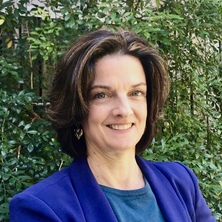
I am a marine ecologist research fellow at UQ, specialising in global and regional marine ecosystem modelling, particulalry focused on the Southern Ocean. My research uses mathematical models to understand and predict how climate change and fishing impact marine ecosystems.
Current research focus:
Leading development of the Zooplankton Model of Size Spectra (ZooMSS) for an ARC Discovery Project on zooplankton and the ocean carbon cycle
Enhancing models of fish population dynamics, fishing impacts, and temperature-dependent physiology
Improving representation of mesopelagic ecosystems in climate projections
I co-coordinate the Southern Ocean Working Group of FishMIP (Fisheries and Marine Ecosystem Model Intercomparison Project), facilitating international collaboration on marine ecosystem projections under global change. My expertise in size-structured food web modelling has advanced understanding of cephalopod ecology and improved biological realism in marine ecosystem models.
Director, Research Training of Faculty of Health Medicine & Behavioural Sciences
Faculty of Health, Medicine and Behavioural Sciences
Affiliate of Dermatology Research Centre
Dermatology Research Centre
Faculty of Health, Medicine and Behavioural Sciences
Director of HDR Students of Frazer Institute
Frazer Institute
Faculty of Health, Medicine and Behavioural Sciences
Professor
Frazer Institute
Faculty of Health, Medicine and Behavioural Sciences
Availability:
Available for supervision
I am a clinician scientist and academic leader with research in melanoma cell biology and experimental melanoma therapy. I received my degree in medicine from the University of Heidelberg, Germany (1990-1998). I graduated summa cum laude with a PhD in Cell Biology from the University of Heidelberg (1993-1999) and trained in clinical dermatology at the University of Hamburg, Germany (1999-2003). In 2003 I moved to Philadelphia, PA, to work as a post-doctoral fellow in Meenhard Herlyn’s lab at The Wistar Institute (2003-2007). From there I was recruited as an associate faculty member to the Centenary Institute/University of Sydney (2007-2013). In 2013 I commenced a position as Associate Professor for Cutaneous Oncology at University of Queensland Diamantina Institute (now Frazer Institute) and was promoted to full Professor in April 2016.
My research applies population genetics, evolutionary and ecological theory, and genomics to understand agricultural pests, weeds and pollination, all three are billion dollar problems facing Australian Agriculture. I am always keen to explore new approaches and cutting-edge technologies. This is important because some of the most innovative and transformative advances in genomics are coming from human genomics, and I draw upon these advances and apply them to insect and weed pests. As a result, my research combines cutting-edge genomic tools and ecological experimentation to investigate agricultural pests in an evolutionary context, with the goal of protecting agricultural crops and ensuring global food security.
Affiliate of ARC Research Hub for Advanced Manufacture of Targeted Radiopharmaceuticals (AMTAR)
ARC Research Hub for Advanced Manufacture of Targeted Radiopharmaceuticals
Australian Institute for Bioengineering and Nanotechnology
Honorary Senior Research Fellow
Mater Research Institute-UQ
Faculty of Health, Medicine and Behavioural Sciences
Availability:
Not available for supervision
Media expert
Dr Jodi Saunus is a senior fellow who specialises in translational research on metastatic breast cancer. Based at Brisbane’s Translational Research Institute, she was recruited by Mater Research in 2022 to help facilitate patient-focused research at the interface of biomedical R&D and clinical practice.
Dr Saunus has an honours degree in biochemistry and biomedical science, a PhD in breast cancer molecular genetics, and broad post-doctoral experience in immunology, molecular cell biology, pathology informatics, and early-phase investigator-initiated clinical trials. Her current portfolio focuses finding new ways to improve the clinical management of aggressive breast cancer, with a focus on triple-negative breast cancer, and the prevention and treatment of brain metastases. This work spans across multiple disciplines and capabilities, and broadly involves:
Molecular profiling of patient-donated blood and tumour tissue samples to identify features that can predict treatment response, or represent previously uncharacterised therapeutic targets.
Using experimental models of breast cancer metastasis to learn about the molecular mechanisms exploited by cancer cells to survive and grow in brain tissue.
Developing innovative treatment strategies that work differently to conventional cancer drugs, including alpha-particle endoradiotherapy and in-situ vaccination.
With an outstanding network of collaborators from academia and clinical practice, she has secured more than $6M to fund this work and has a track record of publishing in prominent biomedical research journals (e.g., Cancer Research, Nature, Science Translational Medicine, Nature Communications and The Journal of Pathology).
Peripherally, Jodi is a strong proponent of biospecimen banking, and clinician and consumer engagement in translational research.
Affiliate of ARC COE for Plant Success in Nature and Agriculture
ARC COE for Plant Success in Nature and Agriculture
Faculty of Science
Associate Professor
School of the Environment
Faculty of Science
Availability:
Available for supervision
I am broadly interested in the evolutionary biology of sexual processes, parasitism, and the interplay between these phenomena. Most of my work involves mathematical models, but I also do experimental and field work. Currently, my research focuses on the following topics:
Reproductive parasites. These parasites, which include the famous bacterium Wolbachia, infect many insect species and manipulate the reproduction of their hosts in fascinating ways.
Recombination in bacteria. Bacteria reproduce clonally, but many still exchange genes with other bacteria, for example through plasmids or the uptake of free DNA from the environment. I'm especially interested in how recombination can affect the evolution of antibiotic resistance in bacteria.
Host-parasite coevolution. Hosts and parasites interact in an antagonistic manner, which may produce interesting coevolutionary dynamics. I am also scrutinizing the Red Queen hypothesis, which posits that host-parasite coevolution can produce selection for recombination and sexual reproduction.
Parthenogenesis in animals. Although most animals reproduce sexually, some species have given up sex and consist of asexually reproducing females only. I am interested in the factors that enhance or inhibit the evolution of such parthenogenetic species and on their long-term evolutionary fate.
Affiliate of The Centre for Cell Biology of Chronic Disease
Centre for Cell Biology of Chronic Disease
Institute for Molecular Bioscience
Availability:
Available for supervision
Media expert
My group studies the role of cadherin cell adhesion molecules in morphogenesis and tumor development. E-cadherin is a key mediator of cell-cell recognition. It participates in tissue patterning and its dysfunction contributes to tumor progression and invasion.
Associate Professor Yap is the group leader for Cadherin cell adhesion molecules, Epithelial morphogenesis & Cell locomotion research at the IMB.
Affiliate Professor of School of Chemistry and Molecular Biosciences
School of Chemistry and Molecular Biosciences
Faculty of Science
Affiliate of ARC COE for Innovations in Peptide and Protein Science
ARC COE for Innovations in Peptide and Protein Science
Institute for Molecular Bioscience
Affiliate Associate Professor
Institute for Molecular Bioscience
Professorial Research Fellow
Australian Institute for Bioengineering and Nanotechnology
Availability:
Available for supervision
Media expert
Professor Mobli is a structural biologist and a group leader at the University of Queensland's Australian Institute for Bioengineering and Nanotechnology (AIBN). He is well known internationally for his contributions to the basic theory of multidimensional nuclear magnetic resonance and its applications to resolving the molecular structure of peptides and proteins, as well as studying their physiochemical properties and function. Mehdi's contributions to the field has been recognised by being appointed an Executive Editor of the AMPERE society's journal "Magnetic Resonance", and to the advisory board of the international Biological Magnetic Resonance Data Bank (BMRB) as well as serving on the board of directors of the Australia and New Zealand Society for Magnetic Resonance (ANZMAG). He is a former ARC Future Fellow and recipient of the ASBMB MERCK medal, the Australia Peptide Society's Tregear Award, the ANZMAG Sir Paul Callaghan medal and the Lorne Proteins Young Investigator Award (now Robin Anders Award).
Prof. Mobli's research group focuses on characterising the structure and function of receptors involved in neuronal signalling, with a particular focus on developing new approaches for the discovery and characterisation of modulators of these receptors through innovations in bioinformatics, biochemistry and and biophysics. This work has led to publication of more than 100 research articles attracting over 6,000 citations.
Queensland Alliance for Agriculture and Food Innovation
Professor
School of Agriculture and Food Sustainability
Faculty of Science
Centre Director of ARC COE for Plant Success in Nature and Agriculture
ARC COE for Plant Success in Nature and Agriculture
Faculty of Science
Availability:
Available for supervision
Media expert
Professor Christine Beveridge's research focuses on understanding the role of plant hormones in the regulation and coordination of plant development, particularly shoot architecture. Major highlights have involved discovery of strigolactone as a plant hormone and that sugar signalling is a driver of shoot branching. Christine’s research has recently expanded toward identifying how different genetic and physiological networks work together to control plant productivity. In the role of Director, Christine has established funding for the ARC Centre of Excellence for Plant Success in Nature and Agriculture (Plant Success - Plant Success) to achieve this aim.
Christine is a Fellow of the Australian Academy of Science, an ARC Georgina Sweet Laureate Fellow, a Highly Cited Researcher (Researcher Recognition - Web of Science Group (clarivate.com)), and past President of the International Plant Growth Substances Association. Christine is a life member of the Australian Society of Plant Scientists (asps.org.au).
Please contact Christine directly for information on projects. We like to build projects around the student and their experience, opportunity and career aspirations. Projects are occassionally advertised at www.plantsuccess.org or by twitter #cabeveridge29.
Office of the Deputy Vice-Chancellor (Research and Innovation)
Availability:
Not available for supervision
Media expert
Virginia Slaughter is Professor of Psychology at the University of Queensland, Australia, where she founded the Early Cognitive Development Centre. Her research focuses on social and cognitive development in infants and young children, with particular emphasis on social behaviour in infancy, theory-of-mind development and the acquisition of peer interaction skills. She is a Fellow of the Academy of the Social Sciences in Australia and a Fellow of the Association for Psychological Science.
Affiliate of Centre for Cardiovascular Health and Research
Centre for Cardiovascular Health and Research
Faculty of Health, Medicine and Behavioural Sciences
Affiliate of Centre for Extracellular Vesicle Nanomedicine
Centre for Extracellular Vesicle Nanomedicine
Faculty of Health, Medicine and Behavioural Sciences
Head of School, Chemical Engineering
Faculty of Engineering, Architecture and Information Technology
Availability:
Available for supervision
Media expert
Professor Justin Cooper-White is a global leader in using engineering to solve problems in biology. In addition to holding the position of Head of School and Professor of Bioengineering in the School of Chemical Engineering, he is Affiliate Professor in the AIBN, Director of the Australian National Fabrication Facility-Queensland Node, Research Director of the Herston Biofabrication Institute (a partnership between UQ and MNHHS) and co-Director of the Australian Organoid Facility at UQ. Professor Cooper-White is a past President of both the Australasian Society for Biomaterials and Tissue Engineering and the Australian Society of Rheology and held the position of CSIRO Office of the Chief Executive (OCE) Science Leader. He has previously held a Visiting Professor Fellowships at ETH Zurich (2007) and Politecnico di Milano (2012-2013). Professor Cooper-White is the Australian representative and Past President of the Asian Biomaterials Federation; an elected Fellow of and Australian representative on the International Union of Societies for Biomaterials Science and Engineering (IUSBE), and an elected Fellow and past vice President of the Queensland Academy of Arts and Sciences.
Professor Cooper-White has many past and currently active international collaborations with world leading research groups at MIT (US); Stanford (USA); ETH (Switzerland); EPFL (Switzerland); SNU (Korea); University Of Grenoble (France); Politecnico di Milano (Italy); UCL (UK); and the Max Planck Institute (Germany). He has performed contract research and consultancy work for many multinational companies, including Unilever in the UK; Nestle International, Switzerland; Rhodia, US; Inion, Finland, Syngenta, UK; and NuFarm, AU since 2001.
He is the Editor-in-Chief of APL Bioengineering (American Institute of Physics Publishing); serves or has served on the editorial boards of Rheological Acta, Soft Materials, Biomicrofluidics and the Open Biomedical Engineering Journal; and is a reviewer of major international journals, including Nature Materials, Nature Methods, Advanced Materials, Lab on a Chip, Stem Cells, Stem Cells and Development, Biomacromolecules, Tissue Engineering, Langmuir, Biomaterials and Journal of Non-Newtonian Fluid Mechanics.