Faculty of Engineering, Architecture and Information Technology
Availability:
Available for supervision
Media expert
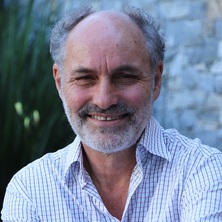
Emeritus Professor David John Williams was the Initiator and Director of the Geotechnical Engineering Centre within the School of Civil Engineering at The University of Queensland, an industry-funded centre that has attracted AUD10 million in funding over the period from 2007 to 2022. He also manages the industry-sponsored Large Open Pit Project, involving 10 global mining company sponsors, with current funding of USD1 million per year. He has over 50 years of teaching, research and consulting experience, and is internationally recognised for his expertise and experience in mine waste management and mine closure, pertaining to tailings dams in particular. He was a member of the Expert Panel investigating technical causes of Brumadinho tailings dam failure and is on numerous Tailings Independent Technical Review Boards globally, including for Escondida Copper Mine in Chile. He authored the 2009 and 2016 Tailings Management Handbook, as part of the Commonwealth Leading Practice Sustainable Development Program for the Mining Industry. He is on the Working Party for the Australian National Committee for Large Dams Guidelines on Tailings Dams – Planning, Design, Construction, Operation and Closure, published in 2012, with an Addendum in 2019 and currently being updated. He initiated in 2020 and largely delivers the AusIMM Tailings Management Professional Certificate Course that has been taken by almost 1,500 Tailings Practitioners worldwide.
David received his BE (Hons I) in Civil Engineering from Monash University in 1975 and his PhD in Soil Mechanics from the University of Cambridge in 1979. His research and consulting interests include:
Physical characterisation of mine tailings deposition, including beaching, hydraulic sorting, sedimentation, consolidation, desiccation and loading
Store and release cover systems for potentially acid forming mine wastes
Co-disposal of mine tailings and coarse-grained mine wastes
Dewatering and densification of mine tailings
Dewatering of mineral products
Moisture movement within mine wastes
Settlement of coarse-grained mine wastes
Strength of coarse-grained mine wastes
Engineered rehabilitation of mine sites
Risk assessment and cost-effectiveness analysis of mine site rehabilitation and closure
Long-term seepage and runoff from mine tailings storages
Characterisation of potentially acid forming waste rock dumps
Application of high-resolution digital stereo-photography to monitoring erosion from mine waste slopes
Affiliate of Centre for Environmental Responsibility in Mining
Centre for Environmental Responsibility in Mining
Faculty of Engineering, Architecture and Information Technology
Affiliate of Minerals Industry Safety and Health Centre
Minerals Industry Safety and Health Centre
Faculty of Engineering, Architecture and Information Technology
Affiliate of W.H. Bryan Mining and Geology Research Centre
WH Bryan Mining Geology Research Centre
Faculty of Engineering, Architecture and Information Technology
Affiliate of Centre for Social Responsibility in Mining
Centre for Social Responsibility in Mining
Faculty of Engineering, Architecture and Information Technology
Affiliate of Julius Kruttschnitt Mineral Research Centre
Julius Kruttschnitt Mineral Research Centre
Faculty of Engineering, Architecture and Information Technology
Centre Director of Julius Kruttschnitt Mineral Research Centre
Julius Kruttschnitt Mineral Research Centre
Faculty of Engineering, Architecture and Information Technology
Professorial Research Fellow and Centre Director, JKMRC
Sustainable Minerals Institute
Faculty of Engineering, Architecture and Information Technology
Availability:
Available for supervision
Media expert
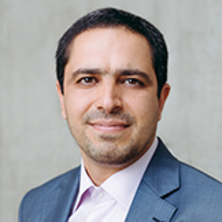
Mohsen Yahyaei is an expert in modelling, optimising, and controlling mineral processing circuits using novel approaches and tools. He is currently the Director of the Julius Kruttschnitt Mineral Research Centre (JKMRC) and Program Leader for Future Autonomous Systems and Technologies (FAST) at the University of Queensland’s Sustainable Minerals Institute.
Mohsen completed his undergraduate studies in Mine Exploration and earned a Master’s degree in Mineral Processing in 2002. His master’s thesis focused on applying column flotation in the Sarcheshmeh Copper Complex, the largest copper mine in the Middle East. After his Master’s, he worked at the R&D centre of the Zarand coal washing plant in Iran for two years before becoming the plant manager. In 2007, he returned to the University of Kerman to pursue a PhD, investigating the effect of liner wear on charge motion and power draw of SAG mills, which he completed in 2010.
Since joining JKMRC in 2011, Mohsen has conducted extensive applied research and successfully delivered numerous industry-funded projects. As a comminution specialist, he is dedicated to implementing fundamental understandings in his research to offer practical solutions to the minerals industry and educate engineers and researchers with problem-solving skills for future resource industry challenges. His research focuses on optimising mineral processing techniques to enhance efficiency and sustainability, with a strong emphasis on practical application. Mohsen's research extends to advanced process control, including the development of soft sensors and model-predictive control solutions. His work aims to improve the precision and reliability of industrial processes, contributing significantly to the field of mineral processing.
Faculty of Engineering, Architecture and Information Technology
Availability:
Available for supervision
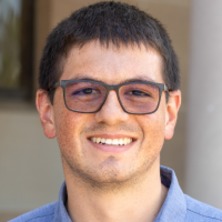
Wenhua Zhao is an Associate Professor at The University of Queensland and a globally recognized expert in offshore hydrodynamics and renewable energy technologies.
He is the recipient of the prestigious ARC Future Fellowship (2024-2028) and DECRAFellowship (2019-2022), with over 110 publications and six awards influencing both industry and academia. He has helped secure over AUD30 million research funding from both Australian Research Council and industry, contributing to transformative engineering practices in renewable energy sectors and oil & gas industry.
His research focuses on Clean Energy, AI, and Climate Change, with groundbreaking studies on wave-structure interactions -- showcased by his multiple publications in Journal of Fluid Mechanics and industry-focused applications, a rare integration of theoretical research with practical implementation. He pioneers innovations in floating wind energy, floating solar, offshore aquaculture, and green hydrogen, leveraging artificial intelligence to transform offshore renewable energies.
Wenhua has been a Deputy Editor for Ocean Engineering (No. 1 in marine engineering, ISI web), Associate Editor for the renowned ASME's Journal of OMAE, and editorial board member for the Q1 journal Applied Ocean Research. His teaching, particularly the "Design of Offshore Energy Systems" course, has prepared hundreds of students for impactful careers in coastal and ocean engineering.