School of Political Science and International Studies
Faculty of Humanities, Arts and Social Sciences
Availability:
Available for supervision
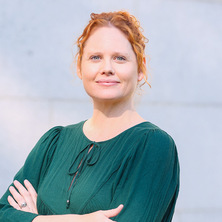
Dr Melinda Rankin is the author of De facto International Prosecutors in a Global Era: With My Own Eyes. Cambridge: Cambridge University Press, 2022; and The Political Life of Mary Kaldor: Ideas and Action in International Relations. Boulder CO: Lynne Rienner Publishing.
Currently, she is Honorary Research Fellow at the School of Political Science and International Studies, The University of Queensland. Prior to this, she was Postdoctoral Research Fellow at The University of Queensland; Visiting Research Fellow at the Centre for Global Constitutionalism, Wissenschaftszentrum Berlin für Sozialforschung (WZB Social Science Centre Berlin); and Lecturer at The University of Sydney.
Rankin's current research program, titled Conceptualising De facto International Prosecutors in a Global Era, explores the role of ‘de facto international prosecutors’ as an emerging phenomenon. They are ‘private’ non-state actors (including witnesses and victims of core crimes), as well as state legal ‘officials’ in foreign courts, that adopt the practices of the offices of international prosecutors. The program examines the practices, innovations and strategies de facto international prosecutors adopt, and shows how witnesses and victims of core crimes emerge as key leaders in the accountability process. As a part of this broader program, Melinda also leads a project, titled ‘The Nuremberg Effect,’ supported by the Gerda Henkel Stiftung. This project investigates how non-state actors have historically drawn upon the Nuremberg Trials as a type of template to pursue those most responsible for core international crimes. In particular, it focuses on those non-state actors who pursue accountability in foreign courts exercising universal jurisdiction.
Rankin has published a range of refereed academic journal articles, as well as policy articles for Global Public Policy Institute (GPPi), Berlin; the Center for Global Constitutionalism at WZB, Berlin; and Lowy Institute for International Policy, Sydney.
In 2022, Melinda was the recipient of a Gerda Henkel Stiftung grant for the project, titled The Nuremberg Effect; and in 2018, she was the recipient of the Berlin Fellowship Award for the research program, titled Conceptualising De facto International Prosecutors in a Global Era. In the past, she has provided comment for media, including on SBS World News on the subject of Iran and US relations.
Rankin is a Member of the International Society of Public Law (ICON-S), New York; British International Studies Association (BISA); American Society of International Law (ASIL); and International Studies Association (ISA).
Prior to her academic career, Dr Rankin worked in projects, business operations, strategy consultancy, data governance, and policy for groups such as (in London) JP Morgan, Deutsche Bank, and Bank of New York; (in Sydney) MLC, Westpac and Genworth; and (in Melbourne) ANZ and NAB.
SELECTED PUBLICATIONS
Single Authored Books
Rankin, Melinda (2022) De facto International Prosecutors in a Global Era: With My Own Eyes, Cambridge: Cambridge University Press.
Rankin, Melinda (2017) The Political Life of Mary Kaldor: Ideas and Action in International Relations, London and Boulder, CO: Lynne Rienner Publishing.
Refereed Journal Articles
Rankin, Melinda (2019) ‘The ‘responsibility to prosecute’ core international crimes: German universal jurisdiction and suspected atrocities committed by the Syrian government.’ Global Responsibility to Protect, 11 (4): 394-410.
Rankin, Melinda (2018) ‘The future of international criminal evidence in New Wars: The Commission for International Justice and Accountability (CIJA).’ Journal of Genocide Research 20(3): 392-411.
Rankin, Melinda (2017) ‘Investigating crimes against humanity in Syria and Iraq: The Commission for International Justice and Accountability (CIJA).’ Global Responsibility to Protect 9 (4): 395-421.
Essays and Commentary Journal Articles
Hale, Kip and Melinda Rankin (2019) ‘ICC’s Decision on Myanmar: Extending the ‘system’ of ICL.’ Australian Journal of International Affairs 71 (3): 22-28.
Rankin, Melinda (2018) ‘Australia’s responsibility to prosecute? Bridging the international criminal law gap in Syria and Iraq.’ Australian Journal of International Affairs 72 (4): 322-328.
Rankin, Melinda, (2023) ‘Russia in Ukraine: Accountability and global order on the precipice’, The Interpreter, Lowy Institute for International Policy, Sydney, 22 Feb.
Ireland-Piper, Danelle, and Melinda Rankin, (2022) Interview by Lauren Sanders: Universal Jurisdiction and Ukraine (University of Queensland Law and the Future of War podcast series): On Spotify , Brisbane, December.
Rankin, Melinda, (2022) ‘From Pinochet to Anwar R.’ Australian and New Zealand Society of International Law Perspective, Melbourne, 18 March.
Rankin, Melinda and Jacinta O'Hagan, (2020) 'Prosecution of alleged war crimes: need for Afghan voices in Australian judicial process', United Against Inhumanity, Lyon, 17 December.
Rankin, Melinda, (2019) ‘The looming international law paradox between the US and Iran’, The Interpreter, Lowy Institute for International Policy, Sydney, 13 May.
Rankin, Melinda, (2019) ‘Responsibility to Prosecute? The Case of German Universal Jurisdiction, CIJA, and the Arrest of Syrian Perpetrators.’ LawLog, Center for Global Constitutionalism, Wissenschaftszentrum Berlin für Sozialforschung, WZB (Social Science Centre Berlin), Berlin. 13 March.
Rankin, Melinda, (2018) ‘A road map for Germany: Negotiating a path to accountability with Assad.’ PeaceLab, Global Public Policy Institute (GPPi), Berlin, 19 December.
Rankin, Melinda, (2018) ‘Jamal Khashoggi: Shifting law in a deadly turf war.’ The Interpreter, Lowy Institute for International Policy, Sydney, 29 October.
Rankin, Melinda, (2018) ’To Russia: A Plea of Caution on Syria.’ The Interpreter, Lowy Institute for International Policy, Sydney, 5 March.
Rankin, Melinda, (2018) ‘Australia’s Responsibility to Prosecute in Syria and Iraq,’ Australian Outlook, Australian Institute for International Affairs, Sydney, 19 February.
Faculty of Engineering, Architecture and Information Technology
Associate Professor
School of the Environment
Faculty of Science
Availability:
Available for supervision
Media expert
Sonia Roitman is an urban sociologist and planner by training. Her contributions to the field of development planning and urban sociology include influential research on urban inequalities and how they manifest in cities. Her research interests include housing and poverty alleviation policies; the role of grassroots organisations in urban planning; disaster planning and informal practices; and, gated communities, segregation and planning instruments in Global South cities. Her main research locations are Indonesia, Samoa, Uganda, Argentina and Australia. Her most recent book is: Rukmana, D. and Roitman, S. (Eds), 2026, Growth of a megacity: Planning Jakarta in the Post-Suburban Era, University of Hawaii Press, Honolulu.
Teaching responsibilities
PLAN1101 Teamwork and negotiation for planners (Course coordinator and lecturer - 2021 and 2022)
PLAN3005/7121 Community planning and participation (Course coordinator and lecturer - 2019 to date)
PLAN3200/7200 Understanding development complexities: Indonesia fieldtrip course (Course coordinator and lecturer - 2015 to date)
PLAN4001/7120 Planning theory (Guest lecturer 2014-2019)
PLAN7010 Planning project (Course coordinator and lecturer - 2015-2016)
PLAN7612 Global South Cities (Course coordinator and lecturer - 2014 to date)
PLAN7614 Urban management and governance (Guest lecturer 2013-2016)
PLAN7638 Assessment of development projects (Course coordinator and lecturer 2013-2015 and lecturer 2016)
SOSC7140 Development effectiveness (Lecturer 2017)
ENVM2100/7100 Sustainable Development (Guest lecturer 2013)
GEOS3102 Global change: Problems and prospects (Guest lecturer 2022-2023)
Service and Engagement
UQ Academic Board (2025 to date) and Academic Board Executive Committee (2026-2027)
Deputy Director Teaching and Learning, School of Architecture, Design and Planning (2026 to date)
Master of Urban Planning Student Advisor (2025-2026)
Planning Program Convenor Bachelor of Regional and Town Planning and Master of Urban and Regional Planning (2023- 2024)
Planning Program Lead, UQ (2019-2023)
Student Advisor Bachelor of Urban and Regional Planning (BRTP) and Master of Urban and Regional Planning (MURP), UQ (Jan 2019- Dec 2020)
Planning Institute of Australia UQ Representative (since 2019)
Full Member of Planning Institute of Australia
Board Member RC21 Committee (Research Committee of the Sociology of Urban and Regional Development), International Sociological Association (2014-2023)
Specialty Chief Editor Urban Sociology, Frontiers in Sociology Journal (2025 - to date)
Scientific Committee Member of Prospectiva Journal (Revista Prospectiva, Universidad del Valle, Colombia) (since 2015)
Scientific Committee Member of Bitácora Urbano-Territorial Journal (Revista Bitácora Urbano-Territorial, Universidad Nacional de Colombia (since 2012)
Editorial Member of Journal of City and Regional Development (Jurnal Penbangunan Wilayah & Kota, Universitas Diponegoro, Indonesia) (since 2018)
Faculty of Health, Medicine and Behavioural Sciences
Availability:
Not available for supervision
Dr Floraidh Rolf is the Deputy Director (South West) for Southern Queensland Rural Health in Charleville Queensland, as well as an educator, researcher and nurse. She is a strong supporter of social justice and activism in healthcare, in particular the duty to address gaps in the care afforded to disenfranchised and vulnerable populations.
Floraidh's background encompasses mental health, critical care, rural and remote health, and higher education. Her research interests include sociological approaches to nursing and health, power and stigma, and qualitative methodology. She is committed to supporting social change through collaborative research.
Affiliate of Centre for the Business and Economics of Health
Centre for the Business and Economics of Health
Faculty of Business, Economics and Law
Affiliate of Centre for Innovation in Pain and Health Research (CIPHeR)
Centre for Innovation in Pain and Health Research
Faculty of Health, Medicine and Behavioural Sciences
Senior Research Fellow
School of Health and Rehabilitation Sciences
Faculty of Health, Medicine and Behavioural Sciences
Availability:
Available for supervision
Media expert
Dr Megan Ross (she/her) is a Specialist Research Physiotherapist and Senior Research Fellow at RECOVER Injury Research Centre, The University of Queensland. She is part of a research team, led by Professor Trevor Russell, which focuses on developing more effective and efficient health services supported by technology innovation. Megan’s current research projects include exploring consumer perspectives of the telerehabilitation service delivery model, factors that influence the uptake and utilisation of telerehabilitation, and exploring the acceptability and usability of digital health innovations. Megan has a broad range of research skills that span both quantitative and qualitative methods and co-design approaches, including systematic reviews, cross-sectional and longitudinal study designs and data analysis, discrete choice experiments, interviews and focus group discussions and thematic analysis.
Dr Ross received a Bachelor of Physiotherapy (with First Class Honours) in 2012 and a PhD in Physiotherapy in 2020 from The University of Queensland. Megan is the inaugural Chair of the Australian Physiotherapy Association’s LGBTQIA+ Advisory Committee, is Deputy Chair of the Australian Physiotherapy Associations’ National Advisory Committee and sits on the Queensland Gender Affirming Network Steering Committee. Dr Ross leads a program of research in the area of LGBTQIA+ experiences of, and access to healthcare with a focus on physiotherapy and allied health. Megan is passionate about ensuring safe and affirming access to healthcare for people with diverse gender identities, sexual orientations and sex characteristics and has received over $1M AUD in funding, including a CIA MRFF grant to co-design, implement and evaluate an LGBTQIA+ affirming model of primary care. The overarching objective of Dr Ross’s work is to improve access to, provision of, and experiences with health care and ultimately contribute to improved health and wellbeing for the LGBTQIA+ communities.
Andreas Schloenhardt is Professor of Criminal Law in the School of Law at The University of Queensland in Brisbane, Australia and Honorary Professor for Foreign and International Criminal Law in the Faculty of Law, Department of Criminal Law and Criminology at the University of Vienna, Austria.
Professor Schloenhardt is the convenor of the Transnational Organised Crime programme (https://toc.jura.uni-koeln.de/), a research and learning network with academic staff and students from the University of Vienna (Austria), the University of Zurich (Switzerland), the University of Cologne (Germany), the University of Ferrara (Italy), and the University of Queensland (Australia). Professor Schloenhardt holds a PhD in Law from The University of Adelaide. Prior to his position at The University of Queensland, he was a lecturer at The University of Adelaide Law School.
Professor Schloenhardt’s principal areas of research include criminal law, organised crime, smuggling of migrants, trafficking in persons, wildlife trafficking, narco-trafficking, terrorism, criminology, and immigration and refugee law. He is the author of many books and journal articles and his work is frequently cited by other scholars, in government reports, and judicial decisions, including the High Court of Australia and the Supreme Court of Austria.
Professor Schloenhardt has held adjunct appointments and visiting professorships at the University of Zurich, the University of St Gallen, the University of Ferrara, Bucerius Law School, Hamburg, the National University of Singapore Faculty of Law , The University of British Columbia, Vancouver, and the Monterey Institute of International Studies, Monterey, California. In 2011-2012, Professor Schloenhardt was a recipient of a Fellowship from the Winston Churchill Memorial Trust.
Professor Schloenhardt is a member of the Austrian Society of Criminal Law and Criminology and he has worked extensively with the United Nations Office on Drugs and Crime (UNODC), the Council of Europe, the Global Initiative against Transnational Crime, the International Centre for Migration Policy Development (ICMPD) and a range of law enforcement agencies in Australia and Asia.
School of Political Science and International Studies
Faculty of Humanities, Arts and Social Sciences
Availability:
Available for supervision
Honorary Professor, Centre for the Government of Queensland, School of History, Philosophy, Religion and Classics.
Professional Activities:
Executive Director, T.J.Ryan Foundation (2013 onwards)
Project Director, "Queensland Speaks" Oral History web-site, (2009 onwards)
Board Member, Youth + Marlene Moore Flexi-learning Centre Network, Edmund Rice Education Australia (2013 onwards).
National Fellow of the Institute of Public Administration Australia (since 1990).
Former editor of The Public Interest (Brisbane).
Former co-editor of the Australian Journal of Public Administration.
Former Review Editor for Politics (now AJPS).
Member/chair of several Quality Assessment Panels of the Queensland Office of Higher Education and formerly member of similar bodies operating in several states during the CAE era.
Member of several Federal Government committees of enquiry into education, including management education (Ralph Committee), aboriginal education (Yunipingu Committee) and university management (Linke Committee).
Former panel member of the Commonwealth Government Review Tribunal on Non-state Schooling.
Former consultant to international aid organizations, providing advice on public sector reform - Uganda, Kazakstan and Nepal.
Background:
1962-1965 : Rhodes Scholar at the University of Oxford; fieldwork for thesis on the development of trade unions in Uganda completed while Rockefeller Teaching Fellow at the University of East Africa, Kampala.
1965-1977 : Lecturing at University of Sydney, the Queen's University of Belfast, and the Canberra College of Advanced Education (Principal Lecturer in Politics in the School of Administrative Studies).
1977-1987: J.D.Story Professor of Public Administration, University of Queensland. President of the Academic Board, 1986-1987.
1987-1990: Principal of the Canberra CAE, Foundation Vice-Chancellor of the University of Canberra.
1990-1994 : Director General of Education, State Government of Queensland.
1994 : Visiting Professor, Graduate School of Management, Griffith University.
1994 - 2000: Dean of Arts, Queensland University of Technology.
2000 - 2002: Professor of Public Management, Faculty of Business, QUT.
2003 - 2011: Professor Emeritus and Teaching Fellow, School of Political Science and International Studies.
Karin Sellberg specialises in medical humanities, feminist and queer historiography, contemporary fiction and theories of gender, sexuality, disability,.embodiment and time. She is particularly interested in convergences and communication between feminist and queer fiction, and the intellectual history of science and medicine. She is currently working on transwomen's writing, transgender history, and different ideas of transitioning in trans* studies, feminist philosophy and the fiction of Jeanette Winterson, Angela Carter and Caitlin R. Kiernan.
Karin joined UQ as a postdoctoral research fellow in the Institute for Advanced Studies in the Humanities in January 2014, and a lecturer in humanities in the School of Historical and Philosophical Inquiry in 2017. Before this she held a postdoctoral research fellowship at the Institute for Advanced Studies in the Humanities at the University of Edinburgh and a postdoctoral teaching fellowship in the English Literature department at the University of Edinburgh. She was also co-director of the Scottish Universities’ International Summer School from 2012 to 2014, and has organised four large international conferences, "Bodies in Movement: Intersecting Discourses of Materiality in the Sciences and the Arts" (University of Edinburgh), "Sensualising Deformity: Communication and Construction of Monstrous Embodiment" (University of Edinburgh), "Technicity, Temporality, Embodiment: the 10th Somatechnics Conference" (SCU/UQ) and the "CSAA Conference 2019: Cultural Transformations".
Dr. Maram Shaweesh's is a qualitative researcher. Her interdisciplinary research spans several humanities and spatial disciplines, including architecture, housing adequacy, migration, multiculturalism, everyday encounters in the Australian suburb, urban design, and young people's experiences in urban spaces.
Maram has conducted various research projects focused on housing. For instance, she investigated everyday life in suburban housing as experienced by the Australian Lebanese community. This research utilised social qualitative research methods to explore the relationship between housing design and policy, and the social and cultural context in Australia, such as changing family ideals, household composition, children's wellbeing, parenting values, and social marginalisation. Additionally, Maram has experience working with remote Indigenous communities, having contributed to the "Gunana Futures" research project investigating housing adequacy in Mornington Island.
Maram was also involved in the team working on the Growing Up in Logan project as part of Growing Up in Cities. Collaborating with Logan City Council (CityStudio) and Beenleigh State High School, the project aims to understand adolescents' perceptions of urban space to better comprehend how local environments impact their everyday lives.
As part of her role at the UQ Institute for Social Science Research, Maram worked across several externally and internally funded projects, including Foundation Partner for a National Centre for Place-Based Collaboration (Nexus Centre for place-based collaboration); Targeted Review of Student Equity in Higher Education Programs and System Level Policy Levers; Social Isolation and Loneliness - Research, Analysis and Best Practice; SMBI Community Intiative - Learning by doing; Empowered Communities Partnership Lessons Learned Project; Place-based Approaches to Road Safety; and, Sharing with Friends (co-housing model for older women in Australia).
I am an Aboriginal woman from the Ngen'giwumirri language group (Daly River, Northern Territory), born in Brisbane and connected to Indigenous communities across South East Queensland. I currently hold the position of Professor and Deputy Head of School in the School of Education at The University of Queensland. My research program is nationally and internationally recognised, with a focus on Indigenous education, codesign in Indigenous education, Indigenous participation in STEM, youth studies, flexi schooling, and education policy. I lead an extensive externally funded research program, including Australian Research Council (ARC) grants and government tenders, and I actively contribute to policy development through advisory roles at both state and national levels. I am a Chief Investigator on the ARC Centre of Excellence for Indigenous Futures.
I am committed to advancing strengths-based approaches in Indigenous education. My scholarship includes over 100 publications, and I have co-edited two major texts in the field. The first, “Indigenous Education in Australia: Learning and Teaching for Deadly Futures” (Routledge, 2021), which received a national award at the Education Publishing Awards Australia. My most recent book, “Strengths-Based Approaches to Indigenous Education Research and Practice” (Routledge, 2025), co-edited with Professor Grace Sarra, further contributes to the growing body of work that centres Indigenous voices and leadership in education. My academic work builds on my foundation as a qualified, Queensland-registered secondary school teacher.
Throughout my career, I have received multiple awards in recognition of research excellence and leadership, including the UQ Foundation Research Excellence Award (2021), the UQ Award for Excellence in Graduate Research Leadership (2024), and the National ACEL Leadership Award (2020). As a qualified and experienced secondary teacher, I remain deeply committed to research translation and applied research that support advancing educational equity. I designed a specialised program aimed at growing the Indigenous Education research workforce, the SoE DEADLY Community, providing mentoring to early career researchers and supervising Indigenous higher degree research students through the creation of an environment that centres Indigenous strengths, knowledges and aspirations.
My work continues to be driven by a belief in the transformative power of education and the importance of Indigenous-led research and practice, underpinned by Indigenous-informed evidence, and a commitment to bridging research, policy and practice.
Deputy Associate Dean (Academic) - StudentsDeputy Associate Dean (Academic) - Students
Faculty of Humanities, Arts and Social Sciences
Director of Teaching and Learning of School of Social Science
School of Social Science
Faculty of Humanities, Arts and Social Sciences
Associate Professor
School of Social Science
Faculty of Humanities, Arts and Social Sciences
Availability:
Not available for supervision
Associate Professor Lynda Shevellar has over 20 years in tertiary education. She joined The University of Queensland in 2009. Based in the School of Social Science, Lynda is the winner of an Australian Award for University Teaching Excellence (AAUT) in Society and Culture (2025). Previously she has won an early career award for teaching excellence in 2011, a University of Queensland Award for Teaching Excellence in 2019, and an Australian Award for University Teaching (AAUT) Citation for Outstanding Contributions to Student Learning (2019). She is a Senior Fellow of the Higher Education Academy, the Principal Practitioner - Participation and Engagement (Institute for Teaching and Learning Innovation), and is one of the Deputy Associate Deans (Academic) - Students, for the HASS Faculty. Lynda has previously held roles in government and the community sector and is influenced by over thirty years of experience in community development, the disability sector, mental health, education, and psychology.
Lynda's research explores three closely aligned agendas: understanding the experience of people who live with heightened vulnerability; developing the awareness, agency and capacity of communities to respond to social disadvantage and inequality; and aligning community development theory and education to inform practice in working alongside people who live with heightened vulnerability. Lynda has a particular interest in the development of inclusive learning communities, through creative teaching practices, participative research strategies, and engaged citizenship.
Lynda currently coordinates the courses SOSC2288: Community Development - Local and International Practice; and SOCY1070: Inequality, Society and the Self.
My research interest may be seen to lie within one or more of the following areas
· Postcolonial sociologies of education
· Critical governmentality studies
· Student mobilities.
· Studies of globalization and transnationalism in relation to education institutions, policies and practices
· International higher education governance
· Development and education
These interests probably have something to do with my personal biography. I am a first generation ‘education migrant’ whose parents migrated to Australia at the tail end of the 1970s, their postcolonial dream unraveled by the cultural politics of new nationhood. We came to live in Western Australia at the end of one mining boom (this one was Japan driven), and the start of a major economic restructuring project that would transform the Australia economy, and the lifestyles and livelihoods of many of its citizens. I finished high school and then majored in Microbiology at the University of Western Australia, before working for two years in a genetics laboratory on the molecular aspects of change in anaerobic bacteria. I subsequently moved disciplines to the social sciences, completed a degree in Social Work, and worked for a decade in a number of areas ranging from child protection and juvenile justice to ‘educational development assistance’, multicultural counselling, refugee settlement and international student advising. In 1999, I commenced my PhD studies. My thesis investigated the workings of the education export industry using postcolonial and poststructuralist frameworks. It critically appraised the concept of globalisation and its use to govern international education. Through this work, I developed an interest in the different actors in the cast of globalization - international students, transnational scientists, and refugees and asylum seekers.
My more recent research has focused on emerging education hubs in Singapore and Malaysia and the transnational mobilities of ‘knowledge workers’ recruited to these emerging knowledge spatialities. I am also investigating the temporal reach and recontextualisation of colonial knowledges and practices on assembling ‘postcolonial’ subjectivities in the context of Southeast Asia. I have a strong interest in empirical work and welcome enquires from students who are interested in deep and substantive engagement with theoretical frameworks. Being a cultural, professional and disciplinary hybrid, I am keen to work across disciplines.
I am actively involved in three research projects at present, all concerned variously with investigations of mobility:
Globalising Universities and International Student Mobilities in East Asia, Funded by the Ministry of Education, Government of Singapore
Transnational Knowledge Workers in the Life-and Technosciences, Funded by the University of Queensland
Inbound and Outbound Student Mobility, Funded by the University of Queensland.
Affiliate Associate Professor of School of Architecture
School of Architecture, Design and Planning
Faculty of Engineering, Architecture and Information Technology
Associate Professor in Human Geography
School of the Environment
Faculty of Science
Availability:
Available for supervision
Media expert
Dr Thomas Sigler is an Associate Professor of Human Geography, with a focus on urban and economic geography. He holds a PhD and MSc from the Pennsylvania State University, and a BA from the University of Southern California. He is Director of the Australian Housing and Urban Research Institute's (AHURI) UQ Research Centre. Dr Sigler has published more than 100 peer-reviewed papers on topics relating to urban growth and development, economic connectivity, urban planning, and the sharing economy with collaborators in Asia, Europe, Australia and North America. These publications appear in a wide range of academic journals, including Urban Geography, Environment and Planning A, Economic Geography, PLoS One, Urban Studies, Regional Studies, Journal of Geography, International Journal of Urban and Regional Research (IJURR), and the Bulletin of Latin American Research. Dr Sigler is an editorial board member of Urban Geography, Finance & Space, Global Networks and Geographical Research.
Affiliate of ARC COE for Children and Families Over the Lifecourse
ARC COE for Children and Families Over the Lifecourse
Faculty of Humanities, Arts and Social Sciences
Research Fellow
School of Nursing, Midwifery and Social Work
Faculty of Health, Medicine and Behavioural Sciences
Availability:
Available for supervision
Dr Laura Simpson Reeves is a Research Fellow in the School of Nursing, Midwifery, and Social Work at The University of Queensland. Her program of research explores how structural and cultural forces shape experiences of inequality and disadvantage, working at the intersection of culture, community, and care. Her work seeks to contribute to positive outcomes for children and families through strengthening evidence-based practice.
Laura's research is grounded in a deep commitment to social justice, equity, and inclusion, with a strong interdisciplinary focus that spans sociology, community and international development, communication studies, and social work. Her work is characterised by applied, impact-driven practice and methodological rigor, especially in qualitative and visual/arts-based methods, with a sustained focus on vulnerable and marginalised populations. She is passionate about translating research into practice and amplifying voices of those with lived/living experience.
In addition to her research, Laura is passionate about creating safe and inclusive spaces in which research and teaching can be grounded and learning shared. She has a strong history of service and mentoring with students and early career academics, especially those returning to study or coming from non-traditional or marginalised backgrounds.
Affiliate of Centre for Digital Cultures & Societies
Centre for Digital Cultures & Societies
Faculty of Humanities, Arts and Social Sciences
UQ Amplify Senior Research Fellow
Institute for Social Science Research
Faculty of Humanities, Arts and Social Sciences
Availability:
Not available for supervision
Kiah Smith is a Sociologist with expertise in environment, sustainable development and food justice. With a strong record of international publications on food justice, food security, climate resilience, financialisation, ethical trade, green economy, sustainable livelihoods, gender empowerment and food system governance, Kiah’s work contributes new understandings of the social dimensions of food system transformation at the intersection of multiple crises. Using mostly qualitative, participatory methodologies (such as action research and future scenario planning), her research emphasises the role that civil society plays in transformative policy making that is systems-focused and inclusive of social-ecological perspectives. For example, her ARC DECRA study - Fair Food, Civil Society and the Sustainable Development Goals - examined how civic stakeholders are able to resist, reshape or redefine what a just and sustainable food system might look like, based on co-design and collaboration with civil society, local government, advocacy groups and grassroots food actors (food hubs, community gardens, and food charities) in Australia. This interdisciplinary research agenda can best be summarised as one where ‘food futures’ are closely connected with ‘deep’ sustainability, rights, justice and empowerment, within the growing field of ‘sustainability transitions’.
Other past and present studies include: Multifunctional horticulture - land, labour and environments; Ethical consumption and COVID; Responsible innovation in digital agriculture; Employment policy and indigenous food sovereignty in remote Australia; Financialisation of food and farmland in Australia; Resilience and governance of Australian food systems during crisis; and Mapping civil society, human rights and the SDGs. Kiah has conducted research in Australia and internationally, she has worked with local NGOs (in Africa and Australia), with the United Nations Research Institute in Geneva, and in multidisciplinary research teams spanning the social and natural sciences both here and abroad. Kiah is also a Future Earth Fellow, treasurer of the Australasian Agrifood Research Network, and executive member of the RC40 on Food and Agriculture in the International Sociological Association. Her work at the nexus of academia and policy/advocacy contributes to the growing movement for the right to food in Australia and globally.
Affiliate of Centre of Architecture, Theory, Culture, and History
Centre of Architecture, Theory, Culture and History
Faculty of Engineering, Architecture and Information Technology
Senior Lecturer in Architecture
School of Architecture, Design and Planning
Faculty of Engineering, Architecture and Information Technology
Availability:
Available for supervision
Media expert
Dr. Manu P. Sobti is a landscape historian and urban interlocutor of the Global South with research specialisations in South Asia, South East Asia, Central Asia, and the Middle East. Within the gamut of the Global, the Islamic, and the Non-Western, his continuing work examines borderland transgressions and their intertwinement with human mobilities, indigeneities, and the narratives of passage across these liminal sites. From his perspective, ‘land-centered’ and ‘deep’ place histories replete with human actors serve as critical and de-colonizing processes that negate the top-down master-narratives wherein borders and boundaries simplistically delineate nation states and their scalar range of internal geographies. He was previously Associate Professor at the School of Architecture & Urban Planning (SARUP), University of Wisconsin-Milwaukee USA (2006-16). He has a B.Dipl.Arch. from the School of Architecture-CEPT (Ahmedabad - INDIA), an SMarchS. from the Massachusetts Institute of Technology (Cambridge - USA), and a Ph.D. from the College of Architecture, Georgia Institute of Technology (Atlanta - USA).
As a recognized scholar and innovative educator, Sobti served as Director of SARUP-UWM’s India Winterim Program (2008-15). This foreign study program worked intensively with local architecture schools in Ahmedabad, Delhi and Chandigarh, allowing students and faculty to interact actively, often within the gamut of the same project. He also set up a similar, research-focused program in Uzbekistan, engaging advanced undergraduate and graduate students to undertake field research at sites, archives and cultural landscapes. In partnership with the Art History Program at the University of Wisconsin-Madison, and SARUP colleagues, Sobti also co-coordinated the Building-Landscapes-Cultures (BLC) Concentration of SARUP-UWM’s Doctoral Program (2011-13), creating opportunities for student research in diverse areas of architectural and urban history and in multiple global settings. He served as the Chair of SARUP's PhD Committee between 2014-16, leading an area of BLC's research consortium titled Urban Histories and Contested Geographies.
Sobti's research has been supported by multiple funding bodies, including the Graham Foundation of the Arts (USA), the Architectural Association (UK), the National Council for Eurasian and East European Research (USA), the French Institute of Central Asian Studies (UZBEKISTAN), the US Department of State Fulbright Foundation (USA), the Aga Khan Foundation (SWITZERLAND), the Andrew W. Mellon Foundation (USA), the Massachusetts Institute of Technology (USA), the Centre for 21st Century Studies University of Wisconsin-Milwaukee (USA), the Institute for Research in the Humanities University of Wisconsin-Madison (USA), Stanford University (USA), in addition to city governments in New Delhi/Chandigarh/Ahmedabad (INDIA), Samarqand/Bukhara (UZBEKISTAN), Erzurum (TURKEY) and New Orleans (USA). He has also served as a United States Department of State Fulbright Senior Specialist Scholar and received 7 Research Fellowships at important institutions worldwide. He is a nominated Expert Member of the ICOMOS-ICIP (Interpretation and Presentation of Cultural Heritage Sites) International Committee, responsible for debate and stewardship on contentious cultural heritage issues globally.
Faculty of Engineering, Architecture and Information Technology
Affiliate of Centre for Social Responsibility in Mining
Centre for Social Responsibility in Mining
Faculty of Engineering, Architecture and Information Technology
Affiliate of Centre for Biodiversity and Conservation Science
Centre for Biodiversity and Conservation Science
Faculty of Science
Adjunct Associate Professor
School of the Environment
Faculty of Science
Availability:
Available for supervision
Media expert
Reconciling biodiversity conservation with development pressures is one of the world’s greatest sustainability challenges. This is particularly true given the myriad ways that human wellbeing directly depends on well-functioning ecosystems. My research seeks to understand where, when and how to manage and conserve landscapes, so as to beneift both nature and people. I use land use change models, coupled with remote sensing and GIS datasets, to predict how future development projects (e.g. mines, hydropower dams, transportation infrastructure) will impact biodiversity and ecosystem services. This information allows us to compare the costs and benefits of alternative management interventions and, ultimately, provides the knowledge needed to make more informed decisions. My research benefits from collaborating across disciplines (ecology, economics, engineering) and working alongside government and non-government organizations. I am currently conducting projects in Australia, Brazil and the USA.
Associate Member of Centre for Community Health and Wellbeing
Centre for Community Health and Wellbeing
Faculty of Health, Medicine and Behavioural Sciences
Affiliate of Centre for Sport and Society
Centre for Sport and Society
Faculty of Health, Medicine and Behavioural Sciences
Lecturer
School of Human Movement and Nutrition Sciences
Faculty of Health, Medicine and Behavioural Sciences
Availability:
Available for supervision
Dr Leigh Sperka is a Lecturer in the School of Human Movement and Nutrition Sciences. She graduated with First Class Honours from the Bachelor of Health, Sport and Physical Education in 2013 and completed her Doctor of Philosophy in 2018.
Her research focuses on the outsourcing of education. This includes investigating decision-making around the practice, how outsourcing impacts curriculum, pedagogy, and assessment, and student perspectives of outsourced lessons.
In her teaching, she emphasises the importance of creating an inclusive environment in Health and Physical Education that allows all students to participate and experience success. Students are at the centre of her teaching. She is a Fellow of the Higher Education Academy and has been awarded:
U21 Health Sciences Teaching Excellence Award (2021)
UQ Commendation for Outstanding Contributions to Student Learning (2020)
Faculty of Health and Behavioural Sciences Awards for Teaching Excellence (2020)
Affiliate of Centre for Digital Cultures & Societies
Centre for Digital Cultures & Societies
Faculty of Humanities, Arts and Social Sciences
Associate Professor
School of Education
Faculty of Humanities, Arts and Social Sciences
Availability:
Not available for supervision
Media expert
Associate Professor Stahl's research interests focus on the relationship between education and society, socio-cultural studies of education, student identities, equity/inequality, and social change. Currently, his research projects and publications encompass theoretical and empirical studies of youth, sociology of schooling in a neoliberal age, gendered subjectivities, equity and difference as well as educational reform.
To date his scholarship has focused upon:
· Social and educational inequalities
· Learner Identities
· Student mobilities
· Masculinities
· Widening participation
He holds a PhD in Education (University of Cambridge), a Masters degree in International Education (New York University) and a Bachelors Degree in Secondary Education and English (Indiana University). He is a member and former SIG Convener for the Australian Association of Researchers in Education (AARE) and the American Educational Research Association (AERA).
Associate Professor Stahl was awarded a Discovery Early Career Researcher Award (DECRA) from the Australian Research Council (2017-2019) where he researched the relationship between extreme disadvantage, masculinities and widening participation (DE170100510). In 2019, he was ranked by The Australian newspaper as one of the top 40 researchers in Australia who were less than 10 years into their career. Dr. Stahl is particularly interested in qualitative research methods, visual research methods and ethnography. At the University of Queensland, Dr. Stahl's teaches at the Undergraduate, Masters and PhD levels.
Recently, he was awarded two ARC Discovery projects: Including the voice of boys and young men in their health and well-being education (DP250102623) and Investigating how boys and young men experience their digital lives (DP250104014).
His research has been published in a range of international journals, including the Pedagogy, Culture and Society, the Journal of Educational Policy and Gender and Education. His books include Identity, neoliberalism and aspiration: educating white working-class boys (2015, Routledge), Ethnography of a neoliberal school: building cultures of success (2018, Routledge), Working-class masculinities in Australian higher education: policies, pathways and progress (2021, Routledge) and Gendering the First-in-Family Experience: Transitions, Liminality, Performativity (2022, Routledge) co-authored with Sarah McDonald.
He has held leadership positions in the American Educational Research Association (AERA) and the Australian Association for Research in Education (AARE).
Prior to working as a researcher, Stahl taught in secondary schools in the United Kingdom and the United States.