Faculty of Engineering, Architecture and Information Technology
Availability:
Available for supervision
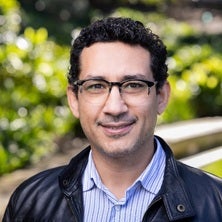
Dr Yahia Ali is a Research Fellow and Lecturer in the School of Mechanical and Mining Engineering at The University of Queensland. His research focuses on tribology and wear, engineering materials, component durability, failure analysis and experimental mechanical engineering, with a strong focus on solving practical problems in mining, mineral processing and manufacturing.
He completed his PhD at The University of Queensland after obtaining his MSc and BSc from the German University in Cairo. His research combines fundamental understanding of materials, wear and failure with the design of experimental methods and engineering solutions for industrial applications.
Dr Ali leads UQ's Wear and Durability Research Group and works closely with UQ Materials Performance, connecting academic research with industry-based engineering and consulting. This interaction has shaped a strongly translational research program encompassing failure investigation, laboratory simulation of industrial wear, development of new testing technologies, alloy and materials development, and validation under industrial conditions.
In 2023, Dr Ali was awarded an Advance Queensland Industry Research Fellowship to develop more sustainable wear-resistant materials for Queensland's mining and agricultural industries. He also leads and contributes to research programs with industrial partners including Bradken, Molycop, Rio Tinto, Weir Minerals and Trelleborg.
Affiliate of Julius Kruttschnitt Mineral Research Centre
Julius Kruttschnitt Mineral Research Centre
Faculty of Engineering, Architecture and Information Technology
Senior Research Fellow
Sustainable Minerals Institute
Faculty of Engineering, Architecture and Information Technology
Availability:
Available for supervision
Media expert
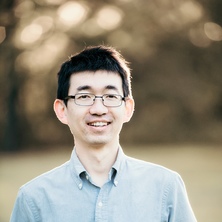
Dr Xiaodong Ma obtained his Bachelor's Degree in 2006 and a Master's Degree in 2009 from Dalian University of Technology, China, then graduated with a PhD in 2012 from The University of Tokyo, Japan, supported by the Japanese Government (Monbukagakusho: MEXT) Scholarship.
Dr Ma joined The University of Queensland in 2012, right after his PhD graduation, starting as a postdoctoral research fellow.
Dr Ma is now the group leader of the High-Temperature Processing (HTP) group and leading the HTP Program at JKMRC, SMI of UQ. He is an expert in experimental and modelling research on thermodynamics and kinetics of high-temperature materials processing for ferrous, non-ferrous and advanced materials. He has extensive hands-on experience in fundamental study and applied research, including solar cell silicon purification, ironmaking, steel secondary refining, copper smelting, metal extraction from low-grade complexed ores, and waste treatment, etc. His research activities also extend to the development of high-strength and high-end specials steels by sophisticated control of second phase particles. Along with the research, he is also good at materials characterization by operating the analytical facilities of SEM, EPMA, TEM, XRD, ICP, etc.
His current research interests span the decarburization of ironmaking and steelmaking with hydrogen metallurgy and lower CO2 emission technologies in the metallurgical sector and high temperature processing of critical minerals, aiming to bridge the gap between conventional metal production and the emerging circular, sustainable economy..
Faculty of Engineering, Architecture and Information Technology
Availability:
Available for supervision
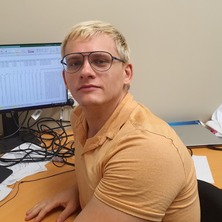
Dr Evgenii Nekhoroshev is a Postdoctoral Research Fellow at the School of Chemical Engineering and a member of the Pyrometallurgy Innovation Centre led by Prof. Evgueni Jak.
He graduated with a Master in Chemistry (chemical thermodynamics) from Lomonosov's Moscow State University, Deparment of Chemistry in 2012. His Master's Thesis was "Thermodynamic optimization of the NaOH-Al(OH)3-Na2SiO3-H2O system for applications in Bayer's process of bauxite treatment" as part of a bigger project initiated in collaboration with Rusal company aimed at utilisation/valorisation of red mud residues accumulated during the production of aluminium oxide from bauxite ores.
In 2019, he completed a PhD in Metallurgical Engineering at Ecole Polytechnique of Montreal, Canada within The Centre For Research in Computational Thermodynamics (CRCT), where he acquired expertise in FactSage software, multicomponent database development, and was included in the list of official collaborators of FactSage. His PhD thesis was "Thermodynamic optimization of the Na2O-K2O-Al2O3-CaO-MgO-B2O3-SiO2 system" sponsored by Glass Consortium including Corning and SCHOTT glass producers. The purpose of the database he developed was to assist the industry in designing new glasses with special properties: chemically hardened glasses (smartphones), technical glasses with high thermal and chemical resilience (boron-containing glasses), chemically inert glasses, etc.
Short after receiving his PhD, Dr Evgenii Nekhoroshev accepted a position at The University of Queensland as part of the Pyrometallurgy Innovation Centre's team where he has an official title of Theme Leader in Thermodynamic Computations, combining his broad expertise in metallurgy, chemical engineering, applied mathematics, and programming.
Dr Evgenii Nekhoroshev has always been passionate about formalisation and automation of big research tasks. He started working on developing an automated solver for thermodynamic optimisation during his PhD thesis which was improved and finalised using the ideas of Prof. Evgueni Jak about real-time derivative matrix optimization and sensitivity analysis applicable to large multicomponent systems. His contribution to the Centre allowed to make transition to a continuous optimization approach when experimental and modelling streams of work in the Centre are efficiently combined together. It allows to include the most recent experimental datasets into a self-consistent database update with minimal time delays.
Affiliate of Centre for Advanced Materials Processing and Manufacturing (AMPAM)
Centre for Advanced Materials Processing and Manufacturing
Faculty of Engineering, Architecture and Information Technology
ARC Early Career Industry Fellow
School of Mechanical and Mining Engineering
Faculty of Engineering, Architecture and Information Technology
Availability:
Available for supervision
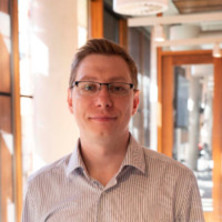
Dr. Xin Fu Tan is a Lecturer in Mechanical Engineering and an ARC Early Career Industry Fellow (2025-2027). Their research interests encompass the areas of electronics manufacturing, hydrogen storage materials, synchrotron radiation techniques, and electron microscopy. Prior to this, Dr. Tan was employed as a Postdoctoral Research Fellow at The University of Queensland, working on an ARC Discovery Project titled "Intermetallic compounds for high-reliability electronic interconnections" (2020-2024). Additionally, Dr. Tan held a Japan Society for the Promotion of Science (JSPS) International Research Fellowship at Kyushu University, contributing to the project "Improving Metal Hydrides to Diversify Energy Storage and Transportation" (2022-2024), as nominated by the Australian Academy of Science (AAS).
Dr. Tan completed their PhD thesis at The University of Queensland in 2020, focusing on the development of novel anode materials for lithium-ion batteries. Between 2010 and 2016, Dr. Tan worked as a Material Scientist at Hydrexia Pty. Ltd., a start-up company specialising in commercialising solid-state hydrogen storage systems based on lab-developed technology from The University of Queensland. They earned a Bachelor's degree (1st class honours) in Mechanical and Manufacturing Engineering at The University of Melbourne and a Master's degree in Advanced Engineering Materials at Chalmers University of Technology in Sweden. These experiences have endowed Dr. Tan with unique research expertise across various Materials Engineering fields, encompassing both academic and industrial settings.
Faculty of Engineering, Architecture and Information Technology
Availability:
Available for supervision
Dr Ju Yao specialises in metal additive manufacturing, microstructural characterisation, and hydrogen embrittlement. She was awarded her PhD from The University of Queensland in 2025. Her research focuses on understanding how processing influences microstructure and properties to improve the reliability and sustainability of advanced metallic materials.
Her work centres on structure–property relationships in high-strength alloys, particularly additively manufactured steels and, more recently, copper and copper-based materials. She integrates advanced characterisation with modelling to reveal how microstructural features govern mechanical performance, corrosion behaviour, and hydrogen-related degradation.
Key areas of expertise include:
Metal additive manufacturing (steels and Cu-based alloys)
Hydrogen embrittlement and corrosion science
Microstructural characterisation
Electrochemical testing and mechanical property evaluation
Dr Yao has published in leading international journals and contributes to advancing knowledge in materials degradation and advanced manufacturing. She collaborates with academic and industry partners to develop innovative alloy design and processing strategies.
Her research aims to deliver high-performance, durable, and sustainable metallic materials for applications in energy, infrastructure, and advanced manufacturing systems.