Faculty of Health, Medicine and Behavioural Sciences
Availability:
Available for supervision
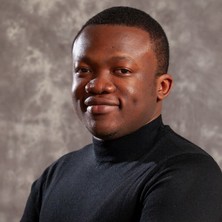
Dr Bademosi received his BSc(Hons) in Medical Physiology from the University of Lagos (Nigeria) in 2010, and his MSc and PhD in Neuroscience from the Queensland Brain Institute at the University of Queensland in 2014 and 2018 respectively. He pioneered super-resolution single-molecule microscopy in vivo during his PhD, where he examined nanoscale changes in synaptic proteins during neurotransmission and under general anaesthesia. In 2018, obtained the highly competitive European Molecular Biology Organisation (EMBO) postdoctoral fellowship.to carry out his postdoctoral training in the lab of Professor Patrik Verstreken who is the current Director of of the Centre for Brain and Disease Research, Flemish Institute of Biotechnology, KU Leuven, Belgium. Here, he characterised how disease coding variants in risk genes for Parkinson's Disease elicit onset of neuronal degeneration (published in Neuron). Dr Bademosi was awarded the inaugural Race Against Dementia - Dementia Australia Research Foundation postdoctoral fellowship in 2020, to carry examine advanced nanoscale investigation into changes in the organisation and dynamics of the Motor Neuron Disease and Frontotemporal Dementia linked protein TDP-43. He is currently a Brazil Family Program for Neurology Fellow. His research has been supported by grants from the Brain Foundation Australia, Dementia Australia Research Foundation, Motor Neuron Disease Research Institute of Australia, and the Australian Research Council.
Faculty of Health, Medicine and Behavioural Sciences
Professorial Research Fellow and Group Leader
Queensland Brain Institute
Faculty of Health, Medicine and Behavioural Sciences
Availability:
Available for supervision
Media expert
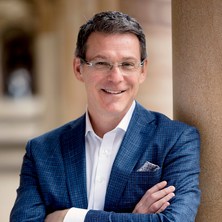
Research in the Bredy laboratory is aimed at elucidating how the genome is connected to the environment through epigenetic modifications, and how this relationship shapes brain and behaviour throughout life. The group is particularly interested in how epigenetic mechanisms, including DNA methylation, histone modifications. the activity of non-coding RNAs, and RNA modification regulate the formation and maintenance of associative fear-related memory.
Faculty of Health, Medicine and Behavioural Sciences
Research Fellow
School of Health and Rehabilitation Sciences
Faculty of Health, Medicine and Behavioural Sciences
Availability:
Available for supervision
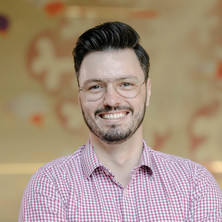
Dr Jonathan Davies is a chronic pain researcher working to improve how pain is understood, assessed and treated. His research focuses on pain phenotyping, precision pain care, and the psychological, physiological and contextual factors that shape pain and treatment response.
At UQ’s Centre for Innovation in Pain and Health Research, he contributes to DISCERN, an NHMRC Synergy-funded multidisciplinary research program developing and validating new approaches to pain assessment. A major focus of his work is DECIPHER PAIN, a standardised, multimodal tool designed to characterise the relative contributions of nociceptive, neuropathic and nociplastic pain and support more personalised care.
His research integrates clinical assessment, quantitative sensory testing, experimental pain methods, psychophysiology, digital health and population data. He is particularly interested in how physiological signals, behaviour, language, psychosocial context and real-world health data can be combined to better understand individual differences in pain and treatment outcomes.
His broader expertise includes placebo and nocebo effects, mindfulness, mental health, quality of life, health outcome measurement and population health. His work aims to support more precise, scalable and patient-centred approaches to pain research and care.
Faculty of Health, Medicine and Behavioural Sciences
UQ Amplify Senior Research Fellow
School of Mathematics and Physics
Faculty of Science
Availability:
Available for supervision
Itia is an optical physicist and neuroscientist recently awarded an ARC DECRA fellowship. She is based at the Queensland Brain Institute in Brisbane. Her research focuses on studying the zebrafish brain using advanced techniques such as whole brain calcium imaging and specialized light shaping devices. Notably, she has pioneered the application of optical tweezers to simulate the zebrafish inner-ear's responses to acceleration and hearing, offering novel insights into sensory processing mechanisms. She has also engineered imaging systems for conducting optogenetic experiments with real-time feedback in zebrafish models. Beyond technique development, Itia explores the noradrenergic system in zebrafish, investigating its pivotal role in modulating sensory functions. Her interdisciplinary approach combines optical physics with neuroscience to advance our understanding of neural circuits and sensory perception mechanisms in zebrafish.
Faculty of Health, Medicine and Behavioural Sciences
Availability:
Available for supervision
Media expert
I am a neuroscientist investigating how cellular signalling and neuron–glia interactions shape brain development, neural circuit function and myelination across the lifespan, and how disruption of these processes contributes to neurodevelopmental and neurodegenerative disorders. My research focuses on neural progenitor cells, oligodendrocyte biology, myelination and neural circuit function, with the broader goal of understanding disease mechanisms and identifying therapeutic targets that can improve the treatment of neurological disorders.
I completed my PhD at the University of Tasmania, investigating ion channel signalling in oligodendrocyte progenitor cells and its role in cell survival, neural circuit function and myelination. I subsequently undertook postdoctoral research at The University of Queensland, including at the Queensland Brain Institute, where I investigated neural progenitor function, neuronal migration and cortical development in models of neurodevelopmental disorders. At Mater Research–UQ, my research has focused on oligodendrocyte dysfunction, myelination and cellular signalling in neurological disease, including multiple sclerosis-like pathology.
Across these research programs, I have developed expertise in developmental and cellular neuroscience, neural progenitor biology, neuron–glia interactions, oligodendrocyte biology, myelination and neural circuit function, using molecular and cellular approaches, advanced microscopy, electrophysiology, animal models and behavioural neuroscience. My broader research direction is to understand how dysfunction across different neural cell populations contributes to disease progression and how this knowledge can be translated into new approaches to prevent, treat or modify neurological disease.
Alongside my research, I contribute to tertiary teaching, student supervision and scientific communication across neuroscience, psychology and biomedical sciences. I am particularly interested in research-informed education and in developing the next generation of scientists by sharing scientific knowledge, technical expertise and practical research skills.