Queensland Alliance for Agriculture and Food Innovation
Higher Degree by Research Scholar
Queensland Alliance for Agriculture and Food Innovation
Availability:
Available for supervision
Media expert
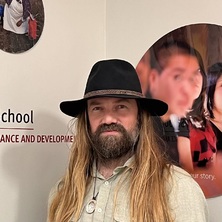
Jacob is a proud Gamilaraay man from QLD and a PhD candidate within QAAFI. Jacob's work focuses on Indigenous food sovereignty as nation-building, looking at the Gamilaraay peoples' governance of thier native grains industry as a case study.
Jacob is taking a systems approach in developing the nascent native grains industry. His priority is setting strong, strategic, sustainable, Indignoeus-led governace to ensure opportunity and benefit remains with Indigenous people. Jacob also has active interests spanning the ecology and conservaion of native grassland species; agronomic knowledge to help support reintroduction of native grains; supply chain and processing of native grains; nutrition and food safety; product development and marketing; and education and engagement.
Jacob's passion also extends to the broader Indigenous food sovereignty movement. Through his work, Jacob collaborates across disparate spaces and advocates for the transformative potential of integrated, circular, sustainable, Indigenous-designed food systems that prioritise human and ecosystem health over profit and production.
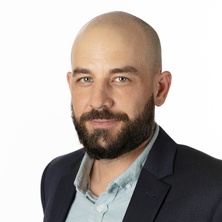
As a music-maker and language revivalist from the south coast Noongar region of Western Australia, I am interested in the connections between song, language, and landscapes. My work intersects with applied linguistics, ecomusicology, Australian studies, and Indigenous studies.
I am lead Chief Investigator for ARC DI project 'Restoring on-Country Performance' and a Chief Investigator for ARC LIEF project 'Nyingarn: A platform for primary sources in Australian Indigenous languages', ARC DI project 'The role of First Nations’ music as a determinant of health', and ARC Linkage project 'Life After Digitisation: Future-Proofing WA's Vulnerable Cultural Heritage'.
After working as an ESL and music teacher, I helped establish the major in Indigenous Knowledge at the University of Western Australia, where I completed a PhD in Noongar song. At the University of Sydney I co-developed the major in contemporary music for Sydney Conservatorium of Music, before returning to Western Australia at Edith Cowan University to bolster humanities research in my home state. Recent arts-language projects I have collaborated on include a mainstage production of Shakespeare's Macbeth in Noongar (Hecate 2020), a Bruce Lee film dubbed in Noongar (Fist of Fury Noongar Daa 2021), and the multi-sensory ‘Noongar Wonderland’ performance installation in Perth Festival 2022.
I serve as Deputy Chair of the Australian Institute of Aboriginal and Torres Strait Islander Studies (AIATSIS) and received the 2020 Barrett Award for Australian Studies.
Faculty of Health, Medicine and Behavioural Sciences
Availability:
Available for supervision
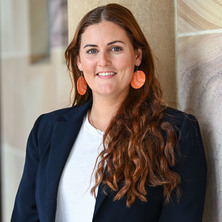
Dr Tamara Butler is an Aboriginal woman of the Undumbi people from the Sunshine Coast region of Queensland, Australia and a NHMRC Emerging Research Fellow at the University of Queensland. She works withing the First Nations Cancer and Wellbeing Research Program. Her work is focused on women’s cancers with the goal of improving cancer outcomes for Aboriginal and Torres Strait Islander people, families, and communities. Broadly Dr Butler’s research interests also include First Nations research methods and process, co-design, wellbeing, and psychosocial aspects of cancer care.
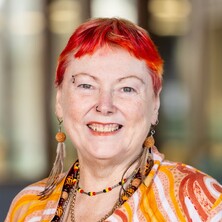
I am a Saltwater woman and a descendant of Matora (Awabakal) and Bungaree (Garigal/Darug), with family ties through Diana Mudgee to the Wiradyuri Nation. I am an Associate Professor in the UQ Business School and Director of the Indigenous Business Hub, and serve as Associate PRME Director – Indigenous Engagement for the UQ Business School.
I have more than 40 years of experience across academia, government, industry and community, with professional and academic work spanning Indigenous employment, Indigenous business, equity and inclusion, organisational change, industrial relations and Indigenous economic participation. My work brings together academic research, professional practice, community relationships and policy engagement, with a focus on creating practical and sustainable pathways for Aboriginal and Torres Strait Islander peoples, organisations and businesses.
My research centres on Indigenous employment, Indigenous business, Indigenous leadership and organisational transformation. My scholarship examines how colonial structures, institutional practices and workplace systems shape the experiences and opportunities of Aboriginal and Torres Strait Islander peoples. Drawing on Indigenous standpoint theory, Indigenous methodologies, Indigenous feminist perspectives and decolonial approaches, my research develops relational and culturally grounded approaches to employment, leadership, business and organisational change.
My research program spans industrial relations, human resource management, business education, leadership, Indigenous governance and economic participation. A consistent feature of my work is the connection between research, policy and practice. My research has informed policy processes and has been cited in Ministerial papers and Bills introduced into Parliament. I have also contributed to national policy and advisory processes concerning Indigenous employment, higher education, Indigenous entrepreneurship, workforce participation and organisational change.
As Director of the Indigenous Business Hub, I connect research, education, industry and community. The Hub supports research and engagement with Aboriginal and Torres Strait Islander businesses, organisations, governments and communities, and provides pathways for Indigenous knowledge, business expertise and community priorities to inform business education and research at UQ.
I established the International Journal of Indigenous Business through the Indigenous Business Hub and serve as Editor-in-Chief. The journal provides an international scholarly platform for Indigenous business research and centres Indigenous voices, Indigenous knowledges and priorities across business, enterprise, governance, policy, education and leadership.
I completed my Doctor of Philosophy (Business) at the University of Newcastle in 2016. My doctoral thesis, Private-sector employment programs for Aboriginal and Torres Strait Islander peoples: Comparative case studies, examined approaches to Indigenous employment in the private sector. I was the first Aboriginal person to be awarded a PhD in Business from the University of Newcastle.
I completed my Honours thesis in 2006, examining mentoring as a human resource strategy to address labour market disadvantage for Indigenous Australians through a qualitative study of mentoring outcomes for Indigenous trainees at the University of Newcastle.
My work is grounded in reciprocity, relational accountability and Indigenous self-determination. Across academic, community, industry and policy settings, I seek to create opportunities through which knowledge, relationships and resources can move in both directions — strengthening UQ while contributing to outcomes for Aboriginal and Torres Strait Islander communities, businesses, organisations and students.
Principal Specialty Supervisor in Indigenous Health Education and Engagment
Medical School (Rural Clinical School)
Faculty of Health, Medicine and Behavioural Sciences
Availability:
Not available for supervision
Leonie is proud of her traditional connections to the Djaku-nde people of North Burnett, Juru people in Bowen North Queensland and the Nuigi people of Mulgumpin (Moreton Island) with bloodline traces back to Tanna, Santo and Lifu Island's in Vanuatu. With over 30 years of experience in social work, Leonie is a nationally recognised leader in cultural safety, Indigenous engagement and community development. Leonie has extensive experience in across child protection, mental health and teritary education sectors. Her professional expereist encompasses policy development, legislative reform, and practice frameworks, with a strong emphasis on co-design, cultural mentoring and workforce development. She has lectured in Indigenous Health, Social Work, Mental Health and contributed to the development of culturally safe, student-centred curricula. Renowned for her authentic faciliation style, she empowers individuals and organisations to embed cultural safety and drive systemic change across government, non-government, and academic contexts.