
Overview
Background
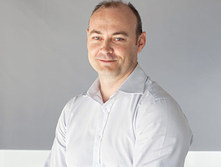
Dr Daniel Blackmore is a senior post-doctoral research fellow in the Bartlett Laboratory at QBI. His research is focused on the ageing brain and developing approaches to slow or even reverse cognitive decline. Dr Blackmore was one of the first to discover the age-associated decrease in neural stem cells. These stem cells are critical as they are able to generate new neurons which are essential for the formation of new memories. Daniel uses mice to study the exact mechanisms involved in these processes. He has shown that physical exercise is very effective at increasing neuron number and improving memory in very old animals. This research formed the basis for a recent human exercise study that demonstrated a significant improvement in the cognitive function of elderly Australians.
Availability
- Dr Daniel Blackmore is:
- Not available for supervision
- Media expert
Fields of research
Qualifications
- Bachelor (Honours) of Science (Advanced), University of Newcastle
- Doctor of Philosophy, University of Newcastle
Works
Search Professor Daniel Blackmore’s works on UQ eSpace
2005
Journal Article
Increased capacity for sucrose uptake leads to earlier onset of protein accumulation in developing pea seeds
Rosche, Elke G., Blackmore, Daniel, Offler, Christina E. and Patrick, John W. (2005). Increased capacity for sucrose uptake leads to earlier onset of protein accumulation in developing pea seeds. Functional Plant Biology, 32 (11), 997-1007. doi: 10.1071/FP05127
2004
Journal Article
Biosynthesis of the Canine Zona Pellucida requires the integrated participation of both oocytes and granulosa cells
Blackmore, Daniel G., Baillie, Lucan R., Holt, Janet E., Dierkx, Lynda, Aitken, R. John and McLaughlin, Eileen A. (2004). Biosynthesis of the Canine Zona Pellucida requires the integrated participation of both oocytes and granulosa cells. Biology of Reproduction, 71 (2), 661-668. doi: 10.1095/biolreprod.104.028779
2002
Journal Article
Seed-specific overexpression of a potato sucrose transporter increases sucrose uptake and growth rates of developing pea cotyledons
Rosche, Elke, Blackmore, Daniel, Tegeder, Mechthild, Richardson, Terese, Schroeder, Hart, Higgins, Thomas J. V., Frommer, Wolf B., Offler, Christina E. and Patrick, John W. (2002). Seed-specific overexpression of a potato sucrose transporter increases sucrose uptake and growth rates of developing pea cotyledons. The Plant Journal, 30 (2), 165-175. doi: 10.1046/j.1365-313X.2002.01282.x
Supervision
Availability
- Dr Daniel Blackmore is:
- Not available for supervision
Supervision history
Completed supervision
-
2025
Doctor Philosophy
Investigating the role of visual stimulation in the gamma range on neuro-vascular reactivity in a mouse model of photothrombotic stroke
Associate Advisor
Other advisors: Dr Matilde Balbi
-
-
2019
Doctor Philosophy
Exploring the Role of Microglia as Regulators of Adult Hippocampal Neurogenesis
Associate Advisor
Other advisors: Professor Jana Vukovic
-
2019
Doctor Philosophy
The structural and functional changes observed in the aged murine hippocampus are ameliorated by physical exercise in a neurogenesis-dependent manner
Associate Advisor
Media
Enquiries
Contact Dr Daniel Blackmore directly for media enquiries about:
- ageing and dementia
- cognitive health
- exercise
Need help?
For help with finding experts, story ideas and media enquiries, contact our Media team: