
Overview
Background
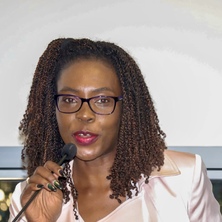
Dr. Lord leads the Spectroscopy Lab at the School of the Environment, the University of Queensland. Her interdisciplinary research is focused on
1. Modified diets for mass rearing of insects including Wolbachia, SIT and gene drive technologies
2. Monitoring and evaluation tools for vector control tools using infrared light and artificial intelligence.
3. Climate change and its impact on vector-borne diseases
As a Chief Investigator, Dr. Lord has secured research funding from several funding bodies including the Bill & Melinda Gates Foundation, USAID, NHMRC, AQIRF, and Grand Challenges Canada to develop rapid tools for large-scale disease surveillance. With her recent funding from the National Health and Medical Research Council, she is developing a smart trap for Ross River virus surveillance in partnership with Queensland Health.
Dr. Lord has published over 60 research works, and presented her findings at over 30 international conferences. Her groundbreaking research has been featured in hundreds of media outlets worldwide. Her contributions to global health have earned her numerous academic accolades, including being named a Fellow of the American Society of Tropical Medicine and Hygiene in 2024.
Beyond research, Dr. Lord leads the STEM Spotlight program, a STEM mentorship initiative that provides a safe and engaging space for students from culturally and linguistically diverse (CALD) communities. The program encourages students from underrepresented backgrounds to pursue careers in STEM while providing them the opportunity to be part of the STEM community in a safe space. In recognition of this work, she was awarded the Diversity and Inclusion Champion Award (2023) by the Department of Multicultural Affairs. Dr Lord has served/serves on numerous committees including the Australian of the year selection Committee (2023), the American Society of Tropical Medicine and Hygiene Scientific Committee, Young investigator award committee (ASTMH), Equity, Diversity and Inclusion committee (UQ).Between 2021-2024 she served as the vice president of African Professionals of Australia (QLD).
Current Research interests and PhD projects:
Techniques to enhance mass rearing of mosquitoes to support next generation vector control interventions
Climate change impacts on vector borne diseases
Availability
- Dr Maggy Lord is:
- Not available for supervision
- Media expert
Fields of research
Qualifications
- Doctor of Philosophy, Griffith University
Research interests
-
Techniques to improve mass rearing of mosquitoes
Wolbachia strategies, SIT and gene-drive technologies
-
Artificial intelligence
Development of AI tools for monitoring vector-borne diseases
-
Climate change
Impact of climate change on mosquitoes including impact on interaction with interventions such as Wolbachia
Research impacts
Demonstrated the capacity of infrared and Artificial intelligence to
1. Characterise mosquito species into age, species and infection
2. Detect Zika, Dengue and Chikungunya in seconds non-invasively in mosquitoes
3. Detect Wolbachia in mosquitoes non-invasively
4. Detect Trypanosoma cruzi in Triatomine species and faecal samples
5. Detect malaria non-invasively through the skin of human subjects
6. Detect soil-transmitted helminths non-invasively in experimental mouse
Works
Search Professor Maggy Lord’s works on UQ eSpace
2009
Journal Article
Comparative evaluation of the Ifakara tent trap-B, the standardized resting boxes and the human landing catch for sampling malaria vectors and other mosquitoes in urban Dar es Salaam, Tanzania
Sikulu, Maggy, Govella, Nicodem J., Ogoma, Sheila B., Mpangile, John, Kambi, Said H., Kannady, Khadija, Chaki, Prosper C., Mukabana, Wolfgang R. and Killeen, Gerry F. (2009). Comparative evaluation of the Ifakara tent trap-B, the standardized resting boxes and the human landing catch for sampling malaria vectors and other mosquitoes in urban Dar es Salaam, Tanzania. Malaria Journal, 8 (1) 197. doi: 10.1186/1475-2875-8-197
Funding
Current funding
Past funding
Supervision
Availability
- Dr Maggy Lord is:
- Not available for supervision
Supervision history
Current supervision
-
Doctor Philosophy
Determine the effect of climate change on the transmission of Dengue
Principal Advisor
Other advisors: Professor Sassan Asgari
-
Doctor Philosophy
Near-infrared and machine learning algorithms to detect arboviruses transmitted by mosquitoes
Principal Advisor
Other advisors: Professor Sassan Asgari, Dr T. Thang Vo-Doan
-
Doctor Philosophy
Smart trap for surveillance of mosquitoes
Associate Advisor
Other advisors: Dr T. Thang Vo-Doan
Completed supervision
-
2024
Doctor Philosophy
Detection of malaria and arboviruses with spectroscopy and machine learning techniques
Principal Advisor
Other advisors: Professor Ricardo Soares Magalhaes
-
2024
Doctor Philosophy
Exploring diagnostic approaches and quality assurance data for improved management of gonorrhoea antimicrobial resistance
Associate Advisor
Other advisors: Associate Professor David Whiley, Dr Emma Sweeney
-
2021
Doctor Philosophy
Detecting Haemonchus contortus infection in sheep using infrared spectroscopy
Associate Advisor
Other advisors: Dr Anne Beasley
Media
Enquiries
Contact Dr Maggy Lord directly for media enquiries about:
- infrared spectroscopy
- malaria
- Mosquitoes
- non-invasive diagnostic tools
- surveillance
Need help?
For help with finding experts, story ideas and media enquiries, contact our Media team: