
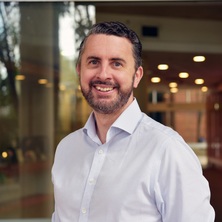
Overview
Background
I lead the extracellular vesicle (EV) Diagnostics and Therapeutics research theme within the Centre for Personalised Nanomedicine at the Australian Institute for Bioengineering and Nanotechnology (AIBN), University of Queensland. My research aims to transform EVs into precision tools for detecting, monitoring, and treating complex diseases of the brain and body by integrating EV biology, immunology, bioengineering, and nanotechnology.
My group is developing advanced analytical platforms for single-vesicle profiling in blood and other biofluids, enabling tissue-specific EV diagnostics that trace their cellular origin and act as a “molecular GPS” for disease activity throughout the body. In parallel, my program focuses on bioengineering organotropic EVs with targeted delivery capabilities to cross biological barriers and treat neurological disorders and cancer.
Through this work, I aim to advance next-generation EV technologies that provide real-time molecular insights into disease progression and enable new therapeutic strategies for brain cancer, metastatic CNS disease, traumatic brain injury, dementia, chronic traumatic encephalopathy (CTE), and motor neuron disease.
Availability
- Dr Richard Lobb is:
- Available for supervision
Qualifications
- Doctor of Philosophy, The University of Queensland
Research interests
-
Extracellular Vesicles
Clinical interest in extracellular vesicles (EVs) has grown rapidly as accumulating evidence highlights their central role in intercellular communication and systemic regulation. Small EVs, or exosomes, are nanoscale lipid bilayer vesicles (30–150 nm) constitutively secreted by virtually all cell types. They carry a diverse molecular cargo of proteins, lipids, and nucleic acids, including mRNA, miRNA, lncRNA, and both nuclear and mitochondrial DNA, reflecting the physiological state of their cell of origin. Consequently, EVs have emerged as versatile biomarkers and mediators of disease processes, offering new opportunities for diagnostics, prognostics, and therapeutic intervention across oncology, neurodegenerative and traumatic brain disorders, cardiovascular disease, and immune dysregulation. Importantly, tissue-derived EVs are readily detectable in a range of biofluids such as blood, urine, saliva, and cerebrospinal fluid, supporting their utility in minimally invasive “liquid biopsy” approaches for precision health.
-
Therapeutics
The ability of small EVs to transfer biomolecules between cells highlights their potential in modulating intercellular communication for therapeutic purposes. Small EVs possess natural traits that facilitate effective drug delivery, including their ability to traverse biological barriers and be administered via various routes, offering flexibility in treatment strategies. These inherent advantages can be exploited with precise bioengineering of EV membrane proteins for targeted distribution to specific organs and cell types, improving therapeutic outcomes while minimizing unintended effects. As a result, EVs as an advanced bionanoparticle therapeutic may represent next-generation drug delivery resulting in safer and more effective therapies
Works
Search Professor Richard Lobb’s works on UQ eSpace
2014
Journal Article
Exosomes in cancer metastasis: Novel targets for diagnosis and therapy?
Wen, Shu Wen, Lobb, Richard and Moller, Andreas (2014). Exosomes in cancer metastasis: Novel targets for diagnosis and therapy?. Cancer Forum, 38 (2), 116-120.
Funding
Current funding
Past funding
Supervision
Availability
- Dr Richard Lobb is:
- Available for supervision
Looking for a supervisor? Read our advice on how to choose a supervisor.
Available projects
-
A New Window into the Brain: Profiling Extracellular Vesicles for Neuro-Oncology
Establish a liquid biopsy approach for brain cancer by mapping the molecular phenotype of blood-derived EVs from brain-resident cells. This project leverages tissue-specific EV markers and multiplexed nanotechnologies to enable minimally invasive monitoring of glioblastoma, brain metastases, and neuroinflammation.
-
Advanced Bionanoparticle Engineering for Therapeutics
Develop next-generation extracellular vesicle (EV) engineering strategies for targeted therapeutic delivery. This project focuses on the design and functionalisation of EVs and synthetic mimetics, integrating bio-orthogonal chemistry, surface display technologies, and therapeutic cargo loading to optimise delivery to tumours and inflamed tissues.
-
Unravelling EV-Mediated Intercellular Communication in Health and Disease
Investigate the functional roles of EVs in modulating recipient cell behaviour. This project combines controlled EV isolation with advanced in vitro/ in vivo models to dissect how EV cargo influences signalling pathways, immune responses, and cellular plasticity in the context of cancer and injury.
-
Multiplexed Nanotechnology for EV Analysis and Diagnostics
Design and apply cutting-edge nanostructures—including nanopillar arrays and barcoded nanoparticles—for high-sensitivity EV capture and molecular profiling. This platform supports multi-marker EV analysis in clinical biospecimens, with applications in early detection, disease monitoring, and precision medicine.
Supervision history
Current supervision
-
Doctor Philosophy
Investigating therapeutic potentials of brain-derived exosomes
Principal Advisor
Other advisors: Professor Matt Trau, Dr Christopher Howard
-
Doctor Philosophy
A Novel Extracellular Vesicle Profiling Platform for Neuro-Oncological Detection and Monitoring
Principal Advisor
Other advisors: Dr Will Anderson
-
Doctor Philosophy
Nanoscale profiling of immune overreactions in cancer therapy, infectious and autoimmune diseases
Associate Advisor
Other advisors: Professor Matt Trau, Associate Professor Alain Wuethrich
-
Doctor Philosophy
Single Molecule Readout of Immune Disfunction
Associate Advisor
Other advisors: Dr Will Anderson, Dr Fiach Antaw, Professor Matt Trau
-
Doctor Philosophy
Bio-inspired Nanoparticles for Mechano-Regulationof Stem Cell Fate
Associate Advisor
Other advisors: Dr Mark Allenby, Associate Professor Ruirui Qiao
-
Doctor Philosophy
Digital Nanotechnologies to track molecular aberrations in cancer
Associate Advisor
Other advisors: Associate Professor Alain Wuethrich, Professor Matt Trau
Completed supervision
-
2026
Doctor Philosophy
Microglia-Derived Extracellular Vesicles as a Window into the Brain: A Multiparametric Approach for Single Microglia-EV Analysis
Principal Advisor
Other advisors: Professor Matt Trau, Associate Professor Alain Wuethrich
-
2025
Doctor Philosophy
Multi-Factor Authentication of Extracellular Vesicles in Clinical Settings
Associate Advisor
Other advisors: Associate Professor Alain Wuethrich, Professor Matt Trau
Media
Enquiries
For media enquiries about Dr Richard Lobb's areas of expertise, story ideas and help finding experts, contact our Media team: