
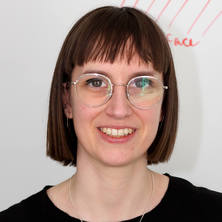
Overview
Background
Dr Verdi's research is in the field of computational materials physics. Her work employs first-principles or ab initio methods, complemented by machine learning techniques, to predict and understand physical properties of materials without relying on empirical models. For more information, visit the research group website.
She received her doctorate from the University of Oxford in 2017. After working at the University of Oxford and the University of Vienna, Dr Verdi moved to the University of Sydney in 2023 as an ARC DECRA Fellow. In the same year, she then joined UQ as a Lecturer in Condensed Matter Physics. She is an associate investigator of the ARC Centre of Excellence for Quantum Biotechnology (QUBIC).
Her current research focuses on understanding the structural, optical and thermodynamic properties of atomic defects for applications in quantum technologies. She is also interested in studying the influence of atomic vibrations, defects, temperature and disorder on the intrinsic properties of various functional materials that can be exploited for novel technologies. Feel free to reach out to Dr Verdi if you are interested in simulating materials properties from first principles using supercomputers and exploring how this can help develop better materials.
Availability
- Dr Carla Verdi is:
- Available for supervision
- Media expert
Fields of research
Qualifications
- Bachelor of Physics, Università degli Studi di Padova
- Masters (Research) of Physics, Università degli Studi di Padova
- Doctor of Philosophy of Materials, University of Oxford
Works
Search Professor Carla Verdi’s works on UQ eSpace
2015
Journal Article
GW Band Structures and Carrier Effective Masses of CH3NH3PbI3 and Hypothetical Perovskites of the Type APbI3: A = NH4, PH4, AsH4, and SbH4
Filip, Marina R., Verdi, Carla and Giustino, Feliciano (2015). GW Band Structures and Carrier Effective Masses of CH3NH3PbI3 and Hypothetical Perovskites of the Type APbI3: A = NH4, PH4, AsH4, and SbH4. Journal of Physical Chemistry C, 119 (45), 25209-25219. doi: 10.1021/acs.jpcc.5b07891
2014
Journal Article
Alignment of energy levels in dye/semiconductor interfaces by GW calculations: Effects due to coadsorption of solvent molecules
Verdi, Carla, Mosconi, Edoardo, De Angelis, Filippo, Marsili, Margherita and Umari, P. (2014). Alignment of energy levels in dye/semiconductor interfaces by GW calculations: Effects due to coadsorption of solvent molecules. Physical Review B - Condensed Matter and Materials Physics, 90 (15) 155410. doi: 10.1103/PhysRevB.90.155410
Funding
Current funding
Supervision
Availability
- Dr Carla Verdi is:
- Available for supervision
Looking for a supervisor? Read our advice on how to choose a supervisor.
Available projects
-
Superconductivity in hyperdoped germanium from first principles
Semiconductors like silicon and germanium are fundamental to electronic devices. Superconductivity can be realised in these semiconductors through heavy doping (or 'hyperdoping'), which involves introducing a high concentration of dopants into the material. This emerging class of 'superconducting semiconductors' presents an exciting new platform for integrated quantum electronics. However, to engineer their properties effectively, an atomistic understanding of the origin of superconductivity is essential. This project aims to elucidate the superconducting mechanisms in hyperdoped germanium crystals using first-principles calculations based on density-functional theory and Migdal-Eliashberg theory. The student will gain expertise in state-of-the-art materials modelling software, electron-phonon physics, and high-performance computing.
-
Thermodynamic properties of atomic defects for quantum technologies
Atomic defects in solids are one of the most promising single-photon sources or 'quantum emitters', an important building block for many quantum technologies. In order to design and engineer better quantum emitters, a fundamental understanding of their optical and electronic properties, as well as defect formation and migration, is essential. In this project, first-principles quantum mechanical calculations combined with machine-learning techniques are used in order to uncover key properties such as defect dynamics, formation mechanisms, free energies and stabilities at room and elevated temperatures. The theoretical insights gained in the project aim to inform the design of atomic defects systems for tailored applications as quantum emitters. The student will gain experience with high-performance computing and materials simulation methods, in particular first-principles methods and machine-learned potentials.
-
Atomistic modelling of solid surfaces and 2D structures
Density functional theory (DFT) is a prominent tool that enables the simulation of materials and molecules at the atomic scale 'from first principles', i.e., without relying on empirical data. To underscore its importance in modern materials physics and beyond, it should suffice to mention that 12 papers on the top-100 list of the most-cited papers of all time, including 2 of the top 10, are all related to DFT. In this project, first-principles DFT calculations will be used to investigate and characterise the structural and electronic properties of 2D structures and solid surfaces. These properties can be directly compared to experimental data, such as scanning tunneling microscopy (STM) experiments conducted in SMP. Target systems include solvated molecules on alkali halide structures, perovskite materials for next-gen solar cells, and oxide structures on metal superconductors. The student will gain experience with widely used first-principles materials modelling software and high-performance computing.
Supervision history
Current supervision
-
Doctor Philosophy
First principles calculations of defects in solids for quantum technologies
Principal Advisor
Other advisors: Professor Ben Powell
-
Doctor Philosophy
Electronic structure of quantum emitters in hBN
Principal Advisor
-
Doctor Philosophy
Electron-phonon coupling in atomic defects for quantum technologies
Principal Advisor
Other advisors: Professor Ben Powell
-
Doctor Philosophy
Computational modelling of materials for next-generation optoelectronic devices
Principal Advisor
Other advisors: Associate Professor Ebinazar Namdas, Dr Julian Andrew Steele
-
Doctor Philosophy
Modelling spin-crossover materials with machine-learned force fields.
Principal Advisor
Other advisors: Professor Ben Powell
-
Doctor Philosophy
New Methods for Strongly Correlated Electrons in Chemically Complex Materials
Associate Advisor
Other advisors: Professor Ben Powell
-
Doctor Philosophy
Exotic Phases in Spin-Crossover Materials
Associate Advisor
Other advisors: Professor Ben Powell
Media
Enquiries
Contact Dr Carla Verdi directly for media enquiries about:
- Condensed matter physics
- Materials modelling and design
- Materials science
- Quantum chemistry
- Quantum materials
- Superconductivity
Need help?
For help with finding experts, story ideas and media enquiries, contact our Media team: