
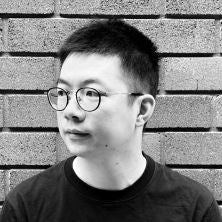
Overview
Background
Dr Qianbin Xu is a Postdoctoral Research Fellow in the School of Civil Engineering at The University of Queensland and a researcher with UQ VisLab. His work brings together spatial digital twins, computer vision, computational design and digital fabrication to measure, design and build better environments, and to help people use these tools in practice.
His current research covers:
- Digital engineering for the construction trades: applied research with vocational education and industry partners on how model-based workflows, common data environments and field-based digital capture can support digital upskilling, starting with plumbing.
- Spatial digital twins: developing UQ VisLab's spatial twin and campus digital twin, which combine 3D scanning, point clouds, LiDAR and environmental sensor data with computer vision, automated modelling and immersive interfaces so that building and campus performance can be measured, visualised and discussed with non-specialists.
- Computational timber construction: reconfigurable timber systems that join rule-based design, robotic milling and augmented reality-assisted assembly.
Dr Xu completed his PhD in Architecture at UQ in 2026. His thesis reinterpreted traditional Chinese mortise-tenon joinery as a rule-based computational design system for discrete, reconfigurable timber blocks, tested through robotic fabrication and full-scale prototypes.
He has also contributed to the international Building with Blue Biomass network on bio-based building materials, with work exhibited in Copenhagen and London. He holds a Master of Architecture from RMIT University and a Bachelor of Architecture from Xiamen University Tan Kah Kee College.
Availability
- Dr Qianbin Xu is:
- Available for supervision
Fields of research
Qualifications
- Masters (Coursework), RMIT University
- Doctor of Philosophy of Architecture, The University of Queensland
Research interests
-
Spatial digital twins and AI for the built environment
Digital twins that combine 3D scanning, point clouds, LiDAR, environmental sensors and building records with computer vision for privacy-aware occupancy and movement sensing, and automated workflows that turn building drawings into 3D models. The aim is to measure and visualise building performance, comfort and campus operations, and make this evidence usable for planners, facilities teams, industry and non-specialists.
-
Digital engineering and upskilling in construction trades
How model-based workflows, common data environments, geospatial tools and field-based digital capture can be introduced into trade training and practice. This includes capability mapping, training needs, pilot design and evaluation with vocational education and industry partners.
-
Computational design for circular timber construction
Rule-based and generative design methods, including shape grammars and discrete aggregation, that encode timber joinery as computable design systems. This work reinterprets traditional mortise-tenon joints for flexible, reconfigurable and reusable timber construction.
-
Robotic fabrication, AR-assisted assembly and physical AI
Design-to-fabrication workflows linking parametric models to robotic milling, robotic 3D printing and augmented reality assembly guidance, with calibrated tolerances for repeatable assembly. Ongoing work explores sensor and vision feedback for closed-loop robotic fabrication.
-
Bio-based materials and immersive research communication
Bio-based building materials from aquatic biomass, and the use of immersive 360-degree environments, extended reality and exhibitions to communicate research and co-design with the public and partners.
Research impacts
Dr Xu's research turns digital design and sensing methods into working tools, prototypes and public demonstrations.
- Campus and building digital twins: he contributes to UQ VisLab's spatial twin and the UQ campus digital twin, which bring scanning, sensor and building data into one interactive model to support facilities, planning and research. He co-authored the Springer book chapter (2024) that set out the campus digital twin framework for urban sustainability.
- Circular timber construction: his doctoral research produced a full-scale timber wall prototype that was repeatedly assembled, disassembled and reconfigured without fasteners or adhesives. He presented it at ROB|ARCH 2026 in Aarhus, Denmark, and in an immersive 360-degree demonstration at UQ VisLab.
- Bio-based materials: with the Building with Blue Biomass network, he co-developed biopolymer panels with microalgae and cyanobacterial pigments, and algae–clay blocks. These were exhibited at Building Green, Copenhagen (2024) and Arup, London (2025).
- Skills for industry: his current applied research with vocational education and industry partners aims to help construction trades adopt digital engineering tools and workflows.
Works
Search Professor Qianbin Xu’s works on UQ eSpace
Featured
2026
Other Outputs
Reconfigurable architecture through computational design: a flexible timber design system combining mortise-tenon joints and discrete timber blocks
Xu, Qianbin (2026). Reconfigurable architecture through computational design: a flexible timber design system combining mortise-tenon joints and discrete timber blocks. PhD Thesis, School of Architecture, Design and Planning, The University of Queensland. doi: 10.14264/ecc7e4b
Featured
2026
Journal Article
Timber system with robotic milling and AR-guided assembly for reconfiguration
Xu, Qianbin, Fialho Teixeira, Frederico and Shafiei, Maryam (2026). Timber system with robotic milling and AR-guided assembly for reconfiguration. Construction Robotics, 10 (2) 15. doi: 10.1007/s41693-026-00210-3
Featured
2026
Journal Article
Incorporating microalgae and cyanobacterial pigments into biopolymers to develop attractive bio-based materials for the built environment
Cronenberg, Rebecca, Mathel, Vincent, Gauthier, Emilie, Xu, Qianbin, Halley, Peter, Ross, Ian L., Alves Teixeira, Fred Fialho Leandro and Hankamer, Ben (2026). Incorporating microalgae and cyanobacterial pigments into biopolymers to develop attractive bio-based materials for the built environment. Sustainability, 18 (3) 1468, 1468. doi: 10.3390/su18031468
Featured
2025
Conference Publication
Rule-based generative design principles for discrete mortise-tenon timber assemblies
Xu, Qianbin, Fialho Teixeira, Frederico and Shafiei, Maryam (2025). Rule-based generative design principles for discrete mortise-tenon timber assemblies. 43rd Conference on Education and Research in Computer Aided Architectural Design in Europe (eCAADe 2025), Ankara, Turkey, 1 - 5 September 2025. Ankara, Turkey: Education and Research in Computer Aided Architectural Design in Europe. doi: 10.52842/conf.ecaade.2025.2.195
Featured
2024
Book Chapter
Integrating digital twins in urban sustainability: a framework for university campus applications
Teixeira, Frederico Fialho, Mashaly, Islam, Shafiei, Maryam, Xu, Qianbin, Zhu, Guanqi and Karlovsek, Jurij (2024). Integrating digital twins in urban sustainability: a framework for university campus applications. Digital twin computing for urban intelligence. (pp. 185-207) edited by Saeid Pourroostaei Ardakani and Ali Cheshmehzangi. Singapore, Singapore: Springer Singapore. doi: 10.1007/978-981-97-8483-7_9
Featured
2024
Conference Publication
Exploring rule-based discrete timber design with mortise-tenon joints
Xu, Qianbin, Teixeira, Frederico Fialho and Shafiei, Maryam (2024). Exploring rule-based discrete timber design with mortise-tenon joints. 29th International Conference of the Association for Computer-Aided Architectural Design Research in Asia (CAADRIA), Singapore, 20-26 April 2024. Hong Kong, China: The Association for Computer-Aided Architectural Design Research in Asia. doi: 10.52842/conf.caadria.2024.1.313
Featured
2023
Conference Publication
Frameworks in flexible timber design systems combining mortise-tenon joints and discrete timber blocks
Xu, Qianbin, Fialho Teixeira, Frederico and Shafiei, Maryam (2023). Frameworks in flexible timber design systems combining mortise-tenon joints and discrete timber blocks. 41st Conference on Education and Research in Computer Aided Architectural Design in Europe (eCAADe 2023), Graz, Austria, 20-22 September 2023. Graz, Austria: Education and Research in Computer Aided Architectural Design in Europe. doi: 10.52842/conf.ecaade.2023.1.283
2025
Other Outputs
Blue Biomass Network
Fialho Texeira, Frederico, Xu, Qianbin, Shafiei, Maryam and Zhu, Guanqi (2025). Blue Biomass Network.
2025
Other Outputs
Chromatic Biologies - Build With Blue Biomass
Xu, Qianbin and Fialho Teixeira, Frederico (2025). Chromatic Biologies - Build With Blue Biomass.
2024
Other Outputs
Building Green Exhibition
Fialho Teixeira, Frederico, Shafiei, Maryam, Zhu, Guanqi and Xu, Qianbin (2024). Building Green Exhibition.
Supervision
Availability
- Dr Qianbin Xu is:
- Available for supervision
Looking for a supervisor? Read our advice on how to choose a supervisor.
Media
Enquiries
For media enquiries about Dr Qianbin Xu's areas of expertise, story ideas and help finding experts, contact our Media team: