Faculty of Health, Medicine and Behavioural Sciences
Availability:
Available for supervision
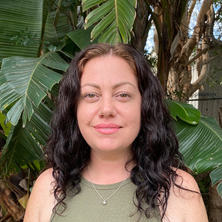
Dr Alana Gall is a proud Pakana (Tasmanian Aboriginal) woman whose ancestral heritage links to the north-east coast of Lutruwita (Tasmania), and more recently, the Bass Strait Islands of Cape Barren and Flinders Island.
Alana is a Postdoctoral Research Fellow in the First Nations Cancer & Wellbeing Research team, and the Project Manager of the What Matters 2 Adults Implementation project. Alana’s research focusses on wellbeing and holistic health for Indigenous peoples globally. The aim of the WM2A-I study she is managing, is to test the most appropriate and effective methods for implementing the newly developed WM2Adults Wellbeing measure - the first nationally-relevant wellbeing measure developed specifically for Aboriginal and Torres Strait Islander adults.
Alana has a background in nutritional medicine and has more than 10 years’ experience in research, research translation, community engagement, health education and clinical consultation. Alana’s PhD thesis, titled Exploring Wellbeing from Indigenous Perspectives, centres primarily on Aboriginal and Torres Strait Islander peoples’ wellbeing but also includes a focus on the domains of wellbeing for Indigenous peoples in Canada, Aotearoa (New Zealand) and the United States.
On a personal note, Alana is passionate about empowering others to take control of their own health and believes better health and wellbeing can be achieved at a population level through transdisciplinary approaches that adhere to holistic models of health and wellbeing. Alana is also passionate about education, understanding on both an academic and personal level, that this is one significant way to lift individuals, families and communities out of poverty – having hope for the future is imperative to good health and wellbeing. Due to this passion, Alana produced a free worksheet for children during the COVID-19 pandemic, in collaboration with Wingaru Kids about antimicrobial bush medicines and would love to collaborate in this space more.
Affiliate of Centre for Living Experience Research
Centre for Living Experience Research
Faculty of Health, Medicine and Behavioural Sciences
Research Fellow
School of Health and Rehabilitation Sciences
Faculty of Health, Medicine and Behavioural Sciences
Availability:
Available for supervision
Kyla is a speech-language pathologist and Research Fellow within the Centre for Living Experience Research (LEX) and the Queensland Aphasia Research Centre at The University of Queensland. Her main research interests are in aphasia rehabilitation, communication within aged care and qualitative health consumer research/ co-design. Her research focuses on understanding the lived experiences of individuals with communication disability to inform and develop meaningful interventions that focus on real-life outcomes.
She is an advocate for designing research processes that are communicatively accessible and inclusive of individuals with communication disability.
Faculty of Health, Medicine and Behavioural Sciences
Availability:
Available for supervision
Media expert
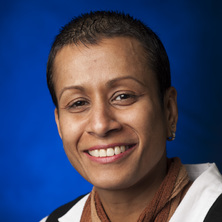
I am a Pacific Fijian academic, researcher and community leader providing senior leadership in community‑engaged research and teaching across Australian and international higher education. My work sits at the intersection of Indigenous knowledge systems, health equity and public policy, driving system‑level change through culturally grounded scholarship.
I lead and shape programs that embed Indigenous methodologies, community participatory action research and social justice principles into policy‑relevant research, professional education and practice. Through long‑term, co‑designed partnerships, I advance culturally safe solutions that address the social, cultural, environmental and political determinants of health affecting Māori and Pasifika, Culturally and Linguistically Diverse (CALD) and First Nations communities nationally and internationally.
My strength‑based research program focuses on health equity and the burden of chronic conditions, with a strong emphasis on research translation, policy development and advocacy impact. My work informs health systems, service design and decision‑making at local, national and international levels, contributing to improved and more equitable health outcomes—particularly for First Nations including Māori and Pasifika and CALD communities in Australia and globally.
Susan Joy Beetson is a Ngemba computer science and information systems researcher, practitioner, and educator whose work advances Indigenous Knowledges through technology, data, AI, human-centred computing, Indigenous Data Sovereignty, Indigenous Data Governance, social media network analysis, business process transformation, technology provenance, and Indigenous-informed automated decision-making. Susan grew up in the very remote Aboriginal communities of Brewarrina and Gongolgon and brings more than 30 years of corporate computer science, information technology management, and process transformation experience together with a decade of higher education teaching and research across information systems, interactive technologies, human-centred computing, Indigenous studies, and engineering curriculum. She is a Research Academic in the Indigenous Business Hub at The University of Queensland, a Chief Investigator with the Australian Research Council Centre of Excellence for Indigenous Futures, and a Chief Investigator with the iSista Care research program with the Southern Cross University.
Susan’s Culture Hubs research develops community-owned digital infrastructure that enables Aboriginal families and communities to hold, govern, teach, and mobilise cultural and historical Knowledges on their own terms. This work brings together Indigenous Cultural and Intellectual Property, data provenance, digital entrepreneurship, language, cultural learning, repatriation of Knowledges, and community-governed technology design. Rather than positioning Aboriginal Knowledges inside Western-designed systems, the Culture Hubs work begins from Aboriginal authority, Country, kinship, relational accountability, and the rights of Traditional Custodians to determine how Knowledges are stored, accessed, validated, and used across digital environments.
Susan’s PhD research, Ngemba Tracks and Networks, examines culturally different social media network phenomena through a Ngemba lens and extends dominant social network theories that were largely developed through Eurocentric assumptions about identity, connection, interaction, and community. Her doctoral work explores dyadic phenomena, Indigenous self-representation, culturally grounded networking practices, and the social, institutional, and political conditions shaping Aboriginal peoples’ lives online and offline. As a Ngemba researcher grounded in lived experience, Country, and community accountability, Susan critically and reflexively examines virtual, interactive, immersive, and emerging technological spaces, including AI, XR, and other data-driven systems.
A Chief Investigator in the $37.5 million Australian Research Council Centre of Excellence for Indigenous Futures and the $2.46 million NHMRC-GACD SISTACARE Strengthening Health Systems grant, where Susan's leadership spans stakeholder engagement and co-design, digital clinical decision systems, implementation, and quality improvement. She was awarded the Science & Technology Australia's #SuperstarsOfStem program, was named a Women in Technology Australia First Nations Changemaker finalist, and was recognised by Cosmos as one of 52 Indigenous peoples changing the world. Susan is also an inaugural auIGF/Identity Digital Indigenous Fellow in internet policy and governance, a guest academic editor for Information Systems Journal and the Journal of Australian Indigenous Issues, and an invited national and international speaker on Indigenous Knowledges, AI, data governance, digital futures, and Indigenous-led technology design.
Faculty of Health, Medicine and Behavioural Sciences
Availability:
Available for supervision
I am a health psychologist and researcher with a strong focus on health psychology and mental health, particularly within First Nations and culturally and linguistically diverse (CALD) communities. My research expertise lies in the development and evaluation of health and wellbeing programs, and cultural adaptations to programs and research methods to more effectively measure mental health and wellness. I have extensive clinical and industry experience, including roles in program design, evaluation, and advocacy within First Nations health, chronic disease management and chronic pain.
Currently, my work spans several projects, including evaluating mental health services for First Nations Australians and investigating the needs of First Nations carers for loved ones with mental health concerns. I also have a keen interest in cultural correlates and expressions of mental disorder, in empowering people to make health behaviour changes, and to engage more effectively with healthcare services through individual, group and health promotion interventions.
Affiliate of Centre for Living Experience Research
Centre for Living Experience Research
Faculty of Health, Medicine and Behavioural Sciences
Lecturer in Speech Pathology
School of Health and Rehabilitation Sciences
Faculty of Health, Medicine and Behavioural Sciences
Availability:
Available for supervision
Dr Katelyn Melvin is a Lecturer and Researcher in Speech Pathology in the School of Health and Rehabilitation Sciences at The University of Queensland. Katelyn's qualitative and mixed-methods research focuses on collaborating with families, professionals, and communities to drive meaningful, long-term improvements in developmental outcomes for children and families. Her clinical experience as a speech pathologist working alongside families navigating social and economic disadvantage and families with diverse cultural and linguistic backgrounds has deeply shaped her approach to research and practice. Katelyn is committed to equity in the early years, ensuring that all children and families have access to the support they need to thrive.
Her research themes include:
Health promotion and prevention in the early years. Designing and implementing proactive, community- and population-level approaches to supporting children's development, with a particular focus on communication.
Advancing best-practice family-centred care through collaboration with families. Supporting collaborative working with families in pre-professional training through to professional practice in complex early years settings.
Co-design for health service innovation. Equipping clinicians and services to bring stakeholder voices together to solve real-world problems and improve service delivery.
Affiliate of University of Queensland Centre for Hearing Research (CHEAR)
Centre for Hearing Research
Faculty of Health, Medicine and Behavioural Sciences
Lecturer in Speech Pathology
School of Health and Rehabilitation Sciences
Faculty of Health, Medicine and Behavioural Sciences
Availability:
Available for supervision
Media expert
Dr Felipe Retamal-Walter is a bilingual speech pathologist, audiologist, and early career academic at The University of Queensland. His research focuses on improving access, equity, and quality in communication and hearing healthcare across the lifespan. Drawing on over 15 years of experience across Chile and Australia, Felipe leads and contributes to international research projects funded nationally and internationally. He is a recipient of multiple academic recognitions, including top-cited article awards, international fellowships, and an invention patent for neonatal care technology.
Felipe uses mixed methods, implementation science, and participatory research approaches to co-design and evaluate practical, person-centred models of care. He works in partnership with families, students, clinicians, educators, and policymakers across many regions in Australia and the Pacific, North and South America, and Europe to develop tools, training, and systems that respond to the needs of underserved and diverse communities.
Felipe’s research themes include:
Design, improvement, and evaluation of service delivery models to enhance access to timely and high-quality services. This is achieved by building honest, transparent, and long-lasting partnerships that consider all stakeholders as equal partners in care: clients, families, communities, healthcare professionals, and policymakers.
Development and validation of implementation tools and measures to enhance person- and family-centred care, engagement, and shared decision-making in healthcare services. These tools promote equitable, community-based access for people across the lifespan in diverse regions and contexts.
Implementation of culturally responsive education and training approaches to prepare health professions students for inclusive, digitally enabled, and person-centred practice in global and diverse contexts.
Felipe is an active member of the World Health Organization’s World Hearing Forum. He serves on The University of Queensland’s Cultural Inclusion Council and several research engagement themes. His work has informed national policy, clinical training programs, and service delivery innovations across Australia and other global settings. As an advocate for inclusion, Felipe also leads interdisciplinary initiatives that embed equity, diversity, and cultural responsiveness in healthcare and health education systems.
Affiliate of Centre for the Business and Economics of Health
Centre for the Business and Economics of Health
Faculty of Business, Economics and Law
Affiliate of Centre for Innovation in Pain and Health Research (CIPHeR)
Centre for Innovation in Pain and Health Research
Faculty of Health, Medicine and Behavioural Sciences
Senior Research Fellow
School of Health and Rehabilitation Sciences
Faculty of Health, Medicine and Behavioural Sciences
Availability:
Available for supervision
Media expert
Dr Megan Ross (she/they) is a Specialist Research Physiotherapist and Senior Research Fellow at RECOVER Injury Research Centre, The University of Queensland. She is part of a research team, led by Professor Trevor Russell, which focuses on developing more effective and efficient health services supported by technology innovation. Megan’s current research projects include exploring consumer perspectives of the telerehabilitation service delivery model, factors that influence the uptake and utilisation of telerehabilitation, and exploring the acceptability and usability of digital health innovations. Megan has a broad range of research skills that span both quantitative and qualitative methods and co-design approaches, including systematic reviews, cross-sectional and longitudinal study designs and data analysis, discrete choice experiments, interviews and focus group discussions and thematic analysis.
Dr Ross received a Bachelor of Physiotherapy (with First Class Honours) in 2012 and a PhD in Physiotherapy in 2020 from The University of Queensland. Megan is the inaugural Chair of the Australian Physiotherapy Association’s LGBTQIA+ Advisory Committee, is Deputy Chair of the Australian Physiotherapy Associations’ National Advisory Committee and sits on the Queensland Gender Affirming Network Steering Committee. Dr Ross leads a program of research in the area of LGBTQIA+ experiences of, and access to healthcare with a focus on physiotherapy and allied health. Megan is passionate about ensuring safe and affirming access to healthcare for people with diverse gender identities, sexual orientations and sex characteristics and has received over $1M AUD in funding, including a CIA MRFF grant to co-design, implement and evaluate an LGBTQIA+ affirming model of primary care. The overarching objective of Dr Ross’s work is to improve access to, provision of, and experiences with health care and ultimately contribute to improved health and wellbeing for the LGBTQIA+ communities.
Faculty of Health, Medicine and Behavioural Sciences
Research Fellow
School of Nursing, Midwifery and Social Work
Faculty of Health, Medicine and Behavioural Sciences
Availability:
Available for supervision
Dr Lucy Shinners is an Indigenous clinician‑researcher with 25 years of ICU nursing experience and a career deeply embedded in the health system. Her work is grounded in the realities of clinical practice and the experiences of patients, families and communities, shaping a research program that examines how emerging technologies can strengthen safe, high‑quality and culturally responsive care.
Using a sociotechnical lens, Dr Shners studies how artificial intelligence influences the health workforce, clinical decision‑making and the conditions required for safe adoption. Her internationally used SHAIP tool supports health services to understand workforce perceptions of AI and ensures that consumer perspectives remain central to technology design and implementation. She also works with Indigenous health organisations to co‑design technological solutions that reflect community priorities, and has contributed to establishing First Nations leaders’ priorities for AI, an expanding line of work shaping future governance and innovation.
Her research intersects with infection prevention and vascular access safety, where she investigates healthcare‑associated infections, device‑related harm and opportunities to improve surveillance, early detection and patient experience. Increasingly, these domains converge as she explores AI‑enabled approaches for infection risk prediction and monitoring, and evaluates how emerging technologies can enhance clinical governance and system performance.
Dr Shinners’ work provides health services, policymakers and industry with evidence‑based, culturally informed insights into AI, infection prevention and the future of safe care.
Core Member of Centre for Community Health and Wellbeing
Centre for Community Health and Wellbeing
Faculty of Health, Medicine and Behavioural Sciences
Senior Lecturer
School of Languages and Cultures
Faculty of Humanities, Arts and Social Sciences
Availability:
Available for supervision
Media expert
I am a linguist specialising in intercultural and public health communication, with a focus on the intersections of language, culture, and migration in healthcare. My research centres on co-designing accessible health communication resources with culturally and linguistically diverse (CALD) communities across Asia and Australia. Drawing on linguistic ethnography and co-design approaches, I work to improve community health, infectious disease prevention, and health equity for underserved populations. I am also passionate about collaborating with colleagues across the health and social sciences to address complex public health challenges, and I convene an interdisciplinary health communication research group at the School.
My publications focus on public health communication. A central aim of these publications is to distill complex health communication data into accessible and actionable strategies that deliver tangible benefits to communities and practitioners. In 2025, I published a single-authored book, Health Crisis Communication: Multimodal Classification for Pandemic Preparedness, which examines effective public health communication and offers practical strategies for communicating complex epidemiological concepts to the public.
I am currently leading and collaborating on three major research projects addressing health communication with vulnerable populations across gender, race, migration, and socioeconomic status. These projects aim to develop tailored communication strategies and resources for conveying critical health information effectively.
I co-create a community health outreach program with Myanmar migrant workers in Thailand.
I co-lead an international project that examines clinician–patient communication across Australia, Switzerland, and Thailand.
I lead a travel medicine project in Australia that investigates how health professionals communicate infectious disease risks to vulnerable groups, including children, pregnant women, and older adults with underlying health conditions.
My research has been recognised with several awards, including the 2021 Humanities Travelling Fellowship from the Australian Academy of the Humanities, the 2025 Young Scholar Research Award from the North America Taiwanese Professors’ Association (NATPA), and the 2025 High Distinction Award from the Taiwan Association of Medical History.
I welcome enquiries from prospective PhD, MPhil, and Honours students interested in health discourse, intercultural communication, and migration studies. Please feel free to contact me to discuss potential research projects.
Affiliate of ARC COE for Children and Families Over the Lifecourse
ARC COE for Children and Families Over the Lifecourse
Faculty of Humanities, Arts and Social Sciences
Senior Research Fellow
PA Southside Clinical Unit
Faculty of Health, Medicine and Behavioural Sciences
Availability:
Available for supervision
Media expert
Dr Arnautovska is a psychologist with 20 years' experience spanning clinical practice and research in mental health, with a focus on health behaviour change and neuroscience. Her research translates evidence into real-world care, closing the gap between what mental health treatments can achieve and what is sustainable in individuals' everyday lives and in health services more broadly.
Her work addresses a critical structural divide: clinicians who lack the time or resourcing to address lifestyle factors, health services organised around separate physical and mental health pathways, and people with complex mental illness or those with cognitive challenges who are rarely equipped with the tools to change health behaviours on their own. Dr Arnautovska's research is focused on embedding physical health care into routine mental health treatment, so that monitoring and supporting a person's physical health becomes as standard as supporting their mental state.
She led the development of SMART, a world-first SMS-based lifestyle intervention targeting metabolic health tailored to people living with severe mental illness, delivered without reliance on smartphones or app-based platforms. SMART was developed through a comprehensive co-design process with multidisciplinary experts, clinicians, and people with lived experience, and is now being implemented within routine care at four mental health services in metropolitan Brisbane.
Consumer partnership is central to Dr Arnautovska's approach to research; she facilitates the involvement of people with lived experience across all phases of the research cycle, from priority-setting and study design through to evaluation and implementation, while actively supporting the research capacity of lived experience partners.
Dr Arnautovska has published more than 80 peer-reviewed papers and is a named investigator on projects attracting more than $14.5M in funding since 2021, including a $5M NHMRC Synergy Grant. Her contributions have been recognised through the Mental Health Australia General Clinical Trials Network (MAGNET) Emerging Leader Mid-Career Researcher award (2024), the UQ Rising Star Commendation (2024), and earlier BA and PhD Thesis awards (2017 and 2006).
Central to her research philosophy is the view that motivation and a person's agency are central elements of treatment outcomes and determine whether novel, health behaviour-focused interventions succeed and whether their impact is sustainable.
Dr Arnautovska grew up in Slovenia, where social justice and equality were formative family values that continue to inform her approach to health equity in her research today.
Professor Roxanne Bainbridge is a Gunggari/Kunja woman from South-Western Queensland. She previously worked as a Professorial Research Fellow in Indigenous Health at Central Queensland University Australia; Adjunct to The Cairns Institute at James Cook University; and an inaugural Senior Atlantic Fellow for Social Equity at the University of Melbourne / the University of Oxford. With a background in anthropology, Roxanne focusses her interests on medical anthropology as a culturally constructive critique of the biomedical sciences and policy-makers that provides new understandings of human health, wellness and illness for Aboriginal and Torres Strait Islander people.
Roxanne is an engaged researcher/evaluator with extensive experience leading, collaborating and coordinating projects with international, national and local teams. Her methodological expertise is in high impact applied research conducted in participatory and action-oriented research approaches embedded in improvement and systems sciences. Specific proficiencies are in research impact assessment and evaluation; improvement sciences; systems sciences; mixed methods; phronetic grounded theory; systematic literature reviews; and auto/ethnographic approaches. Roxanne applies her methodological expertise and concepts of Indigenous data sovereignty and governance to projects in Indigenous health, e.g. mental health and suicide, adolescent psychosocial wellbeing, social and emotional wellbeing across the life course, health services research, child and maternal health, palliative care, binge drinking and health promotion; and, in education, e.g. engagement, pedagogy, school transitions, inclusive practice and mentoring).
Over the last 10 years she was Lead/Chief Investigator on a total of 52 grants attracting $37.230m. Of 119 publications, 74 are peer-reviewed articles in national/international peer-reviewed journals; 18 are systematic reviews; 18 are reports for government and community-controlled organisations; 12 chapters; 1 peer-reviewed conference paper; 4 peer-reviewed commissioned works; 1 book; and developed government and community health and educational resources. Systematic literature reviews (including Cochrane) in various content areas for Indigenous populations, e.g. Indigenous research impact, social and emotional wellbeing interventions and measurement tools, mentoring, alcohol and other drugs, resilience strategies, Indigenous research education, child and maternal health, cultural competence, sexual assault, family-centred interventions, health promotion tools, program transfer and Indigenous community governance. She is currently the lead investigator on a 1) 4-year national evaluation of the Commonwealth Government’s investment in Indigenous Primary Healthcare, and 2) ARC Engaging adolescents to improve mental healthcare in Indigenous primary healthcare services.
Affiliate of Centre for Living Experience Research
Centre for Living Experience Research
Faculty of Health, Medicine and Behavioural Sciences
Research Fellow
School of Health and Rehabilitation Sciences
Faculty of Health, Medicine and Behavioural Sciences
Availability:
Available for supervision
Dr Lauren Fothergill is a Research Fellow at the Queensland Aphasia Research Centre (QARC). She holds degrees in Public Health and Gerontology, and her research interests include ageing, digital health, and evaluation methodologies. Her doctoral research examined a digital intervention designed to support independence among older adults in the United Kingdom. At QARC, Lauren works with people with lived experience, aged care workers, and healthcare professionals to co-design an intervention aimed at improving the quality of care for older adults living with communication disability.
Dr Amanda Bourgeois is a postdoctoral researcher in the UQ Learning Lab: a group of multi-disciplinary researchers, educators, and industry partners who collaborate to transform learning, teaching, and training in diverse school and post-school contexts through the science of learning. In this role, Amanda is investigating the proposed adolescent ‘dip’ across a range of social, emotional and cognitive skills and dispositions, predominantly around the age of 15. This dip has appeared in research projects looking at diverse, but related phenomena such as academic wellbeing, learning regulation, emotion regulation, engagement, curiosity, creativity, and self-esteem. Amanda is developing a comprehensive literature review of the adolescent dip with the aim to better understand what is happening, when, and the potential causes, with the aim of working with education stakeholders to co-design possible interventions and resources to support positive growth and development through the adolescent period.
Amanda has experience as a teacher and counsellor working with disadvantaged adolescents in both the United States and Australia. Her research activities span the topics of adolescence, wellbeing, classroom emotions, student-teacher relationships, and student self-efficacy, particularly with a focus on those from a low socioeconomic background. Amanda is interested in incorporating innovative, real-time forms of measurement in classroom research and she recently developed the S2* emotion application, which captures real-time emotions and causes for emotions.
Faculty of Health, Medicine and Behavioural Sciences
Higher Degree by Research Scholar
School of Human Movement and Nutrition Sciences
Faculty of Health, Medicine and Behavioural Sciences
Availability:
Not available for supervision
Stella Boyd-Ford is a Post Doctoral Research Fellow with the First Nations Cancer and Wellbeing Research Program. Her research focus areas include food security, paediatric nutrition and Aboriginal and Torres Strait Islander health. She has expertise in qualitative methods and co-design in health. Her current research involves co-designing culturally safe healthcare services for Aboriginal and Torres Strait Islander communities.
Stella works at the intersection of community health, clinical nutrition and research, with extensive experience in outreach roles and collaborating with diverse communities. She also has a background as an Accredited Practicing Dietitian.
Principal Specialty Supervisor in Indigenous Health Education and Engagment
Medical School (Rural Clinical School)
Faculty of Health, Medicine and Behavioural Sciences
Availability:
Not available for supervision
Leonie is proud of her traditional connections to the Djaku-nde people of North Burnett, Juru people in Bowen North Queensland and the Nuigi people of Mulgumpin (Moreton Island) with bloodline traces back to Tanna, Santo and Lifu Island's in Vanuatu. With over 30 years of experience in social work, Leonie is a nationally recognised leader in cultural safety, Indigenous engagement and community development. Leonie has extensive experience in across child protection, mental health and teritary education sectors. Her professional expereist encompasses policy development, legislative reform, and practice frameworks, with a strong emphasis on co-design, cultural mentoring and workforce development. She has lectured in Indigenous Health, Social Work, Mental Health and contributed to the development of culturally safe, student-centred curricula. Renowned for her authentic faciliation style, she empowers individuals and organisations to embed cultural safety and drive systemic change across government, non-government, and academic contexts.
Faculty of Health, Medicine and Behavioural Sciences
Availability:
Available for supervision
Kate is a mental health academic and practitioner with particular interests in women's wellbeing and neurodiversity. Her recent research activities have focused on exploring the lived experiences of women with an adult diagnosis of ADHD, and she is currently engaged in a number of projects exploring various facets of those experiences, including the impact of hormones, the interplay between ADHD and trauma, and therapeutic approaches that are well-suited to supporting women with ADHD.
Faculty of Health, Medicine and Behavioural Sciences
Clinical Lecturer
School of Nursing, Midwifery and Social Work
Faculty of Health, Medicine and Behavioural Sciences
Availability:
Available for supervision
Angelique Zamora joined the School of Nursing, Midwifery and Social Work (SNMSW) in 2015. Angelique obtained her nursing qualifications in both The Philippines and Australia. She is currently an AHPRA Registered Nurse in Australia.
Angelique has clinical experience in Gerontological, General Medical & Surgical, Community, Maternal & Child, Intensive Care, and Intraoperative Nursing. She also has several years of experience in clinical teaching in nursing both in Australia and overseas. Angelique’s research interests and background include Nursing Education, Interprofessional Care and Education, Implementation Science, Co-design, Gerontology, Dementia Care, and Older People's Oral Health.
Angelique has been recognised for her excellence in teaching, receiving the 2020 Elsevier Emerging Leader in Nursing and Midwifery Education High Commendation Award and the SNMSW 2016 Innovation in Teaching and Learning Award.
Currently, Angelique is undertaking her PhD studies on co-designing digital training for residential aged care staff members on the oral health assessments, with The University of Queensland - School of Dentistry.
Faculty of Health, Medicine and Behavioural Sciences
Availability:
Available for supervision
Katie a health and disability researcher and the Research Lead at the Queensland Centre for Excellence in Intellectual Disability and Autism Health (QCEIDAH). Katie leads research to improve experiences and outcomes for people with intellectual disability and autistic people in the health system.
Katie’s research spans preventive care, primary care, and hospital settings. Katie’s work uses co-design and has strong consumer input across all stages of her research. Katie is driving a research program to transform primary and preventive health. She is currently driving a transformative research program in primary care and preventive health.
Senior Research Fellow - Frailty & Hospital Outcomes Research
Frazer Institute
Faculty of Health, Medicine and Behavioural Sciences
Affiliate of Centre for Online Health
Centre for Online Health
Faculty of Health, Medicine and Behavioural Sciences
Availability:
Available for supervision
Media expert
I am an early career researcher with 5 years post-PhD and estimated research time relative to opportunity of 3 years. Currently, I am a Senior Research Fellow at The University of Queensland’s (UQ) Australian Frailty Network. I have years of study and work experience, including consumer and community involvement, in various healthcare settings in Brazil (2009-2019), the UK (2003-2008) and Australia (2019-present). I came to Australia in December 2019 for a 12-month PhD research placement at UQ after winning a highly competitive scholarship from the Brazilian Government. I have a Bachelor of Pharmacy, a Graduate Certificate in Project Management, a Master of Philosophy in Public Health, a Diploma of Higher Education in Youth and Community Studies and an OCN Level 3 Certificate in Community Development. I completed my PhD in Public Health in 2021.
I have a proven track record for delivering high-quality projects, with national significance, including policy change and integration into the national strategy in Brazil, and the implementation of a digital model of care developed in Australia. My track record demonstrates a rising career trajectory. My research interests are telehealth, virtual care and digital health, including digitally disrupted models of care for chronic conditions, trust and confidence in telehealth and digital health, digital health literacy, health services research, including implementation and evaluation strategies, mixed-methods, cross-sectional studies, co-design and qualitative inquiry, community and consumer involvement in research and service redesign.