Faculty of Health, Medicine and Behavioural Sciences
Availability:
Available for supervision
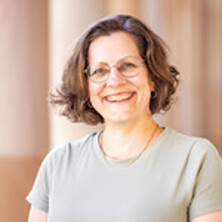
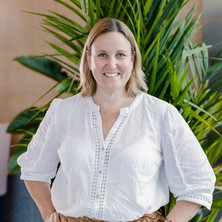
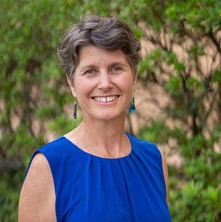
Dr Dorothee Hölscher is a Lecturer in Social Work in the School of Nursing, Midwifery and Social Work at The University of Queensland. She is a qualitative researcher whose work focuses on social justice, social inclusion, and participatory approaches with young people and communities in contexts of (forced) migration and cultural diversity. Her research examines how structural inequalities, xenophobia, and race-based discrimination shape everyday experiences, and explores practical, sustainable, and structural responses that support inclusion and well-being at community, institutional, and policy levels. Her methodological expertise lies in community- and art-based participatory research, informed by grounded theory and critical discourse analysis.
Dorothee completed her social work training in Germany and South Africa, including a Master of Social Science (cum laude) and a PhD (by publication). Prior to entering academia, she worked in refugee and migrant support, community development, and child protection, experiences that continue to inform her research and educational practice. Currently, Dorothee teaches across the Bachelor of Social Work and Master of Social Work (Qualifying) programmes, coordinating theory-focused courses on power, structure, and agency (SWSP1012) and lifespan development, culture, and disability (SWSP7044). Her teaching places a strong emphasis on participatory and critical pedagogies that prepare students for ethical and socially just practice.
Dorothee is the Deputy Chair of a UQ Human Research Ethics Committee and Co-Editor of Ethics & Social Welfare. Having held previous academic appointments in South Africa, Dorothee maintains these important international links through her role as a Research Associate with the Department of Social Work and Criminology at the University of Pretoria.
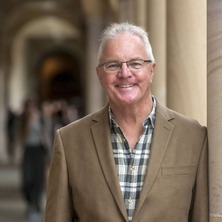
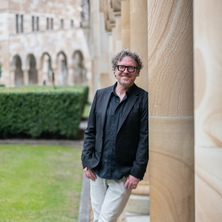
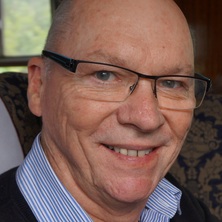
Associate Professor Richard Hutch is an Honorary Associate Professor and Reader in Religion and Psychological Studies in the School of Historical and Philosopical Inquiry. His research interests include psychology of religion, sport and spirituality, self-narrations and life-writing, and death and dying.
His current research projects include:
The American Civil Rights Movement: A Personal Narrative
Sport, Spirituality and Productive Ageing
History and Phenomenology of Religion
TO NOTE: Richard Hutch presented the keynote address at a symposium on the American Civil Rights Movement held at Gettysburg College, Gettysburg, Pennsylvania, in the United States on the 150th anniversary of the end of the Civil War, 9 April 1865. It was also the 50th anniversary of the "Summer Community Organization and Political Education" project (SCOPE), which was sponsored by the Southern Christian Leadership Conference (SCLC), founded and led by Martin Luther King, Jr. Richard volunteered for the SCOPE project in rural counties in Alabama and Louisiana in the summer of 1965. The project spearheaded a massive voter registration drive throughout the South after "Bloody Sunday," the violent racial conflict that occurred at the beginning of the Selma to Montgomery march on March 7th that year. Through the efforts of SCOPE volunteers and others, who often faced life-threatening incidents of racial violence (as Richard himself did), the Voting Rights Act of 1965 was finally passed by the American Congress and signed by the President in August. The keynote address at Gettysburg College presented Richard's experiences in the South during his harrowing time there. He was honoured by his alma mater on the occasion with the establishment of an archive in his name in the Musselman Library at Gettysburg College, including the journal he kept during his summer in the South and other unique materials from the Civil Rights Movement. It can be noted at the town of Gettysburg was the site where the Civil War "Battle of Gettysburg" took place in July, 1863. Northern Union troops pushed the Southern Confederate troops from their so-called "high-water mark" back south across the Mason-Dixon Line (which separated "slave" states from "free" states, and was drawn on maps just beyond the southern border of the state of Pennsylvania near Gettysburg). The battle represented the beginning of the end of the Civil War, with the final defeat of the Confederacy by Abraham Lincoln's Union Army two years later on 9 April, 1865 at 3:15 in the afternoon, when church bells rang out throughout the North.
Associate Professor Hutch was the Director of Studies for the Faculty of Arts (2001-05) and Head of the School of History, Philosophy, Religion and Classics (2005-08) at the University of Queensland. Before taking up his appointment at UQ in 1978, he was Assistant Professor of Religious Studies at Southern Illinois University in the United States (1974-78). He graduated from Gettysburg College (BA, 1967), Yale University (BD, 1970) and the University of Chicago (MA, 1971; PhD, 1974).
Affiliate of Centre of Research Excellence on Achieving the Tobacco Endgame
Centre of Research Excellence on Achieving the Tobacco Endgame
Faculty of Health, Medicine and Behavioural Sciences
Associate Professor
School of Law
Faculty of Business, Economics and Law
Availability:
Available for supervision
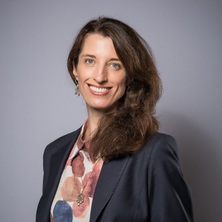
Dr Radha Ivory is an Associate Professor in Law at the University of Queensland, Australia (UQ), where she teaches company law and researches the transnational regulation of corruption and corporate crime.
Her work explores the interlocking domestic and international laws that aim to govern powerful economic and political actors, from politically exposed persons to multinational enterprises. Radha asks what these laws require of whom; how they develop and change across borders; and how we can better appraise and design them to manage their unintended consequences. Her approach is interdisciplinary, using doctrinal legal and socio-legal methodologies, as well as insights from economics, sociology, and international relations. Current projects focus on the human rights impacts of asset recovery laws, the reform of transnational anticorruption and corporate criminal laws, and the securitisation of integrity regulations (corporate ‘lawfare’).
Radha’s research has appeared in leading law journals (International & Comparative Law Quarterly, London Review of International Law, UNSW Law Journal) and important edited collections (e.g., Krieger/Peters/Kreuzer, Due Diligence in the International Legal Order, Oxford University Press; Aaronson/Shaffer, Transnational Legal Ordering of Criminal Justice, Cambridge University Press). Her sole-authored book, Corruption, Asset Recovery, and the Protection of Property in Public International Law: The Human Rights of Bad Guys was published by Cambridge University Press and launched by former Australian federal treasurer, The Hon. Peter Costello AC. Her work with Pieth on corporate criminal liability is also widely cited. A regular speaker at international conferences and meetings, Radha has been a visitor at the London School of Economics and Political Science (LSE), and has delivered presentations at the University of Melbourne, the Wharton School (University of Pennsylvania), and the University of Bergen.
Radha’s scholarship is informed by her past and ongoing roles in the international and private sectors. She commenced her career at Freehills (now Herbert Smith Freehills) in Brisbane, Australia, before joining an NGO self-governance and compliance initiative, Building Safer Organisations in Geneva, Switzerland. Prior to commencing at UQ, Radha was a Senior Expert, Collective Action and Compliance, at the Basel Institute on Governance, Switzerland. In that role, she supported Ukraine and Colombia in anticorruption project design and implementation. During her PhD studies, Radha held research roles in the Basel Institute’s International Centre for Asset Recovery (ICAR) and the University of Basel. Radha currently consults to the World Bank and has previously been engaged by the UN Office of the High Commissioner for Human Rights. She is on the Advisory Board of the Bribery Prevention Network, Australia.
Radha was awarded a PhD (summa cum laude) from the University of Basel, and Bachelors of Arts (International Relations and German) and Laws (Hons I) from UQ.
Chris is a social scientist specialising in international development. Her research primarily revolves around resilience and adaptation, with a current focus on agriculture policy and implementation. With a wealth of experience from her previous roles in international development and academia, Chris also brings strong expertise in monitoring and evaluation.
She has designed and led both research for development (R4D) and development projects across Cambodia, Vietnam, Solomon Islands, Kiribati, Tuvalu, Vanuatu, and Fiji. Her applied research aims to understand the processes and mechanisms of change that bridge policy and action, enhancing food security and sustainability. Currently, Chris is working on projects that emphasise agriculture policy and knowledge brokering for Environmental and Human Health (One Health) in Cambodia, building on her previous work in climate resilience, adaptation, and agrarian change in the region.
Faculty of Health, Medicine and Behavioural Sciences
Affiliate of Australian Women's and Girls' Health Research Centre
Australian Women and Girls' Health Research Centre
Faculty of Health, Medicine and Behavioural Sciences
Availability:
Available for supervision
Media expert
Bec Jenkinson is health consumer advocate-turned-researcher, with more than 15 years’ experience as a leader in the Australian health consumer movement, advocating for high quality, respectful, person-centred care. She is also skilled qualitative and mixed methods researcher, writer, presenter and networker with a passion for consumer and community involvement in health and medical research, and broad experience encompassing health policy, service delivery and evaluation, and education. Bec's PhD investigated the experiences of women, midwives and obstetricians when pregnant women decline recommended care. She went on to co-lead the development and implementation of Queensland Health's Guideline: Partnering with the woman who declines recommended maternity care. More recently, Bec has been the academic lead of the RADIANT study, alongside a Lived Experience Lead. Aiming to addressing weight stigma in maternity care, RADIANT was recognised with two awards at the inaugural AccessCR Australian Consumer Partnerships in Research Awards in 2025. The study coproduce national, consensus-based Best Practice Principles for Weight Inclusive Maternity Care, which have now been endorsed by peak stakeholder organisations.
Bec is now a Senior Research Fellow with UQ's Clinical Trials Capability Team (ULTRA), working collaboratively with researchers, consumers and other stakeholders to enhance consumer and community involvement (CCI) in clinical trial designs and processes. She is particularly interested in the methodologies of research priority setting, and currently leads a pilot study aiming to expand Australian researchers access to James Lind Alliance Priority Setting Partnerships. Bec is also interested in how innovative approaches can support more inclusive CCI, and drive health equity in clinical trials.
Laurel is a spatial and social planner with over 30 years of experience as a practitioner and an educator/researcher. Laurel has led, designed and participated in over 60 applied research projects. Many of those research projects guide and influence the policies and programs of various Australian Local and State governments and non-Government organisations in the fields of social infrastructure, social planning, urban planning and transport provision.
Affiliate of Centre for Digital Cultures & Societies
Centre for Digital Cultures & Societies
Faculty of Humanities, Arts and Social Sciences
Associate Professor
School of Political Science and International Studies
Faculty of Humanities, Arts and Social Sciences
Availability:
Available for supervision
Media expert
Sebastian Kaempf is an Associate Professor in Peace and Conflict Studies at the School of Political Science and International Studies. He is also the Director of the Rotary Peace Centre at UQ.
His expertise lies at the intersection between International Relations and Peace and Conflict Studies, with specialization in the areas of international security, ethics and the laws of war, and information technology relating to global politics and violent conflict. Specifically, his research focuses on two areas:
The first concerns the relationship between ethics and the laws of war in the context of the transformation of violent conflict. Here, he is interested in the ways in which historic and contemporary wars - waged under conditions of asymmetry - have impacted on the relationship between the norms of casualty-aversion and civilian protection.
The second area focuses on the role a transforming global media landscape is playing in violent conflicts. Here, his research focuses on how historic and current conflicts are being waged in and through media and information technology, with a particular emphasis on the geopolitics of cyberspace, embedded news reporting, mass surveillance and big data mining, non-state armed groups, and the influence of the Pentagon and CIA in the entertainment sector.
Dr Kaempf received his PhD at the Department of International Politics at Aberystwyth University (UK). He holds a BSc and MSc in International Relations from the London School of Economics and Political Science (LSE).
He won the ISA Deborah Gerner Award for Teaching Innovation in 2020. In 2013, he won an Australian national award for teaching excellence (AAUT); in 2012, he won UQ and Faculty awards for teaching excellence. He is also the producer (with UQx and edX.com) and convenor of 'MediaWarX', one of UQ's Massive Open Online Courses (MOOCs): https://www.edx.org/course/global-media-war-technology-uqx-mediawarx-0
He was a visiting fellow/researcher at UGA in Athens, Georgia, Sao Paulo State University, Humboldt University in Berlin, Sciences Po Lyon, the Catholic University in Rio de Janeiro, The University of Sydney,and Brown University in Providence, US.
Together with his colleague A/Prof Al Stark, he hosts the podcast 'Higher Ed Heroes': https://www.buzzsprout.com/813707
And he is the co-producer of the award-winning film documentary 'Theatres of War: How the CIA and Pentagon took Hollywood': https://go.mediaed.org/theaters-of-war
He is a member of the editorial team of the journal 'Review of International Studies'.
Faculty of Health, Medicine and Behavioural Sciences
Availability:
Available for supervision
Media expert
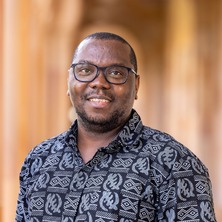
Dr. Amani Kasherwa is a social work lecturer in the School of Nursing, Midwifery, and Social Work at the University of Queensland (UQ), with expertise in childhood trauma. His primary research focus is on child sexual abuse, particularly among children and families exposed to adverse childhood experiences (ACEs) in complex humanitarian settings. Amani's work deeply explores the intersection of childhood trauma, including intergenerational trauma and access to support services for children and young people affected by various forms of childhood adversities. He is highly engaged in the fields of critical childhood and youth studies, peacebuilding, family violence, and mental health services.
Amani brings his extensive research, teaching and practice experiences to enrich the learning experiences of undergraduate and postgraduate students at UQ. He received his PhD in Social Work from the University of New South Wales (UNSW Sydney) in 2024, with a thesis titled "Negotiating Survival Overseas: Exploring the Help-Seeking Processes and Support Patterns of Adverse Childhood Experiences (ACEs) Survivors in African Communities with Refugee Backgrounds in New South Wales." His research agenda post-PhD focuses on developing culturally safe prevention strategies for children, young people, and families transitioning from refugee settlements and negotiating a new life in high-income countries like Australia, building on the foundation of social work and peacebuilding theories and methods.
Affiliate of Centre for Environmental Responsibility in Mining
Centre for Environmental Responsibility in Mining
Faculty of Engineering, Architecture and Information Technology
Deputy Director, Research of Sustainable Minerals Institute
Sustainable Minerals Institute
Faculty of Engineering, Architecture and Information Technology
Affiliate of Minerals Industry Safety and Health Centre
Minerals Industry Safety and Health Centre
Faculty of Engineering, Architecture and Information Technology
Affiliate of W.H. Bryan Mining and Geology Research Centre
WH Bryan Mining Geology Research Centre
Faculty of Engineering, Architecture and Information Technology
Affiliate of Centre for Social Responsibility in Mining
Centre for Social Responsibility in Mining
Faculty of Engineering, Architecture and Information Technology
Affiliate of Julius Kruttschnitt Mineral Research Centre
Julius Kruttschnitt Mineral Research Centre
Faculty of Engineering, Architecture and Information Technology
Centre Director of Centre for Social Responsibility in Mining
Centre for Social Responsibility in Mining
Faculty of Engineering, Architecture and Information Technology
Centre Director and Deputy Director Research
Sustainable Minerals Institute
Faculty of Engineering, Architecture and Information Technology
Availability:
Available for supervision
Deanna is a leading international expert focused on the social and political challenges of the global mining industry. She specialises in industry-engaged social science that bridges company and community perspectives on extractive industries. Particular areas of expertise include company-community conflict, displacement and resettlement, and human rights and development challenges. Deanna studies how the global mining industry is organised, resourced and incentivised to respond to these pressing challenges.
Deanna Co-chairs the Board of Trustees for the Institute for Human Rights and Business (IHRB), and the New Member Review Panel for the International Council on Mining and Metals (ICMM). She is a Senior Associate of the Cambridge Institute of Sustainability Leadership, a member of the International Association of Impact Assessment (IAIA) and the International Network of Displacement and Resettlement (INDR).
After commencing her research career with UQ in 2006 as a Senior Research Fellow with CSRM, in 2012 she became Associate Professor and CSRM’s Deputy Director, and in 2016 Professor and Director of the Centre. Deanna has made significant contributions to positioning CSRM as a world-leading centre of research excellence. In her current role, Deanna develops and delivers high-profile research, leads diverse project teams, and oversees more than 40 staff and PhD students.
Industry Engagement
Deanna engages with most of the world’s major mining companies, and many of its peak industry bodies, including the International Council of Mining and Metals (ICMM). She also engages with international finance institutions and other norm-setting bodies. She has collaborated with international non-government organisations—including Oxfam and Human Rights Watch—on industry-related studies. Before her academic career, Deanna held senior positions in the mining industry, working in corporate and operational roles at BHP, and as an advisor to a number of other global resources companies.
Collaborations
At The University of Queensland, Deanna has collegial relationships with the School of Social Science, including the Institute of Social Sciences Research (ISSR). She also has a range of national and international collaborative projects, including with the Cambridge Institute for Sustainability Leadership (CISL) and Monash Indonesia. She has in the past collaborated with the Harvard Kennedy School of Government on joint research.
Prof. M. Adil Khan, has been working as an adjunct staff at the School of Social Sciences, since 2010. Prior to taking up the adjinct position at the School, he worked as Chief of Socio-Economic Governance and Management Branch of the Division for Public Administration and Development Management, the United Nations Department of Economic and Social Affairs (UNDESA), New York. Prof. Khan retired from the United Nations in 2008.
Prof. Khan possesses more than 35 years of working experience in international development - his varied job experiences in 'development' include but not limited to public policy manager the planning ministry of Bangladesh (1973-1988), consultancies for international aid agencies such as the World Bank, the Asian Development Bank and the United Nations (1988-1994), research director on sustainable development at the University of Queensland (1994-1997), senior development advisor of UN in Myanmar and Sri Lanka (1997-2002) and senior policy manager at the Department of Economic and Social Affairs, United Nations HQs.His core expertise includes but not limited to public policy, pro-poor development and participatory governance.
In recent times Professor Khan was engaged by (i) AusAid as Course Director of Enhancing Policy Making Capacity Building in Ministries of Women Affairs (2012) and (ii) by the Department of Foreign Affairs and TRade, Australia the course on International Development Policy for Australian and foreign diplomats (2016)
Prof Khan has been a guest lecturer at Harvard Kennedy School (2006), University of Pennsylvania (2007), and University of Ottawa (2012). He also served as a visiting professor at the Kyung Hee University, Seoul, Korea where he introduced and taught the graduate certificate course on "Global Governance and national challenges: a UN perspective".
Prof. Khan has published extensively on issues of poverty, climate change, governance, corruption, monitoring and evaluation etc. He is also the Principal Author of the 2008 United Nations World Public Sector Report, “People matter: civic engagement in public governance” and the founder Editor-in-chief and currently a editorial board member of the international journal, Sustainable Development, Wiley. He is also the editorial board member of the New York based journal, South Asia Journal
For his unique management initiatives at the United Nations, Prof Khan was awarded the UN Manager of the Year Award in 2005 and for his pioneering work on participatory governance a Plaque of Recognition by the UN Committee of Experts on Public Administration in New York, in 2008.
Prof. Khan has a Master degree in Economics, a Master degree in Social Planning and Development and a PhD in Political Economy
Prof Khan is married to Yasmin and they have no children. His hobbies include cooking, reading, writing and music.
Affiliate of Centre for Living Experience Research
Centre for Living Experience Research
Faculty of Health, Medicine and Behavioural Sciences
Affiliate Research Fellow of T.C. Beirne School of Law of T.C. Beirne School of Law
School of Law
Faculty of Business, Economics and Law
Affiliate of Queensland Aphasia Research Centre (QARC)
Queensland Aphasia Research Centre
Faculty of Health, Medicine and Behavioural Sciences
Research Fellow
School of Health and Rehabilitation Sciences
Faculty of Health, Medicine and Behavioural Sciences
Availability:
Available for supervision
Michelle is a sociologist and lawyer: her research focuses on decision-making and the operation of law and regulation in practice for people with disabilities and other impairments to communication and legal capacity. She has research interests in the sociology of law, decision-making (supported and substituted), legal personhood, the UNCPRD, disability law, legal and administrative transition to adulthood, communication impairments, and profound intellectual disability. Her work examines decision-making in practice in a range of areas, including health and aged care, banking and finance, income support, and the NDIS. Michelle is trained in both qualitative and quantitative methods, and has extensive experience in research development, design, and practice, as well as health consumer research and co-design.
Michelle works on the MRFF funded project: Unspoken, Unheard, Unmet: Improving Access to Preventative Health Care through Better Conversations about Care. She leads the experience gathering stage of the project, the co-design elements of the work, and the development of guidelines about communication, decision-making, and aged care.
Michelle is also a consumer and disability advocate, with experience in strategic policy development, implementation, and evaluation, including the co-design of state level strategy for transition to adulthood health care, and on Australia’s National Living Evidence Taskforce. She is also the consumer board Chair of Child Unlimited, a consortium of researchers, clinicians, and consumers working towards best evidence-based practice in health care for children and young adults with chronic ill health and disabilities, and co-chair of the consumer advisory committee for the ARC Centre of Excellence Life Course Centre.
Affiliate of Research Centre in Creative Arts and Human Flourishing
Research Centre in Creative Arts and Human Flourishing
Faculty of Humanities, Arts and Social Sciences
Associate Professor
School of Music
Faculty of Humanities, Arts and Social Sciences
Availability:
Not available for supervision
Media expert
Associate Professor Eve Klein’s compositions have been called vivid, revolutionary, inclusive, moving and must-see. Winner of the 2023 Art Music Award for Experimental Practice, Klein brings orchestral music into dialogue with immersive and interactive technologies for screen, art music and mass festival audiences. Klein's work has been experienced by hundreds of thousands of people globally at Salisbury Cathedral, Burning Man, New York University, VIVID Sydney, MONA, GOMA, Brisbane Festival, World Science Festival, the Arts Centre Melbourne and the State Library of Queensland. As Lead Composer for Textile Audio, Eve crafts City Symphony, an interactive AR music experience overlaying Brisbane CBD (available via iOS and Android app stores).
Klein creates artworks in collaboration with community groups, festivals, researchers, and NGOs to achieve community transformation goals. Recent projects have explored gendered and racial violence, climate change, disaster recovery and refugee rights. Klein's work, Vocal Womb, is an example of this practice, allowing the audience to explore the relationship between voice, identity and power by stepping into and directly manipulating the voice of another. The premier was called the "#1 coolest thing at MOFO 2018" (Timeout Melbourne) and "One of the must-see music/artworks of the 2018 festival... a deeply considered engagement with the history and traditions of opera" (The Conversation).
Klein is Associate Professor of Music Technology, leading an interactive music and spatial audio research cluster at the University of Queensland, guiding postgraduate composers on the creation of immersive, interacitve, virtual reality and augmented reality concert works and operas.
"This is contemporary music at its most relevant – it is simultaneously inward and outward focused in addressing the challenge of its existence and its capacity to produce something great.” - Melonie Bayl-Smith, Cyclic Defrost, Issue 31
“Excellence in Experimental Practice was awarded to Eve Klein for City Symphony, a Brisbane sound walk revolutionising audiences' engagement with urban environments, underpinned by an ethos of collaborative inclusivity and accessibility.” -Australian Music Centre
“One of the must-see music/art works of the 2018 festival was Eve Klein’s Vocal Womb … a deeply considered engagement with the history and traditions of opera.” - Svenja J. Kratz -The Conversation
Faculty of Health, Medicine and Behavioural Sciences
Availability:
Available for supervision
Media expert
Dr Dillon Landi is a Lecturer in Health and Education in the School of Human Movement and Nutrition Sciences. His research and teaching focuses on equity in sport, health education, sexuality education and physical education. He is internationally recognised for his contributions to these areas and has published extensively in leading journals and edited volumes across health, wellbeing, sport and education. His research has been cited in and informed policy documents, government reports and national position statements in Aotearoa New Zealand, Australia, the United Kingdom and the United States.
Dillon's research has been recognised and won major awards from prestigious organisations such as the American Educational Research Association (AERA), the British Educational Research Association (BERA), the Association Internationale des Écoles Supérieures d'Éducation Physique (AIESEP) and SHAPE America. He has also co-edited three Special Issues in high-impact journals on topics that reflect his commitment to inclusive scholarship: (a) Equity and Diversity in Health, Physical Activity and Education; (b) LGBTQIA+ Research in Physical Education; and (c) LGBTQIA+ Research in Sport, Human Movement and Education.
At the University of Queensland, Dillon teaches courses related to health, research methods, and education. He is also actively engaged in mentoring students and early-career researchers in research related to health, wellbeing, and education. He holds a PhD from the Waipapa Taumata Rau - The University of Auckland (Aotearoa New Zealand) and two postgraduate degrees from Columbia University (New York, USA). Prior to joining UQ, he held academic appointments in Aotearoa New Zealand, Maryland (USA), and Scotland (UK). He currently serves as the Senior Editor of Physical Education and Sport Pedagogy (Q1, Taylor & Francis) and sits on the editorial board of Sport, Education and Society (Q1, Taylor & Francis).
Affiliate of UQ Poche Centre for Indigenous Health
UQ Poche Centre for Indigenous Health
Faculty of Health, Medicine and Behavioural Sciences
Affiliate of Centre of Architecture, Theory, Culture, and History
Centre of Architecture, Theory, Culture and History
Faculty of Engineering, Architecture and Information Technology
Associate Professor
School of Public Health
Faculty of Health, Medicine and Behavioural Sciences
Availability:
Available for supervision
Media expert
Associate Professor Nina Lansbury (also published as Nina Hall) is an environmental public health research and teaching academic at The University of Queensland’s School of Public Health. Her current research at UQ examines environmental health aspects that support the health and wellbeing of remote Indigenous community residents (as a non-Indigenous Australian) on both mainland Australia and in the Torres Strait in terms of housing, water and sanitation, and women's health. She also investigates the impacts of climate change on human health; at a global level, this involves a role as Coordinating Lead Author on the Intergovernmental Panel on Climate Change (IPCC AR7 WG II Ch 9, and formerly as a Lead Author in AR6) as well as a focus on remote Indigenous communities in Australia. In her teaching of undergraduate and postgraduate health students, she covers wicked health problems, integrative and interdisciplinary thinking in health, environmental health, and climate change impacts on health. Within the research sector, she was a senior research scientist at CSIRO, manager of the Sustainable Water program at The University of Queensland, and senior research consultant at the Institute for Sustainable Futures, UTS. Within the non-government sector, she was the director of the Climate Action Network Australia and research coordinator at the Mineral Policy Institute.
Geoff is a leading Australian sociologist with interests in rural and regional sociology, globalisation/localisation and agrifood research.
He attended James Ruse Agricultural High School in Sydney and was School Captain in 1968. He then completed a degree in agricultural economics at Sydney University in 1972. This was followed by a diploma in social science (UNE), Master of Science in Sociology (Wisconisn-Madison) and a PhD (Griffith). In 1992 he became Associate Professor of Sociology and Foundation Director, Centre for Rural Social Research, at Charles Sturt University before moving later that year to Central Queensland University as Foundation Professor of Sociology (1992-2002) and Executive Director, Institute for Sustainable Regional Development (1998-2002). He joined The University of Queensland as Professor of Sociology and Head of the School of Social Science in 2002. He is a Life Member of the Fitzroy Basin Association, a Fellow of the Academy of Social Sciences in Australia, Life Member of the Australian Sociological Association, and was President of the International Rural Sociology Association (2012-2016). He became Emeritus Professor of Sociology at the University of Queensland in 2014.
His full profile can be seen at: https://en.wikipedia.org/wiki/Geoffrey_Lawrence_(sociologist)
Core Member of Centre for Community Health and Wellbeing
Centre for Community Health and Wellbeing
Faculty of Health, Medicine and Behavioural Sciences
Senior Lecturer
School of Languages and Cultures
Faculty of Humanities, Arts and Social Sciences
Availability:
Available for supervision
Media expert
I am a linguist specialising in intercultural and public health communication, with a focus on the intersections of language, culture, and migration in healthcare. My research centres on co-designing accessible health communication resources with culturally and linguistically diverse (CALD) communities across Asia and Australia. Drawing on linguistic ethnography and co-design approaches, I work to improve community health, infectious disease prevention, and health equity for underserved populations. I am also passionate about collaborating with colleagues across the health and social sciences to address complex public health challenges, and I convene an interdisciplinary health communication research group at the School.
My publications focus on public health communication. A central aim of these publications is to distill complex health communication data into accessible and actionable strategies that deliver tangible benefits to communities and practitioners. In 2025, I published a single-authored book, Health Crisis Communication: Multimodal Classification for Pandemic Preparedness, which examines effective public health communication and offers practical strategies for communicating complex epidemiological concepts to the public.
I am currently leading and collaborating on three major research projects addressing health communication with vulnerable populations across gender, race, migration, and socioeconomic status. These projects aim to develop tailored communication strategies and resources for conveying critical health information effectively.
I co-create a community health outreach program with Myanmar migrant workers in Thailand.
I co-lead an international project that examines clinician–patient communication across Australia, Switzerland, and Thailand.
I lead a travel medicine project in Australia that investigates how health professionals communicate infectious disease risks to vulnerable groups, including children, pregnant women, and older adults with underlying health conditions.
My research has been recognised with several awards, including the 2021 Humanities Travelling Fellowship from the Australian Academy of the Humanities, the 2025 Young Scholar Research Award from the North America Taiwanese Professors’ Association (NATPA), and the 2025 High Distinction Award from the Taiwan Association of Medical History.
I welcome enquiries from prospective PhD, MPhil, and Honours students interested in health discourse, intercultural communication, and migration studies. Please feel free to contact me to discuss potential research projects.
Affiliate of ARC COE for Children and Families Over the Lifecourse
ARC COE for Children and Families Over the Lifecourse
Faculty of Humanities, Arts and Social Sciences
Postdoctoral Research Fellow
Institute for Social Science Research
Faculty of Humanities, Arts and Social Sciences
Availability:
Not available for supervision
Suri Li is a Postdoctoral Research Fellow at the Institute for Social Science Research, University of Queensland and the Centre of Excellence for Children & Families over the Life Course. Her current work centres on gender inequality and family dynamic across life course and explores the interplay of gender relations in the public and private spheres.
Prior to her current position, she holds a BSc and MSc in Finance, as well as an MA in Public Policy from the University of Edinburgh, the UK and a PhD in Sociology at Trinity College Dublin, Ireland. Her DPhil Thesis focus on the relationship between household resources and child wellbeing in Ireland, Australia and the UK using longitudinal data from birth cohort studies.
Affiliate of Queensland Centre for Population Research
Queensland Centre for Population Research
Faculty of Science
Senior Lecturer in Geography
School of the Environment
Faculty of Science
Availability:
Not available for supervision
Dr. Lieske’s overarching research theme is spatial decision support. Topics include city analytics, the costs of sprawl, planning support system theory and implementation as well as regional environmental change. Additional areas of expertise include the effective use of geographic visualisation as a communication and decision support tool.