Associate Professor, Medical Education (Assessment of Clinical Skills)
MD Curriculum & Assessment
Faculty of Health, Medicine and Behavioural Sciences
Availability:
Not available for supervision
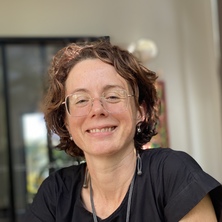
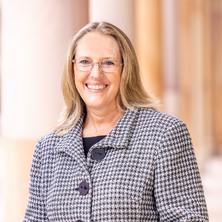
Christy is registered pharmacist with more than 17 years’ experience as a clinical educator and educational researcher, in both academic and clinical settings. Her clinical education experiences have been underpinned by my formal postgraduate qualifications, Master of Education (Clinical Education) and Doctor of Philosophy (Pharmacy Education). Her Doctor of Philosophy (University of Queensland, 2014) examined pharmacy curriculum and its influence on professional identity formation. This research has served as a platform for an ongoing research program in workplace learning in medical and health professional education, which has been recognised internationally.
Affiliate of Research Centre in Creative Arts and Human Flourishing
Research Centre in Creative Arts and Human Flourishing
Faculty of Humanities, Arts and Social Sciences
Professor
School of Social Science
Faculty of Humanities, Arts and Social Sciences
Availability:
Not available for supervision
Media expert
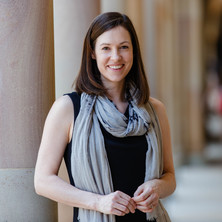
Rebecca Olson is Professor of Sociology at the University of Queensland, cutting-edge translational qualitative researcher, mentor and award-winning educator with expertise in the sociologies of health and emotions. Her work advances the human aspects of care. It empowers students, teachers and researchers to foreground social and emotional aspects in addressing emerging health challenges through collaborative, interdisciplinary research with in-built impact. As Co-Founder and past Director of SocioHealthLab, she leads an interdisciplinary collective of researchers, health professional educators and practitioners interested in doing health and healthcare differently: more socially aware, more relational, more inclusive and more just. As Director of Teaching and Learning in the School of Social Science, she prioritises collaborative, reflexive, creative and emotions-centred practices in higher education. As Joint Editor-in-Chief of Health: An Interdisciplinary Journal for the Social Study of Health, Illness and Medicine, Olson fosters dialogue across theory-curious clinician researchers and critical health social scientists. With 100+ scholarly publications – as well as news media and creative video productions – Rebecca is a prolific contributor to public debate. With research interests spanning medicinal cannabis and health professions education to climate anxiety, Olson is internationally renowned for bringing sociological insight to complex challenges related to emotions, wellbeing, healthcare and caregiving.
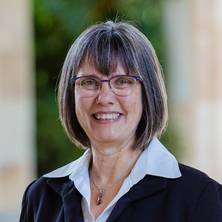
Dr Jan Packer has a background in Psychology having completed a BA (Hons) at UQ in 1976. Her PhD (Education, QUT, 2004) focussed on motivations for learning in educational leisure settings. She has published broadly in the area of educational psychology over many years. The current major focus of her research is in applying the principles of educational, environmental and positive psychology to understand and facilitate visitor experiences in leisure settings such as museums and other tourist and leisure contexts. Jan was co-editor of the international journal, Visitor Studies from 2005 through 2011.
Affiliate of Centre for Living Experience Research
Centre for Living Experience Research
Faculty of Health, Medicine and Behavioural Sciences
Senior Lecturer
School of Health and Rehabilitation Sciences
Faculty of Health, Medicine and Behavioural Sciences
Availability:
Available for supervision
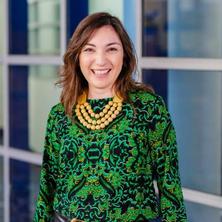
Adriana Penman is a Senior Teaching-Focused Lecturer in Speech Pathology and the Head of Speech Pathology for the School of Health and Rehabilitation Sciences (SHRS), Faculty of Health, Medicine and Behavioural Sciences (HMBS) at The University of Queensland (UQ). She is an elected Academic member of the UQ Academic Board (2026-2028). Adriana is an experienced speech pathologist who has worked clinically in the areas of adult swallowing and communication disorders across the continuum of care and stuttering or fluency disorders across the lifespan. Adriana is passionate about sharing her knowledge, experience and expertise in these clinical areas through her teaching and research.
Adriana's teaching and research programs are driven by the need to create innovative and authentic solutions such as embedding simulation-based learning within health professional curricula to support students’ preparation for practice. Adriana leads a program of research that aims to assist the growth of new graduates who are prepared for future success in speech pathology through their enriched student educational experiences. As a previous ITaLI Affiliate Academic, she is interested in embedding experiential learning opportunities such as simulation-based learning into university classrooms more broadly to assist student learning and engagement, and to build their confidence and readiness for placement. Additionally, within her Affiliate Academic role in 2023-2024, Adriana is the ITaLI representative on the UQ Fitness to Practise Working Party review which is necessitated to continue to guide and support students as developing practitioners.
Adriana's program of research is focussed on the investigation of teaching and learning practices within speech pathology and more broadly, within health science professions with a specific focus on graduate preparedness for placement and the transition to professional practice. She maintains national and international collaborations with a learning community of academics interested in scholarship of teaching. Adriana’s PhD (2021) investigated the use of simulation-based learning to prepare speech pathology students for clinical practice. Her research utilises mixed methodologies however, she has a particular interest in qualitative studies. Adriana is an active researcher in stuttering across the lifespan, teaching and student learning practices, practice education and simulation pedagogy. She is also interested in exploring students’ engagement in interprofessional education and collaborative practice.
Awards and Fellowships:
Australian Awards for University Teaching (AAUT) Citation for Outstanding Contributions to Student Learning (2025)
Senior Fellow, Higher Education Academy (2025)
UQ Award for Teaching Excellence (2024)
Faculty of Health and Behavioural Sciences (HaBS) Award for Teaching Excellence (2023)
Fellow, Higher Education Academy (2019)
Faculty of Heath and Behavioural Sciences (HaBS) Citation for Outstanding Contribution to Student Learning (2018)
School of Health and Rehabilitation Sciences (SHRS) Early Career Citation for Outstanding Contribution to Student Learning (2017)
School of Health and Rehabilitation Sciences (SHRS) Commendation for Early Career Citation for Outstanding Contribution to Student Learning (2016)
I am a Quandamooka researcher and educator whose work sits at the intersection of Indigenous education, culturally safe engagement, and Indigenous data governance. With more than twenty‑five years’ experience across schooling, VET and higher education, I focus on creating systems, policies, and learning environments that strengthen Indigenous participation, leadership, and workforce capability.
I am a Lecturer in Indigenous Education in the School of Education and was previously the Director for Indigenous Education in UQ’s Faculty of Health, Medicine and Behavioural Sciences. In these roles, I work closely with Aboriginal and Torres Strait Islander students, staff, and communities, and collaborate with academic, industry, and government partners to progress Indigenous‑led educational reform.
My research centres on Indigenous workforce pathways, retention, and accountability, informed by strengths‑based Indigenous methodologies. My PhD examined the sustainability of the Indigenous teacher workforce, and this work now extends through ARC and Teaching Innovation Grant projects focusing on Indigenous workforce data practices, governance, and culturally grounded policy design.
I welcome HDR students and collaborators who are interested in Indigenous education, workforce development, community‑led methodologies, and ethical approaches to Indigenous data. I am particularly interested in projects that partner with communities and contribute to practical, strengths‑focused change.
Dr Stefanie Plage is an ARC DECRA Fellow at the School of Social Science researching health and social care in the context of housing instability. Prior to her DECRA Fellowship, she was a Research Fellow with the Life Course Centre at the School of Social Science at UQ. Her expertise is in qualitative research methods, including longitudinal and visual methods. Her research interests span the sociology of emotions, disadvantage and health and illness. Stefanie has taught introductory and advanced courses in sociology and medical sociology, research design and qualitative inquiry, including the use of software for qualitative research (i.e. NVivo). Her work is multi-disciplinary. She completed her PhD at the Centre for Social Research in Health at The University of New South Wales. In her study she employed a mix of longitudinal qualitative interviews and visual elicitation methods to explore the lived experience of people with cancer.
As part of her DECRA, UQ offers a PhD opportunity. While the DECRA itself is not focussed on Aboriginal and Torres Strait Islander peoples, the project will support a PhD Candidate to address their experiences. The scholarship is advertised here https://study.uq.edu.au/study-options/phd-mphil-professional-doctorate/projects/dying-dignity-caring-people-without-home-end-life . Please reach out to Stefanie directly for more information.
I am a part-time teaching associate and lecturer in the School of Education and coordinate undergraduate and postgraduate courses in teacher development, languages, literacy and Arts education. My research explores professional learning and classroom-based research,with a particular focus on English pronunciation teaching and literacy development. I have also taught in Queensland primary and high schools, academic English programs and federally-funded adult migrant English teaching programs.
Faculty of Health, Medicine and Behavioural Sciences
Associate Professor In Education
School of Education
Faculty of Humanities, Arts and Social Sciences
Availability:
Available for supervision
Media expert
Dr Shiralee Poed is an Associate Professor within the School of Education at the University of Queensland. Her career spans more than 30 years, and includes working as a teacher and leader in Australian state, Catholic and independent primary, secondary and special schools. She was awarded the 2023 International Positive Behaviour Leadership Award for her extensive leadership of Positive Behaviour for Learning in Australia, and internationally.
Deputy Director (Training) of Institute for Social Science Research
Institute for Social Science Research
Faculty of Humanities, Arts and Social Sciences
Principal Research Fellow
Institute for Social Science Research
Faculty of Humanities, Arts and Social Sciences
Availability:
Available for supervision
Media expert
Jenny leads the Wellbeing, Equity, and Inclusion Research Group: Transforming education, employment and human service systems through evidence, innovation and partnership at the Institute for Social Science Research at the University of Queensland. She is a Psychologist and obtained her BA Honors, MA and PhD from the Nelson Mandela Metropolitan University in South Africa. Before coming to ISSR, Jenny worked as a Chief Researcher at the Human Sciences Research Council in South Africa in the area of education effectiveness.
Jenny’s research focuses on advancing wellbeing, equity and inclusion across education, employment, and human service systems. She evaluates programs and policies that support marginalised populations navigating complex service systems. Jenny’s work integrates lived experience with rigorous analysis of the services, institutions, and policy environments that shape life trajectories, identifying evidence-based levers for change within families, organisations, and government systems. She is a mixed-methods researcher with expertise in integrating large-scale population and administrative data with survey and in-depth qualitative data to generate nuanced, practice-relevant insights. Through large-scale evaluations and long-term research partnerships with government and community organisations, Jenny produces generalisable knowledge with demonstrable real-world impact, while strengthening research and evaluation capability within the human services sector. Her research is grounded in participatory and co-production approaches, ensuring that people with living or lived experience are meaningfully involved in shaping research design, interpretation, and impact.
Jenny has worked closely with Government Departments and Ministries both in Australia (e.g., Tasmania DHHS; Australian DoE; Qld DoE; CESE NSW; Australian DSS; Qld DCSSD; Department of Home Affairs) and internationally (e.g., South Africa, Eritrea, Cambodia and the Solomon Islands) to gather research evidence from a wide range of disadvantaged communities to inform policy. Jenny is a Chief Investigator on an ARC Linkage project which investigates how Aboriginal and Torres Strait Islander and non-Indigenous children experience Out-of-Home Care (OOHC) using elicitation methods and a longitudinal qualitative research design to provide evidence to improve service agencies’ understanding of children’s experiences in OOHC and how agencies can best support families, carers and communities to promote the social, emotional, and cultural well-being of Aboriginal and Torres Strait Islander and non-Indigenous children in OOHC. This research will improve service provider capability and test Government reform interventions. Jenny leads large-scale complex commissioned evaluations and is currently leading the following evaluations: FamilyLinQ Evaluation and the Journi Online Road Safety Education Program Evaluation.
In addition to leading a research group and complex evaluation, Jenny delivers hands-on professional training and capability-building in evaluation, statistical, and social research methods for policymakers, practitioners, and service leaders, contributes as an Associate Investigator to research for the ARC Centre of Excellence on Families and Children over the Life Course (the Life Course Centre), and supervises HDR and placement students.
Faculty of Health, Medicine and Behavioural Sciences
Availability:
Available for supervision
Media expert
I received my Bachelor's in Biology (2001) from Yarmouk University in Jordan, followed by postgraduate degrees from the University of Houston in Houston-Texas (2002-2007). My studies are integrative in nature, joining the best of both the Neuroscience world and Circadian Biology (the study of biological clocks). In the laboratory of Prof. Arnold Eskin, I investigated how processes as complex as learning and memory are modulated by biological clocks i.e. the circadian (about 24 hours) system, using Aplysia californica as the experimental model. After completing my Master's in Science in 2005, my research focused on the mechanism by which biological clocks modulate learning and memory. This work was performed in the laboratories of Prof. Gregg Cahill and Prof. Greg Roman, experts in chronobiology and behavioral neuroscience, respectively. Using Zebrafish as a model system, I investigated the role of melatonin, a night-time restricted hormonal signal, in modulating long-term memory consolidation. My findings, published in Science in 2007, shows that the circadian system via the cyclic night-time confined synthesis/release of melatonin “the hormone of darkness” functions as a modulator, shaping daily variations in the efficiency by which memories are processed. After receiving my Ph.D. in 2007, I joined as a postdoctoral fellow the laboratory of the pharmacologist and melatonin researcher Prof. Margarita Dubocovich. My postdoctoral work engaged in elucidating the role of melatonin in circadian physiology and pharmacology during development and ageing in rodents (Mus musculus) and non-human primates (Macaca mulatta) at the Feinberg School of Medicine (Northwestern University-Chicago) and the State University of New York (SUNY). From 2010-2015, I held a teaching/research position in the Dr. Senckenbergische Anatomy and the Dept. of Neurology at the Goethe University in Frankfurt-Germany. During this time, I was involved in teaching gross human anatomy while continuing my endeavor in understanding the mechanistics involved in shaping memory processes (acquisition, consolidation and retrieval) by the circadian system.
Senior Lecturer and Principal Speciality Supervisor (General Practice)
General Practice Clinical Unit
Faculty of Health, Medicine and Behavioural Sciences
Availability:
Available for supervision
Media expert
Dr Lynne Reid is a General Practitioner, medical educator and researcher with expertise in general practice education, sport and exercise medicine, musculoskeletal medicine, and preventive healthcare. She is a Senior Lecturer within the University of Queensland Medical School and works across undergraduate teaching, clinical supervision, assessment, and curriculum development.
Her work focuses on preparing future doctors for contemporary practice, with particular interests in immersive clinical education, evidence-based medicine, communication skills, preventative health, and whole-person care.
Her broader interests include:
General practice and community-based medical education
Sport and exercise medicine
Musculoskeletal medicine and injury management
Preventive health
Women’s health
Clinical assessment and feedback
Digital health and AI in medical education
Exercise prescription in primary care
Dr Reid is passionate about strengthening the role of general practice within the health system and building supportive learning environments for students, trainees and clinicians.
The School of Education is one of the most productive and high profile schools of education in Australia.
Professor Peter Renshaw's research has focussed on learning and teaching processes both at school and tertiary level. With a team of colleagues in the School of Education at UQ, he is currently investigating the quality of teaching and assessment practices in schools across Queensland. In two current ARC projects, with his co-researchers (Dr Ray Brown and Dr Elizabeth Hirst) he is investigating how teachers group and label students, and the effects of these practices on learning outcomes. These projects are framed by a sociocultural theory of education that foregrounds the social and cultural construction of knowledge and identity, and the responsibility of educators to create challenging, inclusive and supportive learning contexts for diverse groups of students. Professor Renshaw was President and Secretary of Australian Association for Research in Education and a member of the Executive for over a decade (1991-2002). He currently is on the International Advisory Board of CICERO Learning, an interdisciplinary research centre at the University of Helsinki, Finland. He has active collaborations with European researchers in the Netherlands and Sweden, studying how teachers deal with student diversity and how they provide inclusive contexts for learning in multicultural classrooms.
Dr Emily Ross is Deputy Director of Teaching and Learning, Director of Primary Preservice Programs, and Lecturer in the School of Education at The University of Queensland. She has extensive experience in curriculum implementation, supporting school leadership teams and teachers to implement some of the most exciting and cutting-edge curriculum initiatives. She has led the design and implementation of key curriculum and assessment initiatives for the state of Queensland and at a national level. Emily's doctoral research on curriculum interpretation and implementation has shaped government policy in Queensland. It has influenced the method and messaging for implementation support of the Australian Curriculum, and the professional development and resources that have been developed to aid teachers in the curriculum planning work. After completing her doctoral studies, Emily was asked to lead the project for the renewal of the QCAA Australian Curriculum website, including the redevelopment of over 500 curriculum support resources.
Emily's expertise in curriculum development and implementation has continued to be drawn upon by several national organisations, including the Australian Curriculum, Assessment and Reporting Authority (ACARA) and Education Services Australia. Through these organisations, she has been invited to continue to serve on Advisory Groups and National Expert Panels to support the development and delivery of the Australian Curriculum and resources to support its implementation in Australian schools.
Previously, Emily held senior leadership positions at the QCAA, the Australian Curriculum, Assessment and Reporting Authority (ACARA) and the interim National Curriculum Board, as well as in Queensland government and independent schools. Emily’s research focuses on curriculum and assessment policy and its implementation, particularly in areas of STEM education.
Faculty of Health, Medicine and Behavioural Sciences
Associate Professor
School of Human Movement and Nutrition Sciences
Faculty of Health, Medicine and Behavioural Sciences
Availability:
Available for supervision
Media expert
Dr. Steven Rynne is an Associate Professor in Sport Pedagogy and Coaching as well as the Director of Engagement and Partnerships with the School of Human Movement and Nutrition Sciences at The University of Queensland, Australia. The major theme that runs throughout Steven’s work is learning in sport. Within this broad theme he has worked and conducted research with a variety of peak domestic and international sporting bodies aimed at fostering high performance through learning (e.g. how elite coaches learn their craft) and understanding outcomes for sport participants (e.g. sport for reconciliation). Steven teaches undergraduate and graduate students, is a cycling coach and registered HPE teacher, and has been immersed in junior and community sport settings for more than two decades.
I am a passionate English literature teacher and researcher, having received an education in English literature, linguistics, and language as well as the humanities. I have completed my PhD in Postcolonial Studies and Other Literature in English from the School of Languages and Cultures at the University of Queensland, supported by the prestigious and highly competitive International Postgraduate Research Scholarship and the University of Queensland Centennial Scholarship. My research entwines eighteenth-century English literature and contemporary world anglophone literature, straddling migration and diaspora, subjectivity formation and agency, gender and age, and metaphors as a literary device. I have pursued my research within the South Asian region, with a particular focus on the underrepresented branch of Anglophone literature, for example, Bangladeshi literature in English. By engaging with the tension among colonial, postcolonial, and world literature writings, I foreground literary/fictional endeavours as tools to voice inequity, inequality, exclusion, and social justice, and to cultivate emotional intelligence. My poems reflect my multidisciplinary academic and critical literary perspectives, and thus, all my works have gradually been shaped by my life experiences as an emotional Bedouin.
Dr Shapter's background was originally in Agricultural Science and higher education which evolved to the completion of her PhD in molecular genetics in 2008. Prior to her current appointments she was the senior researcher on ARC linkage, Australian Flora Foundation and RIRDC research grants looking at the genetic foundations of domestication and adaptation in Australian native grasses. She supervised two HDR students and has a strong publication record in this field. Her research interests centre on identifying and developing practical applications for gene sequencing. Fran is passionate about teaching and has worked as a facilitator commercially and trained early career researchers and PhD candidates in Project Management, IP and commercialisation and Leadership. She was a participant in the 2020 summit and was appointed to the federal advisory Rural R&D Council in 2009. Dr Shapter was also a sitting member of the Office of the Gene Technology Regulator's Ethics and Community Consultative Committee, 2016-2020.
Fran began tutoring at the UQ School of Veterinary Science in 2011, in large animal production, parasitology and microbiology. Since then she has held a variety of teaching, research and professional roles based around project management, curriculum design and blended learning design. She was the project manager for a Scholarship of Teaching and Learning (SoTL) grant which developed 40 vertically and horizontally integrated, online, adaptive tutorials for veterinary science students and was co-author on the manual developed by this project. She assisted with the development of a new flexible delivery laboratory animal science course in 2015 and delivers 5 weeks of online learning units into this course currently. She has been part of the SoTL research and evaluation associated with both these projects and has reported outcomes at University showcases annually since 2016.
In 2017 Fran became the new Student Clinical Skills Hub Coordinator, a purpose-built, state-of-the-art self-directed learning facility for students of veterinary science. Whilst undertaking this role student usage, resource availability and online support for the Hub has increased more than tenfold. Fran's aim is to provide a safe, authentic, self-directed learning environment where students can practice their clinical skills in accordance with individual competences, beyond the scheduled contact hours of their programs and further enhance their capacity for self-directed, lifelong learning whilst acknowledging the vast array of qualifications, previous training, life experience and cultural backgrounds each student brings with them to the Hub.In 2020 Fran recieved a UQ Teaching Excellence Award due to the demonstarted impact of the SVS Student Clinical Skills Hub.
In 2019 Fran was appointed as a Lecturer in Veterinary Science, while continuing her role as the Hub's coordinator. She continues to maintain her teaching roles into the veterinary program in animal handling, animal production, reproduction, microbiology, parasitology and plant identification. Fran has an additional role in the School with regard to asissting with the design, development and integration of blended learning resources, after working with the Science faculties blended learning design team in 2018. However her SoTL portfolio is best showcased by the development of the online learning community and training resources she has developed for the Student Clinical Skills Hub. As of June 2021, Fran has also taken on the role of the School of Veterinary Science Honours Program Coordinator.
I am an Aboriginal woman from the Ngen'giwumirri language group (Daly River, Northern Territory), born in Brisbane and connected to Indigenous communities across South East Queensland. I currently hold the position of Professor and Deputy Head of School in the School of Education at The University of Queensland. My research program is nationally and internationally recognised, with a focus on Indigenous education, codesign in Indigenous education, Indigenous participation in STEM, youth studies, flexi schooling, and education policy. I lead an extensive externally funded research program, including Australian Research Council (ARC) grants and government tenders, and I actively contribute to policy development through advisory roles at both state and national levels. I am a Chief Investigator on the ARC Centre of Excellence for Indigenous Futures.
I am committed to advancing strengths-based approaches in Indigenous education. My scholarship includes over 100 publications, and I have co-edited two major texts in the field. The first, “Indigenous Education in Australia: Learning and Teaching for Deadly Futures” (Routledge, 2021), which received a national award at the Education Publishing Awards Australia. My most recent book, “Strengths-Based Approaches to Indigenous Education Research and Practice” (Routledge, 2025), co-edited with Professor Grace Sarra, further contributes to the growing body of work that centres Indigenous voices and leadership in education. My academic work builds on my foundation as a qualified, Queensland-registered secondary school teacher.
Throughout my career, I have received multiple awards in recognition of research excellence and leadership, including the UQ Foundation Research Excellence Award (2021), the UQ Award for Excellence in Graduate Research Leadership (2024), and the National ACEL Leadership Award (2020). As a qualified and experienced secondary teacher, I remain deeply committed to research translation and applied research that support advancing educational equity. I designed a specialised program aimed at growing the Indigenous Education research workforce, the SoE DEADLY Community, providing mentoring to early career researchers and supervising Indigenous higher degree research students through the creation of an environment that centres Indigenous strengths, knowledges and aspirations.
My work continues to be driven by a belief in the transformative power of education and the importance of Indigenous-led research and practice, underpinned by Indigenous-informed evidence, and a commitment to bridging research, policy and practice.
Dr Chase Sherwell is a Research Fellow at the UQ Learning Lab and the Principal Research Technician for the Compassionate Mind Research Group in the School of Psychology. His research combines neuroscientific, psychological, and educational perspectives to provide tools for enacting learning, well-being, and behavioural change in real-world contexts. With a focus on application, Dr Sherwell’s work aims to identify metrics of internal psychological mechanisms that can be easily interpreted and integrated by professionals and end-users to facilitate skill development and mental health in everyday life.
With a background in cognitive neuroscience, psychology, and education research, Dr Sherwell leads projects that aim to explain learning, development, and mental health across disciplinary lines: from the level of neural networks through to everyday experience. Integrating multi-modal techniques including digital interaction, biometrics, and neurophysiology, Dr Sherwell develops tools, user experiences, and analytics that provide actionable metrics and insights for professionals and researchers.
Dr Sherwell is a Research Fellow in the UQ Learning Lab: a team of multi-disciplinary researchers, educators, and industry partners who collaborate to transform learning, teaching, and training in diverse school and post-school environments through the science of learning. In this role, Dr Sherwell lends his expertise in cognitive neuroscience and psychology to develop projects aimed at understanding and measuring the barriers, facilitators, and mechanisms of self-regulation in professional contexts. He leads projects designing digital tools providing educators with real-time feedback on learner states and skill development integrating smartphone apps and biometrics from wearable devices.
Dr Sherwell is also the Principal Research Technician for the Compassionate Mind Research Group – the leading research hub for Compassion Science in Australia, based at the UQ School of Psychology. In this role, he oversees research design and development across projects investigating the mechanisms of prosocial behaviour in everyday life, barriers to clinical interventions, and the efficacy of online interventions for mental health.
Deputy Associate Dean (Academic) - StudentsDeputy Associate Dean (Academic) - Students
Faculty of Humanities, Arts and Social Sciences
Director of Teaching and Learning of School of Social Science
School of Social Science
Faculty of Humanities, Arts and Social Sciences
Associate Professor
School of Social Science
Faculty of Humanities, Arts and Social Sciences
Availability:
Not available for supervision
Associate Professor Lynda Shevellar has over 20 years in tertiary education. She joined The University of Queensland in 2009. Based in the School of Social Science, Lynda is the winner of an Australian Award for University Teaching Excellence (AAUT) in Society and Culture (2025). Previously she has won an early career award for teaching excellence in 2011, a University of Queensland Award for Teaching Excellence in 2019, and an Australian Award for University Teaching (AAUT) Citation for Outstanding Contributions to Student Learning (2019). She is a Senior Fellow of the Higher Education Academy, the Principal Practitioner - Participation and Engagement (Institute for Teaching and Learning Innovation), and is one of the Deputy Associate Deans (Academic) - Students, for the HASS Faculty. Lynda has previously held roles in government and the community sector and is influenced by over thirty years of experience in community development, the disability sector, mental health, education, and psychology.
Lynda's research explores three closely aligned agendas: understanding the experience of people who live with heightened vulnerability; developing the awareness, agency and capacity of communities to respond to social disadvantage and inequality; and aligning community development theory and education to inform practice in working alongside people who live with heightened vulnerability. Lynda has a particular interest in the development of inclusive learning communities, through creative teaching practices, participative research strategies, and engaged citizenship.
Lynda currently coordinates the courses SOSC2288: Community Development - Local and International Practice; and SOCY1070: Inequality, Society and the Self.