Centre Director of ARC COE in Quantum Biotechnology (QUBIC)
ARC COE in Quantum Biotechnology
Faculty of Science
Professor
School of Mathematics and Physics
Faculty of Science
Availability:
Available for supervision
Media expert
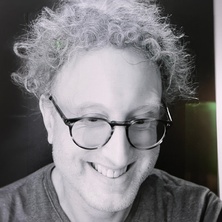
Professor Bowen is Director of the Australian Research Council Centre of Excellence in Quantum Biotechnology, and leads the Quantum Optics Laboratory at UQ. He is recognised both nationally and internationally for research at the interface of quantum science and nanotechnology; including bioimaging, biotechnology, nanophotonics, nanomechanics, quantum optomechanics and photonic/quantum sensing. He is a Fellow of the Australian Institute of Physics.
Professor Bowen's research spans from the very fundamental, e.g. how does quantum physics transition into our everyday world at large scales?, to applied, e.g. developing next generation sensors for medical diagnostics and navigation. To pursue this research, his lab works in close partnership with industry and uses state-of-the-art facilities for nanofabrication, nanoanalysis, precision optical measurement and deep cryogenic refrigeration available in-house or on campus at UQ.
Professor Bowen has supervised more than thirty postgraduate students, who have been recognised with prizes such as Fulbright Scholarships, an Australian Youth Science Ambassadorship, a Springer PhD theses prize, the Queensland nomination for the Australian Institute of Physics Bragg Medal, the Australian Optical Society Postgraduate Student Prize and UQ Graduate of the Year. He regularly has projects available, both for postgraduate students and for postdoctoral researchers. Please check his website, above, or contact him directly for details (w.bowen@uq.edu.au).
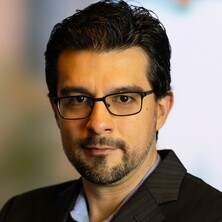
Dr Jorge Campos-González-Angulo develops theoretical and computational models for quantum molecular systems, working at the interface of quantum chemistry, molecular photonics, and quantum computing. His research is part of the quantum decarbonisation mission of the Queensland Quantum Decarbonisation Alliance, providing the physical models needed to simulate and engineer molecular systems for clean energy and quantum technology applications.
His work on light–matter interaction spans from single molecules to collective quantum optical regimes, with applications in the design of organic light-emitting materials for sustainable electronics. A parallel line of research develops reduced models for spin-vibronic systems at molecule–electrode interfaces, with relevance to quantum sensing and electrochemical energy conversion. He also builds physically motivated molecular models that serve as rigorous benchmarks for fault-tolerant quantum computers, connecting advances in quantum hardware directly to chemical problems of practical importance.
Jorge completed his PhD in Chemistry at the University of California San Diego, where he worked with Prof. Joel Yuen-Zhou on foundational problems in vibropolaritonic chemistry. He then joined the Matter Lab of Prof. Alán Aspuru-Guzik at the University of Toronto as a Postdoctoral Fellow, where he was also an affiliate of the Vector Institute for Artificial Intelligence. He joined the University of Queensland in 2026 as a Lecturer jointly appointed in the Schools of Mathematics & Physics and Chemistry & Molecular Biosciences, and is a Chief Investigator at the ARC Centre of Excellence in Quantum Biotechnology (QUBIC).
Faculty of Engineering, Architecture and Information Technology
Associate Professor
School of Mathematics and Physics
Faculty of Science
Availability:
Available for supervision
Media expert
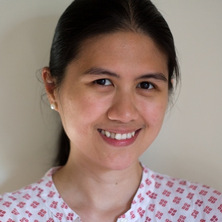
Dr Jacqui Romero is an expert in experimental quantum information. Her research is focused on using higher-dimensional systems for exploring curious quantum physics phenomena and developing future quantum technologies. She is the group leader of the research team Qudits@UQ, there's more information on her group's webpage.
Jacqui was born and bred in Manila, Philippines. Hearing her high school physics teacher complain about quantum physics, she became curious and googled "quantum physics"—she has been hooked ever since. She holds BS Applied Physics magna cum laude and MS Physics degrees from the University of the Philippines. She finished her PhD at the University of Glasgow (in sunny Scotland!) where she was a researcher for seven years. In 2015, she moved to Brisbane to join the Quantum Technology group at the University of Queensland. In 2016 she took up an ARC DECRA fellowship with the same group. In 2019, she took up a Westpac Research Fellowship and formed her own team, Qudits@UQ. Jacqui is recognised for moving the shape of photons to mainstream quantum information. She has received several prestigious national and international awards which include: a L'Oreal-UNESCO For Women In Science award in 2017 (one of four in Australia), the Ruby Payne-Scott Medal of the Australian Institute of Physics for excellence in early-career research in 2018, and a L'Oreal-UNESCO For Women In Science International Rising Talent Award in 2019 (one of fifteen awards globally).
She is currently an associate professor and Westpac Research Fellow. She is also a chief investigator at the Centre of Excellence For Engineered Quantum Systems (EQUS).
Outside work, she is a busy mum to three lovely boys, and an occasional painter. She also loves sharing her research to the wider community, example here.
Faculty of Health, Medicine and Behavioural Sciences
Associate Professor
School of Mathematics and Physics
Faculty of Science
Availability:
Available for supervision
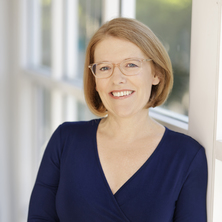
Associate Professor Sally Shrapnel is an internationally recognised theoretical physicist whose research lies at the intersection of quantum physics, artificial intelligence, digital health and philosophy of science. Her work seeks to answer a single overarching question: how can we understand and model causation, from the quantum world to complex healthcare systems?
Originally trained as a medical practitioner, Sally worked clinically for more than twenty years in Australia and the United Kingdom before undertaking a PhD in quantum artificial intelligence at The University of Queensland. This unusual combination of clinical medicine, mathematics and theoretical physics now underpins an interdisciplinary research program that connects fundamental science with real-world applications.
Sally is internationally recognised for pioneering Quantum Causal Modelling, the first mathematical framework for representing and discovering causal relationships between quantum systems. Her work has helped establish quantum causality as an internationally active research field, with contributions spanning quantum foundations, quantum information theory and the philosophy of science. She is also developing new quantum algorithms for machine learning and causal inference, with the aim of enabling future quantum computers to solve problems beyond the reach of classical approaches.
Alongside her fundamental research, Sally leads a program developing Quantum Technologies for Digital Health at the Queensland Digital Health Centre. Working with Queensland Health, IBM Quantum and international collaborators, her group investigates how advances in quantum computing, optimisation and artificial intelligence can improve healthcare delivery, patient flow and clinical decision-making. This research reflects her long-standing commitment to translating fundamental discoveries into technologies that deliver public benefit.
Sally has held senior leadership roles across Australia's quantum ecosystem, including Deputy Director of the ARC Centre of Excellence for Engineered Quantum Systems (EQUS), where she helped shape national research strategy, governance and researcher development. She also contributes to international policy, research governance and data stewardship through leadership roles spanning quantum technologies, artificial intelligence and global health.
Her research has been recognised through invited keynote lectures, highly cited publications, international collaborations and leadership of major interdisciplinary research initiatives. She is particularly interested in building intellectual bridges between disciplines and mentoring researchers who combine deep technical expertise with a willingness to tackle important real-world problems.
Beyond research, Sally is passionate about educating the next generation of scientists, engineers and healthcare professionals. She leads the development of AI and digital health education at UQ and is committed to ensuring that emerging technologies are adopted responsibly, ethically and for the public good.
Quantum computers provide a fundamentally different model of computation that lends itself to naturally to a collection of problems that are expected to be infeasible or prohibitively inefficient to solve on classical computers. In my research, I focus on identifying such problems and formulating quantum computational solutions with the goal of reducing the computational resources required to solve the problems.
On one hand, I consider the efficacy of quantum optimisation methods for the purposes of solving optimisation problems that require evaluating a cost function across an exponentially large space of possible solutions, with the aim of speeding up the procedure of identifying optimal solutions.
On the other hand, I work with quantum machine learning techniques for the purposes of learning on datasets that involve high-dimensional or otherwise unknown underlying structures, a regime in which quantum computers are expected to work well owing to the fact that they inherently operate in high-dimensional "Hilbert spaces".
At UQ, my research focuses predominantly on the former, where I aim to utilise quantum optimisation methods for the purposes of solving integer linear programs or Hamiltonian simulation problems. However I am also greatly interested in identifying inherently quantum learning problems for which substantial empirical or provable improvements in learning performance over classical machine learning methods can be derived.
Centre Director of ARC COE for Engineered Quantum Systems (EQUS)
ARC COE for Engineered Quantum Systems
Faculty of Science
ARC Australian Laureate Fellow
School of Mathematics and Physics
Faculty of Science
Availability:
Available for supervision
Media expert
Professor White leads the Quantum Technology Laboratory at UQ, which he established in 1999, and is an Australian Research Council Laureate Fellow. He is internationally recognised for research in quantum science and technology, and is interested in all aspects of quantum weirdness. He is a Fellow of the Australian Academy of Science, the American Physical Society, and Optica. Andrew’s research spans: quantum foundations; production, manipulation and exploitation of quantum states of light, both in conventional optics and nanophotonics; and utilising quantum technology, be it in quantum computation, quantum communication, quantum sensing, or neuromorphic computing. Details can be found at the Quantum Laboratory website.
Professor White has worked with twenty-two postdoctoral researchers since 2001, five of whom received ARC Discovery Early Career Researchers Awards whilst working in his lab, six receiving Marie Skłodowska-Curie Fellowships subsequently and one a Erwin Schrödinger Fellowship. He has supervised more than 40 postgraduate students, who have received an array of awards including a Rhodes Scholarship, three Springer PhD thesis prizes, Australian representative at the Lindau Nobel Meeting, the only-ever runner for the Australian Institute of Physics Bragg Medal, and UQ Medals and Valedictorian, to name but a few.
Bio: Andrew was raised in a Queensland dairy town, before heading south to the big smoke of Brisbane to study chemistry, maths, physics and, during the World Expo, the effects of alcohol on uni students from around the world. Deciding he wanted to know what the cold felt like, he first moved to Canberra, then Germany—completing his PhD in quantum physics—before moving on to Los Alamos National Labs in New Mexico where he quickly discovered that there is more than enough snow to hide a cactus, but not nearly enough to prevent amusing your friends when you sit down. Over the years he has conducted research on various topics including shrimp eyes, nuclear physics, optical vortices, and quantum computers. He likes quantum weirdness for its own sake, but his current research aims to explore and exploit the full range of quantum behaviours—notably entanglement—with an eye to engineering new technologies and scientific applications. He is currently Director of the Centre of Engineered Quantum Systems, an Australia-wide, 14-year long, research effort by more than 250 scientists to build quantum machines that harness the quantum world for practical applications.