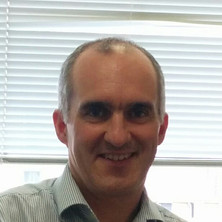
I studied Technical Mathematics at the Vienna University of Technology. I also earned a Master's degree in Law and I finished the first ("non-clinical") part of Medical Studies at the University of Vienna. I earned my PhD in Applied Mathematics at the University of Vienna in 2007. My PhD advisor was Christian Schmeiser, my co-advisor was Peter Markowich. I spent several months at the University of Buenos Aires working with C. Lederman and at the ENS-Paris rue d'Ulm in the group of B. Perthame.
Before coming to UQ, I held post-doc positions at the Wolfgang Pauli Insitute (Vienna), University of Vienna and the Austrian Academy of Sciences (RICAM). In 2013 I won an Erwin Schrödinger Fellowship of the Austrian Science Fund (FWF). I was a post-doc researcher in the group of Alex Mogilner first at UC Davis, then at the Courant Institute of Math. Sciences (New York University).
I moved to UQ in Dec. 2016. More recently, in 2024, I spent 4 months at the department of Mathemetics of the U. of Heidelberg as a visiting scientist.
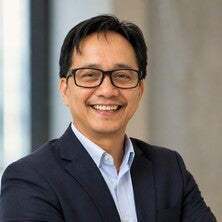
Dr Anthony Halog: Expert in Circular Economy, Life Cycle Thinking, and Sustainable Systems
Dr. Anthony B. Halog is a professor at the University of Queensland specialising in circular economy, sustainability engineering, industrial ecology, and life cycle assessment (LCA/LCSA). His current work focuses on designing low-carbon, net-zero, and resource-efficient systems to address climate change, waste reduction, and sustainable development.
Dr. Halog works across energy, materials, food, waste, and policy systems, applying systems thinking, life cycle sustainability assessment, digital twins, and artificial intelligence for sustainability. His research helps governments, industries, and communities make evidence-based decisions that reduce emissions, improve resource efficiency, and avoid unintended environmental impacts.
A core focus of his work is transforming linear value chains into circular value chains, supporting green hydrogen, bioenergy, circular bioeconomy, agricultural waste valorisation, waste-to-energy, and sustainable materials. These solutions contribute to decarbonisation, climate resilience, sustainable supply chains, and the green economy.
Key areas of expertise
Circular economy and industrial ecology
Life cycle assessment and sustainability metrics
Green hydrogen, bioenergy, and clean energy transitions
Sustainable waste management and circular bioeconomy
Systems modelling, AI-enabled tools, and sustainability policy
Dr. Halog collaborates with policymakers, industry partners, SMEs, and Indigenous communities in Australia and internationally to deliver practical climate solutions and support the transition to decarbonised circular economies.
My research applies population genetics, evolutionary and ecological theory, and genomics to understand agricultural pests, weeds and pollination, all three are billion dollar problems facing Australian Agriculture. I am always keen to explore new approaches and cutting-edge technologies. This is important because some of the most innovative and transformative advances in genomics are coming from human genomics, and I draw upon these advances and apply them to insect and weed pests. As a result, my research combines cutting-edge genomic tools and ecological experimentation to investigate agricultural pests in an evolutionary context, with the goal of protecting agricultural crops and ensuring global food security.
School of Electrical Engineering and Computer Science
Faculty of Engineering, Architecture and Information Technology
Availability:
Not available for supervision
Media expert
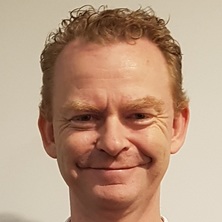
Marcus Gallagher is an Associate Professor in the School of Electrical Engineering and Computer Science. His research interests are in the foundations of artificial intelligence, including optimisation and machine learning algorithms. He is particularly interested in understanding the relationship between algorithm performance and problem structure via benchmarking. His research includes cross-disciplinary collaborations and real-world applications of AI techniques in areas such as healthcare and computer networks.
Dr Gallagher received his BCompSc and GradDipSc from the University of New England, Australia in 1994 and 1995 respectively, and his PhD in 2000 from the University of Queensland, Australia. He also completed a GradCert (Higher Education) in 2010.
Affiliate of Julius Kruttschnitt Mineral Research Centre
Julius Kruttschnitt Mineral Research Centre
Faculty of Engineering, Architecture and Information Technology
Emeritus Professor
Sustainable Minerals Institute
Faculty of Engineering, Architecture and Information Technology
Availability:
Available for supervision
Media expert
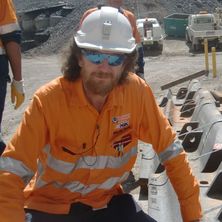
Malcolm has applied fundamental comminution research to design and process improvement on over 70 mines worldwide during 40 years at Mintek, UCT, Professor of comminution at the JKMRC in Australia, and through private research companies. His work is published in over 240 papers and has been presented in as many conferences worldwide. Malcolm collaborates extensively, with close compatriots on 5 continents forming the Global Comminution Collaborative (GCC) – providing an expert research and consulting base covering the full comminution process chain. Malcolm provides on-site experiential training and site reviews to empower mine staff to upgrade the productivity and their skills. This is supplemented with formal training workshops on liner design, comminution and Advanced Mine to Mill. Malcolm’s research vision is of integrated total process simulation as a tool for innovation – linking geology, mining, energy and size reduction, gangue rejection and recovery into flexible process design and process optimisation.
Malcolm supervises research students and runs three companies dedicated to advancing cutting edge technology into the mining industry. These focus around operation-relevant training; advanced mill liner design using DEM modelling; mechanistic mill modelling; introducing the latest tools into daily process control; operationalising advanced mine-to-mill implementation; and development of step-change reduction in comminution energy.