
Overview
Background
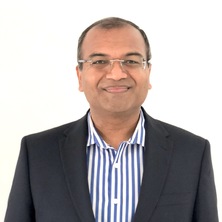
Associate Professor Srinivas Kondalsamy Chennakesavan is Head of Research at The University of Queensland Rural Clinical School and an internationally recognised researcher in rural health, Indigenous health, public health, epidemiology and health services research. With a background in medicine and public health, his research focuses on improving health outcomes for rural, remote and underserved populations through innovative, community-centred and translational research.
His work addresses major health challenges affecting rural and remote communities, particularly Aboriginal and Torres Strait Islander peoples, with a focus on chronic disease prevention and management, health service innovation, population health surveillance, digital health, workforce development, healthy ageing and implementation science. He is widely recognised for developing practical models of care that translate research evidence into measurable improvements in health outcomes, service delivery and policy.
Associate Professor Chennakesavan has secured more than A$11.3 million in National Health and Medical Research Council (NHMRC) and Medical Research Future Fund (MRFF) funding, and over A$12 million in total competitive research income from national and international funding agencies. He has served as Chief Investigator, Associate Investigator and collaborator on major research programs spanning chronic disease prevention, Indigenous health, cardiovascular disease, digital health, healthy ageing, frailty and rural health service redesign. His research has directly informed policy, clinical practice and health service planning across Australia.
A defining feature of his work is the development and evaluation of community-based screening, surveillance and chronic disease management programs for Indigenous and other underserved populations living in rural and remote settings. These models have improved the early detection and management of chronic disease while strengthening local healthcare capacity. Through international collaborations, elements of this work have been adapted and implemented in resource-constrained settings in South Africa and India.
His interdisciplinary approach combines clinical medicine, epidemiology, biostatistics, health informatics and digital technologies to address complex healthcare challenges. He has expertise in designing technology-enabled models of care that improve access to prevention, diagnosis, treatment and long-term disease management for geographically dispersed populations.
Associate Professor Chennakesavan's research has achieved significant international impact. His publications have been cited extensively by leading organisations including the World Health Organization (WHO), the Organisation for Economic Co-operation and Development (OECD), and National Institute for Health and Care Excellence (NICE) guidelines, reflecting the global relevance of his work in primary healthcare, chronic disease management, rural health and health system strengthening.
He is committed to collaborative and community-engaged research and works closely with health services, Aboriginal Community Controlled Health Organisations, governments, clinicians, consumers and academic partners. His work has contributed to the development of sustainable, culturally safe and evidence-based models of care that advance health equity and improve healthcare access.
Associate Professor Chennakesavan is a globally recognised rural health researcher and thought leader whose work has influenced research, policy, and healthcare delivery both nationally and internationally. As a Council Member of the World Organization of Family Doctors (WONCA) Rural Health Working Party, he contributes to shaping the global rural health agenda, advancing strategies to strengthen healthcare access, workforce capacity, and research impact across underserved populations. He also serves as Chair of the Queensland Rural Health Innovation and Research Collaborative (QRHIRC), leading one of Australia's largest rural health research networks and bringing together universities, health services, policymakers, and communities to drive innovation, build research capacity, and translate evidence into meaningful improvements in rural and remote healthcare outcomes.
An experienced mentor and supervisor, Associate Professor Chennakesavan has supported the development of numerous higher degree research candidates, medical students, clinicians and early-career researchers. He regularly serves on NHMRC, MRFF and international peer-review panels, contributing to the assessment of major competitive funding schemes and helping shape future directions in health and medical research.
Availability
- Associate Professor Srinivas Kondalsamy Chennakesavan is:
- Available for supervision
- Media expert
Fields of research
Qualifications
- Bachelor of Medicine and Surgery and Medical Science, The Tamil Nadu Dr. M.G.R. Medical University
- Masters (Coursework) of Public Health, Institution to be confirmed
Research interests
-
Rural health
-
Chronic diseases
-
Prediction model development and validation
-
Indigenous health
-
Health Services Research
-
Oncology
Research impacts
Translation and impact are core, intentional elements of my research program. My work has been cited in 75 policy documents produced by 23 policy organisations across 11 countries, including the World Health Organization and the OECD. This level of policy uptake is unusual for a single researcher and reflects sustained authority in areas of workforce policy, Indigenous health, and health system sustainability.
Notably:
- My Rural Pipeline research forms a key evidence base for WHO global guidelines on rural health workforce attraction, recruitment and retention, influencing workforce reform internationally and within Australia.
- My research on Indigenous suicide prevention and culturally governed mental health models has informed national frameworks in Australia, New Zealand, Canada, Taiwan and Brazil, embedding Indigenous leadership and cultural safety into policy.
- My health‑systems research, including the Surgical Preparedness Index, has contributed to global benchmarking across 119 countries, shaping understanding of system resilience post‑COVID‑19.
- I have led the development of Indigenous‑led virtual health service models, translating evidence into implemented service frameworks that improve access and continuity of care for people with chronic disease in rural and remote communities.
In addition to policy translation, my work has achieved significant public and professional engagement, with extensive media coverage and Altmetric attention, reinforcing societal relevance and impact. My program contributes to seven SDGs, dominated by SDG 3 and SDG 4.
Works
Search Professor Srinivas Kondalsamy Chennakesavan’s works on UQ eSpace
2007
Conference Publication
Adult chronic kidney disease patients have lower birth weight than the general Australian population
Al Salmi, I., Hoy, W. E., Kondalsamy-Chennakesavan, S., Wang, Z., Gobe, G. C., Healy, H., Atkins, R. A. and Shaw, J. E. (2007). Adult chronic kidney disease patients have lower birth weight than the general Australian population. 5th International Congress on Developmental Origins of Health & Disease, Perth, Australia, 6-10 November 2007. Amsterdam, the Netherlands/Suwon, [South] Korea: Elsevier. doi: 10.1016/S0378-3782(07)70264-5
2007
Conference Publication
Disorders of glucose regulation in adults and birthweight: results from the AusDiab study
al Salmi, I., Hoy, W. E., Kondalsamy-Chennakesavan, S., Wang, Z., Gobe, G. C., Barr, E. L. M. and Shaw, J. E. (2007). Disorders of glucose regulation in adults and birthweight: results from the AusDiab study. 5th International Congress on Developmental Origins of Health & Disease, Perth, Australia, 6-10 November 2007. CLARE: ELSEVIER IRELAND LTD. doi: 10.1016/S0378-3782(07)70365-1
2006
Journal Article
Chronic kidney disease management - What can we learn from South African and Australian efforts?
Katz, I. J., Hoy, W. E., Kondalsamy-Chennakesavan, S., Gerntholtz, T., Scheppingen, J., Sharma, S., Butler, O., Shezi, E., Mdleleni, G. and Mthombeni, D. (2006). Chronic kidney disease management - What can we learn from South African and Australian efforts?. Blood Purification, 24 (1), 115-122. doi: 10.1159/000089447
2006
Conference Publication
Metabolic syndrome and birthweight: results from the AusDiab Study
Al Salmi, I. S., Hoy, W., Wang, Z., Gobe, G. C., Kondalsamy-Chennakesavan, S., Shal, J. and Barr, L. (2006). Metabolic syndrome and birthweight: results from the AusDiab Study. 10th International Congress on Obesity (ICO), Sydney, Australia, 3-8 September, 2006. Oxford, U.K.: Blackwell Publishing. doi: 10.1111/j.1467-7881.2006.00283_6.x
2006
Journal Article
Setting up chronic disease programs: Perspectives from Aboriginal Australia
Hoy, Wendy E., Kondalsamy-Chennakesavan, S., Smith, J., Sharma, S., Davey, R. and Gokel, G. (2006). Setting up chronic disease programs: Perspectives from Aboriginal Australia. Ethnicity & Disease, 16 (2 Supp. 2), 73-78.
2006
Conference Publication
Body composition and birthweight - results from the AusDiab Study
Al Salmi, I. S., Hoy, W., Wang, Z., Gobe, G. C., Kondalsamy-Chennakesavan, S., Shal, J. and Barr, L. (2006). Body composition and birthweight - results from the AusDiab Study. 10th International Congress on Obesity (ICO), Sydney, Australia, 3-8 September, 2006. Oxford, UK: Blackwell Publishing. doi: 10.1111/j.1467-7881.2006.00283_2.x
2006
Journal Article
Investigating the Sustainability of Outcomes in a Chronic Disease Treatment Programme
Bailie, Ross S., Robinson, Gary, Kondalsamy-Chennakesavan, Srinivas N., Halpin, Stephen and Wang, Zhiqiang (2006). Investigating the Sustainability of Outcomes in a Chronic Disease Treatment Programme. Social Science & Medicine, 63 (6), 1661-1670. doi: 10.1016/j.socscimed.2006.04.010
2006
Journal Article
Renal disease, the metabolic syndrome, and cardiovascular disease
Hoy, Wendy E., Kondalsamy-Chennakesavan, Srinivas, McDonald, Stephen and Wang, Zhiqiang (2006). Renal disease, the metabolic syndrome, and cardiovascular disease. Ethnicity and Disease, 16 (Suppl. 2), 46-51.
2006
Conference Publication
Glucose disorders and birthweight: results from the AusDiab Study
Al Salmi, I. S., Hoy, W., Wang, Z., Gobe, G. C., Kondalsamy-Chennakesavan, S., Shal, J. and Barr, L. (2006). Glucose disorders and birthweight: results from the AusDiab Study. 10th International Congress on Obesity (ICO), Sydney, Australia, 3-8 September, 2006. Oxford, U.K.: Blackwell Publishing. doi: 10.1111/j.1467-7881.2006.00283_6.x
2006
Conference Publication
Waist to height ratio is a better predictor of proteinuria among Aborigines than other anthropometric measurements
Kondalsamy-Chennakesavan, S. N. and Hoy, W. E. (2006). Waist to height ratio is a better predictor of proteinuria among Aborigines than other anthropometric measurements. 42nd Annual Scientific Meeting of the Australian and New Zealand Society of Nephrology, Melbourne, Australia, 14-18 August 2006. Richmond, VIC, Australia: Wiley-Blackwell.
2005
Journal Article
Clinical Outcomes Associated with Changes in a Chronic Disease Treatment Program in an Australian Aboriginal Community
Hoy, W. E., Kondalsamy Chennakesavan, S. and Nicol, J. (2005). Clinical Outcomes Associated with Changes in a Chronic Disease Treatment Program in an Australian Aboriginal Community. Medical Journal of Australia, 183 (6), 305-309. doi: 10.5694/j.1326-5377.2005.tb07060.x
2005
Journal Article
A chronic disease outreach program for Aboriginal communities
Hoy, Wendy E., Kondalsamy Chennakesavan, Srinivas, Scheppingen, Joanne, Sharma, Suresh and Katz, Ivor (2005). A chronic disease outreach program for Aboriginal communities. Kidney International, 68 (Supplement 98), S-76-S-82. doi: 10.1111/j.1523-1755.2005.09814.x
2005
Conference Publication
Waist-to-height ratio and waist circumference are better predictors of type 2 diabetes in remote Australian Aboriginals
Kondalsamy-Chennakesavan, S., Hoy, W. and Wang, Z. (2005). Waist-to-height ratio and waist circumference are better predictors of type 2 diabetes in remote Australian Aboriginals. 4th World Congress on Prevention of Diabetes and its Complications, Chennai, India, 11-13 February 2005.
2005
Journal Article
Kidney and related chronic disease profiles and risk factors in three remote Australian Aboriginal communities
Hoy, Wendy, Kondalsamy-Chennakesavan, Srinivas, Scheppingen, Joanne and Sharma, Suresh (2005). Kidney and related chronic disease profiles and risk factors in three remote Australian Aboriginal communities. Advances in Chronic Kidney Disease, 12 (1), 64-70. doi: 10.1053/j.ackd.2004.10.004
2005
Book Chapter
Chronic kidney disease in Aboriginal Australians
Hoy, W. E., Kondalsamy-Chennakesavan, S., McDonald, S. P., Cass, A., Singh, G. R., Bertram, J. F. and Hughson, M. D. (2005). Chronic kidney disease in Aboriginal Australians. Kidney Disease in Ethnic Minorities and the Developing World. (pp. 305-333) edited by M. E. L. Nahas. New York, U.S.: Taylor & Francis.
2004
Conference Publication
Albuminuria is an early and integral component of the metabolic/vascular syndrome
Kondalsamy-Chennakesavan, S. and Hoy, W. E. (2004). Albuminuria is an early and integral component of the metabolic/vascular syndrome. 40th Annual Scientific Meeting of the Australian and New Zealand Society of Nephrology, Adelaide Convention Centre, Adelaide, Australia, 1–3 September, 2004. Carlton, Vic. Australia: Blackwell Science.
2004
Conference Publication
A simplified approach to renal and cardiovascular protection for Australian Aboriginal people with Type 2 Diabetes
Kondalsamy-Chennakesavan, S. and Hoy, W. E. (2004). A simplified approach to renal and cardiovascular protection for Australian Aboriginal people with Type 2 Diabetes. 40th Annual Scientific Meeting of the Australian and New Zealand Society of Nephrology, Adelaide Convention Centre, Adelaide, Australia, 1–3 September, 2004. Carlton, Vic. Australia: Blackwell Science.
2004
Conference Publication
Blood pressure (BP) responses following initiation or changes in vasoactive medication for chronic diseases (CD) in remote Australian Aboriginal (AA) communities
Kondalsamy-Chennakesavan, S. and Hoy, W. E. (2004). Blood pressure (BP) responses following initiation or changes in vasoactive medication for chronic diseases (CD) in remote Australian Aboriginal (AA) communities. 40th Annual Scientific Meeting of the Australian and New Zealand Society of Nephrology, Adelaide Convention Centre, Adelaide, Australia, 1–3 September, 2004. Carlton, Vic. Australia: Blackwell Science.
2003
Conference Publication
Resurgence of deaths and end stage renal disease (ESRD) in a high risk Australian Aboriginal community
Hoy, W. E. and Kondalsamy-Chennakesavan, S. (2003). Resurgence of deaths and end stage renal disease (ESRD) in a high risk Australian Aboriginal community. 39th Annual Scientific Meeting of ANZSN, Perth, Australia, 31 Aug - 3 Sep 2003. Carlton, Vic., Australia: Blackwell Publishing Asia. doi: 10.1046/j.1440-1797.8.s3.1.x
2003
Conference Publication
Planning services for non-communicable chronic diseases (NCDS) in Australian Aboriginal communities
Hoy, W. E., Scheppingen, J. M., McKendry, K., Sharma, S. and Kondalsamy Chennakesavan, S. (2003). Planning services for non-communicable chronic diseases (NCDS) in Australian Aboriginal communities. 39th Annual Scientific Meeting of ANZSN, Perth, Western Australia, 31 Aug - 3 Sep, 2003. Melbourne, Australia: Blackwell Publishing Asia. doi: 10.1046/j.1440-1797.8.s3.1.x
Funding
Current funding
Supervision
Availability
- Associate Professor Srinivas Kondalsamy Chennakesavan is:
- Available for supervision
Looking for a supervisor? Read our advice on how to choose a supervisor.
Supervision history
Current supervision
-
Doctor Philosophy
Referral patterns, disease progression and impact of the Kidney Failure Risk Equation (KFRE) in a Queensland chronic kidney disease Registry (CKD.QLD) cohort
Principal Advisor
Other advisors: Associate Professor Matthew McGrail
-
Doctor Philosophy
Evaluating the connectedness and confidence of Indigenous Australian suicide gatekeepers trained insuicide prevention.
Associate Advisor
Other advisors: Dr Bushra Nasir
-
Master Philosophy
Comparing Rural and Regional Experiences: The Impact of Frail Long-Stay Patients on Hospital Bed Capacity, Patient Flow, and Hospital Avoidance Programs in the Darling Downs
Associate Advisor
Other advisors: Dr Soraia De Camargo Catapan
Completed supervision
-
2025
Doctor Philosophy
The influence of obesity on knee replacement outcomes in Australia
Principal Advisor
-
2026
Doctor Philosophy
Exploring the association between depression and comorbid chronic physical health conditions: An analysis of the urban-regional-rural divide
Associate Advisor
Other advisors: Associate Professor Matthew McGrail, Dr Bushra Nasir
-
2021
Doctor Philosophy
Interactions and experiences of doctors with the public health sector Human Resource Management (HRM) systems in two Indian states
Associate Advisor
Other advisors: Emerita Professor Di Eley, Associate Professor Yibeltal Alemu
Media
Enquiries
Contact Associate Professor Srinivas Kondalsamy Chennakesavan directly for media enquiries about:
- Analyses - statistical/epidemiological
- Cancer
- Clinical trials
- Health - sustainable intervention
- Indigenous health
- Medical and surgical complications
- Project management - clinical trials
- Public health
- Risk modelling
- Risk prediction
- Statistical/epidemiological analyses
Need help?
For help with finding experts, story ideas and media enquiries, contact our Media team: