Faculty of Engineering, Architecture and Information Technology
Availability:
Available for supervision
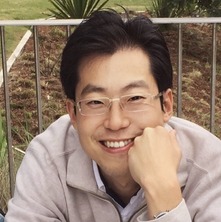
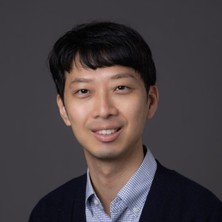
SangHyung Ahn is Lecturer in the School of Civil Engineering. SangHyung Ahn joined UQ in 2015 as postdoctoral research fellow and started working as Lecturer in 2017 after pursuing his PhD research in Civil Engineering (Construction Engineering and Management) at Purdue University in USA. Prior to joining Purdue, he worked as an assistant manager at Hyundai Engineering and Construction Co., Ltd. (ranked as world’s top 15 international contractor in Engineering News-Record 2015) from 2003 to 2007. He also holds his MBA (international business) from Hanyang University in South Korea and his B.Sc (Civil Engineering) from Korea University in South Korea.
Dr. Ahn’s research focus encompasses construction process modelling with virtual reality, decision support systems for construction, automation of data-driven simulation modelling, sensor-based operations analysis, and construction management systems with Building Information Modelling (BIM). He is currently coordinating and delivering undergraduate courses, Introduction to Project Management (CIVL3510) and Construction Engineering Management (CIVL4522) offered in the School of Civil Engineering at UQ.
Faculty of Engineering, Architecture and Information Technology
Affiliate of Centre for Marine Science
Centre for Marine Science
Faculty of Science
Availability:
Available for supervision
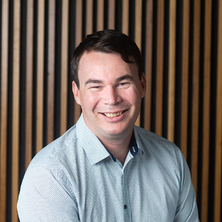
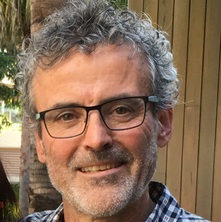
Dr. Simon Albert has a background in the fields of natural resource management, water quality, marine ecology and climate change. For the past 15 years he has worked at the intersection of these fields in both Australia and Melanesia providing a gradient of social-political-ecological factors. Through this foundation of land-sea connectivity Dr. Albert has developed integrated monitoring approaches that capture temporally and spatially relevant water quality trends. Dr. Albert has worked on a range of resource projects across Melanesia in both a research and consulting capacity. Over the past 10 years of working closely with communities, government and industry, Dr. Albert has established strong networks and is a highly skilled communicator of environmental monitoring and research.
Faculty of Engineering, Architecture and Information Technology
Head of School of Civil Engineering
School of Civil Engineering
Faculty of Engineering, Architecture and Information Technology
Availability:
Not available for supervision
Media expert
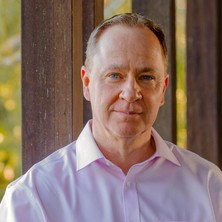
Professor Tom Baldock, B.Eng, Ph.D (Lond), DIC, MIEAust.
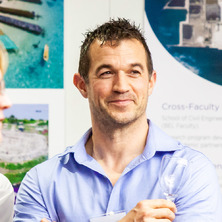
Professor Baldock’s research is primarily in the field of Coastal and Ocean Engineering, but also encompasses renewable energy and higher education. He has published over 120 journal papers and over 80 conference papers, notably in top-rated journals for his discipline (Journal of Fluid Mechanics, Proceedings and Transactions of the Royal Society), and has been one of the most published authors in the journal Coastal Engineering over the past decade. He has 22 PhD graduated as Principal Advisor since 2007. His Ph.D. students have published over 100 journal papers since 2004. They have worked on field and laboratory experiments in the UK, Europe, the USA, in association with international researchers and government agencies. Prof Baldock received a UQ Award for “Excellence in HDR Supervision” in 2017. He has recently worked on a major project within the National Reef Restoration and Adaption Program (https://gbrrestoration.org/) focused on the Great Barier Reef and is a Chief Investigator on the recently awarded ARC Centre of Excellence "Our Future Oceans" (https://www.unsw.edu.au/research/our-future-oceans).
He has strong national and international collaboration on research on topical issues in coastal engineering and close links with Government and National agencies, which includes consultancy and expert witness services in Marine Engineering. Previous, recent and current relevant research projects include a multi-partner CSIRO Cluster project under the Wealth from Oceans Flagship, investigating tsunami impact on ultra-long submarine pipelines running from the deep ocean up to continental slope and then onshore, ARC Discovery, ARC Linkage and ARC LIEF projects investigating storm surge and wave run-up along the East Australian coast, and four European Union HYDRALAB IV transnational access projects to study beach erosion and recovery processes in large wave flume facilities. He has worked with Geoscience Australia on the Bushfire and Natural Hazards projects, Resilience of Coasts to Clustered storm events and with the Global Change Institute (UQ) on the World Bank project "Capturing Coral Reef Ecosystems Services", as well as the National Reef Resilience and Restoration Project (RRAP).
He is a member of the Editorial Board for Coastal Engineering and a former member of the Engineers Australia National Committee on Coastal and Ocean Engineering.
He was Chair of the Organising Committee for Coasts and Ports 2017, held in Cairns, June 2017
His primary research interests are in : Swash zone hydrodynamics, Beach face sediment transport, Coral reef hydrodynamics and associated shoreline behaviour, Long wave generation and surf beat, Extreme non-linear waves (freak waves), Storm surge and tsunami hazards.
His current research projects are in the fields of:
Swash Zone hydrodynamics and Sediment Transport
Wave overtopping, including tsunami overtopping
Coral reef hydrodynamics
Impact of sea level rise on coastlines on open and reef-fronted coasts
Surf zone processes and beach erosion
Infrastructure for offshore aquaculture
Wave energy conversion
Google Scholar : https://scholar.google.com.au/citations?hl=en&user=QU14lwEAAAAJ
Top publications
Baldock, T.E., Swan, C. and Taylor, P.H., 1996. A laboratory study of non-linear surface waves on water. Philosophical Transactions of the Royal Society, London, Series A. 354, 1-28. [ERA – A]
Baldock, T. E and Huntley, D. A., 2002. Long wave forcing by the breaking of random gravity waves on a beach. Proceedings of the Royal Society, London, Series A. 458, 2177-2201. [ERA – A*]
Baldock, T.E., 2006. Long wave generation by the shoaling and breaking of transient wave groups on a beach, Proceedings of the Royal Society, London., Series A. 462, 1853–1876. [ERA – A*]
Baldock, T. E., O’ Hare, T. J., and Huntley, D. A.., 2004. Long wave forcing on a barred beach. J. Fluid Mechanics, 503, 321-341. [ERA – A*]
Pritchard, D., Guard, P.A. and Baldock, T.E., 2008. An analytical model for bore-driven run-up. Journal of Fluid Mechanics, 610: 183-193. [ERA – A*]
Baldock, T.E., Peiris, D. and Hogg, A.J., 2012. Overtopping of solitary waves and solitary bores on a plane beach. Proceedings of the Royal Society, London, Series A., doi: 10.1098/rspa.2011.0729. [ERA –A*]
Saunders, M.I. et al., 2014. Interdependency of tropical marine ecosystems in response to climate change. Nature Clim. Change, 4(8): 724-729. [ERA – A*]
Affiliate of Centre for Environmental Responsibility in Mining
Centre for Environmental Responsibility in Mining
Faculty of Engineering, Architecture and Information Technology
Senior Research Fellow
School of Civil Engineering
Faculty of Engineering, Architecture and Information Technology
Availability:
Available for supervision
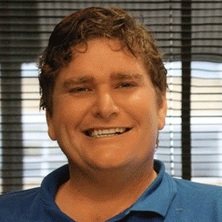
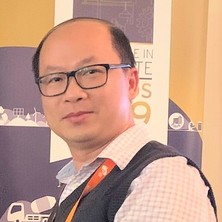
Dr Thierry Bore is a specialist of electromagnetic measurement methods for civil engineering purpose. He is currently working at the University of Queensland after having obtained a Ph.D. from the Conservatoire National des Arts et Metiers of Paris in France. His past work was mostly related to moisture measurement in porous media such as concrete and clayrock. He has a large and diverse experience in field instrumentation of civil engineering structures such as bridge or nuclear waste repository. He has particular interest in developing electromagnetic monitoring system in combination with dielectric spectroscopy.
Faculty of Engineering, Architecture and Information Technology
Availability:
Available for supervision
Media expert
Before joining the University of Queensland, Dave P. Callaghan held positions within industry including Parsons Brinckerhoff and Lawson and Treloar and research sector including Nederlands Instituut voor Ecologie and the University of Queensland. He is an observer of the Queensland Water Panel and active in the newly created Australian Hydraulic Modelling Association. He is the author of a book section and more than 50 other technical documents with applied and research applications. He is a consultant to private and government organisations. He has worked recently with private and government organisations to improve understanding of extreme coastal weather responses. He is recognised for leading edge research in coastal engineering including statistics of extremes, beach erosion from extreme events, physical and biological interactions of salt marshes and coral reefs, lagoon dynamics and wave propagation.
Faculty of Engineering, Architecture and Information Technology
Senior Lecturer
School of Civil Engineering
Faculty of Engineering, Architecture and Information Technology
Availability:
Available for supervision
Dr Jennifer Leigh Campbell is an environmental engineer, scientist, and researcher, deeply committed to enriching STEM education with Aboriginal and Torres Strait Islander perspectives and connecting people with Country through community-led or codesigned infrastructure, with a particular focus on Nature-Based Solutions (NbS), and blue-green infrastructure (BGI).
As the recipient of the 2022 Queensland Women in STEM Breaking Barriers Award and a 2023 Australian Award for University Teaching citation, Dr Jen's innovative approaches to learning and teaching aim to bring playful curiosity back into STEM fields but also promote inclusivity and diversity. She advocates for integrating project-based learning and undergraduate research into the curriculum to enhance student engagement and learning outcomes. In her previous position at Griffith University, she co-founded the Kungullanji Indigenous Research Program and continues to work with universities and organisations to expand undergraduate research opportunities for Aboriginal and Torres Strait Islander students.
Dr Jen's creativity extends beyond traditional research and teaching methods. As a trained LEGO® Serious Play® facilitator, she designs activities that are both meaningful and engaging, proving that learning can be fun and impactful. Driven by a desire to inspire students, empower researchers, and foster a more equitable and diverse STEM community, Jennifer's work transcends conventional approaches. Her commitment to excellence, innovation, and inclusivity makes her an energetic force in STEM education and environmental engineering research.
Faculty of Engineering, Architecture and Information Technology
Availability:
Available for supervision
Media expert
Hubert Chanson is Professor of Civil Engineering at the University of Queensland, where he has been since 1990, having previously enjoyed an industrial career for six years. His main field of expertise is environmental fluid mechanics and hydraulic engineering, both in terms of theoretical fundamentals, physical and numerical modelling. He leads a group of 5-10 researchers, largely targeting flows around hydraulic structures, two-phase (gas-liquid and solid-liquid) free-surface flows, turbulence in steady and unsteady open channel flows, using computation, lab-scale experiments, field work and analysis. He has published over 1,250 peer reviewed publications including two dozen of books. He serves on the editorial boards of International Journal of Multiphase Flow, Flow Measurement and Instrumentation, and Environmental Fluid Mechanics, the latter of which he is currently a senior Editor. He chaired the Organisation of the 34th IAHR World Congress in June 2011 and of the 22nd Australasian Fluid Mechanics Conference in December 2020, both held in Brisbane, Australia.
Faculty of Engineering, Architecture and Information Technology
Availability:
Available for supervision
Dr Shujian Chen started his research on nanomaterial modified cement and concrete in 2011. He is also dedicated to developing and adapting new nano/micro-scale characterisation and simulations techniques for developing new cement and concrete-based construction materials via emerging technologies. Since 2014, he extended his research to apply 3D printing technology in advanced manufacturing of multifunctional, high-performance cement-based materials.
Faculty of Engineering, Architecture and Information Technology
Availability:
Not available for supervision
She joined UQ in September 2015 as a Lecturer of Water Engineering. Her research focuses on hydrogeology topics applied to different sectors of Environmental Engineering, with her primary interest being the hydrogeological and geostatistical modelling of heterogeneous aquifers for the purpose of improved groundwater management. By means of the use of deterministic and stochastic methods, Cherubini is able to characterize the spatial distribution of coastal aquifer’s properties and to model environmental and anthropogenic variables by using advanced geo-statistical techniques. In this way, one can reproduce detailed geological reconstructions that support numerical models. Groundwater flow and transport modelling allow simulations suitable for groundwater management by master plans, remediation interventions at polluted sites and a correct exploitation of groundwater in coastal areas. The characterization and the description of phenomena that involve fractured aquifers, especially if considered in relationship with water resource exploitation, is an important issue because fractured aquifers serve as the primary source of drinking water for many areas of the world. Current developments of C. Cherubini researches are the study and characterization of physical processes governing infiltration in the fractured vadose zone and heat transport in fractured aquifers to understand and compare fluid movement and thermal behaviour in such media. The study is aimed at investigating the exploitation of low enthalpy geothermal energy that can be obtained with the aid of ground-source heat pump system from the soil, rock and groundwater. Prior to joining the University of Queensland, she was associate professor in hydrogeology at Institute Polytechnique LaSalle Beauvais (France) (2012-2015), held postdoctoral research positions at CNR and at the Polytechnic University of Bari, and was visiting researcher at Lawrence Berkeley National Laboratory (USA) and United States Geological Survey Menlo Park (USA). In 2011 she was invited Lecturer in MSc Module “Mineral Resource Assessment” at University of Exeter- Camborne School of Mines (UK).
Faculty of Engineering, Architecture and Information Technology
Availability:
Available for supervision
Dr Yunil Chu is a highly experienced offshore engineer and researcher with extensive expertise across both industry and academia. Before transitioning into academia, he spent a decade in ship and offshore newbuilding, successfully delivering more than 20 projects and gaining deep insight into industry requirements, challenges, and expectations. Since earning his PhD from the University of Queensland in 2021, Dr Chu has focused his research on advancing offshore farming systems for renewable energy and aquaculture, validating concepts through cutting-edge numerical modelling and experimental testing in collaboration with industry leaders and the Blue Economy Cooperative Research Centre. He also holds a key leadership role as the primary organiser and session chair of the Blue Economy Symposium at the International Conference on Ocean, Offshore & Arctic Engineering (OMAE), where he has overseen more than 50 paper submissions and engaged with over 1,000 participants annually.
Affiliate of ARC Training Centre for Bioplastics and Biocomposites
ARC Training Centre for Bioplastics and Biocomposites
Faculty of Engineering, Architecture and Information Technology
Professor
School of Civil Engineering
Faculty of Engineering, Architecture and Information Technology
Availability:
Available for supervision
Media expert
Prof Bill Clarke (Schools of Civil and Chemical Engineering) has an extensive publication record in methods for accelerating the solubilisation and digestion of solid organic waste, measuring landfill emissions and the ingress of O2 and subsequent composting of waste in landfills, the utilisation of waste as a carbon source for H2S production in the mineral processing industry, on-site digestion of combined wastewater and solid organic waste and the fate of pathogens, heavy metals and POPs in organic treatment processes. He was an Associate Editor of Waste Management (2008-13) and is on the Managing Board of the International Waste Working Group.
Faculty of Engineering, Architecture and Information Technology
Availability:
Available for supervision
Media expert
Remo has over 15 years of research experience in water engineering and joined the School of Civil Engineering in February 2016. Remo’s research projects span over a range of topics such as marine renewable energy, hydrodynamics in coastal areas, sediment transport processes, seafloor mapping and environmental engineering.
Remo started his professional career as a Research Associate at the Franzius-Institute for Hydraulic, Waterways and Coastal Engineering at Hannover University, Germany. Remo did his PhD on the hydrodynamics of oceanic gravity and turbidity currents under the influence of Coriolis forces in the Earth Sciences Department, University of Toronto, Canada. He continued his work in Canada as a Postdoctoral Fellow in the Department of Physical and Environmental Sciences at the University of Toronto where he focused on turbulence in coastal boundary layers and sediment transport processes in density currents. Before joining UQ, Remo was working as a Lecturer and Postdoctoral Fellow at the Australian Maritime College (AMC) at the University of Tasmania where he worked on projects in Tasmanian coastal waters (renewable energy, analysis of tidal currents, pipeline surveys) and limnological processes (Lake Ohau, New Zealand). A career highlight was a research trip with a team of sea-ice experts funded by NZARI to Antarctica (Cape Evans, McMurdo Sound) to analyze characteristics of the sea-ice ocean boundary layer using an autonomous underwater vehicle (UBC Gavia AUV).
Remo’s research over the last years has created advances in renewable energy site exploration methods that aims to fill a critical knowledge gap in understanding the suitability of candidate sites and linking local conditions (hydrodynamics, geotechnical aspects) with device design. Remo is involved as a lead researcher on several projects, for instance, the AUSTEn project for tidal energy exploration in Australian coastal waters (http://austen.org.au/) and the recently funded Blue Economy CRC (https://blueeconomycrc.com.au/).
Faculty of Engineering, Architecture and Information Technology
Affiliate of Centre for Social Responsibility in Mining
Centre for Social Responsibility in Mining
Faculty of Engineering, Architecture and Information Technology
Associate Professor
School of Civil Engineering
Faculty of Engineering, Architecture and Information Technology
Availability:
Available for supervision
Media expert
Qualifications:
PhD (Civil Engineering), The University of Queensland, Australia.
M.Eng (Civil Engineering), The University of Queensland, Australia.
Graduate Certificate in Higher Education, The University of Queensland, Australia.
B.Eng (Civil Engineering), The University of Danang, Vietnam.
Vinh Dao is an Associate Professor in the School of Civil Engineering at The University of Queensland, where he has been since 2009. He is currently the UQ-IITD Research Academy Theme Lead for Advanced materials and manufacturing. He was the School Director of Teaching and Learning (2020-2021), School Deputy Director of Research (2019) and Structures Discipline Lead (2022-2026).
He has been an elected National Councillor of the Concrete Institute of Australia (2013-2023, 2025-ongoing), responsible for "Concrete In Australia" Magazine (2013-2019) and "Technical & Publications" portfolio (2019-2023). He is currently also (i) Chair of the Organising Committee for Concrete2027 - the Concrete Institute of Australia’s 33rd Biennial National Conference, (ii) co-Vice-Chair of the 2nd International Conference on Engineering Structures (ICES2026), (iii) an Associate Editor of Australian Journal of Structural Engineering and (iv) the General Secretary of EASEC International Steering Committee. He was (i) the Vice-Chair of the 16th East Asia-Pacific Conference on Structural Engineering & Construction and (ii) an invited presenter of the National Seminar Series on “Early-age cracking in concrete structures” in capital cities around Australia, besides many state/industry seminars.
Vinh's research interests are in the broad areas of structural engineering and fundamental behaviour of concrete/structures. The focus of his research has been on connecting materials behaviour to structural response of concrete in order to address major issues facing construction industry; with current emphasis on (i) performance of concrete structures at early ages and at elevated temperatures and (ii) low carbon concretes.
In teaching, he has been lecturing in the areas of structural mechanics, reinforced and prestressed concrete design, concrete technology, and advanced structural engineering. He has received a few nominations for the most effective lecturer from UQ-EAIT Dean’s commendation students and was profiled in Learning@UQ for having contributed to high quality of the student experience at UQ.
Faculty of Engineering, Architecture and Information Technology
Availability:
Available for supervision
Dr Nathaniel Deering is a Research Fellow in the School of Civil Engineering at The University of Queensland. His research examines hydrology, sediment transport and water quality processes in rivers, reservoirs, estuaries and coastal systems.
Nathaniel’s work focuses on how extreme and episodic events, such as floods, catchment disturbance and water-level fluctuations, drive sediment, nutrient and greenhouse gas fluxes. He uses field monitoring, process-based modelling and applied data analysis to understand hydrological and biogeochemical processes that are often missed by conventional monitoring approaches.
A central theme of his research is the role of short-duration, high-magnitude events and spatial hotspots in controlling sediment transport. This work has practical applications for drinking water management, reservoir sedimentation, source water protection and coastal water quality.
Nathaniel has expertise in event-driven sediment and nutrient transport, reservoir drawdown dynamics, greenhouse gas emissions from aquatic systems, adaptive monitoring and hydrological modelling. His research supports water utilities, regulators and environmental managers in developing more resilient and evidence-based approaches to water resource management in Australia and internationally.
Faculty of Engineering, Architecture and Information Technology
Availability:
Available for supervision
Jessica Eisma is an expert in community-engaged research in the context of sustainable urban water management. Her vision is to spark a shift toward hydrology-informed urban design spanning the lot to city scale through grounded, yet innovative research on nature-based solutions for managing urban flooding and on urban modification of rainfall. She seeks to uncover how urban development policy and practice contribute to the occurrence of flooding and to stimulate international dialogue on effective urban water management with nature-based solutions. She is committed to developing the information and resources necessary for urban planners and engineers to pursue practice and policy changes that will address significant infrastructural planning and design gaps related to infrastructure for urban water management. Her work will advance scientific evidence for the feedback between urban areas, the hydrosphere, and society and transform the way we approach urban development. In the face of climate change and burgeoning urban populations, such understanding is increasingly critical for managing the human and property costs associated with urban flooding.