Faculty of Engineering, Architecture and Information Technology
Availability:
Not available for supervision
Media expert
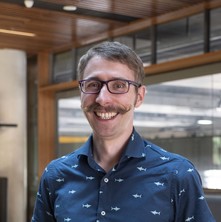
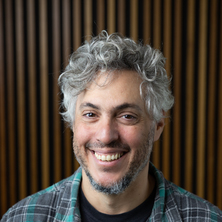
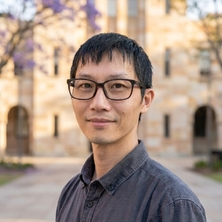
Dr Felix Wiesner is an Assistant Professor at the University of British Columbia and an Honorary Fellow in the School of Civil Engineering at The University of Queensland and works as part of the National Centre for Timber Durability and Design Life. He was appointed at UQ as a Lecturer in Timber Engineering in 2019 to lead research projects focused on enhancing the fire performance of timber using treatments and modification techniques. His background is in structural fire engineering and the fire safety of timber structures, specifically engineered timber structures. His field of expertise are the critical evaluation of load bearing capacity of building elements in fire and the assessment of safety implications arising from the use of engineered timber as structural members in tall buildings or structures with extraordinary architectural features.
Dr Wiesner completed his Master of Engineering in Structural and Fire Safety Engineering at The University of Edinburgh from 2010 to 2015 before he completed his doctoral studies on the structural behaviour of cross-laminated timber in fire between 2015 and 2020. During his undergraduate and postgraduate work, he closely worked with Arup on multiple projects regarding the fire safety of timber buildings and the effect of localised fires in large open spaces. He actively participated in the European COST Action FP 1404 for the Fire Safe Use of Bio-Based Building Products between 2016 and 2019, representing the UK as a Management Committee member. He significantly contributed to the success of the Fires in Tall Timber Structures: Large-scale Tests in Support of Tall Timber Construction project at the BRE in the UK and also worked as a member of the global Fire Safe Use of Wood research collaboration.
Faculty of Engineering, Architecture and Information Technology
Availability:
Available for supervision
Media expert
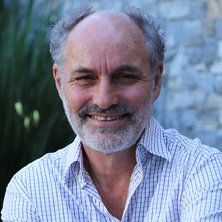
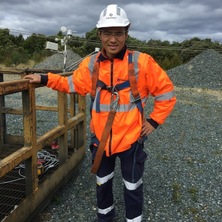
Emeritus Professor David John Williams was the Initiator and Director of the Geotechnical Engineering Centre within the School of Civil Engineering at The University of Queensland, an industry-funded centre that has attracted AUD10 million in funding over the period from 2007 to 2022. He also manages the industry-sponsored Large Open Pit Project, involving 10 global mining company sponsors, with current funding of USD1 million per year. He has over 50 years of teaching, research and consulting experience, and is internationally recognised for his expertise and experience in mine waste management and mine closure, pertaining to tailings dams in particular. He was a member of the Expert Panel investigating technical causes of Brumadinho tailings dam failure and is on numerous Tailings Independent Technical Review Boards globally, including for Escondida Copper Mine in Chile. He authored the 2009 and 2016 Tailings Management Handbook, as part of the Commonwealth Leading Practice Sustainable Development Program for the Mining Industry. He is on the Working Party for the Australian National Committee for Large Dams Guidelines on Tailings Dams – Planning, Design, Construction, Operation and Closure, published in 2012, with an Addendum in 2019 and currently being updated. He initiated in 2020 and largely delivers the AusIMM Tailings Management Professional Certificate Course that has been taken by almost 1,500 Tailings Practitioners worldwide.
David received his BE (Hons I) in Civil Engineering from Monash University in 1975 and his PhD in Soil Mechanics from the University of Cambridge in 1979. His research and consulting interests include:
Physical characterisation of mine tailings deposition, including beaching, hydraulic sorting, sedimentation, consolidation, desiccation and loading
Store and release cover systems for potentially acid forming mine wastes
Co-disposal of mine tailings and coarse-grained mine wastes
Dewatering and densification of mine tailings
Dewatering of mineral products
Moisture movement within mine wastes
Settlement of coarse-grained mine wastes
Strength of coarse-grained mine wastes
Engineered rehabilitation of mine sites
Risk assessment and cost-effectiveness analysis of mine site rehabilitation and closure
Long-term seepage and runoff from mine tailings storages
Characterisation of potentially acid forming waste rock dumps
Application of high-resolution digital stereo-photography to monitoring erosion from mine waste slopes
Faculty of Engineering, Architecture and Information Technology
Availability:
Available for supervision
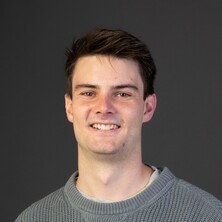
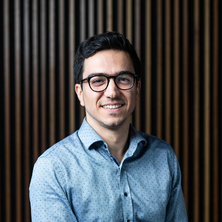
Dr Wenxuan Wu is a Postdoctoral Research Fellow in the UQ Fire group at The University of Queensland. His current research focuses on cladding and façade fire safety, flame spread, material fire behaviour, and experimental methods for assessing fire hazards in the built environment, including battery fire safety.
Wenxuan has a strong background in timber fire safety, smouldering combustion, fire dynamics, and materials characterisation. His PhD investigated the self-sustained smouldering behaviour of preservative-treated timber, with a focus on how thermal conditions and material properties influence fire persistence and severity.
His research combines experimental fire testing, thermal analysis, gas measurement, and data analysis to better understand how construction materials ignite, burn, spread flame, and contribute to fire risk. He has experience with a wide range of fire and material testing methods, including cone calorimetry, fire propagation apparatus, thermogravimetric analysis, bomb calorimetry, FTIR, LIFT, H-TRIS, SEM-EDS, and other interdisciplinary laboratory and analytical techniques.
Faculty of Engineering, Architecture and Information Technology
Availability:
Not available for supervision
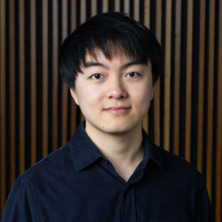
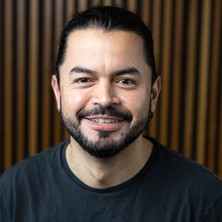
Hons K. Wyn joined the School of Civil Engineering at the University of Queensland in mid-2016 as an Occupational Trainee in the Fire Safety Research Group. He commenced his PhD mid-2017 on smouldering combustion and its potential as a renewable energy production process by generating value-added productions alongside the treatment of organic wastes. Upon the completion of the PhD, Hons continued as a Postdoctoral Research Fellow in the Fire Safety Research Group in mid-2023. Hons currently supports consultancy projects, lab-related activities, teaching, and supervision.
Faculty of Engineering, Architecture and Information Technology
Affiliate of ARC Research Hub to Advance Timber for Australia's Future Built Environment (ARC Advanc
ARC Research Hub to Advance Timber for Australia's Future Built Environment
Faculty of Engineering, Architecture and Information Technology
Availability:
Available for supervision
Media expert
I have a multidisciplinary background in chemical and civil engineering, chemistry and materials science. Currently, I am the UQ leader of the National Centre for Timber Durability and Design Life, based at USC. I apply my expertise to understand the effects of fungal decay and moisture intrusion in timber connections, as well as the improvement of the fire performance of timber. I supervise 6 PhD students.
Faculty of Engineering, Architecture and Information Technology
Availability:
Available for supervision
Mehmet Yildirimoglu is a Senior Lecturer of Transport Engineering at the School of Civil Engineering. Mehmet received his B.Sc. degree in civil engineering from the Middle East Technical University (METU) in 2009, M.Sc. degree in civil engineering from the Rutgers University in 2011 and Ph.D. degree in civil engineering from École Polytechnique Fédérale de Lausanne (EPFL) in 2015. Prior to joining the School of Civil Engineering at the University of Queensland in 2016, he was a Postdoctoral researcher at EPFL, Switzerland. His research revolves around large-scale traffic modeling, dynamic traffic assignment, data mining techniques and real-time traffic management.
Fire Laboratory Manager and Senior Research Technologist
School of Civil Engineering
Faculty of Engineering, Architecture and Information Technology
Availability:
Available for supervision
Sergio Zarate joined the School of Civil Engineering at the University of Queensland in 2016 and currently serves as the Fire Laboratory Manager. He holds a bachelor’s degree in Mechanical Engineering and a Ph.D. in Civil Engineering with a specialization in fire dynamics. Sergio has extensive experience in projects involving fluid mechanics, combustion, and fire dynamics.
He possesses comprehensive expertise in fire science, including heat-transfer analytical methods, experimental techniques, and the design and operation of apparatus to evaluate the burning behavior of various materials. His research interests include:
Fire safety engineering
Development of innovative combustion-based technologies
Faculty of Engineering, Architecture and Information Technology
Availability:
Available for supervision
Dr Chenming Zhang is a specialist in monitoring and modelling hydrological processes in coastal/terrestrial groundwater systems and tailings storage facilities, in particular the evaporation induced mass and heat transport in soil/tailings, hydrogeochemical dynamics in aquifer systems and wast rock dumps. He has been developing IoT-based geotechnical and environmental instruments to monitor continuously and in real-time the weather, soil and water conditions.
Faculty of Engineering, Architecture and Information Technology
Availability:
Available for supervision
Media expert
Dr Weiming Zhao is an ARC DECRA Fellow (2026 - 2029) in the School of Civil Engineering at the University of Queensland.
A domestic (Australian citizens or permanent residents) PhD position is availble: "Learning-based control strategies for personalised and socially aware automated vehicles".
His research sits at the intersection of robotics, human behaviour, and infrastructure, focusing on Intelligent Transportation Systems (ITS) and the interactions between Connected and Automated Vehicles (CAVs) and human drivers in mixed traffic. Using control theory and machine learning, including Model Predictive Control and Mathematica-based modelling, he develops trajectory planning solutions for CAVs at intersections and highway merging areas, aiming to improve safety, efficiency, and energy use in both urban and highway settings.
Dr Zhao completed his PhD at the University of Leeds, followed by a postdoctoral position at Aalto University. He joined UQ as a postdoc in 2022, before commencing his DECRA fellowship in 2026. His current DECRA project, Make Automated Vehicles Personalised and Socialised, investigates how control methods for automated vehicles can align with human driver behaviour to build trust.
Faculty of Engineering, Architecture and Information Technology
Availability:
Available for supervision
Wenhua Zhao is an Associate Professor at The University of Queensland and a globally recognized expert in offshore hydrodynamics and renewable energy technologies.
He is the recipient of the prestigious ARC Future Fellowship (2024-2028) and DECRAFellowship (2019-2022), with over 110 publications and six awards influencing both industry and academia. He has helped secure over AUD30 million research funding from both Australian Research Council and industry, contributing to transformative engineering practices in renewable energy sectors and oil & gas industry.
His research focuses on Clean Energy, AI, and Climate Change, with groundbreaking studies on wave-structure interactions -- showcased by his multiple publications in Journal of Fluid Mechanics and industry-focused applications, a rare integration of theoretical research with practical implementation. He pioneers innovations in floating wind energy, floating solar, offshore aquaculture, and green hydrogen, leveraging artificial intelligence to transform offshore renewable energies.
Wenhua has been a Deputy Editor for Ocean Engineering (No. 1 in marine engineering, ISI web), Associate Editor for the renowned ASME's Journal of OMAE, and editorial board member for the Q1 journal Applied Ocean Research. His teaching, particularly the "Design of Offshore Energy Systems" course, has prepared hundreds of students for impactful careers in coastal and ocean engineering.
Faculty of Engineering, Architecture and Information Technology
Availability:
Available for supervision
Media expert
Professor Zuduo Zheng is TAP Chair (Deputy) sponsored by Queensland Department of Transport and Main Roads, and Professor in the School of Civil Engineering, a current ARC Future Fellow, and a former ARC DECRA Research Fellow. He is currently a member of the College of Experts, the Australian Research Council.
His research primarily focuses on:
traffic flow theory, modelling, simulation and optimisation;
understanding emerging, disruptive, and intelligent mobility technologies’ impact on traffic efficiency, traffic safety, energy consumption, vehicle emissions, etc.;
developing essential theories, the foundational algorithms and analytics that can seamlessly integrate future mobilities into the existing transportation systems;
establishing a new breed of control strategies tailored to maximise the power of the connected environment and vehicle automation; and
complex systems modeling and the design of adaptable, controllable, resilient, and sustainable infrastructure systems (intelligent transportation systems and smart city particularly in the context of the 2032 Olympic and Paralympic Games).
He has been listed as the Top 2% of Scientists in Logistics and Transportation by Scopus & Stanford University since 2020. He has won many prestigious awards, and serves/served as editor, guest editor or editorial board member of several prestigious journals, including Transportation Research Part B, Transportation Research Part C, Analytic Methods in Accident Research , IEEE Transactions on Intelligent Transportation Systems, etc.
More information about Professor Zheng's research activities and engagements can be found here.