Faculty of Health, Medicine and Behavioural Sciences
Availability:
Available for supervision
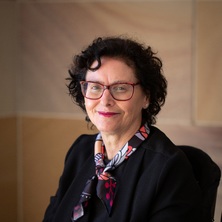
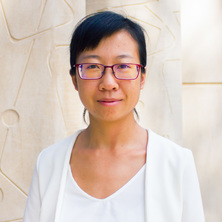
Dr Turpin’s research centres on the clinical/professional reasoning of occupational therapists across the spectrum of experience from new graduates to experts, as well as the subjective experiences of people with disabilities. She specialises in the use of qualitative research methods and uses a variety of qualitative research methods in her own research, as well advising others on these research methods. Dr Turpin has written books and book chapters on occupational therapy models of practice, evidence-based practice, and clinical reasoning, as well as publications on various aspects of people's experience. Dr Turpin has been a teaching and research academic at The University of Queensland for more than 30 years. The connection between theory and practice is central to her research and teaching. As occupational therapists attend to both thinking and experience, they need to use rigorous thinking and a deep understanding of human experience in their practice.
Affiliate of Centre for Living Experience Research
Centre for Living Experience Research
Faculty of Health, Medicine and Behavioural Sciences
Affiliate of Centre for Motor Neuron Disease Research
Centre for Motor Neuron Disease Research
Faculty of Health, Medicine and Behavioural Sciences
Senior Lecturer
School of Health and Rehabilitation Sciences
Faculty of Health, Medicine and Behavioural Sciences
Availability:
Available for supervision
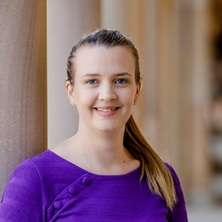
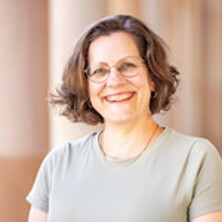
Dr Rebecca Packer is a Certified Practising Speech Pathologist, Senior Lecturer and Undergraduate Program Convenor for Speech Pathology at The University of Queensland. Her work spans research, education and academic leadership, with a commitment to improving healthcare and developing future leaders in the speech pathology profession.
Her research focuses on improving the healthcare experiences and quality of life of people living with complex health conditions, particularly head and neck cancer and motor neurone disease (MND). She has particular expertise in dysphagia (swallowing disorders), the impact of health conditions on families and carers, and the development of person-centred models of care. Her research brings together the perspectives of people with lived experience, families, carers and clinicians, using qualitative and mixed-methods approaches to inform meaningful improvements in healthcare.
As an academic leader, Rebecca is passionate about preparing graduates who are not only excellent clinicians but future leaders who will challenge the status quo and drive improvements in the profession. Her educational leadership focuses on curriculum development, program quality and preparing students with the knowledge and practical skills to contribute to evidence-informed healthcare.
She also contributes to research development, professional engagement and multidisciplinary collaboration across the university and broader health sector.
Deputy Director (Training) of Institute for Social Science Research
Institute for Social Science Research
Faculty of Humanities, Arts and Social Sciences
Principal Research Fellow
Institute for Social Science Research
Faculty of Humanities, Arts and Social Sciences
Availability:
Available for supervision
Media expert
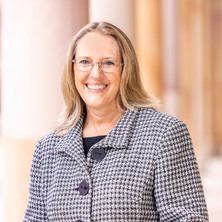
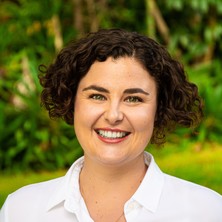
Jenny leads the Wellbeing, Equity, and Inclusion Research Group: Transforming education, employment and human service systems through evidence, innovation and partnership at the Institute for Social Science Research at the University of Queensland. She is a Psychologist and obtained her BA Honors, MA and PhD from the Nelson Mandela Metropolitan University in South Africa. Before coming to ISSR, Jenny worked as a Chief Researcher at the Human Sciences Research Council in South Africa in the area of education effectiveness.
Jenny’s research focuses on advancing wellbeing, equity and inclusion across education, employment, and human service systems. She evaluates programs and policies that support marginalised populations navigating complex service systems. Jenny’s work integrates lived experience with rigorous analysis of the services, institutions, and policy environments that shape life trajectories, identifying evidence-based levers for change within families, organisations, and government systems. She is a mixed-methods researcher with expertise in integrating large-scale population and administrative data with survey and in-depth qualitative data to generate nuanced, practice-relevant insights. Through large-scale evaluations and long-term research partnerships with government and community organisations, Jenny produces generalisable knowledge with demonstrable real-world impact, while strengthening research and evaluation capability within the human services sector. Her research is grounded in participatory and co-production approaches, ensuring that people with living or lived experience are meaningfully involved in shaping research design, interpretation, and impact.
Jenny has worked closely with Government Departments and Ministries both in Australia (e.g., Tasmania DHHS; Australian DoE; Qld DoE; CESE NSW; Australian DSS; Qld DCSSD; Department of Home Affairs) and internationally (e.g., South Africa, Eritrea, Cambodia and the Solomon Islands) to gather research evidence from a wide range of disadvantaged communities to inform policy. Jenny is a Chief Investigator on an ARC Linkage project which investigates how Aboriginal and Torres Strait Islander and non-Indigenous children experience Out-of-Home Care (OOHC) using elicitation methods and a longitudinal qualitative research design to provide evidence to improve service agencies’ understanding of children’s experiences in OOHC and how agencies can best support families, carers and communities to promote the social, emotional, and cultural well-being of Aboriginal and Torres Strait Islander and non-Indigenous children in OOHC. This research will improve service provider capability and test Government reform interventions. Jenny leads large-scale complex commissioned evaluations and is currently leading the following evaluations: FamilyLinQ Evaluation and the Journi Online Road Safety Education Program Evaluation.
In addition to leading a research group and complex evaluation, Jenny delivers hands-on professional training and capability-building in evaluation, statistical, and social research methods for policymakers, practitioners, and service leaders, contributes as an Associate Investigator to research for the ARC Centre of Excellence on Families and Children over the Life Course (the Life Course Centre), and supervises HDR and placement students.
Faculty of Health, Medicine and Behavioural Sciences
Availability:
Available for supervision
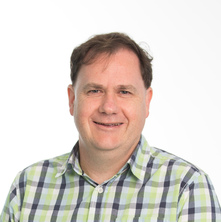
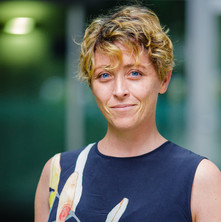
Associate Professor Matthew McGrail is the Head of Regional Training Hubs research at UQ’s Rural Clinical School. Joining UQ in Nov 2017, he is based at the Rockhampton Clinical Unit, and he is chair of the research and evaluation working group of UQ’s Regional Medical Pathway as well as chair of UQ RCS’s medical graduate cohort longitudinal tracking study (UQ MediCoS). He is widely known for co-developing Australia's Modified Monash Model rurality classification, applied to most health research and policies.
Matthew has a particular interest in the ongoing concerns with medical workforce distribution, connecting that through his research and evaluation to health policies, training pathways and healthcare systems. To date he has been a chief investigator on two separate Centres of Research Excellence, one on medical workforce dynamics and the other on rural and remote primary health care access. He has also co-researched with various GP training organisations, specialty colleges, rural workforce agencies, as well as state and commonwealth health departments
Matthew has worked in the university sector for over 25 years, working mostly as a researcher in rural health. He was originally trained as a statistician, expanding his skills across GIS and software development, completing his PhD in 2008. He has been lead biostatistician on 3 large NHMRC-funded RCTs that are published in the world-leading general medical journal, the Lancet. Matthew’s research is mostly centred on improved access to health care for rural populations, mainly focused in the medical sector. He has a unique blend of ‘generalist’ research skills and experience across the disciplines of statistics, geography, rural health, econometrics, public health and clinical research.
Faculty of Engineering, Architecture and Information Technology
Affiliate of School of Chemical Engineering
School of Chemical Engineering
Faculty of Engineering, Architecture and Information Technology
Affiliate of Australian Centre for Water and Environmental Biotechnology (formerly AWMC)
Australian Centre for Water and Environmental Biotechnology
Faculty of Engineering, Architecture and Information Technology
Affiliate of ARC Training Centre for Bioplastics and Biocomposites
ARC Training Centre for Bioplastics and Biocomposites
Faculty of Engineering, Architecture and Information Technology
Availability:
Available for supervision
Dr Lisa Bai is a Research Fellow in the School of Chemical Engineering and the Australian Centre for Water and Environmental Biotechnology (ACWEB) at the University of Queensland. She is chief investigator for multiple projects advancing sustainable waste and wastewater management, with a focus on resource recovery to produce bioenergy and value-added bioproducts such as biodegradable plastics (PHA).
Dr Bai holds a background in bioengineering and environmental engineering. Prior to joining UQ, she worked for four years in environmental consultancy in North Queensland, developing macroalgae-based bioremediation systems and valorising waste streams into biomass for aquaculture feed, fertilisers, and bioactive products.
Faculty of Health, Medicine and Behavioural Sciences
Availability:
Available for supervision
Dr Dorothee Hölscher is a Lecturer in Social Work in the School of Nursing, Midwifery and Social Work at The University of Queensland. She is a qualitative researcher whose work focuses on social justice, social inclusion, and participatory approaches with young people and communities in contexts of (forced) migration and cultural diversity. Her research examines how structural inequalities, xenophobia, and race-based discrimination shape everyday experiences, and explores practical, sustainable, and structural responses that support inclusion and well-being at community, institutional, and policy levels. Her methodological expertise lies in community- and art-based participatory research, informed by grounded theory and critical discourse analysis.
Dorothee completed her social work training in Germany and South Africa, including a Master of Social Science (cum laude) and a PhD (by publication). Prior to entering academia, she worked in refugee and migrant support, community development, and child protection, experiences that continue to inform her research and educational practice. Currently, Dorothee teaches across the Bachelor of Social Work and Master of Social Work (Qualifying) programmes, coordinating theory-focused courses on power, structure, and agency (SWSP1012) and lifespan development, culture, and disability (SWSP7044). Her teaching places a strong emphasis on participatory and critical pedagogies that prepare students for ethical and socially just practice.
Dorothee is the Deputy Chair of a UQ Human Research Ethics Committee and Co-Editor of Ethics & Social Welfare. Having held previous academic appointments in South Africa, Dorothee maintains these important international links through her role as a Research Associate with the Department of Social Work and Criminology at the University of Pretoria.
Dr Giselle Newton (she/her) is a digital health sociologist at the Centre for Digital Cultures and Societies and a Research Fellow on the Australian Ad Observatory in the Centre of Excellence for Automated Decision-Making and Society. Giselle's research focuses on how commercial digital platforms shape individuals' experiences of family and intimate life. Giselle has led projects considering how reproductive and genetic technologies shape personal life and family relationships, for example on donor-conceived people's use of digital technologies, direct-to-consumer DNA testing and digital advertising of fertility treatments and services. Giselle has developed and applied ethical participatory, creative and digital methods in social research. She is experienced working in interdisciplinary teams developing and employing digital tools and observatories to better understand individuals' (often unobservable and ephemeral) digital social worlds. Giselle has published in Sociology, Human Reproduction, New Media & Society, Social Media + Society, Sociology of Health & Illness. Giselle was awarded the Early Career International Visiting Fellowship, University of Sheffield for 2024-25. In 2025, she was a keynote speaker at the Fertility Society of Australia and New Zealand Annual Conference in Adelaide. Giselle has been an invited speaker in Japan (Donor Link Japan) and Denmark (LGBT+ Danmark).
Current projects:
-Ethical, social and regulatory implications of informal sperm donation, ARC Discovery Project
-Targeted digital advertising in fertility, reproduction and parenting, the Australian Ad Observatory
-Technologies of the Body: Women, Visibility and Museum Collections
Past projects:
-Engaging consumers to work towards social license for implementation of AI in healthcare
-Understanding stakeholders’ perspectives on public inquiries in sexual and reproductive health
-DNA datascapes: how individuals seek information about family via direct-to-consumer DNA testing
-How alcohol and gambling companies target people most at risk with marketing for addictive products on social media, using the Australian Mobile Ad Toolkit (contract research project commissioned by the Foundation for Alcohol Research and Education Limited, with Prof Nic Carah and Lauren Hayden)
-On target: Understanding advertising in the fertility sector with data from the Australian Ad Observatory 1.0, a winter research collaboration (with Romy Wilson Gray and Maria Proctor).
-Everyday belongings: how Australian donor-conceived adults’ use digital technologies to bond, sleuth, educate and strategise. Giselle's PhD study won Dean’s Award for Outstanding PhD Theses in 2022.
-Understanding care endings: Sociological and educational approaches to support pathways out of caring Research supervision and development
Current students:
-Lauren Hayden(PhD candidate, Communications and Arts, UQ) - Digital advertising and cultures of alcohol consumption on social media platforms (with Prof Nicholas Carah, Prof Dan Angus) (2022-2026)
-Quita Olsen (PhD candidate, Queensland Digital Health Centre, UQ) - Developing an Inclusive Framework and Communication Strategy towards the Public’s Willingness to Share Health Data for Secondary Purposes (with Prof Jason Pole, Dr Leanna Woods, Dr Amalie Dyda) (2025-2028)
-Juan Ospina Deaza (PhD candidate, Communications and Arts, UQ) How digital platforms shape experiences of male (in)fertility/parenthood (with Dr Giang Nyugen-Thu) (2026-2029)
-Sai Tang (PhD candidate, Communications and Arts, UQ) How digital technologies shape intergenerational care: An investigation of the Chinese “Lao Er Dai” and Chinese families (with Dr Giang Nyugen-Thu) (2026-2029)
-Gabrielle Cournoyer (Master of Genetic Counselling, UTS) Understanding patients’ perspectives of reproductive genetic carrier screening (RGCS) in donor conception in Australia (2026-2027)
-Rishika Chattopadhyay (Master of Genomic and Health, The University of Melbourne) How Australian IVF clinics promote genetic testing services (2026-2027)
Past students:
-Adriana Saab (Master of Genetic Counselling, UTS) - Understanding targeted advertising of reproductive genetic technologies (with Julia Mansour and Dr Lisa Dive)
-Phoebe Price-Barker (Honours, Criminology, UQ) - Assessing cyber vulnerabilities in direct-to-consumer genetic testing platforms (with Dr Caitlin Curtis) (2025)
-Simone Sanders (Master of Genetic Counselling student, UTS) - Representations of breast cancer predisposition testing on TikTok: a qualitative analysis (with Julia Mansour and Dr Lisa Dive)
-Lina Choi (Master of Genetic Counselling student, UTS) - Unpacking Narratives about Direct-to-Consumer Genetic Testing in TikTok Videos: A Thematic Analysis (with Julia Mansour and Dr Lisa Dive)
-Cushla McKinney (Master of Genetic Counselling student, UTS) - The impact of direct-to-consumer DNA testing on genetic counselling practice (with Dr Lisa Dive, A/Prof Aideen McInerny-Leo, Dr Vaishnavi Nathan).
-Diya Dilip Porwal (Master of Genetic Counselling student, UTS) - Experiences of carrier screening and genetic testing in gamete donors (with Julia Mansour and Dr Lisa Dive).
Areas of supervision:
Giselle welcomes research proposals focused on social research in digital identities and cultures; family relationships and practices; DNA and genetic testing/screening; reproductive health issues including endometriosis and menopause; assisted reproduction. Giselle is a member of the School of Communication and Arts HDR Committee. Teaching Giselle has coordinated and lectured across undergraduate and postgraduate programs in courses in humanities, social sciences and health. She has delivered guest lectures to students of Masters of Public Health on 'Digital Methods' and to Master of Diagnostic Genomics on 'Direct-to-consumer genetic testing’. She was course coordinator for COMU2030 Communication Research Methods in 2023, lecturer in HHSS6000 HASS Honours Research Design in 2024 and HHSS6040 Honours Research Design in Arts and Culture in 2025 and will continue in 2026.
Faculty of Health, Medicine and Behavioural Sciences
Availability:
Available for supervision
Media expert
Rebecca Olive joined the School of Human Movement and Nutrition Sciences in 2017. Her work about lifestyle and nature sports contributes to critical cultural, social and historical teaching and research relating to sport, physical cultures, bodies, and health. Rebecca publishes in journals and books across Cultural Studies, Gender Studies, Sport Sociology, and Sport History, and has co-edited a book with Holly Thorpe, Women in Action Sport Cultures: Identity, Politics and Experience (2016).
In 2019, she was awarded a DECRA for her project baout human-ocean health, 'Understanding ecological sensibilities in recreational lifestyle sports'. This project explores practices and cultures of ocean swimming and surfing to understand intersections human and environmental health. The project uses ethnographic methods (fieldwork and interviews) to make sense of ocean-swimmers’ and surfers' relationships to sharks, plastics, and localism at a range of urban and regional beaches. You can read more about this work on her Moving Oceans website.
Rebecca also continues focus on issues of equity and diversity and action/lifestyle sports and cultures, in particular women's experiences. Taking a feminist cultural studies approach to theories of power, ethics and pedagogy, she is interested in how we influence cultural change in everyday lived physical cultures towards more inclusive access and participation. Current projects include:
Bluespaces and health
Nature sports
Women in sport, physical activity and leisure practices
Self-representation on social media – elite athletes, recreational sports and fitness cultures
Faculty of Health, Medicine and Behavioural Sciences
Affiliate of Centre for Living Experience Research
Centre for Living Experience Research
Faculty of Health, Medicine and Behavioural Sciences
Affiliate of Queensland Aphasia Research Centre (QARC)
Queensland Aphasia Research Centre
Faculty of Health, Medicine and Behavioural Sciences
Affiliate of University of Queensland Centre for Hearing Research (CHEAR)
Centre for Hearing Research
Faculty of Health, Medicine and Behavioural Sciences
A/Prof in Speech Pathology
School of Health and Rehabilitation Sciences
Faculty of Health, Medicine and Behavioural Sciences
Availability:
Available for supervision
Media expert
Associate Professor Anthony Angwin is a speech pathologist conducting research on word learning and neurogenic communication disorders. In particular, his research interests are focussed upon the use of psycholinguistic and neuroimaging methodologies to investigate language processing and word learning in both healthy adults as well as people with Parkinson's disease, stroke and dementia.
Affiliate of ARC COE for Children and Families Over the Lifecourse
ARC COE for Children and Families Over the Lifecourse
Faculty of Humanities, Arts and Social Sciences
Associate Professor
School of Nursing, Midwifery and Social Work
Faculty of Health, Medicine and Behavioural Sciences
Availability:
Available for supervision
As/Prof Kathy Ellem is Head of Discipline (Social Work and Counselling) in the School of Nursing, Midwifery and Social Work at The University of Queensland, Australia. Her research expertise includes participatory research methodologies (including narrative, digital and arts-based research) with people with impaired cognitive capacity; the intersectionality of disability and the criminal legal system; disability workforce development; family-centred practice and capacity building of families who have a loved one with a disability; self-advocacy for people with an intellectual disability; families who have been forced to relinquish care of their child with a disability; and parents with an intellectual disabilitiy and their experiences of the child protection system.
Kathy has previously practiced as a social worker in both government and non-government sectors, working with children, young people and their families in disability and child protection services. As a social worker, she has been actively involved in casework; case management; behavioural intervention; group work; community development; and individual, citizen and systems advocacy. She has taken on family leadership roles in the disability sector.
Kathy's academic focus is on improving the lives of people with disabilities. She is a board member of the Australasian Society for Intellectual Disability, and Deputy Chair of the University fo Queensland's Disability Inclusion Group.
Kathy currently leads the Honours research course for the Bachelor of Social Work (Hons) and supervises research higher degree students in the fields of disability, mental health and health. Her work focuses on how both teaching and research can influence positive change in social work practice and in the lives of people who experience significant social disadvantage.
Dr Carmen Mills is an Associate Professor in Teaching, Learning and Classroom Pedagogy in the School of Education at The University of Queensland, where she is the Director of Teaching and Learning. Her research interests are informed broadly by the sociology of education. She has an international reputation for significant research contributions in the areas of social justice in education, schooling in disadvantaged communities and teacher education for the development of socially just dispositions. As a socially critical researcher, informed by the work of Pierre Bourdieu and others, she is concerned to explore questions related to whose interests are served by the social arrangements evident in educational contexts and how these arrangements might be structured more equitably. She is experienced in undertaking empirical research with others from a range of disciplinary backgrounds, bringing her particular experience in interviewing and observation, her empirical interest in equity and social justice, as well as her understanding of Bourdieuian theoretical concepts, to these research teams.
Faculty of Health, Medicine and Behavioural Sciences
Associate Professor In Education
School of Education
Faculty of Humanities, Arts and Social Sciences
Availability:
Not available for supervision
Dr Shiralee Poed is an Associate Professor within the School of Education at the University of Queensland. Her career spans 37 years, and includes working as a teacher and leader in Australian state, Catholic and independent primary, secondary and special schools. She was awarded the 2023 International Positive Behaviour Leadership Award for her extensive leadership of Positive Behaviour for Learning in Australia, and internationally.
Interim Director, Gas & Energy Transition Research Centre
Faculty of Engineering, Architecture and Information Technology
Affiliate of UQ Centre for Natural Gas
UQ Gas & Energy Transition Research Centre
Faculty of Engineering, Architecture and Information Technology
Availability:
Available for supervision
Dr Kathy Witt is an internationally-recognised senior social science researcher and currently an Advance Queensland Fellow at the UQ Centre for Natural Gas. Previously working in the areas of environmental and community change for the Queensland Government, Kathy went on to receive her PhD in 2013 before joining UQ-CNG’s Social Performance research team in 2014. Kathy specialises in the social dimensions of land use, natural resource management and energy technologies and transition, particularly in relation to sustainable regional development.
With degrees in Environmental Management (Natural and Rural Systems Management)/ Sociology from UQ's Gatton and St Lucia campuses, she is an inter-disciplinary researcher fluent in both environmental and social sciences. She applies ‘socio-ecological systems’ approaches to her research.
Leading the UQ-CNG Social Performance team, Kathy currently studies the cumulative social and economic effects of energy development for local communities, and non-technical risks. Her recent work focusses on social acceptance and ‘social licence’ across a range of industries and technologies, including the cattle industries, future fuels, hydrogen, carbon capture, use & storage and utility-scale renewable energy. Through her work Kathy has fostered mutually trusting and enduring relationships with different stakeholders including in the agricultural and energy sectors. She has collated and analysed longitudinal data on town and regional social and economic indicators alongside community members’ own interpretations of lived experience.
While currently in a research-focussed position, Kathy has previously lectured in Effective Stakeholder Engagement, Environment and Community, Global Challenges in Agriculture, Non-Technical Risks and Sustainable Energy.
Kathy’s excellent understanding of participatory research methods and ability to apply approaches from different academic specialisations, is combined with an ability to engage with diverse stakeholder groups.
Faculty of Health, Medicine and Behavioural Sciences
Affiliate of Centre for the Business and Economics of Health
Centre for the Business and Economics of Health
Faculty of Business, Economics and Law
Centre Director of University of Queensland Centre for Hearing Research (CHEAR)
Centre for Hearing Research
Faculty of Health, Medicine and Behavioural Sciences
Professor
School of Health and Rehabilitation Sciences
Faculty of Health, Medicine and Behavioural Sciences
Availability:
Available for supervision
My research concerns i) understanding causes and impacts of hearing impairment, particularly in the context of multimorbidity in older age, ii) prevention and treatment of hearing impairment, and iii) hearing service development and evaluation. My research involves epidemiological modelling with population data sets, clinical trials and hearing health policy. I have authored over130 publications in peer reviewed journals and books, and I frequently present invited and keynote addresses at international conferences. I have received the British Society of Audiology’s TS Littler prize for services to audiology and a prestigious US-UK Fulbright award.
I have been awarded 10 grants as principal investigator in the last 5 years totalling >AUD$14.5 million from competitive sources including the NHMRC, the NIHR, the Alzheimer’s Society UK, the European Commission, industry and charity funders. This funding includes an EU Horizon 2020 grant of €6.2 million (as joint PI for “Ears, Eyes and Mind: The “SENSE-Cog Project” to improve mental well-being for elderly Europeans with sensory impairment”), and two NHMRC Medical Research Future Fund awards ($1.2 million as CI for “SENSEcog aged care: Hearing and vision support to improve quality of life for people living with dementia in residential aged care”; AUD$1.3 million for "Home hearing and vision care to improve quality of life for people with dementia and carers"; and an AUD$0.9 million NHMRC targetted hearing research award (as CI for "Improving access to the hearing services program for people from culturally and linguistically diverse backgrounds"). I have strong links with hearing industry partners and have received research funding (total >AUD$500,000) from major hearing aid companies Starkey, Oticon, Phonak and the hearing industry research consortium. I have a position at the University of Manchester with on-going involvement (as CI and co-I) in projects funded by the NIHR, the ESRC, the Alzheimer’s Society and the RNID.
Faculty of Health, Medicine and Behavioural Sciences
Availability:
Available for supervision
Associate Professor Spurling works at The University of Queensland General Practice Clinical Unit (0.4 FTE) and at the Southern Queensland Centre of Excellence in Aboriginal and Torres Strait Islander primary health care (Inala COE – 0.6 FTE). He has research interests in social determinants of health and access to primary health care, especially where his research skills can be of service to Aboriginal and Torres Strait Islander peoples. His other research interests are quality use of medicines and respiratory infections, with particular methodological interests in systematic reviews and mixed-methods research in general practice. His most recent research interest concerns access to opioid dependence treatment in general practice.
He completed medical training at the University of Queensland, did his junior doctor years in regional Queensland and completed a Diploma of Tropical Medicine and Hygiene in London in 1998. In 2001, he spent 12 months working on a project in Central America with Médecins Sans Frontières. He completed general practice specialty training with the RACGP in 2004, which included an academic registrar term. In 2004, he was fortunate to meet Professor Noel Hayman, one of Queensland’s first Aboriginal medical graduates and Clinical Director of the Inala COE, who offered him a GP position in 2004. He has shared his full-time work as a GP academic at the Inala COE and UQ GPCU ever since.
Associate Professor Spurling has developed clinical interests in serving the Aboriginal and Torres Strait Islander community in Inala, serving Spanish-speaking refugees, diabetic retinopathy, and, most recently, addiction medicine. He has been mentoring GP registrars and medical students at the Inala COE since 2004. As a member of the UQ GPCU academic staff, he regularly takes tutorial groups and lectures in cardiovascular medicine, respiratory infections, Aboriginal and Torres Strait Islander health and social determinants of health for medical students doing their general practice rotation.
Associate Professor Spurling supervises five postgraduate students (PhD students). He has been awarded over A$18M in research grants and has published over 80 peer-reviewed papers.
Dr Hameed is an interdisciplinary leader, educator, and researcher specializing in Educational Leadership at the University of Queensland. With a distinguished 30-year career, she has dedicated her expertise to curriculum and policy development, with a particular focus on internationalization and global education. Born and raised in Singapore, Dr. Hameed's Indigenous Malay heritage has profoundly shaped her perspective on educational leadership and fueled her passion for incorporating diverse cultural frameworks into leadership practices. Her deep connection to her roots informs her approach to creating inclusive educational environments that honor and integrate various cultural traditions and knowledge systems. As the Director of the Master of Educational Studies programme, Dr. Hameed has transformed the curriculum to enhance its global perspective, recognizing the opportunity to better align educational offerings with the evolving needs of UQ's diverse student body and the demands of our increasingly interconnected world.
Her research concentrates on Educational Leadership, Global Policy and Education, and Equity, Inclusion, Diversity and Culture. Dr. Hameed's innovative research projects aim to achieve breakthroughs in developing leaders equipped to support 21st-century schools. She currently leads multiple international research initiatives designed to improve educational outcomes and generate valuable networking opportunities with international educators and school leaders. At UQ's School of Education, which she joined in 2020, Dr. Hameed drives two core Leadership modules and has spearheaded the development of an innovative Global Indigenous course launched in 2021. Her comprehensive strategy encompasses redesigning course content to incorporate global perspectives, building capacity for staff focused on international pedagogies, and creating inclusive learning environments that prioritize both academic excellence and student wellbeing, particularly for diverse international cohorts. Dr. Hameed's extensive experience in varied leadership roles has translated into positive student engagement and improved student trajectories, while producing groundbreaking research in the leadership domain. Her work has contributed invaluably to the leadership field, helping to bridge the gap between theory and practice and assisting students and colleagues in making meaningful connections between theoretical constructs and real-life applications in leadership.
She is currently leading multiple international research which aims at engagement with international counterparts to improve educational outcomes and to generate networking opportunities with international educators and school leaders. One of her notable works is with National Institute of Education Singapore in the ongoing UQ/NIE research excellence partnership. Dr Hameed's extensive experiences in varied leadership roles have translated into positive student engagement, positive student’s trajectories as well as ground-breaking research in the leadership front. It has also allowed her to contribute invaluably to the leadership field and assist in bridging the gap between theory and practice, thus assisting students and her other colleagues to make meaningful connections between theoretical constructs and real-life applications in leadership. She is a recipient of the Australian Council for Educational Leaders (ACEL) Commendation award (2021) and the Australian Council for Educational Leaders (ACEL) National Award (2023) recognising her work within the leadership space.
Faculty of Health, Medicine and Behavioural Sciences
Affiliate of Australian Women's and Girls' Health Research Centre
Australian Women and Girls' Health Research Centre
Faculty of Health, Medicine and Behavioural Sciences
Availability:
Available for supervision
Dr Jordan is a medically trained cancer epidemiologist who is currently Professor of Epidemiology at the School of Public Health. Before starting her PhD, she worked in rural and urban general practice for over 10 years and brings that clinical experience to her research. She is currently a NHMRC Leadership Fellow and leads projects on ovarian and thyroid cancers, examining aetiology, patterns of care and survival. Her research employs a broad range of methods including individual patient and clinician surveys, molecular epidemiology and pooling of consortia data, but she has particular expertise in large-scale data linkage.
Affiliate of Centre for Digital Cultures & Societies
Centre for Digital Cultures & Societies
Faculty of Humanities, Arts and Social Sciences
Centre Director of Centre for Policy Futures
Centre for Policy Futures
Faculty of Humanities, Arts and Social Sciences
Director, Centre for Policy Futures
School of Social Science
Faculty of Humanities, Arts and Social Sciences
Availability:
Not available for supervision
I am Director of Centre for Policy Futures and Coordinator for the Queensland Decarbonisation Hub. Previously I was the Deputy Executive Dean of the Faculty of Humanities, Arts and Social Sciences, a former Head of School for the School of Social Science and Acting Associate Dean Research. My research interests include work and employment, poverty and economic security and the social dimensions of climate change. I am a Fellow of the Academy of the Social Sciences in Australia, and was a member of the ARC College of Experts from 2014-2016. Prior to entering academy I worked in the non-profit sector at the state, national and international level. I am the Australian representative for the Basic Income Earth Network.
Faculty of Health, Medicine and Behavioural Sciences
Affiliate of Centre for Community Health and Wellbeing
Centre for Community Health and Wellbeing
Faculty of Health, Medicine and Behavioural Sciences
Affiliate of Centre of Architecture, Theory, Culture, and History
Centre of Architecture, Theory, Culture and History
Faculty of Engineering, Architecture and Information Technology
Senior Lecturer in Planning
School of Architecture, Design and Planning
Faculty of Engineering, Architecture and Information Technology
Availability:
Available for supervision
Media expert
My research centers on the intersections of Urban Planning and Public Health, with a strong emphasis on interdisciplinary collaboration and practical application. I deliver transdisciplinary solutions to some of the most compelling challenges of our time, 'housing equity' and 'healthy cities'. My work stands out through the application of Systems Thinking to complex planning issues and I explore the connections between planning and the physical, mental, and social health of individuals and communities. My primary focus is on developing resilient cities, capable of maintaining their liveability over time, especially amidst disruptive events and shocks.