Faculty of Engineering, Architecture and Information Technology
Availability:
Available for supervision
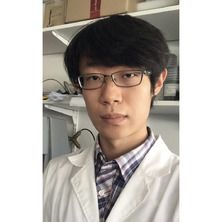
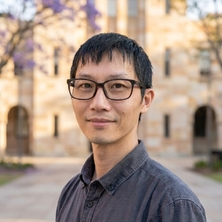
Yuan Xu completed a Bachelor of Engineering degree (Chemical and Material) from the University of Queensland in 2015. After that, he started his PhD in the research field of colloidal science, rheology and chemical engineering, supervised by Professor Jason Stokes. He has continued in UQ as postdoctoral research fellow since 2019, at which, he has contributed to multidisciplinary projects including viscoelastic lubrication of soft matter systems, and programming structural anisotropy in nanocellulose hydrogels. His research capability focuses on the area of rheology, colloidal science/ physical chemistry, material/physical science, soft matters/complex fluids, and tribology/lubrication.
Affiliate of Centre for Environmental Responsibility in Mining
Centre for Environmental Responsibility in Mining
Faculty of Engineering, Architecture and Information Technology
Affiliate of Minerals Industry Safety and Health Centre
Minerals Industry Safety and Health Centre
Faculty of Engineering, Architecture and Information Technology
Affiliate of W.H. Bryan Mining and Geology Research Centre
WH Bryan Mining Geology Research Centre
Faculty of Engineering, Architecture and Information Technology
Affiliate of Centre for Social Responsibility in Mining
Centre for Social Responsibility in Mining
Faculty of Engineering, Architecture and Information Technology
Affiliate of Julius Kruttschnitt Mineral Research Centre
Julius Kruttschnitt Mineral Research Centre
Faculty of Engineering, Architecture and Information Technology
Centre Director of Julius Kruttschnitt Mineral Research Centre
Julius Kruttschnitt Mineral Research Centre
Faculty of Engineering, Architecture and Information Technology
Professorial Research Fellow and Centre Director, JKMRC
Sustainable Minerals Institute
Faculty of Engineering, Architecture and Information Technology
Availability:
Available for supervision
Media expert
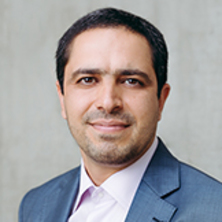
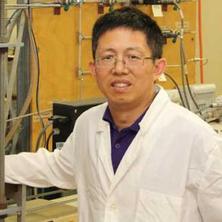
Mohsen Yahyaei is an expert in modelling, optimising, and controlling mineral processing circuits using novel approaches and tools. He is currently the Director of the Julius Kruttschnitt Mineral Research Centre (JKMRC) and Program Leader for Future Autonomous Systems and Technologies (FAST) at the University of Queensland’s Sustainable Minerals Institute.
Mohsen completed his undergraduate studies in Mine Exploration and earned a Master’s degree in Mineral Processing in 2002. His master’s thesis focused on applying column flotation in the Sarcheshmeh Copper Complex, the largest copper mine in the Middle East. After his Master’s, he worked at the R&D centre of the Zarand coal washing plant in Iran for two years before becoming the plant manager. In 2007, he returned to the University of Kerman to pursue a PhD, investigating the effect of liner wear on charge motion and power draw of SAG mills, which he completed in 2010.
Since joining JKMRC in 2011, Mohsen has conducted extensive applied research and successfully delivered numerous industry-funded projects. As a comminution specialist, he is dedicated to implementing fundamental understandings in his research to offer practical solutions to the minerals industry and educate engineers and researchers with problem-solving skills for future resource industry challenges. His research focuses on optimising mineral processing techniques to enhance efficiency and sustainability, with a strong emphasis on practical application. Mohsen's research extends to advanced process control, including the development of soft sensors and model-predictive control solutions. His work aims to improve the precision and reliability of industrial processes, contributing significantly to the field of mineral processing.
School of Electrical Engineering and Computer Science
Faculty of Engineering, Architecture and Information Technology
Affiliate of Centre for Multiscale Energy Systems
Centre for Multiscale Energy Systems
Faculty of Engineering, Architecture and Information Technology
Availability:
Available for supervision
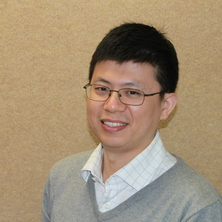
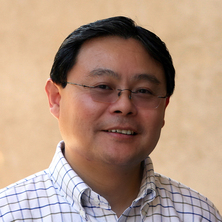
Dr Ruifeng Yan (FIEAust, CPEng, NER, APEC Engineer, IntPE(Aus), RPEQ) received the B. Eng. (Hons.) degree in Automation from University of Science and Technology, Beijing, China, in 2004, the M. Eng degree in Electrical Engineering from the Australian National University, Canberra, Australia, in 2007 and PhD in Power and Energy Systems from the University of Queensland, Australia, in 2012. He was an ARC DECRA Fellow in the School of Electrical Engineering and Computer Science in the University of Queensland. His expertise includes renewable energy integration to power grids, big data mining in power systems, and network strength and stability analysis. He collaborates with power industries on a range of projects, including AEMO, Powerlink Queensland, Energy Queensland, EPEC Group, Siemens, Iberdorla Australia, Noja Power and Transgrid. He has published over 90 journal and conference papers, which have been cited by a number of top power utilities, national labs and academic institutes. He is currently served as an Associate Editor of the renowned IEEE Transactions on Power Systems, and an international Q1 journal – CSEE JPES. He also serves as a committee member in Engineers Australia Queensland Electrical Branch and CIGRE C4 Panel.
Faculty of Engineering, Architecture and Information Technology
Availability:
Available for supervision
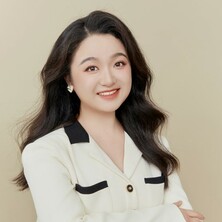
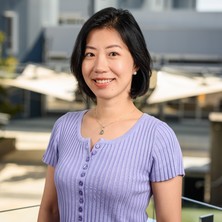
Dr Ju Yao specialises in metal additive manufacturing, microstructural characterisation, and hydrogen embrittlement. She was awarded her PhD from The University of Queensland in 2025. Her research focuses on understanding how processing influences microstructure and properties to improve the reliability and sustainability of advanced metallic materials.
Her work centres on structure–property relationships in high-strength alloys, particularly additively manufactured steels and, more recently, copper and copper-based materials. She integrates advanced characterisation with modelling to reveal how microstructural features govern mechanical performance, corrosion behaviour, and hydrogen-related degradation.
Key areas of expertise include:
Metal additive manufacturing (steels and Cu-based alloys)
Hydrogen embrittlement and corrosion science
Microstructural characterisation
Electrochemical testing and mechanical property evaluation
Dr Yao has published in leading international journals and contributes to advancing knowledge in materials degradation and advanced manufacturing. She collaborates with academic and industry partners to develop innovative alloy design and processing strategies.
Her research aims to deliver high-performance, durable, and sustainable metallic materials for applications in energy, infrastructure, and advanced manufacturing systems.
Affiliate of Dow Centre for Sustainable Engineering Innovation
Dow Centre for Sustainable Engineering Innovation
Faculty of Engineering, Architecture and Information Technology
Professor
School of Chemical Engineering
Faculty of Engineering, Architecture and Information Technology
Availability:
Available for supervision
Media expert
Dr Liu Ye is is a Professor at The University of Queensland (UQ) in the School of Chemical Engineering. She is a Fellow of the Royal Society of Chemistry (RSC) and a Fellow of International Water Association (IWA). Dr Ye’s research is focused on sustainable environmental engineering and is dedicated to finding innovative and practical solutions to tackle challenges in achieving net zero emissions, climate resilience, and sustainability. She is the Greenhouse Gas (GHG) research program leader at UQ urban water engineering. She has an established national and international leadership in the research field of net-zero emissions from urban wastewater systems. Prof Ye has been awarded over AU$10M competitive research funding and has a broad research collaboration within academia and industry. She collaborated extensively with water industry partners (> 15, both Australia and overseas water utilities), Australian state Government, Industry peak bodies (Water Services Association of Australia (WSAA), Water Research Australia (WarterRA)) and Technology companies (e.g., Jacob, Suez, Veolia). She has also received more than eight scientific awards (including Research Innovation Award from Australia Water Association, UQ Foundation Research Excellence Award, etc.), and the EAIT faculty teaching excellence award. She is an elected member in the Strategic Council of IWA and also a member of the Australia Association for Engineering Education (AAEE) and Engineers Australia (EA). She current servers as the Associate editor of Environmental Science: Water Research and Technology and in the Editorial board of Engineering journal.
Research:
Liu’s research includes greenhouse gas (GHG) emissions and mitigation from biological wastewater treatment processes; sludge minimization and biogas production enhancement; advanced biological nutrient removal (BNR) technology development; on-line process control and optimisation and resource recovery from wastes.
Teaching and Learning:
CHEE2020: Process Equipment and Control (Coordinator and Lecturer);
ENGG1100: Professional Engineering (Lecturer);
CHEE2501: Environmental Systems Engineering I: Processes (Lecturer);
Faculty of Engineering, Architecture and Information Technology
Affiliate of ARC Research Hub to Advance Timber for Australia's Future Built Environment (ARC Advanc
ARC Research Hub to Advance Timber for Australia's Future Built Environment
Faculty of Engineering, Architecture and Information Technology
Availability:
Available for supervision
Media expert
I have a multidisciplinary background in chemical and civil engineering, chemistry and materials science. Currently, I am the UQ leader of the National Centre for Timber Durability and Design Life, based at USC. I apply my expertise to understand the effects of fungal decay and moisture intrusion in timber connections, as well as the improvement of the fire performance of timber. I supervise 6 PhD students.
Australian Institute for Bioengineering and Nanotechnology
Availability:
Available for supervision
Media expert
Professor Chengzhong (Michael) Yu is an internationally recognised expert in nanotechnology, chemistry and materials science. He is the author of over 400 scientific publications with over 36,000 citations. He has received National Health and Medical Research Council (NHMRC) Leadership (L3) and Australian Research Council (ARC) Future Fellowship.
His research interest includes functional nanomaterials and their applications in healthcare, agriculture, and energy storage. He is working with industrial partners to provide innovative solutions for challenging problems in our society.
Faculty of Engineering, Architecture and Information Technology
Availability:
Not available for supervision
Media expert
Prof Yuan received his PhD degree in aeronautical engineering in 1992 from Beijing University of Aeronautics and Astronautics, China. He changed research direction to wastewater management in 1994, when he took up a postdoctoral research fellow position at Ghent University, Belgium. He joined the Advanced Water Management Centre (AWMC), renamed as the Australian Centre for Water and Environmental Biotechnology in July 2021, at The University of Queensland in 1998. He served as the AWMC Deputy Director 2001-2014, and then the AWMC/ACWEB Director in 2015 to July 2022. His research focuses on development of innovative solutions for urban water management and environmental biotechnology through effective integration of fundamental science and applied engineering. He won over $50M in government, industry and university research funding including many ARC Discovery, Linkage and Fellowship grants, mostly as the lead Chief Investigator. Prof Yuan was one of the founding members of the $117m Cooperative Research Centre for Water Sensitive Cities. He has published intensively both in specialised journals such as Water Research and Environmental Science and Technology, and multidisciplinary journals including Nature and Science. He is the founder of three biotechnology businesses namely SeweX, Cloevis and Lodomat, and his research has delivered documented savings of hundreds of millions of dollars to the Australian water industry. His research achievements and leadership have been recognized through major national and international awards including the 2015 ATSE Clunies Ross Award and the International Water Association (IWA) 2014 Global Project Innovation Award (Applied Research Category). Prof Yuan was named as one of Engineers Australia’s Top 100 Most Influential Engineers for 2015. He is a Fellow of the Australian Academy of Technological Sciences and Engineering (ATSE), an IWA Distinguished Fellow, and was awarded the highly prestigious ARC Australian Laureate Fellowship in 2017. He was appointed a Member of the Order of Australia in January 2019.
Affiliate of Julius Kruttschnitt Mineral Research Centre
Julius Kruttschnitt Mineral Research Centre
Faculty of Engineering, Architecture and Information Technology
Research Officer
Sustainable Minerals Institute
Faculty of Engineering, Architecture and Information Technology
Availability:
Available for supervision
Saeid Zare is an expert in troubleshooting and optimizing mineral processing plants. He is currently a research officer of the Julius Kruttschnitt Mineral Research Center (JKMRC) at the University of Queensland's Sustainable Minerals Institute.
He graduated as a top student with Bachelor’s and Master's degrees in mining engineering-mineral processing from Shahid Bahonar University of Kerman, Iran. His Bachelor’s and Master’s thesis projects were on flotation and comminution, in Sarcheshme Sarcheshmeh Copper Complex, and in the Gol-E-Gohar iron ore company, the largest mines in the Middle East, respectively. He was also chosen as elite member by Iran's National Elites Foundation in 2019 and 2023. Over the past nine years, he has successfully contributed to numerous funded industrial projects focused on troubleshooting, optimization and designing, mostly in comminution, separation and dewatering fields at the mineral processing plants in more than eight of the largest Mining and Industrial Companies in Iran, which helped him to apply his knowledge in real industrial settings.
Saeid is currently a researcher at the Julius Kruttschnitt Mineral Research Center (JKMRC), working within the Advanced Process Prediction and Control group. His research focuses on the optimization of mineral processing techniques to enhance operational efficiency and sustainability.
Affiliate of Dow Centre for Sustainable Engineering Innovation
Dow Centre for Sustainable Engineering Innovation
Faculty of Engineering, Architecture and Information Technology
Honorary Fellow
School of Chemical Engineering
Faculty of Engineering, Architecture and Information Technology
Availability:
Not available for supervision
Dr Xiangkang Zeng is currently an Honorary Research Fellow at the UQ Dow Centre, School of Chemical Engineering, The University of Queensland. He received his PhD in Chemical Engineering from Monash University in 2017. He subsequently undertook postdoctoral research at the Hong Kong University of Science and Technology and Monash University before joining UQ as an ARC DECRA Research Fellow (2022-2025) and UQ Amplify Lecturer (2025-2026).
Dr Zeng’s research focuses on functional materials and redox catalysis for energy and environmental applications, particularly electrocatalysis, photocatalysis, peroxide synthesis, CO₂ conversion, and energy storage. He has published more than 60 peer-reviewed papers in leading journals, including Advanced Materials, Advanced Energy Materials, Angewandte Chemie, ACS Catalysis, Applied Catalysis B, Water Research, and Green Chemistry. He also has extensive teaching experience in bioprocess engineering, process principles, thermodynamics, and research thesis supervision.
School of Electrical Engineering and Computer Science
Faculty of Engineering, Architecture and Information Technology
Availability:
Available for supervision
Dr Jihui (Aimee) Zhang is currently a lecturer (Assistant Professor) in the School of Electrical Engineering and Computer Science, University of Queensland, Australia. She is also an honorary lecturer in the Audio & Acoustic Signal Processing (AASP) group, the Australian National University (ANU), Australia. From 2023 to 2024, she was a lecturer (Assistant Professor) in the Institute of Sound and Vibration Research (ISVR), University of Southampton, the United Kingdom. From 2018 to 2022, she was a Postdoctoral Research Fellow and a Research Fellow in the AASP group, ANU, Australia. From May 2018 to Aug.2018, she was a Research Engineer Intern in SONY, Japan.
Her research interest is mainly in Audio and Acoustic Signal Processing, especially Spatial Active Noise Control, Spatial Audio Solution for Virtual and Augmented Reality, and Microphone Arrays. Her other research interest is in Human-Robot/machine Audio Interactions, especially Audio Solution for Human-Unmanned Aerial Vehicle (UAV) Interactions. She has practical experience in Digital Design and Embedded Systems, especially Embedded Automatic Test & Control Systems and Embedded Audio Systems
She is currently a senior member of the IEEE and Signal Processing Society (SPS), a member of Audio Engineering Society (AES) and Acoustical Society of America (ASA). She serves as Student Activities Chair in the IEEE Queensland Section in 2025. She served as a chair of Women in Engineering Affinity Group in IEEE Australian Capital Territory Section in 2021 and 2022.
Affiliate of Centre for Advanced Materials Processing and Manufacturing (AMPAM)
Centre for Advanced Materials Processing and Manufacturing
Faculty of Engineering, Architecture and Information Technology
Professor
School of Mechanical and Mining Engineering
Faculty of Engineering, Architecture and Information Technology
Availability:
Available for supervision
Media expert
Professor Mingxing Zhang’s research interests are in the additive manufactruring of metals and MAX phase mateirals, high entropy alloys, new alloy design through machine learning and application of crystallography to engineering materials, surface engineering of metals, and grain refinement for cast metals.
Prof Zhang is a world leader in the area of crystallography of phase transformations and its applications in engineering materials, and is recognised as one of the top researchers in the areas of phase transformations, grain refinement for cast metals, additive manufacturing of metals, and surface engineering.
Prof Zhang obtained his Bachelor of Engineering from the Inner Mongolian University of Science and Technology and Master of Engineering from Northwestern Polytechnical University, China. In 1997 he was awarded his PhD degree by The University of Queensland. His research expertise and interests include crystallography of phase transformations, grain refinement and alloy development of aluminum and magnesium alloys, surface modification and coatings, bainitic transformation and bainitic steels.
Prof Zhang’s research hopes are to apply his fundamental research results to develop new generation metallic materials and to improve the current materials processing techniques. His research outcomes will also offer materials scientists a totally new way to undertake surface treatment for metallic materials, therefore to significantly improve the surface durability of this type of materials. For example, the recently developed new packed powder diffusion coating technique for titanium alloys will enable the replacement of the highly costive superalloys with Ti alloys. The research also hopes to enhance Australia’s competitive ability in international markets in light metals and contribute significantly to material science with the study of the mechanism of phase transformations in solids.
Faculty of Engineering, Architecture and Information Technology
Availability:
Available for supervision
Media expert
Dr Weiming Zhao is an ARC DECRA Fellow (2026 - 2029) in the School of Civil Engineering at the University of Queensland.
A domestic (Australian citizens or permanent residents) PhD position is availble: "Learning-based control strategies for personalised and socially aware automated vehicles".
His research sits at the intersection of robotics, human behaviour, and infrastructure, focusing on Intelligent Transportation Systems (ITS) and the interactions between Connected and Automated Vehicles (CAVs) and human drivers in mixed traffic. Using control theory and machine learning, including Model Predictive Control and Mathematica-based modelling, he develops trajectory planning solutions for CAVs at intersections and highway merging areas, aiming to improve safety, efficiency, and energy use in both urban and highway settings.
Dr Zhao completed his PhD at the University of Leeds, followed by a postdoctoral position at Aalto University. He joined UQ as a postdoc in 2022, before commencing his DECRA fellowship in 2026. His current DECRA project, Make Automated Vehicles Personalised and Socialised, investigates how control methods for automated vehicles can align with human driver behaviour to build trust.
Queensland Alliance for Agriculture and Food Innovation
Availability:
Available for supervision
Dr Yan Zhao is an agricultural remote sensing and digital agriculture scientist specialising in the integration of Earth observation, artificial intelligence, crop modelling and climate information for crop monitoring and decision support. His research spans satellite, UAV and proximal sensing to quantify crop type, phenology, soil moisture, crop stress and yield across field to regional scales. He develops scalable spatial-data and machine-learning approaches to translate complex sensing and environmental data into practical agricultural information, working closely with growers, agribusiness, government and international research partners. His current research increasingly explores multi-source hyperspectral sensing and analytics for detecting crop stress and assessing crop productivity and grain quality.
Faculty of Engineering, Architecture and Information Technology
Availability:
Available for supervision
Wenhua Zhao is an Associate Professor at The University of Queensland and a globally recognized expert in offshore hydrodynamics and renewable energy technologies.
He is the recipient of the prestigious ARC Future Fellowship (2024-2028) and DECRAFellowship (2019-2022), with over 110 publications and six awards influencing both industry and academia. He has helped secure over AUD30 million research funding from both Australian Research Council and industry, contributing to transformative engineering practices in renewable energy sectors and oil & gas industry.
His research focuses on Clean Energy, AI, and Climate Change, with groundbreaking studies on wave-structure interactions -- showcased by his multiple publications in Journal of Fluid Mechanics and industry-focused applications, a rare integration of theoretical research with practical implementation. He pioneers innovations in floating wind energy, floating solar, offshore aquaculture, and green hydrogen, leveraging artificial intelligence to transform offshore renewable energies.
Wenhua has been a Deputy Editor for Ocean Engineering (No. 1 in marine engineering, ISI web), Associate Editor for the renowned ASME's Journal of OMAE, and editorial board member for the Q1 journal Applied Ocean Research. His teaching, particularly the "Design of Offshore Energy Systems" course, has prepared hundreds of students for impactful careers in coastal and ocean engineering.
Faculty of Health, Medicine and Behavioural Sciences
Availability:
Available for supervision
Media expert
Dr Yinghong Zhou leads the ImmunoEngineering for Regenerative Dentistry research team at the School of Dentistry. Her research interests extend across several transdisciplinary research projects, all with the central theme of biomedical engineering and bone/periodontal tissue regeneration. Her high-quality research leads the field in (a) hypoxia-mimicking bioscaffolds for bone regeneration (field-weighted citation impact=13.15), (b) trace element-mediated biomineralization (recognised by the Tissue Engineering and Regenerative Medicine International Society (TERMIS) Young Investigator Award, given only to two emerging researchers in the whole Asia-Pacific region in 2021), and (c) immunoengineering approaches for periodontal regeneration (introduced into the tertiary learning sector as the world-first Master of Philosophy (Materiobiology) Program at QUT). Dr Zhou has been awarded prestigious fellowships including the Endeavour Research Fellowship (2017), NHMRC Early Career Fellowship (2016-2020), and the BridgeTech Industry Fellowship (2021).
Faculty of Engineering, Architecture and Information Technology
Affiliate of Australian Research Council Centre of Excellence for Green Electrochemical Transformati
ARC COE for Green Electrochemical Transformation of Carbon Dioxide
Faculty of Engineering, Architecture and Information Technology
Availability:
Available for supervision
Biography:
John Zhu is currently a Professor in the School of Chemical Engineering, UQ. He is also the inaugural Director of Carbon Energy Research Centre. He received his PhD in Chemical Engineering, UQ in 2002, then worked as a lecturer in Curtin University of Technology from 2002 to 2004. He moved back to UQ at the end of 2004 and has been working in the same school until present. He is the recipient of a number of awards and fellowships, including RK Murphy Medal 2013, Freehills Award IChemE 2011, runner up of Innovator of the Year Award International IChemE 2011, the University of Queensland Foundation Research Excellence Award 2007, an ARC Future Fellowship from 2013 to 2016, an ARC Queen Elizabeth II Fellowship from 2008 to 2012, an ARC Postdoctoral Fellowship from 2003 – 2005. In May 2012, John Zhu’s long term collaborative research with Eden Energy was recognised by Thomson Reuters Innovation Award for Innovative Collaboration between the University of Queensland and Eden Energy.
Research:
John Zhu’s research interests and expertise exist in advanced catalysis, gas adsorption and separation, direct carbon fuel cells and solid oxide fuel cells with strong application focus on clean energy and environment. His current projects include research into scale up of direct carbon fuel cells, next generation solid oxide fuel cells, hierarchically-structured bulk materials for gas storage and catalytic reaction, carbon nanotubes/MOFs composite membranes, carbon nanotube reinforced polymer composites for automotive applications, advanced plasma-assisted catalytic processes for clean energy production and air pollution control.
Teaching and Learning:
John has taught several engineering courses including Research Methods (CHEE7200), Heat and mass transfer (CHEE3002), and Engineering investigation and analysis (CHEE3010). He is currently lecturing a third year course, Reaction Engineering (CHEE3005).
Projects:
1. Transport Processes in Flexible Porous Materials for Gas Separation and Storage, ARC DP
2. Prototype test of Direct Carbon Fuel Cells, QLD Research Partnership Program
Faculty of Engineering, Architecture and Information Technology
Availability:
Available for supervision
Media expert
Jin Zou is an Emeritus Professor in the School of Mechanical and Mining Engineering (Materials Engineering) and an affiliated Professor in the Centre for Microscopy and Microanalysis at the University of Queensland, Australia. Professor Zou earned his Master’s degree from the University of Science and Technology, Beijing in 1985 and PhD from the University of Sydney in 1994. Through his postgraduate studies, Professor Zou was trained as a transmission electron microscopist. After his PhD, he worked in the Australian Key Centre for Microscopy and Microanalysis at the University of Sydney for 10 years with several Australian fellowships, including an Australian Postdoctoral fellowship and a Queen Elizabeth II fellowship. Professor Zou moved to UQ to take up a teaching-and-research position from July 2003. In 2009, Professor Zou won an inaugural ARC Future Fellowship (FT3 - Professor level). In 2021, Professor Zou became an Emeritus Professor.
Over the years, Professor Zou's research interest has been focused on the understanding of the evolution of advanced, smart and nano-scaled materials and the understanding of fundamental properties of these materials through detailed correlating their fabrication and demonstrated properties with their morphological, structural and chemical characteristics (determined by electron microscopy); and on the formation of high-performance functional nanomaterials and their advanced applications, particular in the fields of energy and environmental protection. So far, Professor Zou published over 750 SCI articles with most of them published in leading international journals, which have attracted over 41,000 citations and led to an H-index of 101.