Affiliate of Research Centre in Creative Arts and Human Flourishing
Research Centre in Creative Arts and Human Flourishing
Faculty of Humanities, Arts and Social Sciences
Lecturer
School of Communication and Arts
Faculty of Humanities, Arts and Social Sciences
Availability:
Not available for supervision
Media expert
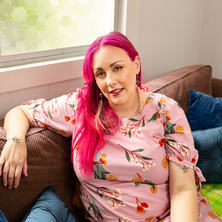
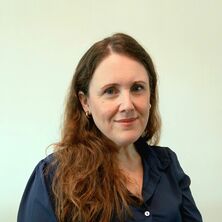
Melanie Saward is a proud Bigambul and Wakka Wakka woman. She is a lecturer of Australian Studies in the School of Communication and Arts and has recently (July 2024) been appointed as the coordinator of BlackWords. Her research looks at Indigeneity in romantic comedy fiction with a focus on diversity, intersectionality, and the Australian publishing industry.
Melanie is a writer and editor. Her debut fiction book, Burn, was published in 2023 with Affirm press and her first romantic comedy novel, Love Unleashed, was published in August 2024.
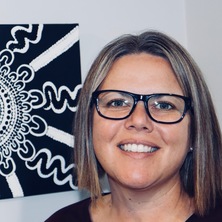
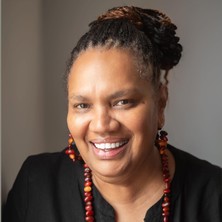
I am an Aboriginal woman from the Ngen'giwumirri language group (Daly River, Northern Territory), born in Brisbane and connected to Indigenous communities across South East Queensland. I currently hold the position of Professor and Deputy Head of School in the School of Education at The University of Queensland. My research program is nationally and internationally recognised, with a focus on Indigenous education, codesign in Indigenous education, Indigenous participation in STEM, youth studies, flexi schooling, and education policy. I lead an extensive externally funded research program, including Australian Research Council (ARC) grants and government tenders, and I actively contribute to policy development through advisory roles at both state and national levels. I am a Chief Investigator on the ARC Centre of Excellence for Indigenous Futures.
I am committed to advancing strengths-based approaches in Indigenous education. My scholarship includes over 100 publications, and I have co-edited two major texts in the field. The first, “Indigenous Education in Australia: Learning and Teaching for Deadly Futures” (Routledge, 2021), which received a national award at the Education Publishing Awards Australia. My most recent book, “Strengths-Based Approaches to Indigenous Education Research and Practice” (Routledge, 2025), co-edited with Professor Grace Sarra, further contributes to the growing body of work that centres Indigenous voices and leadership in education. My academic work builds on my foundation as a qualified, Queensland-registered secondary school teacher.
Throughout my career, I have received multiple awards in recognition of research excellence and leadership, including the UQ Foundation Research Excellence Award (2021), the UQ Award for Excellence in Graduate Research Leadership (2024), and the National ACEL Leadership Award (2020). As a qualified and experienced secondary teacher, I remain deeply committed to research translation and applied research that support advancing educational equity. I designed a specialised program aimed at growing the Indigenous Education research workforce, the SoE DEADLY Community, providing mentoring to early career researchers and supervising Indigenous higher degree research students through the creation of an environment that centres Indigenous strengths, knowledges and aspirations.
My work continues to be driven by a belief in the transformative power of education and the importance of Indigenous-led research and practice, underpinned by Indigenous-informed evidence, and a commitment to bridging research, policy and practice.
Faculty of Health, Medicine and Behavioural Sciences
Research Fellow/Senior Research officer
School of Nursing, Midwifery and Social Work
Faculty of Health, Medicine and Behavioural Sciences
Availability:
Available for supervision
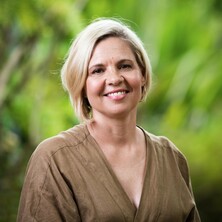
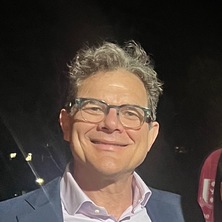
Dr Lucy Shinners is an Indigenous clinician‑researcher with 25 years of ICU nursing experience and a career deeply embedded in the health system. Her work is grounded in the realities of clinical practice and the experiences of patients, families and communities, shaping a research program that examines how emerging technologies can strengthen safe, high‑quality and culturally responsive care.
Using a sociotechnical lens, Dr Shners studies how artificial intelligence influences the health workforce, clinical decision‑making and the conditions required for safe adoption. Her internationally used SHAIP tool supports health services to understand workforce perceptions of AI and ensures that consumer perspectives remain central to technology design and implementation. She also works with Indigenous health organisations to co‑design technological solutions that reflect community priorities, and has contributed to establishing First Nations leaders’ priorities for AI, an expanding line of work shaping future governance and innovation.
Her research intersects with infection prevention and vascular access safety, where she investigates healthcare‑associated infections, device‑related harm and opportunities to improve surveillance, early detection and patient experience. Increasingly, these domains converge as she explores AI‑enabled approaches for infection risk prediction and monitoring, and evaluates how emerging technologies can enhance clinical governance and system performance.
Dr Shinners’ work provides health services, policymakers and industry with evidence‑based, culturally informed insights into AI, infection prevention and the future of safe care.
Affiliate of Centre for the Business and Economics of Health
Centre for the Business and Economics of Health
Faculty of Business, Economics and Law
Affiliate of Queensland Digital Health Centre
Queensland Digital Health Centre
Faculty of Health, Medicine and Behavioural Sciences
Centre Director of Centre for Online Health
Centre for Online Health
Faculty of Health, Medicine and Behavioural Sciences
Professor
Medical School
Faculty of Health, Medicine and Behavioural Sciences
Availability:
Available for supervision
Media expert
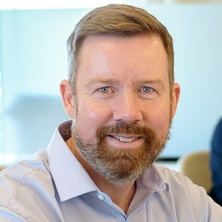
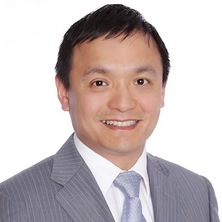
Professor Anthony Smith is the Director of The University of Queensland’s Centre for Online Health (COH), and Adjunct Professor at the Hans Christian Anderson Children's Hospital and University of Southern Denmark, in Odense, Denmark.
Professor Smith is also the Editor in Chief for the Journal of Telemedicine and Telecare (Sage Publishers, London; 5y Impact Factor 4.9).
Professor Smith has more than 25 years of research experience, resulting in the planning, implementation and evaluation of a broad range of telehealth (virtual care) services around Australia. Specific research interests include the feasibility, effectiveness and sustainability of telehealth services in the public health system; genuine consumer engagement; and novel strategies to support our health workforce and telehealth adoption. His research has led to the development of pioneering virtual care services in Australia, including prominent statewide hospital-based telehealth programs in Queensland, wireless (robot) videoconference systems for remote consultations; and a community-based (and telehealth supported) health screening programme for Indigenous children in Queensland. Current projects focus on the integration of telehealth and virtual care services in residential aged care settings; evaluation of community-led First Nations health services; the delivery of video-based rehabilitation services to children in rural and remote primary schools; telementoring services for health professionals in primary care; and discipline specific clinical telehealth services.
Professor Smith chairs the International Conference on Successes and Failures in Telehealth conference. He is also a Fellow of the Queensland Academy of Arts and Sciences. Previous roles have included the President of the Australasian Telehealth Society (ATHS) [2013-2015]; and elected member of the ATHS committee [2008-2024]. In the field of telehealth and virtual care, Prof Smith has over 240 publications, including 230 peer-reviewed journal papers, three edited books and 13 book chapters on related topics. Whilst the field remains highly specialised in comparison to other disciplines, his work is cited over 2000 times each year.
Professor Smith also provides an extensive range of consultancy services for government agencies and industry partners in the field of telehealth, digital health and virtual healthcare.
RECENT AWARDS
1. Honorary Doctorate. Doctor of Medical Science (D.M.SC. (honoris cau)). Faculty of Health Sciences, University of Southern Denmark, 2025
2. Public Engagement and Community-led Research (including Citizen Science) Award, The University of Queensland Research Culture Awards, 2024
3. Top Researcher in the field of "Medical Informatics"- for work involving telehealth, digital health and virtual care. The Australian Research Awards, 2023
4. Commendation, Academic Leader of the Year, UQ Faculty of Medicine Excellence Awards, The University of Queensland, 2023
5. Excellence in Indigenous Engagement Award - for "enhancing access to specialist health services through the use of telehealth for First Nations people. Engagement Australia Excellence Awards, 2021
6. Spirit of Reconciliation Award - for building research and community partnerships in Queensland. UQ Faculty of Medicine Excellence Awards, The University of Queensaland, 2021
Faculty of Health, Medicine and Behavioural Sciences
Availability:
Available for supervision
Media expert
Jaimee is an applied cultural and developmental psychologist and Principal Research Fellow at the UQ Poche Centre for Indigenous Health. Her work examines human development within complex social systems with a focus on the experiences of marginalised, under-represented, and disadvantaged communities. Throughout her career she has worked to support the health and well-being of diverse minority groups (e.g. cultural, religious, gender, and sexual orientation) and those who experience inflated risk factors (e.g., exposure to violence, low socio-economic status, displacement). She is especially interested in how governance, community, and individual-level factors intersect with contemporary social issues including emerging technologies, intercultural relations, and social cohesion. Jaimee focuses on issues of social justice, peace, and equity with an emphasis on the empowerment of Indigenous, migrant and refugee background youth and families.
Jaimee has multisector research and leadership experience across the United Nations, government, and academia in Australia and Aotearoa. Most recently, she was Head of Research (Acting) at the United Nations University Institute in Macau, where she led a team examining the gender digital divide, the ethics of AI, and online violence among civil society in Asia-Pacific. Prior to that she held a senior research role at Griffith University where she led the research strategy for a large project in Logan aimed at alleviating the impacts of place-based disadvantage among diverse cultural groups. Jaimee has extensive experience in both quantitative and qualitative methods, knowledge mobilisation, and stakeholder engagement, and policy advisory.
Principal Specialty Supervisor in Indigenous Health Education and Engagment
Medical School (Rural Clinical School)
Faculty of Health, Medicine and Behavioural Sciences
Availability:
Not available for supervision
Leonie is proud of her traditional connections to the Djaku-nde people of North Burnett, Juru people in Bowen North Queensland and the Nuigi people of Mulgumpin (Moreton Island) with bloodline traces back to Tanna, Santo and Lifu Island's in Vanuatu. With over 30 years of experience in social work, Leonie is a nationally recognised leader in cultural safety, Indigenous engagement and community development. Leonie has extensive experience in across child protection, mental health and teritary education sectors. Her professional expereist encompasses policy development, legislative reform, and practice frameworks, with a strong emphasis on co-design, cultural mentoring and workforce development. She has lectured in Indigenous Health, Social Work, Mental Health and contributed to the development of culturally safe, student-centred curricula. Renowned for her authentic faciliation style, she empowers individuals and organisations to embed cultural safety and drive systemic change across government, non-government, and academic contexts.
I am an urban sociologist and an expert in urban community in all its forms. My research encompasses the outer suburbs in Australia, the gentrifying inner city and informal communities in cities in the Global South. My work focuses on how different urban places and spatial logic in the city impact our opportunities to form attachments to neighbourhoods and each other.
Internationally, I have written extensively on urban poverty in Bangladesh, India and Indonesia and I am currently involved in work on climate change and its effects on the urban poor in collaboration with colleagues in Indonesia, Brazil and Solomon Islands. My latest research concerns the impact of climate change and natural disasters on the urban poor. More than 1 billion people live in informal urban settlements or slums. These people are among the most vulnerable to the impact of climate change. However, adaptation and mitigation policies are being formulated at multiple scales, often without considering the voices of the poor.
I am the Bachelor of Arts Sociology program convenor and an award-winning teacher. I teach courses at all levels in our undergraduate sociology program, including Introduction to Sociology (SOCY1050), An Urban World (SOCY2340) and Advanced Studies in Social Thought: Getting the Big Picture (SOCY3345).
I am also an award-winning photographer (you can see some of my work on my Flickr page.
I am open to proposals from potential Honours and PhD students who share my passion for understanding the social life of cities. Whether you're from Australia, the Global South, or anywhere else in the world, I look forward to the possibility of working together.
Faculty of Health, Medicine and Behavioural Sciences
Director, UQ Poche Centre
Faculty of Health, Medicine and Behavioural Sciences
Affiliate of ARC COE for Indigenous Futures
ARC COE for Indigenous Futures
Faculty of Business, Economics and Law
Availability:
Available for supervision
Professor James Ward is a Pitjantjatjara and Narungga man, and a national leader in Aboriginal and Torres Strait Islander research. He is currently the Director of the Poche Centre for Indigenous Health at the University of Queensland. As such he leads a research program focused on urban Aboriginal and Torres Strait Islander health and an infectious diseases research program and associated issues. Having held various roles in Aboriginal public health policy for both government and non-government organisations, in 2007 he was appointed as the Inaugural Program Head of the Aboriginal Program at the Kirby Institute, University of New South Wales. In 2012 he moved to Alice Springs to become Deputy Director of the Baker Institutes' Aboriginal Health Program, after which he joined the South Australian Health and Medical Research Institute. James has been awarded funding applications totalling $23M since 2013; including $7.14M as CIA on NHMRC funded grants and has authored 160 publications. He has led national research projects on health services research http://cre-ash.org.au/participating-sites/clinical-hubs/; in health promotion www.youngdeadlyfree.org.au; and methamphetamines https://wecandothis.com.au/ to name a few.
His work has influenced policy and practice significantly contributing to national guidelines, policy and practice. During 2020 he has contributed to the national COVID—19 response nationally through membership of the Communicable Diseases Network of Australia and the National Aboriginal and Torres Strait Islander COVID-19 Taskforce.
Faculty of Health, Medicine and Behavioural Sciences
Affiliate of ARC COE for Children and Families Over the Lifecourse
ARC COE for Children and Families Over the Lifecourse
Faculty of Humanities, Arts and Social Sciences
Affiliate of Health and Wellbeing Centre for Research Innovation
Health and Wellbeing Centre for Research Innovation
Faculty of Health, Medicine and Behavioural Sciences
Affiliate of Centre for Sport and Society
Centre for Sport and Society
Faculty of Health, Medicine and Behavioural Sciences
Senior Lecturer
School of Human Movement and Nutrition Sciences
Faculty of Health, Medicine and Behavioural Sciences
Availability:
Available for supervision
Media expert
Dr Wheeler is a proud Ngarabal person and Accredited Exercise Scientist (ESSA). Dr Wheeler specilises in implementation science in partnership with Aboriginal and Torres Strait Islander peoples and communities.
Dr Wheeler was the first Aboriginal person to graduate with a PhD from the University of the Sunshine Coast.
Dr Wheeler’s research examines how Aboriginal and Torres Strait Islander communities can co-design programs that build community capacity and engage children and young peoples in a broad range of development areas. Dr Wheeler’s research strengths consist co-designing physical movement-based programs, ensuring a trauma informed and culturally-responsive approach towards community engagement and empowerment.
Dr Wheeler has led high performing teams working on education programs that support Aboriginal and Torres Strait Islander families through a strength-based and holistic framework. Extending this work, Dr Wheeler's research focuses on developing the Aboriginal and Torres Strait Islander workforce to better address the complex health needs of community. Dr Wheeler has provided FIrst Nations leadership to a range of projects that have catered for the diversity of Aboriginal and Torres Strait Islander communities, and through this experience has partnered to deliver diverse governance solutions and educational engagement frameworks.
Dr Wheeler also specialises in biomechanics, sport analytics and performance analysis as well as strength and conditioning research. Dr Wheeler works currently with a range of sporting organisations to implement best-practice sport servicing, testing and athlete management to achieve excellence. Dr Wheeler is the lead researcher in partnership with Indigenous Basketball Australia. Dr Wheeler has worked with a variety of professional sporting organisations and teams such as the Wallabies, Brumbies Rugby and World Rugby as well as the Australian Institute of Sport, Canberra Raiders, Canberra Comets, Canberra Meteors and GWS Giants. Dr Wheeler co-design training programs to promote optimal performance in a range of sports. Dr Wheeler is a passionate about how sport and exercise can be used to enrich community as well as health and wellbeing for Aboriginal and Torres Strait Islander peoples.
Dr Wheeler is the Chair of the ESSA Aboriginal and Torres Strait Islander Strategy Working Group for Exercise and Sport Science Australia.
Dr Wheeler is the Director of Aboriginal and Torres Strait Islander Strategy for the School of Human Movement and Nutrition Sciences.
Dr Wheeler is the Program Convenor for Bachelor of Exercise and Sport Sciences, the University of Queensland.
Dr Wheeler was named in the top 52 Aboriginal and Torres Strait Islander people changing the world from COSMOS.
Awards
2022 Aboriginal and Torres Strait Islander Scientist Award from the Australian Academy of Science
2022 LSQ Merck Life Science Rural and Regional Service Award from Life Sciences Queensland
2020 Accredited Exercise Scientist of the Year Award from Exercise and Sport Science Australia
2021 Science Peoples Choice Award from National Science Week
2021 Outreach Award from National Science Week
2020 Science Leadership Excellence Award from National Science Week
2017 NAIDOC Award from Fraser Coast NAIDOC Committee
Luke Williams is a proud Gumbaynggirr man of northern NSW. Luke’s research primarily focuses on the traditional uses of native Australian plants with an emphasis on understanding how these plants can contribute to our modern food systems. This includes the promotion of traditional foods in Indigenous communities to improve food security and cultural wellbeing, through to supporting Indigenous businesses to lead the bush food industry, so that the nutritional and environmental benefits attributed to native plants can be enjoyed by all.
Luke’s PhD examined the dietary safety assessment of Australian native foods. He continues this line of research today using a mixed-methods approach that includes working with Traditional Custodians to understand histories of use and cultural context, while supporting consumer safety through the generation of quantitative evidence, such as toxicological endpoints and chemical analyses. Luke is currently expanding this work to develop new laboratory approaches for characterising biological activity and potential toxicity, including emerging non-animal and high-content screening tools to better understand safety and mechanism of action.
Luke sees the growing native foods industry as a culturally appropriate economic opportunity for Indigenous Peoples. However, he also recognises that if these foods and plant-based products are to be made widely available, development must occur under Indigenous leadership and be supported by robust scientific evidence to ensure they are safe for general consumption.
Faculty of Health, Medicine and Behavioural Sciences
Availability:
Available for supervision
Media expert
I'm a cognitive neuroscientist working to understand the neurobiology of language and use that knowledge to improve outcomes for people with aphasia.
I lead the Language Neuroscience Laboratory, where our research spans three themes:
the neuroanatomy of the language network—how language is represented in the brain and localised in individuals
functional reorganisation in neurological patients, especially recovery from aphasia after stroke
developing aphasia assessments that are practical in fast-paced healthcare settings, ecologically valid, psychometrically sound, multilingual, and free.
Faculty of Health, Medicine and Behavioural Sciences
Availability:
Available for supervision
Helen has over 30 years’ experience as a clinician (orthoptist) and an innovative educator. She was the Academic Lead Assessment in the Academy for Medical Education from mid 2017 to March 2024. Helen’s expertise has been built on a career spanning clinical practice in rural and urban settings fuelling a passion for learning from her early mentor, the late Prof Fred Hollows. Her career in higher education has spanned several roles including lecturing and reforming the orthoptics curriculum, leading elearning projects across five health facilities at the University of Sydney before moving to lead academic development at Charles Darwin University. She has worked in three medical schools (University of Sydney, Flinders University and the University of Queensland) inspiring educators to enhance clinical skills teaching, developing clinical supervisors in Northern Australia and most recently leading assessment design for the new Doctor of Medicine program at University of Queensland. She has received multiple teaching and learning awards at University of Sydney (2003, 2004), Flinders University (2016) and the Australian Awards for University Teaching: Citation for Outstanding Contributions to Student Learning (2017).