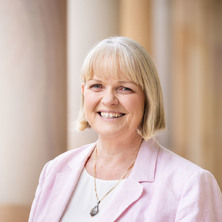
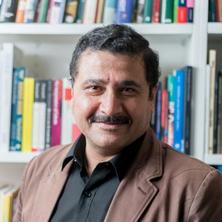
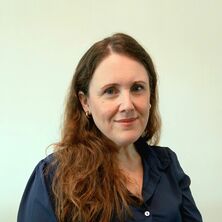
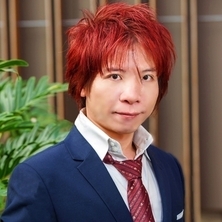
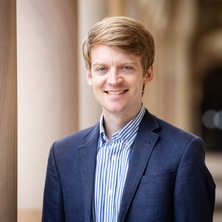
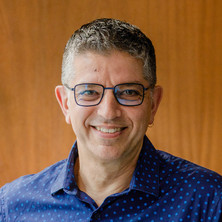
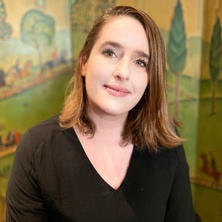
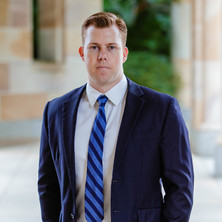
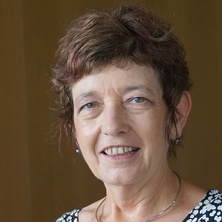
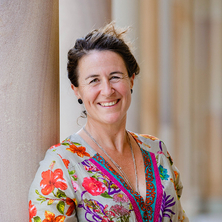
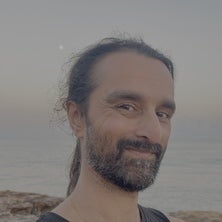
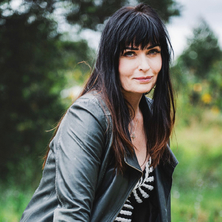
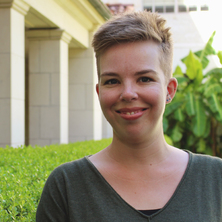
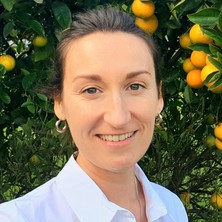
Dr. Simone Smala is a senior lecturer in teacher education, educational psychology and multilingualism in education. Drawing from a background as a middle years and secondary teacher, Simone now focuses her research on Content and Language Integrated Learning (CLIL) in bilingual, immersion and TESOL settings, and the emerging world of Generative AI in K-12 education. Simone's research is based in socio-cultural learning theories, educational policy and blended learning.She publishes in both English and German and has extensive research connections in Europe and the USA.
Affiliate of Centre of Architecture, Theory, Culture, and History
Centre of Architecture, Theory, Culture and History
Faculty of Engineering, Architecture and Information Technology
Senior Lecturer in Architecture
School of Architecture, Design and Planning
Faculty of Engineering, Architecture and Information Technology
Availability:
Available for supervision
Media expert
Dr. Manu P. Sobti is a landscape historian and urban interlocutor of the Global South with research specialisations in South Asia, South East Asia, Central Asia, and the Middle East. Within the gamut of the Global, the Islamic, and the Non-Western, his continuing work examines borderland transgressions and their intertwinement with human mobilities, indigeneities, and the narratives of passage across these liminal sites. From his perspective, ‘land-centered’ and ‘deep’ place histories replete with human actors serve as critical and de-colonizing processes that negate the top-down master-narratives wherein borders and boundaries simplistically delineate nation states and their scalar range of internal geographies. He was previously Associate Professor at the School of Architecture & Urban Planning (SARUP), University of Wisconsin-Milwaukee USA (2006-16). He has a B.Dipl.Arch. from the School of Architecture-CEPT (Ahmedabad - INDIA), an SMarchS. from the Massachusetts Institute of Technology (Cambridge - USA), and a Ph.D. from the College of Architecture, Georgia Institute of Technology (Atlanta - USA).
As a recognized scholar and innovative educator, Sobti served as Director of SARUP-UWM’s India Winterim Program (2008-15). This foreign study program worked intensively with local architecture schools in Ahmedabad, Delhi and Chandigarh, allowing students and faculty to interact actively, often within the gamut of the same project. He also set up a similar, research-focused program in Uzbekistan, engaging advanced undergraduate and graduate students to undertake field research at sites, archives and cultural landscapes. In partnership with the Art History Program at the University of Wisconsin-Madison, and SARUP colleagues, Sobti also co-coordinated the Building-Landscapes-Cultures (BLC) Concentration of SARUP-UWM’s Doctoral Program (2011-13), creating opportunities for student research in diverse areas of architectural and urban history and in multiple global settings. He served as the Chair of SARUP's PhD Committee between 2014-16, leading an area of BLC's research consortium titled Urban Histories and Contested Geographies.
Sobti's research has been supported by multiple funding bodies, including the Graham Foundation of the Arts (USA), the Architectural Association (UK), the National Council for Eurasian and East European Research (USA), the French Institute of Central Asian Studies (UZBEKISTAN), the US Department of State Fulbright Foundation (USA), the Aga Khan Foundation (SWITZERLAND), the Andrew W. Mellon Foundation (USA), the Massachusetts Institute of Technology (USA), the Centre for 21st Century Studies University of Wisconsin-Milwaukee (USA), the Institute for Research in the Humanities University of Wisconsin-Madison (USA), Stanford University (USA), in addition to city governments in New Delhi/Chandigarh/Ahmedabad (INDIA), Samarqand/Bukhara (UZBEKISTAN), Erzurum (TURKEY) and New Orleans (USA). He has also served as a United States Department of State Fulbright Senior Specialist Scholar and received 7 Research Fellowships at important institutions worldwide. He is a nominated Expert Member of the ICOMOS-ICIP (Interpretation and Presentation of Cultural Heritage Sites) International Committee, responsible for debate and stewardship on contentious cultural heritage issues globally.
Affiliate of Research Centre in Creative Arts and Human Flourishing
Research Centre in Creative Arts and Human Flourishing
Faculty of Humanities, Arts and Social Sciences
Associate Professor of Cultural Studies of Queensland Digital Health Centre
Queensland Digital Health Centre
Faculty of Health, Medicine and Behavioural Sciences
Affiliate of Centre for Digital Cultures & Societies
Centre for Digital Cultures & Societies
Faculty of Humanities, Arts and Social Sciences
Associate Professor
School of Communication and Arts
Faculty of Humanities, Arts and Social Sciences
Availability:
Available for supervision
Media expert
Elizabeth Stephens is an Associate Professor of Cultural Studies in the School of Communication and Arts. She was previously an Australian Research Council Future Fellow in the Institute for Advanced Studies in the Humanities (UQ, 2017-2021), Associate Dean Research at Southern Cross University (2014-2017), and an ARC Australian Research Fellow in the Centre for the History of European Discourses (UQ, 2010-2014). Her background is in gender and sexuality studies, and her current research focuses on three interconnected themes:
popular histories and representations of science, medicine and technology
collaborations between the arts and sciences
the critical medical humanities
A new research project examines the history and culture of work, productivity and fatigue. Elizabeth is author of over 100 publications, including four books: Artificial Life: The Art of Automating Living Systems (University of Western Australia Press, 2025), co-authored with Oron Catts, Sarah Collins, and Ionat Zurr, A Critical Genealogy of Normality (University of Chicago Press, 2017), co-authored with Peter Cryle; Anatomy as Spectacle: Public Exhibitions of the Body from 1700 to the Present (Liverpool University Press, 2011), and Queer Writing: Homoeroticism in Jean Genet's Fiction (Palgrave 2009).
She welcomes inquiries from potential PhD students, and can offer supervision in the following areas:
cultural studies of science, medicine and/or technology
Faculty of Health, Medicine and Behavioural Sciences
Availability:
Available for supervision
Media expert
Jaimee is an applied cultural and developmental psychologist and Principal Research Fellow at the UQ Poche Centre for Indigenous Health. Her work examines human development within complex social systems with a focus on the experiences of marginalised, under-represented, and disadvantaged communities. Throughout her career she has worked to support the health and well-being of diverse minority groups (e.g. cultural, religious, gender, and sexual orientation) and those who experience inflated risk factors (e.g., exposure to violence, low socio-economic status, displacement). She is especially interested in how governance, community, and individual-level factors intersect with contemporary social issues including emerging technologies, intercultural relations, and social cohesion. Jaimee focuses on issues of social justice, peace, and equity with an emphasis on the empowerment of Indigenous, migrant and refugee background youth and families.
Jaimee has multisector research and leadership experience across the United Nations, government, and academia in Australia and Aotearoa. Most recently, she was Head of Research (Acting) at the United Nations University Institute in Macau, where she led a team examining the gender digital divide, the ethics of AI, and online violence among civil society in Asia-Pacific. Prior to that she held a senior research role at Griffith University where she led the research strategy for a large project in Logan aimed at alleviating the impacts of place-based disadvantage among diverse cultural groups. Jaimee has extensive experience in both quantitative and qualitative methods, knowledge mobilisation, and stakeholder engagement, and policy advisory.
Ken Tann is an in-house linguist at the UQ Business School. He specializes in applying linguistic and semiotic techniques to interdisciplinary research, and helps industry professionals add value to their professions through effective communication. His analytical framework has been applied across media, forensic, education and workplace contexts. He is currently supervising PhD research in marketing, finance and aged care.
Damon Thomas is a senior lecturer in literacy education. His current research interests include theories of writing, writing development, pedagogy, and assessment, systemic functional linguistics, argumentation, standardised assessment, and classical rhetoric. Damon's research has made important contributions in the following areas:
Understanding the complexities of student writing development
Exploring writing instruction in situ
Unpacking and critiquing the results of Australia's only large-scale test: the National Assessment Program - Literacy and Numeracy.
Damon completed his PhD at the University of Tasmania (UTAS) in 2015. He began lecturing at UTAS in 2014 and was promoted to senior lecturer in 2019. He took up a senior lecturer position at the University of Queensland (UQ) in 2021. Before starting his academic career, Damon taught as a primary school teacher in Tasmania after completing a Bachelor of Education degree with First Class Honours.
Damon was part of a team of Chief Investigators from the University of Tasmania, Deakin University, and La Trobe University that secured a successful ARC Linkage Project in 2015 in partnership with Anglicare Tasmania (LP150100558). The project investigated conditions that improved learning and wellbeing outcomes in regional, low-SES schools in Tasmania and Victoria. Damon oversaw the literacy component across school sites and conducted in-depth case studies in Tasmanian primary and high schools.
Damon is currently a Chief Investigator on an ARC Discovery Project investigating talk for learning in early years mathematics classrooms. Damon's main role is to employ several linguistic frameworks to understand the complexities of student dialogue and features of productive talk.
Damon is a member of several professional organisations including the Australian Systemic Functional Linguistics Association (ASFLA), the Primary English Teaching Association of Australia (PETAA), and the Australian Literacy Educators' Association (ALEA). Damon also translates literacy research for practising teachers via his blog: Read Write Think Learn
Dr Akiko Uchiyama specialises in translation studies and her research interests include postcolonial translation theory, gender in translation, girls’ fiction in translation and the history of translation in Japan. She is the Convenor of the Master of Arts in Japanese Interpreting and Translation (MAJIT) program, and is accredited by the National Accreditation Authority for Translators and Interpreters as a professional translator.
Faculty of Engineering, Architecture and Information Technology
Affiliate of Research Centre in Creative Arts and Human Flourishing
Research Centre in Creative Arts and Human Flourishing
Faculty of Humanities, Arts and Social Sciences
Associate Professor
School of Electrical Engineering and Computer Science
Faculty of Engineering, Architecture and Information Technology
Availability:
Available for supervision
Media expert
Human-centred design of interactive systems
Stephen Viller is a researcher and educator in human-centred design methods, particularly applied to designing social, domestic and mobile computing technologies, and understanding how people's interactions in everyday settings inform the design of such technologies. He has over 30 years of experience in Computer Supported Cooperative Work (CSCW), Interaction Design, and Human-Computer Interaction (HCI) research, where he has focused on bridging disciplines and diverse methodological perspectives. He has concentrated on qualitative methods, particularly observational fieldwork, contextual interviews, diary studies and field trips, but also increasingly on more ‘designerly’ approaches such as cultural probes, low-fidelity prototypes, speculative design.
Stephen is an Associate Professor in the School of Electrical Engineering & Computer Science (EECS), where he leads the Human-Centred Computing discipline. He is also UQ's Theme Leader for the Digital Worlds and Disruptive Technologies theme in the UQ-Exeter Institute, and national chair of CHISIG, the Computer-Human Interaction Special Interest Group of the Human Factors and Ergonomics Society of Australia (HFESA). From 2016-2019 he was the EECS (ITEE at the time) Director of Coursework Studies (Chair of T&L committee) and from 2011-2016 he was Program Director of the Bachelor of Multimedia Design and Master of Interaction Design. His publications span various interdisciplinary journals and conferences in HCI/CSCW and technology design. He has a BSc (Hons) Computation (UMIST), MSc Cognitive Science (Manchester) and PhD Computing (Lancaster).
Dr Walters has published on Cavendish, Shakespeare, Milton, and Renaissance women in relation to gender, science, philosophy, sexuality and political thought. She welcomes research proposals relating to these topics.
She is author of Margaret Cavendish: Gender, Science and Politics (Cambridge University Press, hardback 2014, paperback 2017) and is editor of The Blazing World and other Writings, Oxford World's Classics (Oxford University Press, 2025), which is the first edition to modernise the spelling and grammar of Cavendish’s prose fiction.
Her co-edited volume, Margaret Cavendish: An Interdisciplinary Perspective (2022), was published by Cambridge University Press and won Co-Honorable Mention for the 2022 Collaborative Project Award from the Society for the Study of Early Modern Women and Gender.She is also co-editor of the Restoration section of the Palgrave Encyclopedia of Early Modern Women’s Writing (2021-2026); the General Editors won the 2025 Digital Scholarship, New Media, & Art Award from the Society for the Study of Early Modern Women and Gender. In addition, she is co-editor of Cavendish and Milton, which is forthcoming with Oxford University Press. Currently, she is co-editing Cavendish's Philosophy of Literature, which is under contract with Routledge.
Dr Walters is the managing and founding editor of Margaret Cavendish: A Multidisciplinary Journal. Currently, she serves on the Editorial Board of ANQ: A Quarterly Journal of Short Articles, Notes and Reviews, Anthem Press, and was President of the International Margaret Cavendish Society.
Dr Walters is also Deputy Chair of the Equity, Diversity and Inclusion Committee for the Faculty of Humanities and Social Sciences (HASS) and is the Honours Thesis Coordinator for the Western Civilisation Centre.
She obtained her doctorate and masters degree from the University of Edinburgh, Scotland and her BA from the University of California Santa Cruz. Previously, she was a postdoctoral research fellow at Ghent University, Belgium. She has also held academic positions in England, America, and Scotland and was a visiting professor at Université Catholique de Lille, France. Between studies, she worked in Tokyo, Japan.
Books
Lisa Walters. Margaret Cavendish: Gender, Science and Politics (Cambridge University Press, hardback 2014, paperback 2017)
Lisa Walters and Brandie Siegfried, eds. Margaret Cavendish: An Interdisciplinary Perspective (Cambridge University Press, 2022).
Lisa Walters, ed. The Blazing World and other Writings, Oxford World's Classics (Oxford University Press, 2025)
Suzanne Trill, Natasha Simonova, and Lisa Walters, eds. "Restoration."Palgrave Encyclopedia of Early Modern Women's Writing (Palgrave 2020-2025).
Ann Coiro, Lara Dodds, and Lisa Walters, eds. Cavendish and Milton (Oxford University Press, forthcoming)
Daniel Whiting and Lisa Walters, eds. Cavendish's Philosophy of Literature (under contract with Routledge)
Affiliate of Centre for Public, International and Comparative Law
Centre for Public, International and Comparative Law
Faculty of Business, Economics and Law
Senior Lecturer
School of Law
Faculty of Business, Economics and Law
Availability:
Available for supervision
Dr Matt Watson is a Lecturer in the TC Beirne School of Law, The University of Queensland. Dr Watson teaches Jurisprudence and Administrative Law. His research interests lie primarily in the fields of legal and political philosophy. Dr Watson’s core research areas include multiculturalism and minority rights (with an emphasis on minority language rights and language policy), constitutionalism, the intersection of law and politics, the liberal philosophical tradition, and all aspects of the philosophy of law. Dr Watson is currently working on a research project that enquires into the legal and moral permissibility of taking account of religious and cultural membership in refugee resettlement determinations.
Dr Watson completed his doctoral studies in law at the University of Oxford in 2016. His DPhil thesis, written under the supervision of Professor Leslie Green, inquired into the philosophical foundations of minority language rights. While at Oxford, Dr Watson led tutorials in Jurisprudence.
Assoc. Prof. Dr. habil Franzisca Weder, Senior Lecturer at the University of Queensland, Brisbane (Australia), is researching, writing and teaching in the areas of Organizational Communication and Public Relations with a specific focus on Sustainability Communication and Corporate Social Responsibility.
She worked as Guest Professor at University of Alabama (USA), University of Eichstätt-Ingolstadt (GER), University of Waikato (NZ), RMIT (Melbourne, AUS) and University of Ilmenau (GER).
Franzisca Weder is Chair of the International Environmental Communication Association (IECA) -> check this out (and become a member :-): https://www.theieca.org
Curious about her work? check…
her eco-culture jamming
her sustainability related conversations with artists and campaigners
one of her papers on Sustainability and Storytelling
one of her books
on Sustainability Communication: THE SUSTAINABILITY COMMUNICATION READER
on integrated CSR Communication: INTEGRATED CSR COMMUNICATION
or (in case you speak German..) on Organizational Communication and PR
or other recent papers:
on how (much) Covid made us more sustainable
on sustainability as cognitive friction https://www.frontiersin.org/articles/10.3389/fcomm.2020.00008/full
or on antagonistic framing and CSR Communication https://www.emerald.com/insight/content/doi/10.1108/CCIJ-01-2018-0014/full/html
or (in case you speak German), her ideas on cultures of sustainability
I am an ethnomusicologist and anthropological linguist with a broad research interest in many aspects of music, language, culture and performance, with a particular interest in collaborative research with communities to support the continuity of vulnerable forms of performance.
I have carried out ethnographic research documentation on language and music with Portuguese Burghers in Sri Lanka, Irish speaking communities in the Aran Islands and Australia and Tamil speaking communities involved with Carnatic music in Australia. I have also worked on collaborative language and music projects with Aboriginal communities including Ngarigu as well as Mawng, Yolngu and Walrpiri communities as co-producer of the podcast Music!Dance!Culture!
My Postdoctoral Research Fellowship focuses on working with Aboriginal communities on supporting the continuity of their song language ecologies. This includes the Mudburra Songs project.
Professor and Associate Dean (Academic/Research/External Engagement/Other)
Faculty of Humanities, Arts and Social Sciences
Affiliate of Research Centre in Creative Arts and Human Flourishing
Research Centre in Creative Arts and Human Flourishing
Faculty of Humanities, Arts and Social Sciences
Availability:
Not available for supervision
Media expert
Kim Wilkins is a humanities researcher and acclaimed creative writer who specialises in the intersection of creativity, technology, and cultural industries. Currently Associate Dean (Research) in the Faculty of Humanities and Social Sciences at UQ, she leads innovative research into the socio-material dimensions of creative industries and the application of creative thinking to complex technological challenges.
Her research portfolio spans popular fiction studies, publishing ecosystems, and technology foresight. Recent projects include pioneering work on speculative fiction storytelling for defence innovation, community publishing in regional Australia, and the application of "story thinking" to anticipate technological impacts. She serves as a member of the Australian Research Council College of Experts.
As a creative practitioner, Wilkins has published 30+ novels in 20+ languages, including bestselling historical fiction and fantasy series. Her dual expertise as both researcher and professional writer uniquely positions her to bridge academic inquiry with industry practice, particularly in areas of creativity research, reading and book culture, the future of publishing, and transdisciplinary innovation.
Beck Wise teaches and researches in professional, technical and academic writing, with specialisations in the rhetoric of science, multimodal writing, writing in digital environments, and feminist rhetorics.
Charlotte Young is a research fellow at the Institute for Social Science Research at The University of Queensland. Charlotte is a qualitative researcher with interdisciplinary interests spanning sociology, public health, health promotion, and migration studies. Her research focuses on the systemic drivers of migrant health inequities and how they can be redressed. Charlotte is also interested in the ways migrants adapt and respond to systemic and structural drivers of inequity. Recently, she has been exploring how the COVID-19 pandemic has impacted migrant and refugee background tertiary students and how young culturally and linguistically diverse social media influencers have been promoting COVID-safe behaviours online. Charlotte also explores immigrant organisations as critical settings to influence health and wellbeing. She is passionate about producing impactful research to affect positive change and tackling migrant health problems in solidarity with the communities they affect. Charlotte also has experience conducting evaluation research for large-scale health interventions.