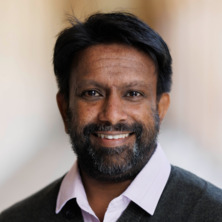
Darryn Bryant's research interests are in combinatorics, specifically in graph theory and design theory.
He received his PhD from The University of Queensland in 1993. His current research projects concern fundamental open problems on graph decompositions and a new design theory-based approach to signal sampling via compressed sensing.
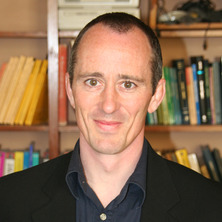
Adrian grew up in Perth and double majored in Pure Mathematics and Applied Mathematics at the University of Western Australia. Soonafter, he ventured to Canberra to undertake a PhD, focussing on analytic number theory: an enchanting area where one perplexingly uses calculus and analysis to study discrete structures such as the set of prime numbers.
After this, he worked as a derivatives trader at Optiver APAC for five years and stayed on there as Head of Academic Partnerships. He currently straddles both industry and academia and believes they both have much to offer mathematicians.
Adrian is available (and invariably keen) to supervise honours, masters and PhD projects in analytic number theory.
Faculty of Engineering, Architecture and Information Technology
Professor
School of Mathematics and Physics
Faculty of Science
Availability:
Available for supervision
Media expert
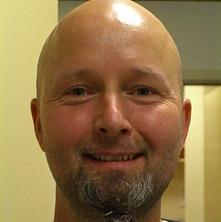
Benjamin Burton's research interests include computational geometry and topology, combinatorics, and information security. He also maintains an active role in gifted-and-talented programmes for secondary school students.
Benjamin Burton's research involves a blend of techniques from pure mathematics and computer science. His main interest is in computational geometry and topology in three and four dimensions, looking at problems such as how a computer can recognise whether a loop of string is knotted, or how it can identify large-scale geometric structures in a three-dimensional space. He is the primary author of the open source software package Regina, which implements state-of-the-art algorithms in this field.
His multi-disciplinary background includes a PhD in geometry and topology, an honours degree in combinatorics, research experience in information security, and three years as a research analyst in the finance industry. He has worked at several universities in Australia and overseas.
He maintains a strong interest in enrichment programmes for gifted and talented high school students, including the Mathematics and Informatics Olympiads and the National Mathematics Summer School. From 1999 until 2008 he directed the Australian training programme for the International Olympiad in Informatics (IOI), and from 2009 to 2014 he holds a seat on the international IOI Scientific Committee.
Benjamin is an active member of the UQ Ally Network, an award-winning program that supports and celebrates diversity of sexuality, gender and sex at UQ and in the broader community.
I am interested in low-dimensional geometric topology, with a focus on knot theory, quantum invariants of 3-manifolds, and knot homologies --especially in relation to concordances and 4-dimensional smooth topology. I recently got interested in the deep connections, usually provided by combinatorial algebraic topology, between discrete structures --such as matchings and discrete Morse functions-- and their smooth counterparts. As a side interest, I try to apply techniques from topological data analysis to knot theory.
Australian Institute for Bioengineering and Nanotechnology
Availability:
Available for supervision
Dr Stephen Sanderson is an expert in nonequilibrium molecular dynamics simulation, with a particular interest in fundamental theory and method development. His current research focuses on developing new methods based in response theory for efficient calculation of nonequilibrium steady state properties, with applications in fluid dynamics, energy materials, heat flow, and quantum systems, among others. Previously, Stephen worked as a Postdoctoral Research Fellow in the group of Prof. Debra Bernhardt, where his focus was on nonequilibrium thermodynamics and statistical mechanics theory, and improving capacity for molecular dynamics simulation of fluids. He holds undergraduate degrees in electrical engineering and physics and a PhD in physics from James Cook University, during which he developed and applied kinetic Monte-Carlo simulations of charge and exciton dynamics coupled with atomistic molecular dynamics deposition simulations to establish a better understanding of structure-property relationships in organic semiconductors, particularly organic light-emitting diodes.
School of Electrical Engineering and Computer Science
Faculty of Engineering, Architecture and Information Technology
Availability:
Available for supervision
Shakes an imaging expert that leads a strong deep learning, artificial intelligence (AI) focused research team interested in medical image analysis and signal/image processing applied to many areas of science and medicine. He received his Ph.D in Theoretical Physics from Monash University, Melbourne and has been involved in applying machine learning in medical imaging for over a decade.
Shakes’ past work has involved developing shape model-based algorithms for knee, hip and shoulder joint segmentation that is being developed and deployed as a product on the Siemens syngo.via platform. More recent work involves deep learning based algorithms for semantic segmentation and manifold learning of imaging data. Broadly, he is interested in understanding and developing the mathematical basis of imaging, image analysis algorithms and physical systems. He has developed algorithms that utilise exotic mathematical structures such as fractals, turbulence, group theoretic concepts and number theory in the image processing approaches that he has developed.
He is currently a Senior Lecturer and leads a team of 20+ researchers working image analysis and AI research across healthcare and medicine. He currently teaches the computer science courses Theory of Computation and Pattern Recognition and Analysis.