
Overview
Background
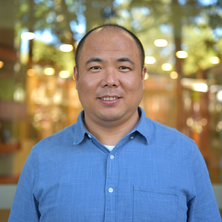
Dr Changkui Fu is currently an NHMRC Emerging Leadership Fellow in the Australian Institute for Bioengineering and Nanotechnology (AIBN), The University of Queensland (UQ).
Dr Fu obtained his bachelor and PhD degrees in Chemistry from Tsinghua University China in 2010 and 2015 respectively. After that, he moved to the Centre of Advanced Macromolecular Design (CAMD) in the UNSW as a postdoctoral researcher working with Prof Cyrille Boyer to explore photo-induced polymerization technologies. In 2016, he relocated to AIBN, UQ as a postdoctoral research fellow in Prof Andrew Whittaker's group on developing advanced imaging agents. In 2018, He was awarded a UQ Development Fellowship to work on novel bioactive polymers. Following this, he was awarded an NHMRC Emerging Investigator Grant on studying Bio-Nano interaction.
Dr Fu's research focuses on the design and synthesis of novel polymers with well-defined molecular structures and sophisticated functionalities. These polymers are suitable for a range of advanced applications including controlled drug delivery and bioimaging. He has published a number of peer-reviewed articles in leading scientific journals including Macromolecules, ACS Macro Letter, Polymer Chemistry, Advanced Healthcare Materials, Chemical Communications, JACS, Angewandte Chemie and others, and been granted a patent. To date, these publications have received nearly 4000 citations in total with an h-index of 36.
Dr Fu is looking for HDRs to join his group with a focus on Polymer Science and Biomaterials.
Availability
- Dr Changkui Fu is:
- Available for supervision
Qualifications
- Bachelor, Tsinghua University
- Doctor of Philosophy, Tsinghua University
Research interests
-
Synthetic polymer chemistry
-
Biomedical polymers
-
Protein conjugation
-
Bio-Nano interactions
-
mRNA delivery
Works
Search Professor Changkui Fu’s works on UQ eSpace
2011
Journal Article
CO2-responsive polymeric vesicles that breathe
Yan, Qiang, Zhou, Rong, Fu, Changkui, Zhang, Huijuan, Yin, Yingwu and Yuan, Jinying (2011). CO2-responsive polymeric vesicles that breathe. Angewandte Chemie (International Edition), 50 (21), 4923-4927. doi: 10.1002/anie.201100708
2010
Journal Article
Electroactive conducting polymers for biomedical applications
Wei, Yen, Li, Baosong, Fu Changkui and Qi, Hongxu (2010). Electroactive conducting polymers for biomedical applications. Acta Polymerica Sinica, 00 (12), 1399-1405. doi: 10.3724/SP.J.1105.2010.10194
Funding
Current funding
Past funding
Supervision
Availability
- Dr Changkui Fu is:
- Available for supervision
Looking for a supervisor? Read our advice on how to choose a supervisor.
Available projects
-
Design and synthesis of next-generation of antifouling polymers
Antifouling polymers play very important roles in many biomedical applications such as medical implants, drug delivery systems and targeted imaging and sensing. Polyethylene glycol (PEG) has been the most successful and popular antifouling polymer. Despite this, a number of limitations associated with use of PEG have emerged, with the apparent immunogenicity of PEG being the most striking and important as revealed by recent animal and clinical studies. The exact biological mechanism underpinning the immunogenicity of PEG is still not very clear. However, it is believed that the partial amphiphilic nature of PEG is largely responsible. Thus, this project aims to understand the origin of PEG immunogenicity, particularly from a perspective of the chemical nature of polymers, and correlate the antifouling performance of polymers to their structures to develop next-generation of antifouling polymers. For more details, please read our recent papers (Adv. Sci, 2020, 2000406; ACS Macro Lett. 2020, 9, 799–805; Angew.Chem. Int.Ed. 2020, 59, 4729 –4735).
-
Develop advanced lipid nanoparticles and polymers for mRNA delivery
Messenger RNA (mRNA) technology is transforming modern medicine by offering a powerful platform for the prevention, treatment, and management of a wide array of challenging diseases, including infectious illnesses, cancer, and genetic disorders. This project focuses on the development of next-generation mRNA delivery systems based on advanced lipid nanoparticles and/or synthetic polymers. By enhancing intracellular delivery and protein expression, the project seeks to overcome current limitations and unlock the full therapeutic potential of mRNA-based treatments.
-
Develop new approaches for the delivery of protein therapeutics
Proteins are an important class of pharmaceuticals. There are 6 protein therapeutics out 10 best-selling drugs of 2018. Overcoming the limitations of many protein therapeutics such as low aqueous solubility and biological stability as well as possible immunogenicity to improve their bioavailability is a key to use them to treat human diseases. This project aims to developing new approaches for efficient and effective delivery of proteins by utilising advanced synthetic chemistry and biocompatible polymer materials. We pay particular attention to the pharmacokinetics and pharmacodynamics of the proteins formulated using our advanced approaches. For more details, please read our recent papers (ACS Macro Lett. 2020, 9, 799–805; Angew.Chem. Int.Ed. 2020, 59, 4729 –4735).
-
Synthesis and application of advanced polymeric imaging agents
This project focuses on developing advanced polymers capable of inherent imaging property for high-resolution and highly sensitive imaging applications. In particular, we are interested in exploring synthetic polymers that can be used as high performance magnetic resonance imaging (MRI) contrast agents. Despite the popular use of metal-based MRI contrast agents such as gadolinium-chelates or iron oxide nanoparticles, safety concerns have been raised associated with the use of these metal-based contrast agents. The polymers developed in this project will provide outstanding candidates as metal-free MRI contrast agents, which would enable a variety of biomedical applications such as targeted imaging and therapy of many diseases. For more details, please read our recent papers (Polym. Chem., 2017, 8, 4585-4595; Macromolecules 2018, 51, 5875-5882; Angew.Chem. Int.Ed. 2020, 59, 4729 –4735).
-
We welcome motivated students with background on synthetic chemistry, polymer science, biomaterials, and pharmacy to join our research programs.
Supervision history
Current supervision
-
Doctor Philosophy
Combinatorial Synthesis of Tertiary Amine Polymers for mRNA Delivery
Principal Advisor
Other advisors: Professor Andrew Whittaker
-
Doctor Philosophy
Antimicrobial polymer synthesis
Principal Advisor
Other advisors: Professor Andrew Whittaker
-
Doctor Philosophy
Novel polymeric membranes for CO2 capture and electrical conversion
Associate Advisor
Other advisors: Dr Hui Peng, Associate Professor Jingwei Hou, Professor Andrew Whittaker
-
Doctor Philosophy
Synthesis and applications of advanced carbon dioxide capture membranes
Associate Advisor
Other advisors: Dr Hui Peng, Professor Andrew Whittaker
Completed supervision
-
2025
Doctor Philosophy
Modulating Bio-Material Interactions Using Multifunctional Polymer Brushes
Principal Advisor
Other advisors: Professor Andrew Whittaker, Dr Hui Peng
-
2025
Doctor Philosophy
Sulfoxide Polymers - a New Paradigm in Thermally Sensitive and Low Fouling Materials
Associate Advisor
Other advisors: Dr Hui Peng, Professor Andrew Whittaker
-
2024
Doctor Philosophy
Nanomaterials for Bioapplications: from Inorganic Nanoparticles to Polymeric Nanoparticles
Associate Advisor
Other advisors: Dr Hui Peng, Dr Gayathri Ediriweera, Professor Andrew Whittaker
-
2024
Doctor Philosophy
Design, Synthesis and Evaluation of Perfluoropolyether (PFPE)-Containing Polymeric Devices for Efficient Removal of Per- and Polyfluoroalkyl Substances (PFAS) from Water Sources
Associate Advisor
Other advisors: Dr Hui Peng, Associate Professor Cheng Zhang, Professor Andrew Whittaker
-
2023
Doctor Philosophy
Intelligent Metal-Organic Frameworks Nanohybrids for Cancer Diagnosis and Therapy
Associate Advisor
Other advisors: Dr Hui Peng, Dr Gayathri Ediriweera, Professor Andrew Whittaker
-
2022
Master Philosophy
Polymer-assisted Smart Iron Oxide Nanoparticles as Novel Magnetic Resonance Imaging Contrast Agents
Associate Advisor
Other advisors: Associate Professor Ruirui Qiao
-
2022
Doctor Philosophy
Novel hydrogels for delivery of cancer drugs
Associate Advisor
Other advisors: Professor Andrew Whittaker, Professor Lisbeth Grondahl
-
2022
Doctor Philosophy
Dibromomaleimide-Based Conjugation Reactions for Self-Reporting Polymers
Associate Advisor
Other advisors: Dr Hui Peng, Professor Andrew Whittaker
Media
Enquiries
For media enquiries about Dr Changkui Fu's areas of expertise, story ideas and help finding experts, contact our Media team: