
Overview
Background
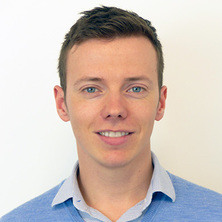
Dr Aleksandr Kakinen is an NHMRC Emerging Leadership Fellow (EL1) at AIBN, UQ. His research investigates how protein aggregation, inflammation, and infection contribute to neurodegenerative diseases, particularly Alzheimer’s and Parkinson’s disease.
His work focuses on amyloid proteins — misfolded proteins that assemble into toxic aggregates in the brain — and how these assemblies interact with inflammatory and microbial factors to influence disease progression. He combines approaches from biophysics, structural biology, molecular neuroscience, neuroinflammation, and nanomedicine to understand disease mechanisms and identify new therapeutic opportunities.
Dr Kakinen’s research program includes:
- amyloid aggregation and cross-seeding mechanisms
- infection- and inflammation-driven neurodegeneration
- structural and biological diversity of amyloid assemblies
- neuroinflammatory responses in neuronal and microglial models
- brain-targeted delivery of neuroprotective molecules and peptides
He has authored over 65 peer-reviewed publications in leading journals, including Nature Communications, Advanced Science, ACS Nano, and Chemical Reviews. His current work aims to link fundamental mechanisms of protein aggregation with translational strategies for diagnosis, prevention, and treatment of neurodegenerative diseases.
Availability
- Dr Aleksandr Kakinen is:
- Available for supervision
Fields of research
Qualifications
- Doctor of Philosophy of Chemical Engineering and Technology, Tallinn University of Technology
Research interests
-
Neuroscience
Neurodegenerative diseases, amyloid biology
-
Structural biology
-
Nanomedicine
Research impacts
Dr Aleksandr Kakinen’s research aims to improve understanding of the molecular processes that drive neurodegenerative diseases, particularly Alzheimer’s and Parkinson’s disease. His work focuses on how misfolded proteins, inflammation, infection-related factors, and cellular stress contribute to disease progression.
This research helps build the knowledge needed to develop better diagnostic tools, therapeutic strategies, and disease models for neurodegenerative disorders.
Key areas of impact include:
- Improving understanding of disease mechanisms by studying how amyloid proteins form toxic aggregates and interact with inflammatory and microbial factors.
- Supporting therapeutic development by investigating brain-targeted delivery of neuroprotective molecules and peptides relevant to Parkinson’s disease and other neurodegenerative conditions.
- Informing translational research through studies of amyloid structure, neuroinflammation, and cellular responses in neuronal and microglial models.
- Building international research capacity through collaborations with partners in Australia and Europe, linking expertise in biophysics, structural biology, neuroscience, and nanomedicine.
- Training future researchers through supervision, mentoring, and research-led teaching in molecular neuroscience and biophysics.
Through peer-reviewed publications, invited presentations, competitive funding, and collaborative projects, Dr Kakinen’s research contributes to global efforts to understand, diagnose, and eventually treat neurodegenerative diseases.
Works
Search Professor Aleksandr Kakinen’s works on UQ eSpace
2013
Journal Article
Aqueous photocatalytic oxidation of prednisolone
Klauson, Deniss, Pilnik-Sudareva, Jana, Pronina, Natalja, Budarnaja, Olga, Krichevskaya, Marina, Käkinen, Aleksandr, Juganson, Katre and Preis, Sergei (2013). Aqueous photocatalytic oxidation of prednisolone. Central European Journal of Chemistry, 11 (10), 1620-1633. doi: 10.2478/s11532-013-0290-8
2013
Journal Article
Interaction of firefly luciferase and silver nanoparticles and its impact on enzyme activity
Kaekinen, Aleksandr, Ding, Feng, Chen, Pengyu, Mortimer, Monika, Kahru, Anne and Ke, Pu Chun (2013). Interaction of firefly luciferase and silver nanoparticles and its impact on enzyme activity. Nanotechnology, 24 (34) 345101. doi: 10.1088/0957-4484/24/34/345101
2013
Conference Publication
Biological effects of nanoparticles of silver, gold, TiO2 and nanoporous silica to selected invertebrate species and bacteria: FP7 project NanoValid
Bondarenko, Olesja, Ivask, Angela, Kaekinen, Aleksandr, Aruoja, Villem, Blinova, Irina, Juganson, Katre, Kasemets, Kaja, Kuennis-Beres, Kai, Kurvet, Imbi, Mortimer, Monika, Sihtmaee, Mariliis and Kahru, Anne (2013). Biological effects of nanoparticles of silver, gold, TiO2 and nanoporous silica to selected invertebrate species and bacteria: FP7 project NanoValid. 49th Congress of the European Societies of Toxicology (EUROTOX), Interlaken, Switzerland, 1-4 September 2013. Shannon, Ireland: Elsevier . doi: 10.1016/j.toxlet.2013.05.146
2013
Journal Article
Competitive binding of natural amphiphiles with graphene derivatives
Radic, Slaven, Geitner, Nicholas K., Podila, Ramakrishna, Kaekinen, Aleksandr, Chen, Pengyu, Ke, Pu Chun and Ding, Feng (2013). Competitive binding of natural amphiphiles with graphene derivatives. Scientific Reports, 3 (1) 2273. doi: 10.1038/srep02273
2013
Journal Article
Particle-cell contact enhances antibacterial activity of silver nanoparticles
Bondarenko, Olesja, Ivask, Angela, Kaekinen, Aleksandr, Kurvet, Imbi and Kahru, Anne (2013). Particle-cell contact enhances antibacterial activity of silver nanoparticles. PLoS One, 8 (5) e64060. doi: 10.1371/journal.pone.0064060
2013
Journal Article
Toxicity of two types of silver nanoparticles to aquatic crustaceans Daphnia magna and Thamnocephalus platyurus
Blinova, Irina, Niskanen, Jukka, Kajankari, Paula, Kanarbik, Liina, Kaekinen, Aleksandr, Tenhu, Heikki, Penttinen, Olli-Pekka and Kahru, Anne (2013). Toxicity of two types of silver nanoparticles to aquatic crustaceans Daphnia magna and Thamnocephalus platyurus. Environmental Science and Pollution Research, 20 (5), 3456-3463. doi: 10.1007/s11356-012-1290-5
2013
Conference Publication
Aqueous photocatalytic oxidation of prednisolone
Klauson, Deniss, Pilnik-Sudareva, Jana, Budarnaja, Olga, Krichevskaya, Marina, Kulyasova, Yulia, Kakinen, Aleksandr, Juganson, Katre and Preis, Sergei (2013). Aqueous photocatalytic oxidation of prednisolone. Symposium on Physicochemical Characterization of Organic Matter - Past, Present, Future, and Role of Environment / 245th National Spring Meeting of the American-Chemical-Society (ACS), New Orleans La, Apr 07-11, 2013. WASHINGTON: AMER CHEMICAL SOC.
2012
Journal Article
Sub-toxic effects of CuO nanoparticles on bacteria: Kinetics, role of Cu ions and possible mechanisms of action
Bondarenko, Olesja, Ivask, Angela, Kaekinen, Aleksandr and Kahru, Anne (2012). Sub-toxic effects of CuO nanoparticles on bacteria: Kinetics, role of Cu ions and possible mechanisms of action. Environmental Pollution, 169, 81-89. doi: 10.1016/j.envpol.2012.05.009
2012
Journal Article
Environmental hazard of oil shale combustion fly ash
Blinova, Irina, Bityukova, Liidia, Kasemets, Kaja, Ivask, Angela, Kaekinen, Aleksandr, Kurvet, Imbi, Bondarenko, Olesja, Kanarbik, Liina, Sihtmaee, Mariliis, Aruoja, Villem, Schvede, Hedi and Kahru, Anne (2012). Environmental hazard of oil shale combustion fly ash. Journal of Hazardous Materials, 229, 192-200. doi: 10.1016/j.jhazmat.2012.05.095
2011
Journal Article
The effect of composition of different ecotoxicological test media on free and bioavailable copper from CuSO4 and CuO nanoparticles: comparative evidence from a Cu-selective electrode and a Cu-biosensor
Kaekinen, Aleksandr, Bondarenko, Olesja, Ivask, Angela and Kahru, Anne (2011). The effect of composition of different ecotoxicological test media on free and bioavailable copper from CuSO4 and CuO nanoparticles: comparative evidence from a Cu-selective electrode and a Cu-biosensor. Sensors, 11 (11), 10502-10521. doi: 10.3390/s111110502
2011
Conference Publication
Bioavailability and toxicity of copper oxide and silver nanoparticles to bacteria, yeasts, crustaceans and protozoa
Kahru, A., Bondarenko, O., Kajankari, P., Kaekinen, A., Ivask, A., Kasemets, K., Mortimer, M. and Blinova, I. (2011). Bioavailability and toxicity of copper oxide and silver nanoparticles to bacteria, yeasts, crustaceans and protozoa. 47th Congress of the European-Societies-of-Toxicology, Paris, France, 28-31 August 2011. Shannon, Ireland: Elsevier Ireland. doi: 10.1016/j.toxlet.2011.05.964
Funding
Current funding
Supervision
Availability
- Dr Aleksandr Kakinen is:
- Available for supervision
Looking for a supervisor? Read our advice on how to choose a supervisor.
Supervision history
Current supervision
-
Doctor Philosophy
Inflammation and chronic infections in the pathogenesis of Alzheimers disease: the role of amyloid cross-seeding
Principal Advisor
-
Doctor Philosophy
Investigating the role of gut-bacteria in neurodegenerative diseases
Associate Advisor
Media
Enquiries
For media enquiries about Dr Aleksandr Kakinen's areas of expertise, story ideas and help finding experts, contact our Media team: