Postdoctoral Research Fellow of Queensland Digital Health Centre
Queensland Digital Health Centre
Faculty of Health, Medicine and Behavioural Sciences
Availability:
Not available for supervision
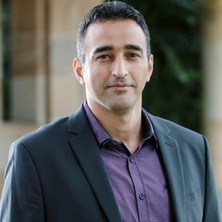
Dr Javad Pool is a researcher focusing on the use of AI and the sustainable implementation of emerging technologies. He completed his PhD in Information Systems at The University of Queensland, where his thesis received the ACPHIS PhD Medal for the best PhD thesis in Information Systems in Australia. He has conducted research in Digital Health, Responsible AI, and Information Systems, with a particular focus on trust in AI, data privacy, and the socio-technical aspects of Information Systems. His work aims to develop a better understanding of responsible and effective use of Information Systems, particularly in organisational contexts.
Faculty of Engineering, Architecture and Information Technology
UQ-Cisco Chair in Network Security
School of Electrical Engineering and Computer Science
Faculty of Engineering, Architecture and Information Technology
Availability:
Available for supervision
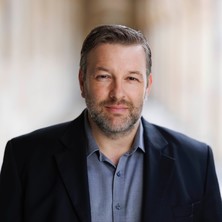
Prof Portmann is the UQ-Cisco Chair of Network Security at the School of Electrical Engineering and Computer Science (EECS) at The University of Queensland (UQ).
He received his PhD in Electrical Engineering from the Swiss Federal Institute of Technology (ETH) in Zürich in 2003. His research interests include Computer Networks, Cybersecurity, IoT (Internet of Things) and applied AI.
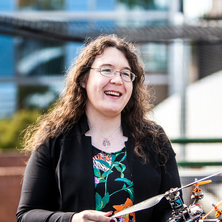
Dr Josephine Previte’s research examines how marketing, services and technology shape people’s everyday lives, wellbeing and participation in society. Her work brings together social marketing, transformative service research and social entrepreneurship to examine how people experience complex systems, and how organisations can respond with more inclusive, ethical and effective forms of change.
Current projects extend this agenda through research on disability-inclusive services, homelessness, mission-led social entrepreneurship and changing alcohol cultures, including shifts toward low- and no-alcohol consumption. Across these projects, her research focuses on how people navigate complex systems and how organisations can design more responsive, equitable and human-centred interventions. Applied research is central to this agenda, bringing marketing insight to behaviour change and service-system challenges.
Her methodological expertise spans qualitative and mixed-method research, with a strong interest in alternative and innovative methodologies. This includes expertise in using Q methodology, videography, digital and technology-enabled research approaches, and interpretive designs that reveal the complexity of people’s lives.
Across this work, Josephine is committed to research that generates practical insight, strengthens social change efforts, and brings meaningful benefits to people, organisations and society.
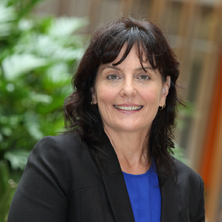
Dr David Pullar's research interests are in: Geographical Information Science (Spatial analysis, Spatial modelling languages and frameworks, 3D visualisation, Environmental database applications) and Landscape Modelling (Catchment hydrology, Landuse change, Landscape dynamics).
David Pullar received his PhD from the University of Maine in 1994. His current research projects are in the fields of:
Incorporating Level Set Methods in Geographical Information Systems (GIS) for Land-Surface Process ModellingUsing Spatial Simulation to Create a Process Classification of Provincial BioregionsEnvironmental Database Management and IntegrationHis collaborators include:Coastal CRCIntelligent Real-time Imaging and Sensing (IRIS)The Ecology CentreHigh Performance Computing, VisAC Lab
Affiliate of ARC COE for Engineered Quantum Systems (EQUS)
ARC COE for Engineered Quantum Systems
Faculty of Science
Research Fellow in Quantum Tech and Neuromorphic Computing
School of Mathematics and Physics
Faculty of Science
Availability:
Available for supervision
Dr. Markus Rambach's research interests are in the field of quantum optics, especially on single photon sources to create photonic qubits and qudits.
Markus was born and raised in a small alpine town in Austria, before doing his BSc and MSc at the University of Innsbruck (Austria). He did his undergrad in Physics, before completing an MSc in experimental quantum physics in the prestigious group of Pro. Rainer Blatt. Here, is where he met a young renegade Brit who had just completed his PhD in the research group of Prof. Andrew White at the University of Queensland. Inspired by the stories, Markus decided to have a look for himself and moved to Brisbane, where he completed his PhD with Andrew in 2017. After a short intermezzo for a Postdoc in Scotland, he moved back to Brisbane 2019 and has been a research fellow at UQ ever since. Markus' research interests are in the weird but beautiful world of quantum physics, where he is investigating ways to make the upcoming quantum internet a reality. Over the years he has worked with verious single photon platforms and used them for quantum information experiments. Recently he changed gear and is now investigating the infinitely-sized space of higher-dimensional quantum systems, so-called qudits.
Markus enjoys community engagement, be it as chair of the SMP Early and Mid-Career Academics Committee or as a member of the EQUS Public Engagement Committee. He particular likes the sparks in people's eyes when they start to understand a concept or idea.
School of Electrical Engineering and Computer Science
Faculty of Engineering, Architecture and Information Technology
Availability:
Available for supervision
I am a postdoc at the Computational Imaging Group, led by Steffen Bollmann. I recently finished my Ph.D. in Computational Imaging at UQ. Specifically, my Ph.D. work involved predicting the functional organization of the human visual cortex from underlying anatomy using geometric deep learning. To tackle this and other research questions, I am leveraging my interdisciplinary background in Biophysics (Bachelor's degree; University of Sao Paulo, Brazil), Neuroscience (Master's degree; Federal University of ABC, Brazil), and now the intersection of AI and imaging. I am interested in (geometric) deep learning, vision, neuroscience, and explainable and fair AI research.
Affiliate of Centre for Unified Behavioural and Economic Sciences
Centre for Unified Behavioural and Economic Sciences
Faculty of Business, Economics and Law
Adjunct Senior Fellow
School of Psychology
Faculty of Health, Medicine and Behavioural Sciences
Availability:
Available for supervision
Marten Risius is Senior Lecturer in Business Information Systems at the University of Queensland (UQ) in Brisbane, Australia. He graduated in psychology summa cum laude from the University of Osnabrueck, Germany and was the first psychologist to graduate from the House of Finance at the Goethe University Frankfurt, where he received his PhD in Information Systems summa cum laude. Afterwards, he worked as postdoctorate at the University of Mannheim, Germany, where he managed the research alliance "ForDigital" between the University of Mannheim and the Karlsruhe Institute of Technology (KIT). Subsequently, he worked as an assistant professor (tenure-track) at Clemson University, SC, USA prior to joining UQ. Marten is also a research fellow at the Weizenbaum Institute in Berlin, Germany.
His research interests are in the areas of social media and blockchain technologies. He applies business analytics to solve managerial and societal issues (e.g., centralization, echo-chambers, fake news). His articles have been published in several journals (e.g., SMJ, JSIS, JIT, I&M, MISQE, BISE, CAIS) and peer-reviewed conference proceedings (ICIS, ECIS, AMCIS, PACIS).
His dissertation thesis was recognized as the best publication in the entire field of Business Administration from a young researcher in Germany, Austria and Switzerland by the VHB (German Academic Association for Business Research), received the TARGION award for the best practice-oriented research on strategic information management, was honored as the best dissertation from the Frankfurt Chamber of Commcerce, and was a finalist for the Schmalenbach-Award.
He serves as Associate Editor at ICIS, ECIS and WI, as Session Chair at PACIS, and as reviewer for various international journals (e.g., ISR, JAIS, JSIS, ISJ, DSJ, BISE, ISeB, Electronic Markets, Entrepreneurship Theory and Practice) and conferences (e.g., ICIS, ECIS, HICSS, AMCIS, PACIS, WI, MKWI). In his free time he serves as member of the young jury for the DVPT Start-Up Future Awards.
Affiliate of Centre for Biodiversity and Conservation Science
Centre for Biodiversity and Conservation Science
Faculty of Science
Associate Professor
School of the Environment
Faculty of Science
Availability:
Available for supervision
Media expert
Research interest: Monitoring ecosystem health of coral reefs and seagrass habitats, integrating field and remote sensing image datasets, and the developing applied cost-effective mapping and monitoring approaches. Developed approaches have been adopted as standard practice globally, making a difference in conservation of these valuable habitats. The long term monitoring studies at Heron and Moreton Bay formed the basis for the development of mapping and monitoring over time and space at local to global scale. See here major research impact
Major projects:
Long term monitoring of benthic composition at Heron Reef (2002-ongoing).
Long term monitoring of seagrass composition and abundance in Moreton bay Marine Park (2000-ongoing).
Smart Sat CRC Hyperspectral Remote Sensing of Seagrass and Coral Reefs 2023-2027.
Developement of Underwater Field Spectrometry and Benthic Photo Collection and Analysis
3D GBR Habitat Mapping Project 2015 - ongoing:
Global habitat mapping project 2019-2023 Allen Coral Atlas .
Current position: Associate Professior in Marine Remote Sensing leading the Marine Ecosystem Monitoring Lab. . Academic Director Heron Island Research Station and affiliated researchers with Centre for Marine Science and Centre for Biodiversity and Conservation Science
Capacity Building and Citizen Science: Capacity: under/post graduate courses; Msc/PhD supervision, workshops/courses; Remote Sensing Educational Toolkit, and online courses (e.g. TNC).Strong supporter of citizen science based projects, as trainer, organiser and advisor for Reef Check Australia, CoralWatch, Great Reef Census and UniDive.
Dr Shahrzad Roohy Gohar is a full-time Lecturer in the Business Information Systems (BIS) discipline, with a background in Information Systems research and practice. She has completed her PhD in Information Systems, a Master’s degree in Information Technology, and a Bachelor of Science in Computer Science, Software Technology.
Shahrzad's research expertise spans Environmental Sustainability and Information Systems, Business Process Management (BPM), and the Cognitive Effectiveness of Visual Notations. Her PhD research interests focus on measuring and communicating Environmental Performance Indicators (EPI) in business processes and designing intelligent Information Systems to manage the environmental impact of organisations. Methodologically, she applies Design Science (DS) approaches, case studies, experiments, and interviews in her research.
She has recently initiated a research project to explore the effectiveness of mental healthcare management in Australia, identifying key sociotechnical challenges, gaps, and opportunities from the perspective of mental health practitioners. This research aims to develop a theoretical framework for designing effective digital interventions seeking to improve continuity of care, integrated patient data, and enhance service quality in public and private mental healthcare sectors.
As an educator, Shahrzad has extensive experience teaching Information Systems (IS) fundamentals, Business Process Management (BPM) and improvement, as well as IS analysis and design at both undergraduate and postgraduate levels. She integrates insights from her research and industry experience into her curriculum, ensuring that students gain both theoretical knowledge and practical skills.
Shahrzad is actively engaged in academic service and leadership. In the past, she has served as an Executive Officer (Funding Chair) for the Association for Information Systems Women's Network (AISWN) and has been recognised with a leadership award from the Association for Information Systems (AIS). She is a registered peer reviewer for multiple journals and conferences, including the Australasian Journal of Information Systems (AJIS), Communications of the Association for Information Systems (CAIS), and Business Information Systems Engineering (BISE). She has also contributed to academic recruitment selection panels and previously served as a student representative for UQ’s Service Innovation Alliance.
School of Electrical Engineering and Computer Science
Faculty of Engineering, Architecture and Information Technology
Availability:
Not available for supervision
Dr David Ross, CPEng, RPEQ, MAICD, APEC Engineer, IntPE(Aus), is a recognised information security expert, a director on the boards of Australian proprietary and public companies, a Founding Director and current Chair of the Cloud Security Alliance Australia, a past Chair of Standards Australia’s IT-038 Committee for Cloud Computing and Distributed Platforms, has represented Australia as Australia’s Head of Delegation to numerous international ISO/IEC standards development plenaries over the past ten years, and is a co-editor of the ISO/IEC Standard 27071:2023 “Cybersecurity — Security recommendations for establishing trusted connections between devices and services”.
David is a Chartered Professional Engineer (CPEng), Registered both nationally (NER) and in Queensland (RPEQ), with degrees in Electrical Engineering and Computer Science, Class I Honours in the field of Computer Science, and a PhD in Information Security.
David is a Certified Information Systems Security Professional (CISSP), Certified Information Security Manager (CISM), Global Industrial Cyber Security Professional (GICSP), SABSA Chartered Practitioner in Architectural Design (SCPA) and has also been a Payment Card Industry Qualified Security Assessor (PCI QSA) for ten years previously.
He is currently an Associate Professor with the University of Queensland’s UQ Cyber group and has previously worked as a cyber security consultant in critical infrastructure, heavy industry, utilities, finance and commercial sectors.
David has worked in the computer industry for 30 years and specifically in cyber security for over 20 years. He has particular expertise in Autonomous Vehicle Communications Security, Industrial Automation and Control System (IACS) Security, Cloud Computing Security, Wireless Network Security, the Payment Card Industry, and Public Key Infrastructures.
His consulting roles typically involve security infrastructure development and review, including co-operative and autonomous vehicles communications, enterprise architecture and industrial control systems for the resources and government sectors, as well as consulting in specialist areas of government and enterprise PKI, IoT and IACS.
David is a Senior Member of the Institute of Electrical and Electronics Engineers (IEEE), a Chartered Member of Engineers Australia (EA), an Honorary Life Member of the Australian Information Security Association (AISA) and a Member of the Association of Computing Machinery (ACM), as well as leading the Cloud Security Alliance Australia (CSA-AU).
I am a Cosmologist studying the properties of the Universe on the largest scales.
By mapping the positions of millions of galaxies, I investigate the unknown physics of the dark energy which drives the evolution of the Universe today, and the physics just after the Big Bang, when the ripples which grew under gravity to become galaxies were created.
I am actively participating in the key experiments designed to understand dark energy and gravity. I am co-chair of the Dark Energy Spectroscopic Instrument (DESI) lensing working group, and an active member of the Vera Rubin Observatory (LSST) and the Dark Energy Survey (DES). In the past, I had led science with the Sloan Digital Sky Survey, one of the major quests of contemporary physics that has spurred advancement in answering a range of fundamental questions about the origins of the universe.
I am passionate about communicating top-level research ideas to audiences outside our immediate academic sub-community. I have experience on a variety of media, including radio, public talks and lectures to local schools, science festivals and amateur astronomy groups, outreach activities at Stargazing Live events, as well as through written pieces.
I am an advocate for making STEM field accessible to everyone. During my career, I took part into different initiatives aiming to reduce structural barriers faced by different minorities in academia and inspire the next generation of STEM careers. I am part of the Women in Science Association with the aim to foster a community for young women in STEM, within and beyond the academic community. I worked and volunteered at N.G.O. centres, in Italy and Australia supporting young students to overcome educational inequality caused by poverty and other conditions.
Since 2021 I am on the Early Career Chapter committee for the Astronomical Society of Australia (ASA) to promote and assist the career development of early and mid-career researchers in the Australian astronomy community. I am also part of the Wellbeing ambassador program at University of Queensland, to promote and assist the career development of early and mid-career researchers in the Australian astronomy community.
Affiliate of Minerals Industry Safety and Health Centre
Minerals Industry Safety and Health Centre
Faculty of Engineering, Architecture and Information Technology
Research Fellow
Sustainable Minerals Institute
Faculty of Engineering, Architecture and Information Technology
Availability:
Available for supervision
Media expert
Dr Nikodem Rybak is a researcher specialising in advanced machine learning techniques that drive data-informed decision-making in complex and dynamic systems. His work spans multiple domains, including sustainable resource management, critical infrastructure resilience, and health, safety, and environmental risk assessment.
Dr Rybak's background combines expertise in developing transparent machine learning approaches with a strong focus on interpretability, enabling stakeholders to understand and trust the insights generated. His work leverages cutting-edge natural language processing methods to transform vast amounts of textual data into clear, actionable information. This approach fosters evidence-based strategies and supports effective governance, policy development, and organisational leadership.
Over the past decade, Dr Rybak has collaborated with industry partners, government agencies, and interdisciplinary research teams to address pressing challenges such as decarbonisation, resource allocation, and operational risk mitigation. By integrating robust predictive analytics, complex systems modelling, and innovative data visualisations, his research enables the uncovering of patterns, improvement of forecasting accuracy, and support of the sustainability of diverse systems.
Dr Rybak's work ultimately aims to empower decision-makers with tools that offer transparency, foster trust, and encourage responsible innovation. Through research on refinement of algorithms, methods, and applications, he strives to ensure that artificial intelligence serves as a reliable catalyst for positive social, economic, and environmental outcomes.
Deputy Head of School of Electrical Engineering and Computer Science
School of Electrical Engineering and Computer Science
Faculty of Engineering, Architecture and Information Technology
Affiliate of UQ Cyber Research Centre
UQ Cyber Research Centre
Faculty of Engineering, Architecture and Information Technology
Centre Director of Centre for Enterprise AI
Centre for Enterprise AI
Faculty of Engineering, Architecture and Information Technology
Centre Director of ARC Training Centre for Information Resilience
ARC Training Centre for Information Resilience
Faculty of Engineering, Architecture and Information Technology
Professor
School of Electrical Engineering and Computer Science
Faculty of Engineering, Architecture and Information Technology
Availability:
Available for supervision
Media expert
Shazia Sadiq FTSE is a Professor of Computer Science at the School of Electrical Engineering and Computer Science, The University of Queensland. Her research focusses on responsible data management and aims to reduce the socio-technical barriers to data driven transformation, by assisting organisations to create, protect and sustain agile data pipelines. Her work has contributed to advancing knowledge on data quality management, scalable data curation and cleaning, and bias mitigation for opaque analytical models and techniques, and process improvements for data-driven organisations. She is part of the Data Science discipline that has received the highest ranking for excellence in research for Australia in every round of ERA. She has published over 200 peer-reviewed publications and attracted $20million in research funding from the Australian Research Council, industry and various national and international funding bodies. She has recieved numerous research awards including Test-of-Time award for influential work on Business Process Compliance, Best Use of Data award from Queensland Government, Distinguished Researcher Award from Women in Tech, and several best paper awards at international conferences. Shazia has been a devoted lecturer for two decades, and an advocate of learning analytics and AI in Education for improving personalized learning and equitable graduate outcomes. In 2012, she received an institutional award for teaching excellence and in 2016 she spearheaded the highly successful Master of Data Science program at UQ, that is helping overcome skill shortages in Queensland for qualified data scientists. She is currently leading UQ's AI Research Strategy and Capability Development work as the convenor of UQ's AI Research Network that brings together over 100 interdisciplinary researchers. Shazia is a Fellow of the Australian Academy of Technological Sciences and Engineering, immediate past chair of the National Committee on Information and Communication Sciences at the Australian Academy of Science 2019-2023, a member of The Australian Research Council College of Experts 2018-2021, and Centre Director for the ARC Industry Transformation Training Centre on Information Resilience 2021-2026.
Faculty of Health, Medicine and Behavioural Sciences
Availability:
Available for supervision
Media expert
I build quantitative systems for understanding how humans move, perform, using data from wearable sensors in real-world conditions.
My work sits at the intersection of machine learning, signal processing, and sports and health science. I develop the analytical infrastructure that makes large-scale, free-living sensor research feasible: pipelines for IMU and GNSS data, predictive models for physical activity and pain dynamics, and validation frameworks for wearable devices.
At UQ, I contribute to the CIPHeR program (NIH/NHMRC-funded), investigating mechanisms of chronic low back pain through longitudinal modelling of movement, sleep, stress, and pain. I also lead Metric Trails, an applied R&D initiative developing high-precision geospatial standards for trail and mountain running.
My background spans academia and industry. Before UQ, I led data science teams at LATAM Airlines and built research programs in wearable analytics and geospatial modelling at Adolfo Ibáñez University in Chile, where I supervised 19 postgraduate theses.
I work across disciplines, with physiotherapists, sports scientists, engineers, and clinicians, and across an international network of collaborators in Australia, Chile, Norway and Spain.
Affiliate of ARC Research Hub for Advanced Manufacture of Targeted Radiopharmaceuticals (AMTAR)
ARC Research Hub for Advanced Manufacture of Targeted Radiopharmaceuticals
Australian Institute for Bioengineering and Nanotechnology
Honorary Senior Research Fellow
Mater Research Institute-UQ
Faculty of Health, Medicine and Behavioural Sciences
Availability:
Not available for supervision
Media expert
Dr Jodi Saunus is a senior fellow who specialises in translational research on metastatic breast cancer. Based at Brisbane’s Translational Research Institute, she was recruited by Mater Research in 2022 to help facilitate patient-focused research at the interface of biomedical R&D and clinical practice.
Dr Saunus has an honours degree in biochemistry and biomedical science, a PhD in breast cancer molecular genetics, and broad post-doctoral experience in immunology, molecular cell biology, pathology informatics, and early-phase investigator-initiated clinical trials. Her current portfolio focuses finding new ways to improve the clinical management of aggressive breast cancer, with a focus on triple-negative breast cancer, and the prevention and treatment of brain metastases. This work spans across multiple disciplines and capabilities, and broadly involves:
Molecular profiling of patient-donated blood and tumour tissue samples to identify features that can predict treatment response, or represent previously uncharacterised therapeutic targets.
Using experimental models of breast cancer metastasis to learn about the molecular mechanisms exploited by cancer cells to survive and grow in brain tissue.
Developing innovative treatment strategies that work differently to conventional cancer drugs, including alpha-particle endoradiotherapy and in-situ vaccination.
With an outstanding network of collaborators from academia and clinical practice, she has secured more than $6M to fund this work and has a track record of publishing in prominent biomedical research journals (e.g., Cancer Research, Nature, Science Translational Medicine, Nature Communications and The Journal of Pathology).
Peripherally, Jodi is a strong proponent of biospecimen banking, and clinician and consumer engagement in translational research.
Faculty of Health, Medicine and Behavioural Sciences
Availability:
Available for supervision
Media expert
Associate Professor Jessica Schults is a Principal Research Fellow with the The University of Queensland School of Nursing, Midwifery and Sociall Work and the Herston Infectious Diseases Institute, Metro North Health. She is an NHMRC Emerging Leadership Fellow whose research focuses on reducing the burden of healthcare-associated infections. Jessica leads the NHMRC-funded REBUILD program, a national learning health system initiative designed to strengthen infection prevention and control across Australian healthcare services. She is Co-Principal Investigator of the MRFF-funded IVCare adaptive platform trial, and leads the first international living evidence synthesis for prevention of central line-associated bloodstream infection. A former paediatric intensive care nurse, Jessica has established a multidisciplinary research program spanning clinical trials, epidemiology, evidence synthesis, implementation science, consumer engagement, and policy translation. Her work is focused on generating evidence that is capable of delivering measurable improvements in patient outcomes and health system performance.
Jessica has strong national and international partnerships with healthcare consumers, clinicians, policymakers, professional organisations, and health services. She provides expert advice to government (ACSQHC technical advisor) and healthcare organisations on infection prevention and control and holds leadership roles across critical care and infection prevention societies, research networks and NGOs (board director ANZ Intensive Care Fouondation). She is committed to building research capacity and supporting the next generation of clinician-researchers.